the Creative Commons Attribution 4.0 License.
the Creative Commons Attribution 4.0 License.
 | 04 Dec 2025
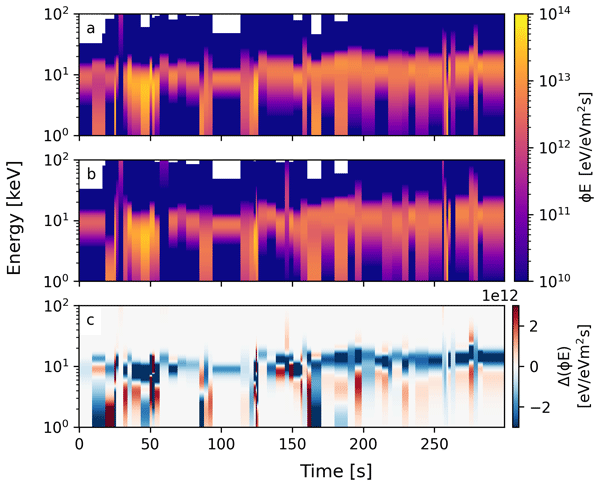
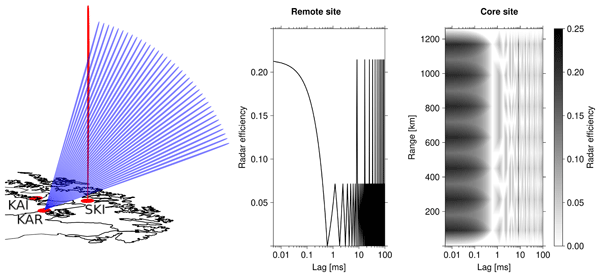
An empirical model of high-latitude ionospheric conductances based on EISCAT observations

Ilkka Virtanen
Spencer Mark Hatch
Heikki Vanhamäki
Maxime Grandin
Noora Partamies
Urs Ganse
Ilja Honkonen
Abiyot Workayehu
Antti Kero
Minna Palmroth
Related authors
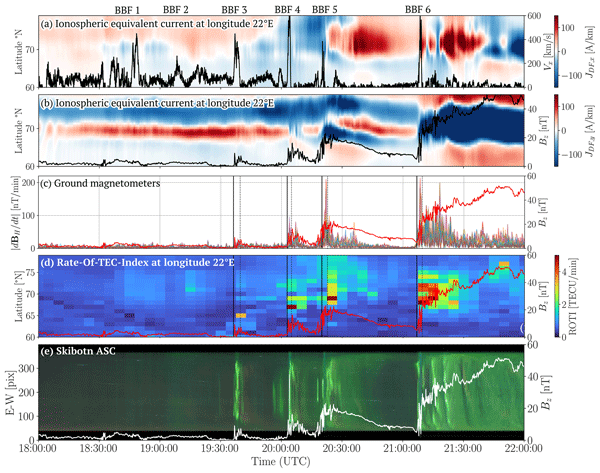
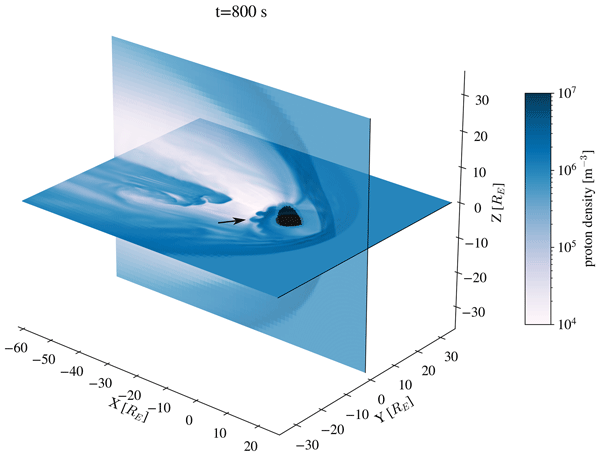
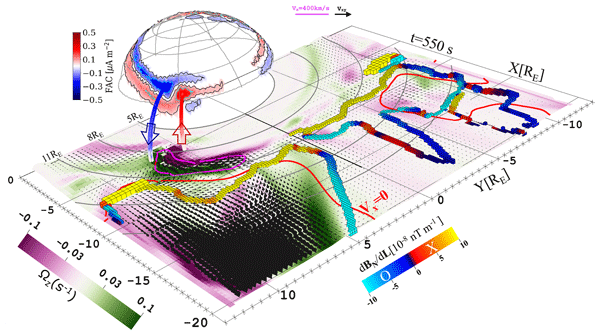
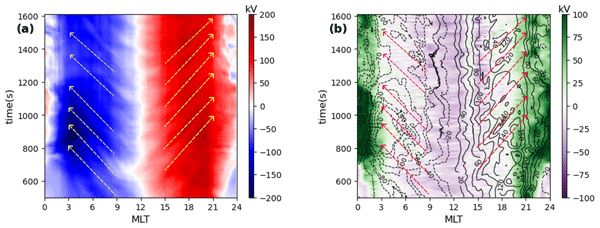
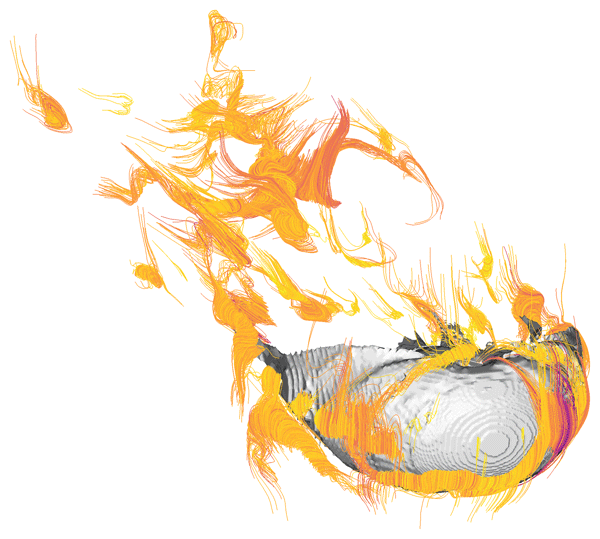
This study investigates the ionospheric signatures of a Bursty Bulk Flow in Earth’s magnetotail using a global 6D hybrid-Vlasov simulation coupled with an ionospheric model. The results show that a reconnection-driven Bursty Bulk Flow generates vortices that produce field-aligned currents, which map to the ionosphere with a distinct east–west orientation and exhibit a characteristic westward drift. Variations in ionospheric observables are identified as clear signatures of this flow.
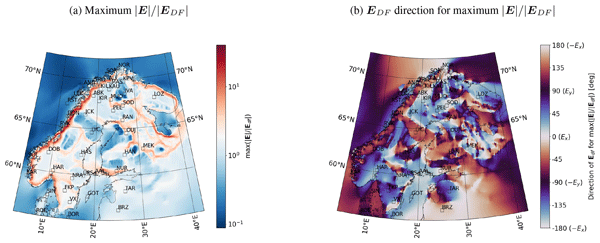
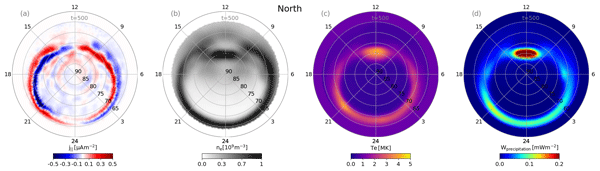
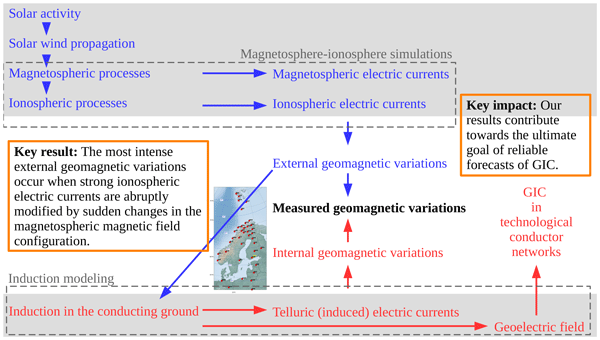
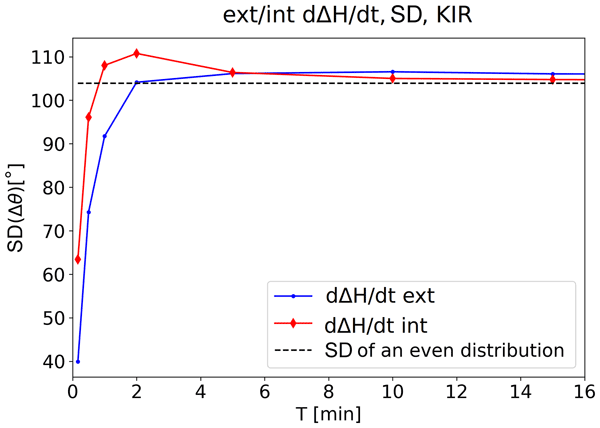
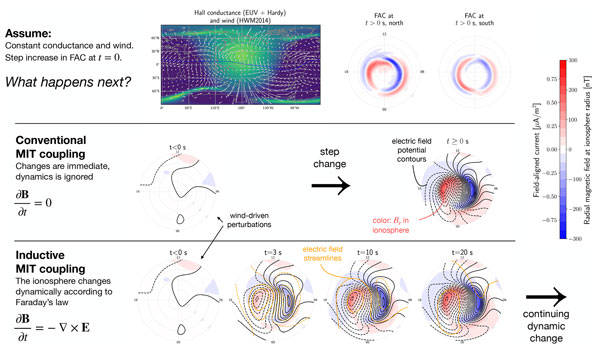
reset time, about 2 min. We conclude that this result gives insight on the current systems high in Earth’s atmosphere, which are the main driver behind the time derivative’s behavior and GIC formation.

This study investigates the ionospheric signatures of a Bursty Bulk Flow in Earth’s magnetotail using a global 6D hybrid-Vlasov simulation coupled with an ionospheric model. The results show that a reconnection-driven Bursty Bulk Flow generates vortices that produce field-aligned currents, which map to the ionosphere with a distinct east–west orientation and exhibit a characteristic westward drift. Variations in ionospheric observables are identified as clear signatures of this flow.
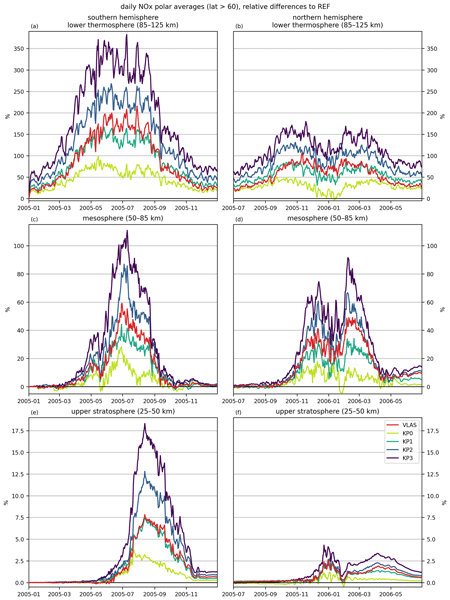
Extreme events can pose serious risks to satellites, potentially disrupting communication, navigation, and power systems. Our study estimates the worst-case radiation levels during such an event and assesses their impact on electronics and solar panels.


reset time, about 2 min. We conclude that this result gives insight on the current systems high in Earth’s atmosphere, which are the main driver behind the time derivative’s behavior and GIC formation.