
Articles | Volume 44, issue 2
https://doi.org/10.5194/angeo-44-1143-2026
© Author(s) 2026. This work is distributed under
the Creative Commons Attribution 4.0 License.
the Creative Commons Attribution 4.0 License.
https://doi.org/10.5194/angeo-44-1143-2026
© Author(s) 2026. This work is distributed under
the Creative Commons Attribution 4.0 License.
the Creative Commons Attribution 4.0 License.
Regular paper
| 
21 Oct 2026
Regular paper |
| 21 Oct 2026
| 21 Oct 2026
Ion composition of the Earth plasmasphere observed by the PEP JEI and RPWI instruments on the JUICE spacecraft

Max-Planck-Institut für Sonnensystemforschung, Göttingen, Germany
Henning Fischer
Max-Planck-Institut für Sonnensystemforschung, Göttingen, Germany
Norbert Krupp
Max-Planck-Institut für Sonnensystemforschung, Göttingen, Germany
Elias Roussos
Max-Planck-Institut für Sonnensystemforschung, Göttingen, Germany
Philipp Wittmann
Max-Planck-Institut für Sonnensystemforschung, Göttingen, Germany
Patrick Bambach
Deutsches Zentrum für Luft- und Raumfahrt, Cologne, Germany
Jan-Erik Wahlund
Swedish Institute of Space Physics (IRF), Uppsala, Sweden
Gabriella Stenberg Wieser
Swedish Institute of Space Physics (IRF), Kiruna, Sweden
Stas Barabash
Swedish Institute of Space Physics (IRF), Kiruna, Sweden
Mika Holmberg
Astronomy Astrophysics Section, School of Cosmic Physics, Dublin Institute for Advanced Studies, DIAS Dunsink Observatory, Dublin, Ireland
Maryam Zeroual
Astronomy Astrophysics Section, School of Cosmic Physics, Dublin Institute for Advanced Studies, DIAS Dunsink Observatory, Dublin, Ireland
Pontus C. Brandt
Johns Hopkins University, Baltimore, MD, USA
Peter Wurz
Space Research & Planetary Sciences, University of Bern, Switzerland
Martin Wieser
Swedish Institute of Space Physics (IRF), Kiruna, Sweden
Yoshifumi Futaana
Swedish Institute of Space Physics (IRF), Kiruna, Sweden
Manabu Shimoyama
Swedish Institute of Space Physics (IRF), Kiruna, Sweden
Angèle Pontoni
Swedish Institute of Space Physics (IRF), Kiruna, Sweden
Audrey Vorburger
Space Research & Planetary Sciences, University of Bern, Switzerland
André Galli
Space Research & Planetary Sciences, University of Bern, Switzerland
Andreas Riedo
Space Research & Planetary Sciences, University of Bern, Switzerland
George Ho
Johns Hopkins University, Baltimore, MD, USA
Donald G. Mitchell
Johns Hopkins University, Baltimore, MD, USA
George Clark
Johns Hopkins University, Baltimore, MD, USA
Peter Kollmann
Johns Hopkins University, Baltimore, MD, USA
Malamati Gkioulidou
Johns Hopkins University, Baltimore, MD, USA
Leonardo Regoli
Johns Hopkins University, Baltimore, MD, USA
Robert Wimmer-Schweingruber
Christian-Albrechts-Universität zu Kiel, Kiel, Germany
Kazushi Asamura
Institute of Space and Astronautical Science, Sagamihara, Japan
Esa Kallio
Department of Electronics and Nanoengineering, School of Electrical Engineering, Aalto University, Espoo, Finland
Andrea Opitz
Institute for Particle and Nuclear Physics, Wigner Research Centre for Physics, Budapest, Hungary
Manuel Grande
Institute of Mathematical and Physical Sciences, University of Wales Aberystwyth, Wales, UK
Andrew Coates
Mullard Space Science Laboratory, University College, London, UK
Geraint Jones
Mullard Space Science Laboratory, University College, London, UK
Theodoros Sarris
Department of Electrical and Computer Engineering, Democritus University of Thrace, Xanthi, Greece
Andrey Fedorov
Institut de Recherche en Astrophysique et Planétologie (IRAP), CNES-CNRS-Université Toulouse III Paul Sabatier, Toulouse, France
Nicolas André
Institut de Recherche en Astrophysique et Planétologie (IRAP), CNES-CNRS-Université Toulouse III Paul Sabatier, Toulouse, France
Institut Supérieur de l'Aéronautique et de l'Espace (ISAE-SUPAERO), Université de Toulouse, Toulouse, France
Ján Baláž
Institute of Experimental Physics SAS, Košice, Slovak Republic
Related authors
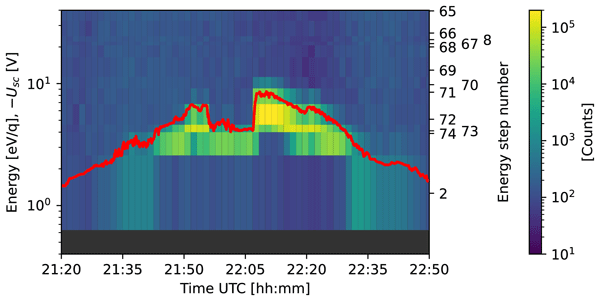
Gabriella Stenberg Wieser, Martin Wieser, Stas Barabash, Philipp Wittmann, Leif Kalla, Markus Fränz, Elias Roussos, Audrey Vorburger, Peter Wurz, Jan-Erik Wahlund, Pontus C. Brandt, Yoshifumi Futaana, Manabu Shimoyama, Angèle Pontoni, André Galli, Andreas Riedo, George Ho, Donald G. Mitchell, George Clark, Peter Kollmann, Malamati Gkioulidou, Leonardo Regoli, Norbert Krupp, Robert Wimmer-Schweingruber, Kazushi Asamura, Esa Kallio, Andrea Opitz, Manuel Grande, Andrew Coates, Geraint Jones, Theodoros Sarris, Andrey Fedorov, Nicolas André, and Ján Baláž
Ann. Geophys., 44, 937–948, https://doi.org/10.5194/angeo-44-937-2026, https://doi.org/10.5194/angeo-44-937-2026, 2026
Short summary
Short summary
We used Juice flyby of Earth in August 2024 to evaluate the performance of the Jovian Plasma Dynamics and Composition analyzer (JDC). JDC measures positive and negative ions as well as electrons. When Juice arrives at Jupiter, one of the most challenging tasks for JDC is to record low energy ion populations. We used the data JDC recorded close to Earth, together with measurement in the laboratory on ground, to improve the future observations the sensor will make around Jupiter’s icy moons.
Maryam Zeroual, Mika K. G. Holmberg, Francois Gutierrez, Fredrik L. Johansson, Jan-Erik Wahlund, Markus Fräenz, Pierre Henri, Xavier Vallieres, and Alexandra R. Fogg
EGUsphere, https://doi.org/10.5194/egusphere-2026-2068, https://doi.org/10.5194/egusphere-2026-2068, 2026
Short summary
Short summary
The electric charge build up on the surface of the JUICE spacecraft was simulated for two different environments around Earth. These results are important for improving the data analysis. In the dense and cold region close to Earth, an average potential of -2 V was found. In the second region, a hotter environment beyond Earth’s magnetic field, a potential of 2.5 V was found. The behaviour of particles around JUICE was also simulated, which can affect the accuracy and range of measurements made.
Gabriella Stenberg Wieser, Martin Wieser, Stas Barabash, Philipp Wittmann, Leif Kalla, Markus Fränz, Elias Roussos, Audrey Vorburger, Peter Wurz, Jan-Erik Wahlund, Pontus C. Brandt, Yoshifumi Futaana, Manabu Shimoyama, Angèle Pontoni, André Galli, Andreas Riedo, George Ho, Donald G. Mitchell, George Clark, Peter Kollmann, Malamati Gkioulidou, Leonardo Regoli, Norbert Krupp, Robert Wimmer-Schweingruber, Kazushi Asamura, Esa Kallio, Andrea Opitz, Manuel Grande, Andrew Coates, Geraint Jones, Theodoros Sarris, Andrey Fedorov, Nicolas André, and Ján Baláž
Ann. Geophys., 44, 937–948, https://doi.org/10.5194/angeo-44-937-2026, https://doi.org/10.5194/angeo-44-937-2026, 2026
Short summary
Short summary
We used Juice flyby of Earth in August 2024 to evaluate the performance of the Jovian Plasma Dynamics and Composition analyzer (JDC). JDC measures positive and negative ions as well as electrons. When Juice arrives at Jupiter, one of the most challenging tasks for JDC is to record low energy ion populations. We used the data JDC recorded close to Earth, together with measurement in the laboratory on ground, to improve the future observations the sensor will make around Jupiter’s icy moons.
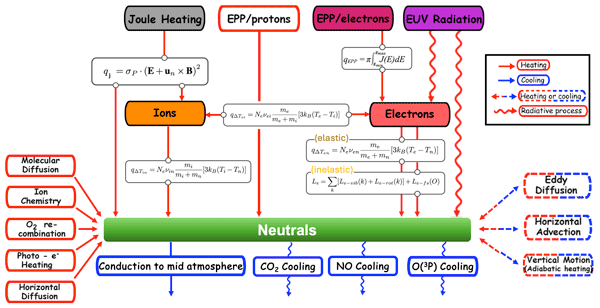
Stelios Tourgaidis, Theodoros Sarris, Dimitrios Baloukidis, Stephan Buchert, Panagiotis Pirnaris, Konstantinos Papadakis, and Athanasios Balafoutis
Ann. Geophys., 44, 773–793, https://doi.org/10.5194/angeo-44-773-2026, https://doi.org/10.5194/angeo-44-773-2026, 2026
Short summary
Short summary
The Lower Thermosphere-Ionosphere energy balance is driven by complex interactions between ions, neutrals and electrons. These processes are understood theoretically, but their estimates show large discrepancies between models. We calculate the storm-time energy budget according to the neutrals, ions and electrons using TIE-GCM (Thermosphere Ionosphere Electrodynamics General Circulation Model) using two different external drivers. Discrepancies between the model runs are discussed and the way forward to close the gaps in present knowledge is highlighted.
Konstantinos Dialynas, Matina Gkioulidou, Donald Mitchell, Pontus Brandt, George Clark, Elias Roussos, Peter Kollmann, Leonardo Regoli, Frederic Allegrini, Nicolas Andre, Xianzhe Jia, Krishan Khurana, Carol Paty, Stas Barabash, and Peter Wurz
EGUsphere, https://doi.org/10.5194/egusphere-2026-2062, https://doi.org/10.5194/egusphere-2026-2062, 2026
Short summary
Short summary
We analyze the first ENA images of Earth's magnetosphere that were captured by the PEP/JENI detector on the JUICE spacecraft, at distances of ~17 to ~150 Earth Radii during the Lunar and Earth Gravity Assist (LEGA), to discern substorm dynamics around Earth. We show increased ENA emissions associated with the onsets of substorm events, suggesting direct responses to the increased energetic ion activity.
Maryam Zeroual, Mika K. G. Holmberg, Francois Gutierrez, Fredrik L. Johansson, Jan-Erik Wahlund, Markus Fräenz, Pierre Henri, Xavier Vallieres, and Alexandra R. Fogg
EGUsphere, https://doi.org/10.5194/egusphere-2026-2068, https://doi.org/10.5194/egusphere-2026-2068, 2026
Short summary
Short summary
The electric charge build up on the surface of the JUICE spacecraft was simulated for two different environments around Earth. These results are important for improving the data analysis. In the dense and cold region close to Earth, an average potential of -2 V was found. In the second region, a hotter environment beyond Earth’s magnetic field, a potential of 2.5 V was found. The behaviour of particles around JUICE was also simulated, which can affect the accuracy and range of measurements made.
Pontus C. Brandt, George Clark, Donald G. Mitchell, Peter Kollmann, Matina Gkioulidou, Leonardo Regoli, Kostas Dialynas, Frederic Allegrini, Nicolas Andre, Xianzhe Jia, Krishan Khurana, Carol Paty, Stanislav Barabash, and Peter Wurz
EGUsphere, https://doi.org/10.5194/egusphere-2026-2050, https://doi.org/10.5194/egusphere-2026-2050, 2026
Short summary
Short summary
This report presents the measurements conducted by two particle sensors onboard the Jupiter Icy Moon Explorer spacecraft during its flyby of the Moon and Earth.
Marco Pinto, André Rodrigues, Elias Roussos, Daniel Schmid, Martin Volwerk, Stavros Kotsiaros, Patrick Brown, Michele Dougherty, Luísa Arruda, and Olivier Witasse
EGUsphere, https://doi.org/10.5194/egusphere-2026-2055, https://doi.org/10.5194/egusphere-2026-2055, 2026
Short summary
Short summary
During its flyby of the Moon and Earth, the Jupiter Icy Moons Explorer crossed Earth's radiation belts and gave us a rare chance to test the Radiation Hard Electron Monitor in space. By studying how its measurements changed along the path, we showed that the instrument can clearly detect trapped electrons and protons. This gives confidence for future operations at Jupiter, where the radiation environment is far harsher and these measurements will be especially valuable.

François Poulet, Giuseppe Piccioni, Yves Langevin, Cydalise Dumesnil, Vincent Carlier, Benoit Seignovert, Marc Dexet, Leigh N. Fletcher, Cédric Leyrat, Francesca Altieri, John Carter, Emiliano D'Aversa, Maria De Sanctis, Davide Grassi, Sandrine Guerlet, Stéphane Le Mouélic, Alessandra Migliorini, Fabrizio Oliva, Clément Royer, Sébastien Rodriguez, Katrin Stephan, Federico Tosi, Francesca Zambon, Alberto Adriani, Gabriele Arnold, Jean-Pierre Bibring, Dominique Bockelée, Rosario Brunetto, Fabrizio Capaccioni, Cristian Carli, Thibault Cavalié, Miriam Cisneros González, Mauro Ciarnello, Simone De Angelis, Pierre Drossart, Gianrico Filacchione, Thierry Fouchet, Jean-Claude Gérard, Denis Grodent, Patrick Irwin, Sophie Jacquinod, Ozgur Karatekin, Emmanuel Lellouch, Nicolas Ligier, Nicolas Mangold, Magali Mebsout, Frédéric Merlin, Alessandro Morbidelli, Alessandro Mura, Andreas Nathues, Maria E. Palumbo, Cédric Pilorget, Olivier Poch, Eric Quirico, Andrea Raponi, Séverine Robert, Elias Roussos, Agustin Sanchez-Lavega, Bernard Schmitt, Giuseppe Sindoni, Marcel Snels, Roberto Sordini, Stefania Stefani, Giovanni Strazzulla, Tim Trent, Gabriel Tobie, Diego Turrini, Ann-Carine Vandaele, Mathieu Vincendon, Olivier Witasse, Claire Vallat, and Alessandro Moraino
Ann. Geophys., 44, 163–193, https://doi.org/10.5194/angeo-44-163-2026, https://doi.org/10.5194/angeo-44-163-2026, 2026
Short summary
Short summary
During the double Lunar-Earth Gravitational Assist with the ESA/JUICE (Jupiter Icy Moons Explorer) spacecraft in August 2024, we acquired hyperspectral data cubes of both the Moon and Earth with the MAJIS (Moons And Jupiter Imaging Spectrometer) imaging spectrometer under challenging, real in-flight conditions. This allowed to characterize surface materials and thermophysical properties on the Moon, identify various cloud phases and gases in Earth's atmosphere, and thoroughly validate the performance of the instrument.
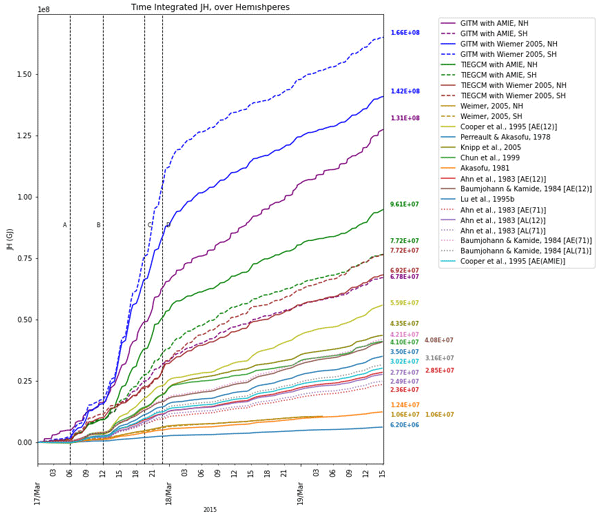
Stelios Tourgaidis, Dimitris Baloukidis, Panagiotis Pirnaris, Theodoros Sarris, Aaron Ridley, and Gang Lu
Ann. Geophys., 43, 881–899, https://doi.org/10.5194/angeo-43-881-2025, https://doi.org/10.5194/angeo-43-881-2025, 2025
Short summary
Short summary
During geomagnetic storms, Joule heating is a major heating source of the upper atmosphere that is not well estimated, due to a lack of measurements. This leads to uncertainties in orbital calculations. We present simulations with commonly used physics-based models and empirical models that provide measurements of Joule heating. The results show great discrepancies, pointing to the need for measurements in the Earth's Lower Thermosphere-Ionosphere at altitudes where Joule heating maximizes.
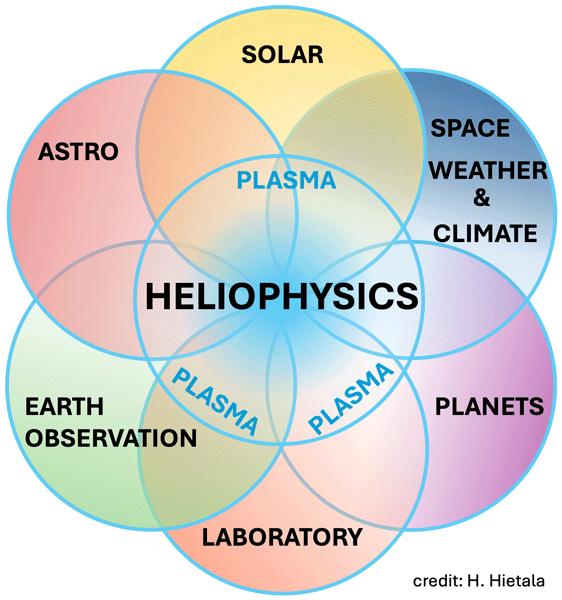
Rumi Nakamura, Thierry Dudok de Wit, Geraint H. Jones, Matt G. G. T. Taylor, Nicolas André, Charlotte Goetz, Lina Z. Hadid, Laura A. Hayes, Heli Hietala, Caitríona M. Jackman, Larry Kepko, Aurélie Marchaudon, Adam Masters, Mathew Owens, Noora Partamies, Stefaan Poedts, Jonathan Rae, Yuri Shprits, Manuela Temmer, Daniel Verscharen, and Robert F. Wimmer-Schweingruber
Ann. Geophys., 43, 855–879, https://doi.org/10.5194/angeo-43-855-2025, https://doi.org/10.5194/angeo-43-855-2025, 2025
Short summary
Short summary
Heliophysics spans a wide range of disciplines covering the study of the Sun and the different Solar System bodies, such as Earth and other planets, moons, comets, and asteroids, and their interactions with the Sun, focusing on plasma and atmospheric processes. A grass-roots effort has been recently started toward establishing a European Heliophysics Community (https://www.heliophysics.eu/). This white paper outlines the motivation, priorities, and a future vision of Heliophysics in Europe.

Sebastián Rojas Mata, Gabriella Stenberg Wieser, Tielong Zhang, and Yoshifumi Futaana
Ann. Geophys., 42, 419–429, https://doi.org/10.5194/angeo-42-419-2024, https://doi.org/10.5194/angeo-42-419-2024, 2024
Short summary
Short summary
The Sun ejects a stream of charged particles into space that have to flow around planets like Venus. We quantify how this flow varies with spatial location using spacecraft measurements of the particles and magnetic field taken over several years. We find that this flow is connected to interactions with the heavier charged particles that originate from Venus’ upper atmosphere. These interactions are not unique to Venus, so we compare our results to similar studies at Mars.
Joachim Vogt, Octav Marghitu, Adrian Blagau, Leonie Pick, Nele Stachlys, Stephan Buchert, Theodoros Sarris, Stelios Tourgaidis, Thanasis Balafoutis, Dimitrios Baloukidis, and Panagiotis Pirnaris
Geosci. Instrum. Method. Data Syst., 12, 239–257, https://doi.org/10.5194/gi-12-239-2023, https://doi.org/10.5194/gi-12-239-2023, 2023
Short summary
Short summary
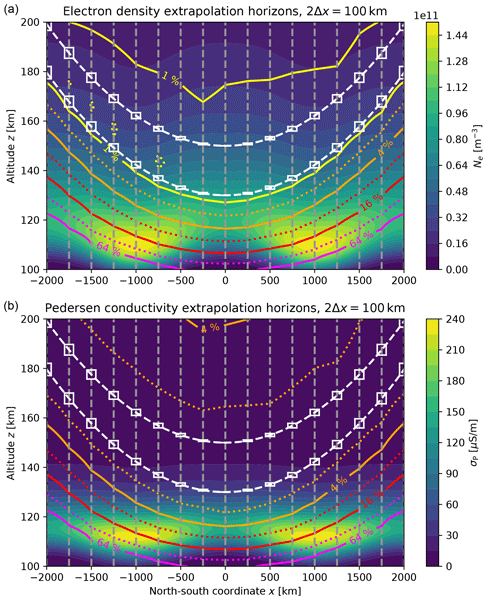
Motivated by recent community interest in a satellite mission to the atmospheric lower thermosphere and ionosphere (LTI) region (100–200 km altitude), the DIPCont project is concerned with the reconstruction quality of vertical profiles of key LTI variables using dual- and single-spacecraft observations. The report introduces the probabilistic DIPCont modeling framework, demonstrates its usage by means of a set of self-consistent parametric non-isothermal models, and discusses first results.

Martin Volwerk, Cyril Simon Wedlund, David Mautner, Sebastián Rojas Mata, Gabriella Stenberg Wieser, Yoshifumi Futaana, Christian Mazelle, Diana Rojas-Castillo, César Bertucci, and Magda Delva
Ann. Geophys., 41, 389–408, https://doi.org/10.5194/angeo-41-389-2023, https://doi.org/10.5194/angeo-41-389-2023, 2023
Short summary
Short summary
Freshly created ions in solar wind start gyrating around the interplanetary magnetic field. When they cross the bow shock, they get an extra kick, and this increases the plasma pressure against the magnetic pressure. This leads to the creation of so-called mirror modes, regions where the magnetic field decreases in strength and the plasma density increases. These structures help in exploring how energy is transferred from the ions to the magnetic field and where around Venus this is happening.
Panagiotis Pirnaris and Theodoros Sarris
Ann. Geophys., 41, 339–354, https://doi.org/10.5194/angeo-41-339-2023, https://doi.org/10.5194/angeo-41-339-2023, 2023
Short summary
Short summary
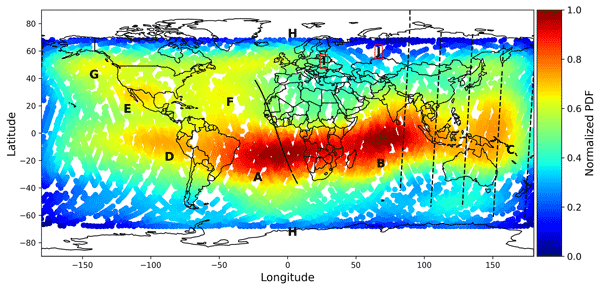
The relation between electron, ion and neutral temperatures in the lower thermosphere–ionosphere (LTI) is key to understanding the energy balance and transfer between species. However, their simultaneous measurement is rare in the LTI. Based on data from the AE-C, AE-D, AE-E and DE-2 satellites of the 1970s and 1980s, a large number of events where neutrals are hotter than ions are identified and statistically analyzed. Potential mechanisms that could trigger these events are proposed.

Cyril Simon Wedlund, Martin Volwerk, Christian Mazelle, Sebastián Rojas Mata, Gabriella Stenberg Wieser, Yoshifumi Futaana, Jasper Halekas, Diana Rojas-Castillo, César Bertucci, and Jared Espley
Ann. Geophys., 41, 225–251, https://doi.org/10.5194/angeo-41-225-2023, https://doi.org/10.5194/angeo-41-225-2023, 2023
Short summary
Short summary
Mirror modes are magnetic bottles found in the space plasma environment of planets contributing to the energy exchange with the solar wind. We use magnetic field measurements from the NASA Mars Atmosphere and Volatile EvolutioN mission to detect them around Mars and show how they evolve in time and space. The structures concentrate in two regions: one behind the bow shock and the other closer to the planet. They compete with other wave modes depending on the solar flux and heliocentric distance.

Brady P. Strabel, Leonardo H. Regoli, Mark B. Moldwin, Lauro V. Ojeda, Yining Shi, Jacob D. Thoma, Isaac S. Narrett, Bret Bronner, and Matthew Pellioni
Geosci. Instrum. Method. Data Syst., 11, 375–388, https://doi.org/10.5194/gi-11-375-2022, https://doi.org/10.5194/gi-11-375-2022, 2022
Short summary
Short summary
The design, characteristics, and performance of a CubeSat magnetometer board (Quad-Mag) equipped with four PNI RM3100 magnetometers is presented. The inclusion of four sensors allows a potential factor of 2 reduction in the noise floor established for an individual sensor via oversampling with multiple sensors. The Quad-Mag is shown to enable 1 nT magnetic field measurements at 1 Hz and 5.345 nT at 65 Hz using commercial off-the-shelf sensors for space applications.
Cited articles
Bergman, S., Stenberg Wieser, G., Wieser, M., Johansson, F. L., and Eriksson, A.: The Influence of Varying Spacecraft Potentials and Debye Lengths on In Situ Low-Energy Ion Measurements, J. Geophys. Res.-Space, 125, e2020JA027870, https://doi.org/10.1029/2020JA027870, 2020. a
Bochet, M., Bergman, S., Holmberg, M. K. G., Wieser, M., Wieser, G. S., Wittmann, P., Gourinat, Y., Imhof, C., and Barabash, S.: Perturbations of JUICE/JDC Ion Measurements Caused by Spacecraft Charging in the Jovian Magnetosphere and the Ionosphere of Ganymede, J. Geophys. Res.-Space, 128, e2023JA031377, https://doi.org/10.1029/2023JA031377, 2023. a, b
Chappell, C. R., Fields, S. A., Baugher, C. R., Hoffman, J. H., Hanson, W. B., Wright, W. W., Hammack, H. D., Carignan, G. R., and Nagy, A. F.: The Retarding Ion Mass Spectrometer on Dynamics Explorer-A., Space Science Instrumentation, 5, 477–491, 1981. a
Comfort, R. H.: Thermal structure of the plasmasphere, Adv. Space Res., 17, 175–184, https://doi.org/10.1016/0273-1177(95)00710-V, 1996. a
Comfort, R. H., Waite, Jr., J. H., and Chappell, C. R.: Thermal ion temperatures from the retarding ion mass spectrometer on DE 1, J. Geophys. Res.-Space, 90, 3475–3486, https://doi.org/10.1029/JA090iA04p03475, 1985. a
Craven, P. D., Olsen, R. C., Chappell, C. R., and Kakani, L.: Observations of molecular ions in the earth's magnetosphere, J. Geophys. Res.-Space, 90, 7599–7606, https://doi.org/10.1029/JA090iA08p07599, 1985. a, b
Darrouzet, F., de Keyser, J., and Pierrard, V.: The Earth's Plasmasphere, Springer, ISBN-978-1-4419-1322-7, https://doi.org/10.1007/978-1-4419-1323-4, 2009. a
Delzanno, G. L., Borovsky, J. E., Henderson, M. G., Resendiz Lira, P. A., Roytershteyn, V., and Welling, D. T.: The impact of cold electrons and cold ions in magnetospheric physics, J. Atmos. Sol.-Terr. Phy., 220, 105599, https://doi.org/10.1016/j.jastp.2021.105599, 2021. a
European Space Agency: ESA-JUICE_LEGA-Special-Issue_v1.0, https://doi.org/10.57780/esa-2bb387d, 2026. a
Frank, L. A. and Paterson, W. R.: Observations of plasmas in the Io torus with the Galileo spacecraft, J. Geophys. Res.-Space, 105, 16017–16034, https://doi.org/10.1029/1999JA000250, 2000. a
Fränz, M., Dubinin, E., Roussos, E., Woch, J., Winningham, J. D., Frahm, R., Coates, A. J., Fedorov, A., Barabash, S., and Lundin, R.: Plasma Moments in the Environment of Mars. Mars Express ASPERA-3 Observations, Space Science Review, 126, 165–207, https://doi.org/10.1007/s11214-006-9115-9, 2006. a, b
Fränz, M., Bührke, U., Ferreira, P., Fischer, H., Heumüller, P., Krupp, N., Kühne, W., and Roussos, E.: The Jovian Electron and Ion Spectrometer (JEI) for the JUICE mission, in: European Planetary Science Congress, pp. EPSC2017–464, https://meetingorganizer.copernicus.org/EPSC2017/EPSC2017-464.pdf (last access: 16 October 2026), 2017. a
Gallagher, D. L., Craven, P. D., and Comfort, R. H.: Global core plasma model, J. Geophys. Res.-Space, 105, 18,819–18,833, https://doi.org/10.1029/1999JA000241, 2000. a, b
Genestreti, K. J., Goldstein, J., Corley, G. D., Farner, W., Kistler, L. M., Larsen, B. A., Mouikis, C. G., Ramnarace, C., Skoug, R. M., and Turner, N. E.: Temperature of the plasmasphere from Van Allen Probes HOPE, J. Geophys. Res.-Space, 122, 310–323, https://doi.org/10.1002/2016JA023047, 2017. a, b
Génot, V. and Schwartz, S. J.: Spacecraft potential effects on electron moments derived from a perfect plasma detector, Ann. Geophys., 22, 2073–2080, https://doi.org/10.5194/angeo-22-2073-2004, 2004. a
Goldstein, J., Chappell, C. R., Davis, M. W., Denton, M. H., Denton, R. E., Gallagher, D. L., Gladstone, G. R., Lecocke, M. B., Sandel, B. R., and Windt, D. L.: Imaging the Global Distribution of Plasmaspheric Oxygen, J. Geophys. Res.-Space, 123, 2078–2103, https://doi.org/10.1002/2017JA024531, 2018. a
Goldstein, J., Burch, J. L., Fuselier, S. A., Gomez, R., Gonzalez, C. A., Kim, M. J., Mukherjee, J., Turner, N. E., and Wilson, M. E.: MMS Observations of Dayside Warm (Several eV to 100 eV) Ions in the Middle and Outer Magnetosphere, J. Geophys. Res.-Space, 128, e2022JA031051, https://doi.org/10.1029/2022JA031051, 2023. a
Grasset, O., Dougherty, M. K., Coustenis, A., Bunce, E. J., Erd, C., Titov, D., Blanc, M., Coates, A., Drossart, P., Fletcher, L. N., Hussmann, H., Jaumann, R., Krupp, N., Lebreton, J.-P., Prieto-Ballesteros, O., Tortora, P., Tosi, F., and Van Hoolst, T.: JUpiter ICy moons Explorer (JUICE): An ESA mission to orbit Ganymede and to characterise the Jupiter system, Planentary and Space Science, 78, 1–21, https://doi.org/10.1016/j.pss.2012.12.002, 2013. a
Gringauz, K. I.: Plasmasphere and its interaction with the ring current, Space Science Review, 34, 245–257, https://doi.org/10.1007/BF00175281, 1983. a
Hoffman, J. H., Dodson, W. H., Lippincott, C. R., and Hammack, H. D.: Initial ion composition results from the Isis 2 satellite, J. Geophys. Res.-Space, 79, 4246, https://doi.org/10.1029/JA079i028p04246, 1974. a
Horwitz, J. L., Baugher, C. R., Chappell, C. R., Shelley, E. G., and Young, D. T.: Conical pitch angle distributions of very low-energy ion fluxes observed by ISEE 1, J. Geophys. Res.-Space, 87, 2311–2320, https://doi.org/10.1029/JA087iA04p02311, 1982. a
Jahn, J.-M., Goldstein, J., Kurth, W. S., Thaller, S., De Pascuale, S., Wygant, J., Reeves, G. D., and Spence, H. E.: Determining Plasmaspheric Density From the Upper Hybrid Resonance and From the Spacecraft Potential: How Do They Compare?, J. Geophys. Res.-Space, 125, e2019JA026860, https://doi.org/10.1029/2019JA026860, 2020. a
James, M. K., Yeoman, T. K., Jones, P., Sandhu, J. K., and Goldstein, J.: The Scalable Plasma Ion Composition and Electron Density (SPICED) Model for Earth's Inner Magnetosphere, J. Geophys. Res.-Space, 126, e2021JA029565, https://doi.org/10.1029/2021JA029565, 2021. a
Kotova, G., Bezrukikh, V., Verigin, M., and Smilauer, J.: New aspects in plasmaspheric ion temperature variations from INTERBALL 2 and MAGION 5 measurements, J. Atmos. Sol.-Terr. Phy., 70, 399–406, https://doi.org/10.1016/j.jastp.2007.08.054, 2008. a, b, c
Krems, M., Zirbel, J., Thomason, M., and DuBois, R. D.: Channel electron multiplier and channelplate efficiencies for detecting positive ions, Rev. Sci. Instrum., 76, 093305-093305-7, https://doi.org/10.1063/1.2052052, 2005. a, b, c, d
Larsen, B. A., Klumpar, D. M., and Gurgiolo, C.: Correlation between plasmapause position and solar wind parameters, J. Atmos. Sol.-Terr. Phy., 69, 334–340, https://doi.org/10.1016/j.jastp.2006.06.017, 2007. a, b
Lavraud, B. and Larson, D. E.: Correcting moments of in situ particle distribution functions for spacecraft electrostatic charging, J. Geophys. Res.-Space, 121, 8462–8474, https://doi.org/10.1002/2016JA022591, 2016. a, b
Lejosne, S., Maus, S., and Mozer, F. S.: Model-observation comparison for the geographic variability of the plasma electric drift in the Earth's innermost magnetosphere, Geophys. Res. Lett., 44, 7634–7642, https://doi.org/10.1002/2017GL074862, 2017. a
Lin, M.-Y. and Ilie, R.: A review of observations of molecular ions in the Earth's magnetosphere-ionosphere system, Frontiers in Astronomy and Space Sciences, 8, 223, https://doi.org/10.3389/fspas.2021.745357, 2022. a
Lu, J. Y., Zhou, Y., Ma, X., Wang, M., Kabin, K., and Yuan, H. Z.: Earth's Bow Shock: A New Three-Dimensional Asymmetric Model With Dipole Tilt Effects, J. Geophys. Res.-Space, 124, 5396–5407, https://doi.org/10.1029/2018JA026144, 2019. a
Maldonado, C. A., Resendiz Lira, P. A., Delzanno, G. L., Larsen, B. A., Reisenfeld, D. B., and Coffey, V.: A review of instrument techniques to measure magnetospheric cold electrons and ions, Frontiers in Astronomy and Space Sciences, 9, https://doi.org/10.3389/fspas.2022.1005845, 2023. a
Mott-Smith, H. M. and Langmuir, I.: The Theory of Collectors in Gaseous Discharges, Phys. Rev., 28, 727–763, https://doi.org/10.1103/PhysRev.28.727, 1926. a, b, c
Nyffenegger, O., Mildner, M., Wurz, P., Altwegg, K., Balsiger, H., and Berthelier, J. J.: Influence of Electric Charging on the ROSINA Instrument in the Plasma Environment of Comet 46P/Wirtanen, in: Spacecraft Charging Technology, edited by Harris, R. A., vol. 476 of ESA Special Publication, p. 203, European Space Agency, ISBN 92-9092-745-3, 2001. a
Roberts Jr., W. T., Horwitz, J. L., Comfort, R. H., Chappell, C. R., Waite, Jr., J. H., and Green, J. L.: Heavy ion density enhancements in the outer plasmasphere, J. Geophys. Res.-Space, 92, 13499–13512, https://doi.org/10.1029/JA092iA12p13499, 1987. a, b
Sauvaud, J.-A., Lundin, R., Rème, H., McFadden, J. P., Carlson, C., Parks, G. K., Möbius, E., Kistler, L. M., Klecker, B., Amata, E., DiLellis, A. M., Formisano, V., Bosqued, J. M., Dandouras, I., Décréau, P., Dunlop, M., Eliasson, L., Korth, A., Lavraud, B., and McCarthy, M.: Intermittent thermal plasma acceleration linked to sporadic motions of the magnetopause, first Cluster results, Ann. Geophys., 19, 1523–1532, https://doi.org/10.5194/angeo-19-1523-2001, 2001. a
Shue, J.-H., Song, P., Russell, C. T., Steinberg, J. T., Chao, J. K., Zastenker, G., Vaisberg, O. L., Kokubun, S., Singer, H. J., Detman, T. R., and Kawano, H.: Magnetopause location under extreme solar wind conditions, J. Geophys. Res.-Space, 103, 17691–17700, https://doi.org/10.1029/98JA01103, 1998. a
Stenberg Wieser, G., Wieser, M., Barabash, S., Wittmann, P., Kalla, L., Fränz, M., Roussos, E., Vorburger, A., Wurz, P., Wahlund, J.-E., Brandt, P. C., Futaana, Y., Shimoyama, M., Pontoni, A., Galli, A., Riedo, A., Ho, G., Mitchell, D. G., Clark, G., Kollmann, P., Gkioulidou, M., Regoli, L., Krupp, N., Wimmer-Schweingruber, R., Asamura, K., Kallio, E., Opitz, A., Grande, M., Coates, A., Jones, G., Sarris, T., Fedorov, A., André, N., and Baláž, J.: Flying through the plasmasphere to optimize low-energy ion measurements, Ann. Geophys., 44, 937–948, https://doi.org/10.5194/angeo-44-937-2026, 2026. a, b
Štverák, Š., Herčík, D., Hellinger, P., Popd'akunik, M., Lewis, G. R., Nicolaou, G., Owen, C. J., Khotyaintsev, Y. V., and Maksimovic, M.: Modelling spacecraft-emitted electrons measured by the SWA-EAS experiment on board the Solar Orbiter mission, Astronomy & Astrophysics, 709, A132, https://doi.org/10.1051/0004-6361/202658881, 2026. a, b
Tsyganenko, N. A. and Stern, D. P.: Modeling the global magnetic field of the large-scale Birkeland current systems, J. Geophys. Res.-Space, 101, 27187–27198, https://doi.org/10.1029/96JA02735, 1996. a
Wahlund, J.-E., Bergman, J. E. S., Åhlén, L., Puccio, W., Cecconi, B., Kasaba, Y., Müller-Wodarg, I., Rothkaehl, H., Morawski, M., Santolik, O., Soucek, J., Grygorczuk, J., Wisniewski, Ł., Henri, P., Rauch, J. L., Le Duff, O., Retinò, A., Mansour, M., Stverak, S., Laifr, J., Andrews, D., André, M., Benko, I., Berglund, M., Cripps, V., Cully, C., Davidsson, J., Dimmock, A., Edberg, N. J. T., Eriksson, A. I., Fredriksson, J., Gill, R., Gomis, S., Holback, B., Jansson, S.-E., Johansson, F., Johansson, E. P. G., Khotyaintsev, Y., Mårtensson, B., Morooka, M. W., Nilsson, T., Ohlsson, D., Pelikan, D., Richard, L., Shiwa, F., Vigren, E., Wong, H. C., Bonnin, X., Girard, J. N., Grosset, L., Henry, F., Lamy, L., Lebreton, J.-P., Zarka, P., Katoh, Y., Kita, H., Kumamoto, A., Misawa, H., Tsuchiya, F., Galand, M., Barcinski, T., Baran, J., Kowalski, T., Szewczyk, P., Grison, B., Jansky, J., Kolmasova, I., Lan, R., Pisa, D., Taubenschuss, U., Uhlir, L., Bochra, K., Borys, M., Duda, M., Kucinski, T., Ossowski, M., Palma, P., Tokarz, M., Colin, F., Dazzi, P., De Léon, E., Hachemi, T., Millet, A.-L., Randrianboarisson, O., Sene, O., Chust, T., Le Contel, O., Canu, P., Hadid, L., Sahraoui, F., Zouganelis, Y., Alison, D., Ba, N., Jeandet, A., Lebassard, M., Techer, J.-D., Mehrez, F., Varizat, L., Sumant, A. V., Sou, G., Hellinger, P., Travnicek, P., Bylander, L., Giono, G., Ivchenko, N., Kullen, A., Roth, L., Vaivads, A., Tanimoto, K., Mizuno, H., Sawamura, A., Suzuki, T., Namiki, M., Fujishima, S., Asai, K., Shimoyama, T., Fujii, M., Sato, Y., Birch, J., Bakhit, B., Greczynski, G., Gare, P., Landström, S., LeLetty, R., Ryszawa, E., Torralba, I., Trescastro, J. L., Osipenco, S., Wiklund, U., Roos, A., Söderström, J. C., Björneholm, O., Fischer, G., Nyberg, T., Kovi, K. K., Balikhin, M., Yearby, K. H., Holmberg, M., Jackman, C. M., Louis, C. K., Rhouni, A., Leray, V., Geyskens, N., Berthod, C., Lemaire, B., Clémencon, A., Wattieaux, G., André, N., Garnier, P., Génot, V., Louarn, P., Marchaudon, A., Modolo, R., Baskevitch, C.-A., Hess, L. G., Leclercq, L., Saur, J., Kimura, T., Kojima, H., Yagitani, S., and Miyoshi, Y.: The Radio & Plasma Wave Investigation (RPWI) for the JUpiter ICy moons Explorer (JUICE), Space Science Review, 221, 1, https://doi.org/10.1007/s11214-024-01110-0, 2025. a, b
Whipple, E. C., Warnock, J. M., and Winkler, R. H.: Effect of satellite potential on direct ion density measurements through the plasmapause, J. Geophys. Res.-Space, 79, 179–186, https://doi.org/10.1029/JA079i001p00179, 1974. a, b, c, d
Yamauchi, M., Christon, S., Dandouras, I., Haaland, S., Kastinen, D., Kistler, L. M., Mann, I., Nozawa, S., Plane, J. M. C., Saito, Y., Schulz, L., Watababe, S., Wurz, P., and Yau, A. W.: Heavy Molecular and Metallic Ions in the Magnetosphere, Space Science Review, 220, 82, https://doi.org/10.1007/s11214-024-01114-w, 2024. a
Yue, C., Li, Y., Kistler, L., Ma, Q., Fu, H., Reeves, G. D., Zhou, X., Zong, Q., and Spence, H. E.: The Densities and Compositions of Background Cold Ions Based on the Van Allen Probe Observations, Geophys. Res. Lett., 50, e2023GL104282, https://doi.org/10.1029/2023GL104282, 2023. a
Zeroual, M., Holmberg, M. K. G., Gutierrez, F., Johansson, F. L., Wahlund, J.-E., Fräenz, M., Henri, P., Vallieres, X., and Fogg, A. R.: Surface charging of the JUICE spacecraft during the 2024 Earth gravity assist, EGUsphere [preprint], https://doi.org/10.5194/egusphere-2026-2068, 2026. a, b, c, d
Short summary
During the first Earth gravity assist maneuver of the Jupiter Icy Moons Explorer spacecraft in August 2024 the spacecraft passed through the Earth plasmasphere for about 2 hours. The Jovian Ion and Electron spectrometer was able to make a very rare observation of the molecular ion fraction of the cold and dense plasma in the Earth plasmasphere. The analysis also shows that the spectrometer can resolve ion masses by using the negative potential of the spacecraft.
During the first Earth gravity assist maneuver of the Jupiter Icy Moons Explorer spacecraft in...


