
Articles | Volume 44, issue 1
https://doi.org/10.5194/angeo-44-17-2026
© Author(s) 2026. This work is distributed under
the Creative Commons Attribution 4.0 License.
the Creative Commons Attribution 4.0 License.
https://doi.org/10.5194/angeo-44-17-2026
© Author(s) 2026. This work is distributed under
the Creative Commons Attribution 4.0 License.
the Creative Commons Attribution 4.0 License.
Regular paper
| 
12 Jan 2026
Regular paper |
| 12 Jan 2026
| 12 Jan 2026
A comparison of modeled daytime E regions from E-PROBED and PyIRI with ionosonde observations

Air Force Institute of Technology, Wright-Patterson AFB, OH, United States
Cornelius Csar Jude H. Salinas
NASA Goddard Space Flight Center, Greenbelt, MD, United States
Dong L. Wu
NASA Goddard Space Flight Center, Greenbelt, MD, United States
Nimalan Swarnalingam
NASA Goddard Space Flight Center, Greenbelt, MD, United States
The Catholic University of America, Washington, DC, United States
Eugene V. Dao
Air Force Research Laboratory, Albuquerque, NM, United States
Jorge L. Chau
Leibniz Institute for Atmospheric Physics, Kühlungsborn, Germany
Yosuke Yamazaki
Leibniz Institute for Atmospheric Physics, Kühlungsborn, Germany
Kyle E. Fitch
Air Force Institute of Technology, Wright-Patterson AFB, OH, United States
Victoriya V. Forsythe
U.S. Naval Research Laboratory, Washington, DC, United States
Related authors
No articles found.
Jie Gong, Yuli Liu, Joseph A. Finlon, Ian S. Adams, Rachael A. Kroodsma, Dong L. Wu, and Ralf Bennartz
Atmos. Chem. Phys., 26, 12457–12477, https://doi.org/10.5194/acp-26-12457-2026, https://doi.org/10.5194/acp-26-12457-2026, 2026
Short summary
Short summary
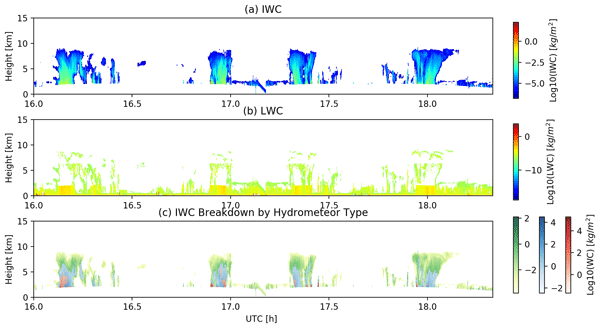
This is a closure and polarimetric study using a variety of airborne observations to disentangle hydrometeor microphysical properties and their vertical distribution. This work paves a concrete step in assuring timely delivery of high-quality science products for several future sub-mm radiometer missions as well as possibilities of new science products beyond the mission requirements.
Christoph Jacobi, Ales Kuchar, Manfred Ern, Toralf Renkwitz, Ralph Latteck, and Jorge L. Chau
Adv. Radio Sci., 24, 15–28, https://doi.org/10.5194/ars-24-15-2026, https://doi.org/10.5194/ars-24-15-2026, 2026
Short summary
Short summary
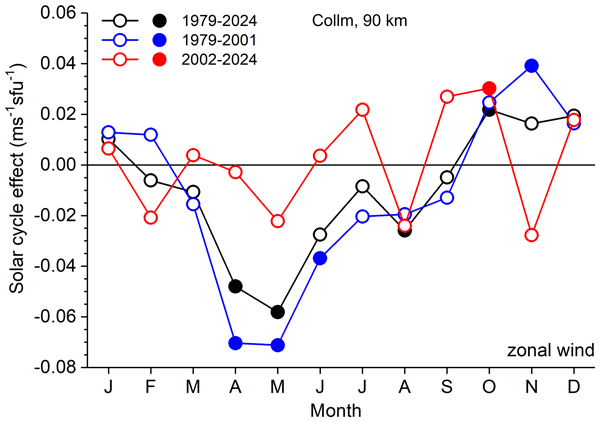
Analyses of more than four decades (1979–2024) of mean horizontal winds in the mesopause region at about 90 km altitude show long-term trends and an influence of the 11-year solar cycle. After the 1990s, both linear trends and the solar cycle effect change and strongly weaken, indicating a change in dynamics or solar forcing. Gravity wave proxies also show a solar cycle effect, which decreases after the 1990s.
Devin Huyghebaert, Juha Vierinen, Björn Gustavsson, Ralph Latteck, Toralf Renkwitz, Marius Zecha, Claudia C. Stephan, J. Federico Conte, Daniel Kastinen, Johan Kero, and Jorge L. Chau
Atmos. Meas. Tech., 19, 4277–4292, https://doi.org/10.5194/amt-19-4277-2026, https://doi.org/10.5194/amt-19-4277-2026, 2026
Short summary
Short summary
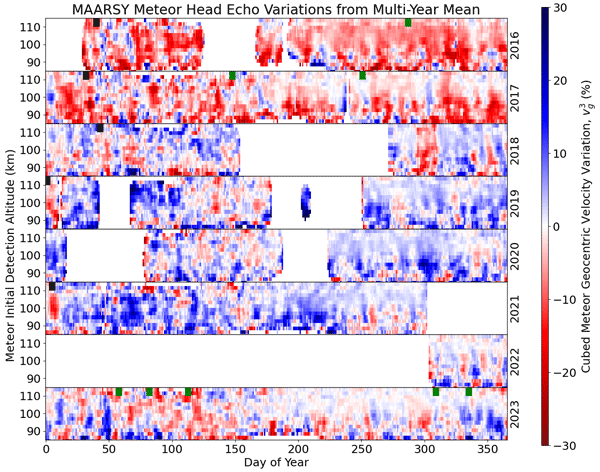
The phenomena of meteors occurs at altitudes of 60–120 km and can be used to measure the neutral atmosphere. We use a large high power radar system in Norway (Middle Atmosphere Alomar Radar System (MAARSY)) to measure the meteors and determine changes to the atmospheric density between the years of 2016–2023 at altitudes of 85–115 km. The same time period between years are compared, minimizing changes to the measurements due to factors other than the atmosphere.
Juha Vierinen, Dabrowka Knach, Jorge Luis Chau, Gerd Baumgarten, Devin Huyghebaert, Matthias Clahsen, Nico Pfeffer, Toralf Renkwitz, Robin Wing, Kenneth Obenberger, Björn Gustavsson, and Daniel Kastinen
EGUsphere, https://doi.org/10.5194/egusphere-2026-2857, https://doi.org/10.5194/egusphere-2026-2857, 2026
Short summary
Short summary
We observed the re-entry of a Falcon 9 rocket upper stage over Europe using a network of cameras and radars normally used to study meteors. The measurements showed how hot ionized gas formed around the debris during hypervelocity entry, producing strong radio echoes high in the atmosphere. As the number of satellites and rocket launches increases, these observations can help improve monitoring of space waste re-entering the atmosphere and its possible environmental effects.
Yuli Liu, Jie Gong, Ian S. Adams, Rachael A. Kroodsma, Ruiyao Chen, Dong L. Wu, Ralf Bennartz, and Scott A. Braun
EGUsphere, https://doi.org/10.5194/egusphere-2026-1348, https://doi.org/10.5194/egusphere-2026-1348, 2026
Short summary
Short summary
This paper presents an ice hydrometeor retrieval algorithm for the PolSIR and PMM satellite missions. The algorithm combines Bayesian Monte Carlo Integration with the Optimal Estimation Method, extending retrieval capability beyond the limitations of the a priori database. Experiments using simulations and airborne observations show that the algorithm effectively reduces discrepancies between observations and simulations and improves the accuracy of retrieved ice cloud microphysical properties.
Alex Timothy Chartier, Ryan Poffenbarger, Rafael Mesquita, Diego Janches, Jorge Chau, Toralf Renkwitz, Ralph Latteck, and William Bristow
EGUsphere, https://doi.org/10.5194/egusphere-2026-1634, https://doi.org/10.5194/egusphere-2026-1634, 2026
Short summary
Short summary
We created a new long-term record of upper atmosphere winds using data from a global network of radars spanning more than 30 years. Because these measurements do not directly show altitude, we developed a method to estimate where the signals come from and tested it against other observations and models. The results show good agreement, meaning these data can now be used with greater confidence to study atmospheric motion and its effects on communication and space systems.
J. Federico Conte, Jorge L. Chau, Toralf Renkwitz, Ralph Latteck, Masaki Tsutsumi, Christoph Jacobi, Njål Gulbrandsen, and Satonori Nozawa
Ann. Geophys., 43, 603–619, https://doi.org/10.5194/angeo-43-603-2025, https://doi.org/10.5194/angeo-43-603-2025, 2025
Short summary
Short summary
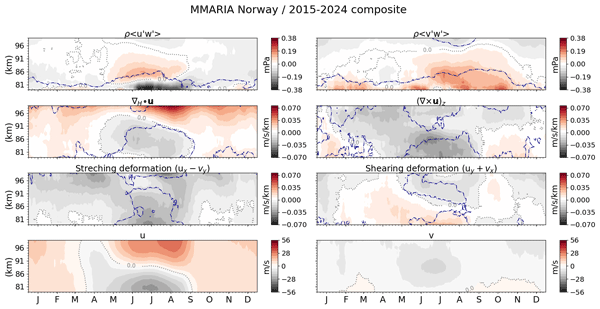
Analysis of 10 years of continuous measurements provided MMARIA/SIMONe Norway and MMARIA/SIMONe Germany reveals that the divergent and vortical motions in the mesosphere and lower thermosphere exchange the dominant role depending on the height and the time of the year. At summer mesopause altitudes over middle latitudes, the horizontal divergence and the relative vorticity contribute approximately the same, indicating an energetic balance between mesoscale divergent and vortical motions.
Jie Gong, Dong L. Wu, Michelle Badalov, Manisha Ganeshan, and Minghua Zheng
Atmos. Meas. Tech., 18, 4025–4043, https://doi.org/10.5194/amt-18-4025-2025, https://doi.org/10.5194/amt-18-4025-2025, 2025
Short summary
Short summary
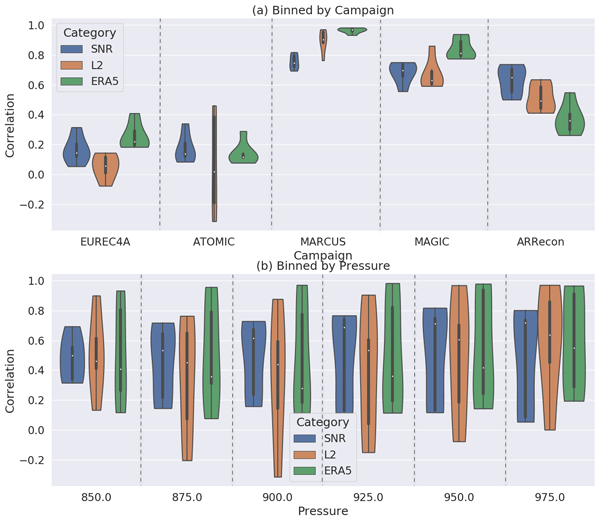
Marine boundary layer (MABL) water vapor is among the key factors to couple the ocean and atmosphere, but it is also among the hardest to retrieve from a satellite remote sensing perspective. Here we propose a novel way to retrieve MABL specific humidity profiles using the GNSS (Global Navigation Satellite System) Level-1 signal-to-noise ratio. Using a machine learning approach, we successfully obtained a retrieval product that outperforms the ERA-5 reanalysis and operational Level-2 retrievals globally, except in the deep tropics.
Markus Kunze, Christoph Zülicke, Tarique A. Siddiqui, Claudia C. Stephan, Yosuke Yamazaki, Claudia Stolle, Sebastian Borchert, and Hauke Schmidt
Geosci. Model Dev., 18, 3359–3385, https://doi.org/10.5194/gmd-18-3359-2025, https://doi.org/10.5194/gmd-18-3359-2025, 2025
Short summary
Short summary
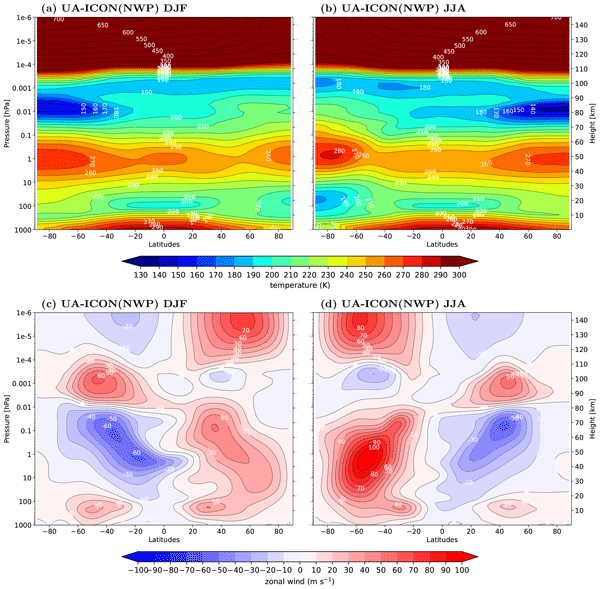
We present the Icosahedral Nonhydrostatic (ICON) general circulation model with an upper-atmospheric extension with the physics package for numerical weather prediction (UA-ICON(NWP)). We optimized the parameters for the gravity wave parameterizations and achieved realistic modeling of the thermal and dynamic states of the mesopause regions. UA-ICON(NWP) now shows a realistic frequency of major sudden stratospheric warmings and well-represented solar tides in temperature.
Christoph Jacobi, Khalil Karami, Ales Kuchar, Manfred Ern, Toralf Renkwitz, Ralph Latteck, and Jorge L. Chau
Adv. Radio Sci., 23, 21–31, https://doi.org/10.5194/ars-23-21-2025, https://doi.org/10.5194/ars-23-21-2025, 2025
Short summary
Short summary
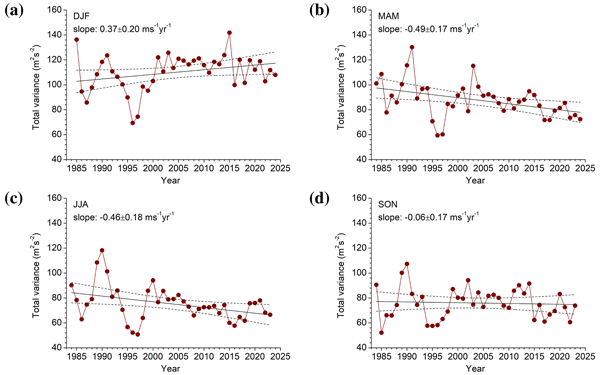
Half-hourly mean winds have been obtained using ground-based low-frequency and very high frequency radio observations of the mesopause region at Collm, Germany, since 1984. Long-term changes of wind variances, which are proxies for short-period atmospheric gravity waves, have been analysed. Gravity wave amplitudes increase with time in winter, but mainly decrease in summer. The trends are consistent with mean wind changes according to wave theory.
Manisha Ganeshan, Dong L. Wu, Joseph A. Santanello, Jie Gong, Chi Ao, Panagiotis Vergados, and Kevin J. Nelson
Atmos. Meas. Tech., 18, 1389–1403, https://doi.org/10.5194/amt-18-1389-2025, https://doi.org/10.5194/amt-18-1389-2025, 2025
Short summary
Short summary
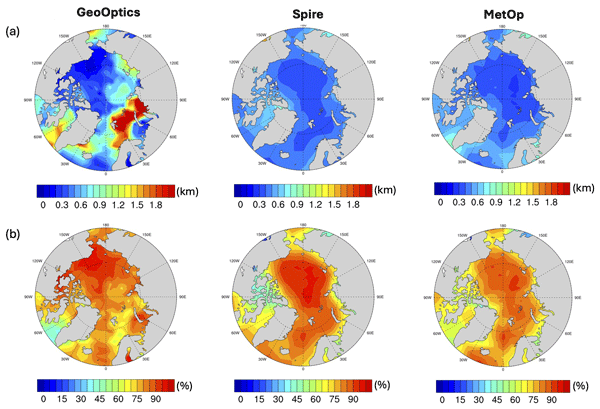
This study explores the potential of two newly launched commercial Global Navigation Satellite System (GNSS) radio occultation (RO) satellite missions for advancing Arctic lower-atmospheric studies. The products have a good sampling of the lower Arctic atmosphere and are useful to derive the planetary boundary layer (PBL) height during winter months. This research is a step towards closing the observation gap in polar regions due to the decomissioning of Constellation Observing System for Meteorology, Ionosphere, and Climate (COSMIC-1) GNSS RO mission and the lack of high-latitude coverage by its successor (COSMIC-2).
Dong L. Wu, Valery A. Yudin, Kyu-Myong Kim, Mohar Chattopadhyay, Lawrence Coy, Ruth S. Lieberman, C. C. Jude H. Salinas, Jae N. Lee, Jie Gong, and Guiping Liu
Atmos. Meas. Tech., 18, 843–863, https://doi.org/10.5194/amt-18-843-2025, https://doi.org/10.5194/amt-18-843-2025, 2025
Short summary
Short summary
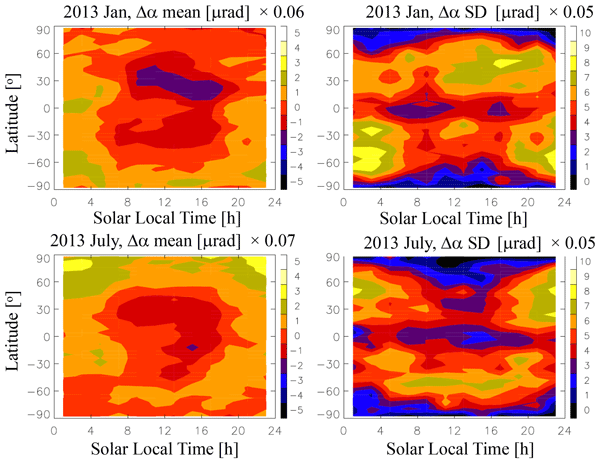
Global Navigation Satellite System radio occultation data help monitor climate and weather prediction but are affected by residual ionospheric errors (RIEs). A new excess-phase-gradient method detects and corrects RIEs, showing both positive and negative values, varying by latitude, time, and solar activity. Tests show that RIE impacts polar stratosphere temperatures in models, with differences up to 3–4 K. This highlights the need for RIE correction to improve the accuracy of data assimilation.
Jennifer Hartisch, Jorge L. Chau, Ralph Latteck, Toralf Renkwitz, and Marius Zecha
Ann. Geophys., 42, 29–43, https://doi.org/10.5194/angeo-42-29-2024, https://doi.org/10.5194/angeo-42-29-2024, 2024
Short summary
Short summary
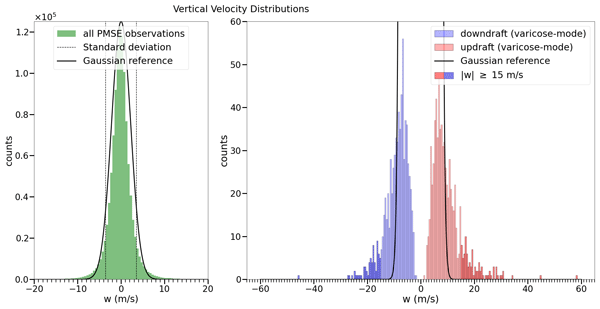
Scientists are studying the mesosphere and lower thermosphere using radar in northern Norway. They found peculiar events with strong upward and downward air movements, happening frequently (up to 2.5 % per month) from 2015 to 2021. Over 700 such events were noted, lasting around 20 min and expanding the studied layer. A total of 17 % of these events had extreme vertical speeds, showing their unique nature.
Juliana Jaen, Toralf Renkwitz, Huixin Liu, Christoph Jacobi, Robin Wing, Aleš Kuchař, Masaki Tsutsumi, Njål Gulbrandsen, and Jorge L. Chau
Atmos. Chem. Phys., 23, 14871–14887, https://doi.org/10.5194/acp-23-14871-2023, https://doi.org/10.5194/acp-23-14871-2023, 2023
Short summary
Short summary
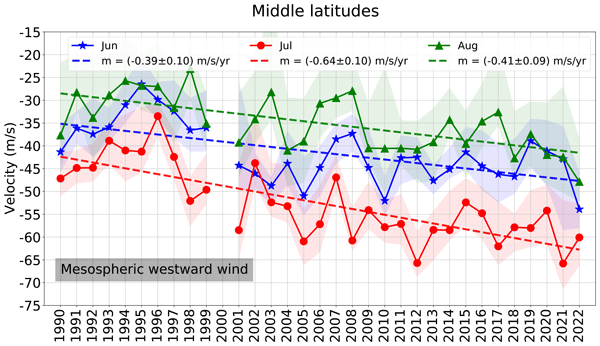
Investigation of winds is important to understand atmospheric dynamics. In the summer mesosphere and lower thermosphere, there are three main wind flows: the mesospheric westward, the mesopause southward (equatorward), and the lower-thermospheric eastward wind. Combining almost 2 decades of measurements from different radars, we study the trend, their interannual oscillations, and the effects of the geomagnetic activity over these wind maxima.
Yosuke Yamazaki
Geosci. Model Dev., 16, 4749–4766, https://doi.org/10.5194/gmd-16-4749-2023, https://doi.org/10.5194/gmd-16-4749-2023, 2023
Short summary
Short summary
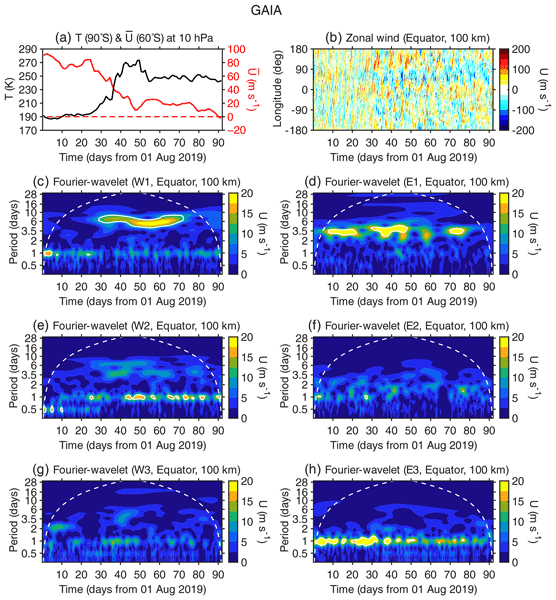
The Earth's atmosphere can support various types of global-scale waves. Some waves propagate eastward and others westward, and they can have different zonal wavenumbers. The Fourier–wavelet analysis is a useful technique for identifying different components of global-scale waves and their temporal variability. This paper introduces an easy-to-implement method to derive Fourier–wavelet spectra from 2-D space–time data. Application examples are presented using atmospheric models.
Cornelius Csar Jude H. Salinas, Dong L. Wu, Jae N. Lee, Loren C. Chang, Liying Qian, and Hanli Liu
Atmos. Chem. Phys., 23, 1705–1730, https://doi.org/10.5194/acp-23-1705-2023, https://doi.org/10.5194/acp-23-1705-2023, 2023
Short summary
Short summary
Upper mesospheric carbon monoxide's (CO) photochemical lifetime is longer than dynamical timescales. This work uses satellite observations and model simulations to establish that the migrating diurnal tide and its seasonal and interannual variabilities drive CO primarily through vertical advection. Vertical advection is a transport process that is currently difficult to observe. This work thus shows that we can use CO as a tracer for vertical advection across seasonal and interannual timescales.
Ákos Horváth, James L. Carr, Dong L. Wu, Julia Bruckert, Gholam Ali Hoshyaripour, and Stefan A. Buehler
Atmos. Chem. Phys., 22, 12311–12330, https://doi.org/10.5194/acp-22-12311-2022, https://doi.org/10.5194/acp-22-12311-2022, 2022
Short summary
Short summary
We estimate plume heights for the April 2021 La Soufrière daytime eruptions using GOES-17 near-limb side views and GOES-16–MODIS stereo views. These geometric heights are then compared with brightness-temperature-based radiometric height estimates to characterize the biases of the latter. We also show that the side view method can be applied to infrared imagery and thus nighttime eruptions, albeit with larger uncertainty.
Sumanta Sarkhel, Gunter Stober, Jorge L. Chau, Steven M. Smith, Christoph Jacobi, Subarna Mondal, Martin G. Mlynczak, and James M. Russell III
Ann. Geophys., 40, 179–190, https://doi.org/10.5194/angeo-40-179-2022, https://doi.org/10.5194/angeo-40-179-2022, 2022
Short summary
Short summary
A rare gravity wave event was observed on the night of 25 April 2017 over northern Germany. An all-sky airglow imager recorded an upward-propagating wave at different altitudes in mesosphere with a prominent wave front above 91 km and faintly observed below. Based on wind and satellite-borne temperature profiles close to the event location, we have found the presence of a leaky thermal duct layer in 85–91 km. The appearance of this duct layer caused the wave amplitudes to diminish below 91 km.
Juliana Jaen, Toralf Renkwitz, Jorge L. Chau, Maosheng He, Peter Hoffmann, Yosuke Yamazaki, Christoph Jacobi, Masaki Tsutsumi, Vivien Matthias, and Chris Hall
Ann. Geophys., 40, 23–35, https://doi.org/10.5194/angeo-40-23-2022, https://doi.org/10.5194/angeo-40-23-2022, 2022
Short summary
Short summary
To study long-term trends in the mesosphere and lower thermosphere (70–100 km), we established two summer length definitions and analyzed the variability over the years (2004–2020). After the analysis, we found significant trends in the summer beginning of one definition. Furthermore, we were able to extend one of the time series up to 31 years and obtained evidence of non-uniform trends and periodicities similar to those known for the quasi-biennial oscillation and El Niño–Southern Oscillation.
Jie Gong, Dong L. Wu, and Patrick Eriksson
Earth Syst. Sci. Data, 13, 5369–5387, https://doi.org/10.5194/essd-13-5369-2021, https://doi.org/10.5194/essd-13-5369-2021, 2021
Short summary
Short summary
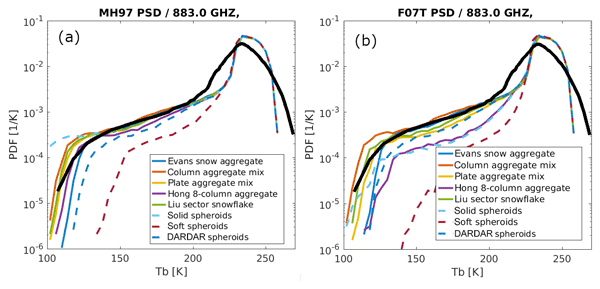
Launched from the International Space Station, the IceCube radiometer orbited the Earth for 15 months and collected the first spaceborne radiance measurements at 874–883 GHz. This channel is uniquely important to fill in the sensitivity gap between operational visible–infrared and microwave remote sensing for atmospheric cloud ice and snow. This paper delivers the IceCube Level 1 radiance data processing algorithm and provides a data quality evaluation and discussion on its scientific merit.
Ryan Volz, Jorge L. Chau, Philip J. Erickson, Juha P. Vierinen, J. Miguel Urco, and Matthias Clahsen
Atmos. Meas. Tech., 14, 7199–7219, https://doi.org/10.5194/amt-14-7199-2021, https://doi.org/10.5194/amt-14-7199-2021, 2021
Short summary
Short summary
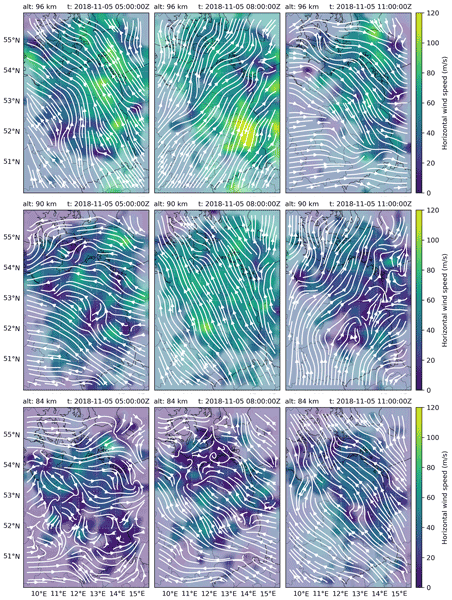
We introduce a new way of estimating winds in the upper atmosphere (about 80 to 100 km in altitude) from the observed Doppler shift of meteor trails using a statistical method called Gaussian process regression. Wind estimates and, critically, the uncertainty of those estimates can be evaluated smoothly (i.e., not gridded) in space and time. The effective resolution is set by provided parameters, which are limited in practice by the number density of the observed meteors.
Cited articles
Arras, C., Wickert, J., Beyerle, G., Heise, S., Schmidt, T., and Jacobi, C.: A global climatology of ionospheric irregularities derived from GPS radio occultation, Geophys. Res. Lett., 35, https://doi.org/10.1029/2008GL034158, 2008. a
Arras, C., Resende, L. C. A., Kepkar, A., Senevirathna, G., and Wickert, J.: Sporadic E layer characteristics at equatorial latitudes as observed by GNSS radio occultation measurements, Earth Planets Space, 74, 163, https://doi.org/10.1186/s40623-022-01718-y, 2022. a, b
Bhattacharyya, A.: Equatorial plasma bubbles: A review, Atmosphere, 13, 1637, https://doi.org/10.3390/atmos13101637, 2022. a
Bilitza, D.: International Reference Ionosphere 1990, URSI/COSPAR Task Group on the International Reference Ionosphere 90-22, National Space Science Data Center, Lanham, Maryland, USA, 1990. a
Bilitza, D.: The E- and D-region in IRI, Adv. Space Res., 21, 871–874, https://doi.org/10.1016/s0273-1177(97)00645-5, 1998. a
Bilitza, D. and Eyfrig, R.: A global model for the height of the F2-peak using M3000 values from the CCIR numerical map, ITU Telecommunication Journal, 46, 1979. a
Bilitza, D., Pezzopane, M., Truhlik, V., Altadill, D., Reinisch, B. W., and Pignalberi, A.: The International Reference Ionosphere Model: A Review and Description of an Ionospheric Benchmark, Rev. Geophys., 60, https://doi.org/10.1029/2022rg000792, 2022. a, b
Brekke, A., Doupnik, J. R., and Banks, P. M.: Incoherent scatter measurements of E region conductivities and currents in the auroral zone, J. Geophys. Res., 79, 3773–3790, 1974. a
CDAAC: University Cooperation for Atmospheric Research (UCAR) COSMIC Data Analysis and Archive Center, https://cdaac-www.cosmic.ucar.edu/, last access: 31 October 2025. a
Chapman, S.: The absorption and dissociative or ionizing effect of monochromatic radiation in an atmosphere on a rotating earth, Proceedings of the Physical Society, 43, 26–45, https://doi.org/10.1088/0959-5309/43/1/305, 1931. a, b
Chasovitin, Y. K., Shushkova, V., Sykilinda, T., Denisenko, P., Sotsky, V., and Shejdakov, N.: An empirical model of electron density for low and middle latitudes below 200 km, Adv. Space Res., 5, 21–24, 1985. a
Chen, S.-P., Lin, C., Rajesh, P., Cheng, P.-H., Tsai, H.-F., Eastes, R., Choi, J.-M., Liu, J., and Chen, A. B.-C.: Machine learning detection of radio occultation electron density profiles perturbed by the equatorial plasma bubbles, IEEE T. Geosci. Remote, 63, https://doi.org/10.1109/TGRS.2025.3543427, 2025. a
DIDBASE: Digital Ionogram Database, Global Ionosphere Radio Observatory (GIRO), University of Massachusetts Lowell, https://giro.uml.edu/didbase/, last access: 1 March 2025. a
Fabrizio, G. A.: High frequency over-the-horizon radar: fundamental principles, signal processing, and practical applications, McGraw-Hill Education, ISBN 978-0-07-162127-4, 2013. a
Forsythe, V. and Burrell, A.: PyIRI v0.0.2, International Reference Ionosphere (IRI) model in Python, Zenodo [code], https://doi.org/10.5281/zenodo.8235172, 2023. a
Forsythe, V. V., Bilitza, D., Burrell, A. G., Dymond, K. F., Fritz, B. A., and McDonald, S. E.: PyIRI: Whole-globe approach to the International Reference Ionosphere modeling implemented in Python, Space Weather, 22, e2023SW003739, https://doi.org/10.1029/2023SW003739, 2024. a, b, c, d
Galkin, I., Reinisch, B., and Khmyrov, G.: Accuracy of Virtual Height Measurements with Digisondes, Ionosonde Network Advisory Group (INAG) Technical Memorandum, University of Massechusetts Lowell, Lowell, Massechusetts, USA, 2009. a
Galkin, I., Reinisch, B., Huang, X., and Khmyrov, G.: Confidence score of ARTIST-5 ionogram autoscaling, Ionosonde Network Advisory Group (INAG) Technical Memorandum, University of Massechusetts Lowell, Lowell, Massechusetts, USA, 2013. a
Galkin, I. A. and Reinisch, B. W.: The new ARTIST 5 for all Digisondes, Ionosonde Network Advisory Group Bulletin, 69, 1–8, 2008. a
Hajj, G. A. and Romans, L. J.: Ionospheric electron density profiles obtained with the Global Positioning System: Results from the GPS/MET experiment, Radio Sci., 33, 175–190, https://doi.org/10.1029/97RS03183, 1998. a
Haldoupis, C.: A tutorial review on sporadic E layers, in: Aeronomy of the Earth's Atmosphere and Ionosphere, edited by: Abdu, M. and Pancheva, D., IAGA Special Sopron Book Series, Springer, Dordrecht, 381–394, https://doi.org/10.1007/978-94-007-0326-1_29 2011. a
Hodos, T. J., Nava, O. A., Dao, E. V., and Emmons, D. J.: Global sporadic-E occurrence rate climatology using GPS radio occultation and ionosonde data, J. Geophys. Res.-Space Phys., 127, e2022JA030795, https://doi.org/10.1029/2022JA030795, 2022. a
Huang, X. and Reinisch, B. W.: Real-time HF ray tracing through a tilted ionosphere, Radio Sci., 41, 1–8, 2006. a
Jones, R. and Stephenson, J.: A versatile three-dimensional ray tracing computer program for radio waves in the ionosphere OT Rep. 75-76U, S. Dep. of Commer., Office of Telecommun, 1975. a
Knight, H., Galkin, I., Reinisch, B., and Zhang, Y.: Auroral ionospheric E region parameters obtained from satellite-based far ultraviolet and ground-based ionosonde observations: Data, methods, and comparisons, J. Geophys. Res.-Space Phys., 123, 6065–6089, 2018. a
Kouris, S. and Muggleton, L.: Diurnal variation in the E-layer ionization, J. Atmos. Terr. Phys., 35, 133–139, 1973a. a
Kouris, S. S.: The dependence of ionospheric characteristics on the state of the solar-cycle, Annals of Geophysics, 41, 703–713, 1998. a
Luo, J., Liu, H., and Xu, X.: Sporadic E morphology based on COSMIC radio occultation data and its relationship with wind shear theory, Earth Planets Space, 73, 212, https://doi.org/10.1186/s40623-021-01550-w, 2021. a
Matsushita, S.: Interrelations of sporadic E and ionospheric currents, in: Ionospheric Sporadic E, Elsevier, 344–375, ISBN 9780080097442, 1962. a
McNamara, L. F.: The ionosphere: communications, surveillance, and direction finding, Krieger publishing company, ISBN 0894640402, 1991. a
Mikhailov, A. V., de la Morena, B. A., Miro, G., and Marin, D.: A comparison of foE and hmE model calculations with El Arenosillo Digisonde observations. Seasonal variations, Annals of Geophysics, 42, 691–698, 1999. a
Moro, J., Xu, J., Denardini, C., Resende, L., Da Silva, L., Chen, S., Carrasco, A., Liu, Z., Wang, C., and Schuch, N.: Different sporadic-E (Es) layer types development during the August 2018 geomagnetic storm: Evidence of auroral type (Esa) over the SAMA region, J. Geophys. Res.-Space Phys., 127, e2021JA029701, https://doi.org/10.1029/2021JA029701, 2022. a
Mostafa, M. G., Haralambous, H., and Oikonomou, C.: Statistical ionospheric E layer properties measured with the Cyprus Digisonde and comparisons with IRI predictions, Adv. Space Res., 61, 337–347, 2018. a
Muggleton, L.: Effect of Sun-Earth distance on E-region ionization, J. Atmos. Terr. Phys., 33, 1299–1305, 1971a. a
Muggleton, L.: Solar cycle control of NmE, J. Atmos. Terr. Phys., 33, 1307–1310, 1971b. a
Muggleton, L.: A describing function of the diurnal variation of Nm(E) for solar zenith angles from 0 to 90°, J. Atmos. Terr. Phys., 34, 1379–1384, 1972. a
Nava, B., Coïsson, P., and Radicella, S.: A new version of the NeQuick ionosphere electron density model, J. Atmos. Solar-Terr. Phy., 70, 1856–1862, https://doi.org/10.1016/j.jastp.2008.01.015, 2008. a, b
Papitashvili, N. E. and King, J. H.: OMNI Hourly Data, NASA Space Physics Data Facility [data set], https://doi.org/10.48322/1shr-ht18 (last access: 1 April 2025), 2020. a
Pavlov, A. and Pavlova, N.: Comparison of NmE measured by the Boulder ionosonde with model predictions near the spring equinox, J. Atmos. Solar-Terr. Phy., 102, 39–47, 2013. a
Paznukhov, V., Altadill, D., Juan, J. M., and Blanch, E.: Ionospheric tilt measurements: application to traveling ionospheric disturbances climatology study, Radio Sci., 55, e2019RS007012, https://doi.org/10.1029/2019RS007012, 2020. a
Piggott, W. R. and Rawer, K.: URSI handbook of ionogram interpretation and reduction, Elsevier Publishing Company, Amsterdam, the Netherlands, edited by: Herbays, E., 1961. a
Reinisch, B. W. and Xueqin, H.: Automatic calculation of electron density profiles from digital ionograms: 1. Automatic O and X trace identification for topside ionograms, Radio Sci., 17, 421–434, 1982. a
Rishbeth, H. and Garriott, O. K.: Introduction to ionospheric physics, IEEE Transactions on Image Processing, edited by: Van Mieghem, J. and Hales, A. L., 1, 69-12280, 1969. a
Roble, R., Ridley, E., and Dickinson, R.: On the global mean structure of the thermosphere, J. Geophys. Res.-Space Phys., 92, 8745–8758, 1987. a
Salinas, C. C. J.: EPROBED_v01.00, Zenodo [code], https://doi.org/10.5281/zenodo.13328319, 2024. a, b
Salinas, C. C. J. H., Wu, D. L., Swarnalingam, N., Emmons, D., and Qian, L.: Development of the ionospheric E-region prompt radio occultation based electron density (E-PROBED) model, Space Weather, 22, e2024SW004037, https://doi.org/10.1029/2024SW004037, 2024. a, b, c, d
SAO-X: SAOExplorer, University of Massachusetts Lowell, Center for Atmospheric Research, https://ulcar.uml.edu/SAO-X/, last access: 1 March 2025. a
Schreiner, W. S., Sokolovskiy, S. V., Rocken, C., and Hunt, D. C.: Analysis and validation of GPS/MET radio occultation data in the ionosphere, Radio Sci., 34, 949–966, https://doi.org/10.1029/1999RS900034, 1999a. a
Schreiner, W. S., Sokolovskiy, S. V., Rocken, C., and Hunt, D. C.: Analysis and validation of GPS/MET radio occultation data in the ionosphere, Radio Sci., 34, 949–966, 1999b. a
Schunk, R. and Nagy, A.: Ionospheres: Physics, Plasma Physics, and Chemistry, Cambridge University Press, edited by: Houghton, J. T., Rycroft, M. J., and Dessler, A. J., ISBN 978-0-521-87706-0, 2009. a
Solomon, S. C.: Auroral electron transport using the Monte Carlo Method, Geophys. Res. Lett., 20, 185–188, https://doi.org/10.1029/93gl00081, 1993. a
Swarnalingam, N., Wu, D. L., Emmons, D. J., and Gardiner-Garden, R.: Optimal estimation inversion of ionospheric electron density from GNSS-POD limb measurements: Part II-validation and comparison using NmF2 and hmF2, Remote Sens., 15, 4048, https://doi.org/10.3390/rs15164048, 2023. a
Themens, D. R. and Jayachandran, P.: Solar activity variability in the IRI at high latitudes: Comparisons with GPS total electron content, J. Geophys. Res.-Space Phys., 121, 3793–3807, 2016. a
Themens, D. R., Reid, B., and Elvidge, S.: ARTIST ionogram autoscaling confidence scores: Best practices, URSI Radio Sci. Lett, 4, 1–5, 2022. a
Titheridge, J. E.: Model results for the ionospheric E region: solar and seasonal changes, Ann. Geophys., 15, 63–78, https://doi.org/10.1007/s00585-997-0063-9, 1997. a
Titheridge, J. E.: Ionogram analysis with the generalised program POLAN, Report UAG 93, World Data Center A, Washington DC, USA, 1985b. a
Virtanen, P., Gommers, R., Oliphant, T. E., Haberland, M., Reddy, T., Cournapeau, D., Burovski, E., Peterson, P., Weckesser, W., Bright, J., and Van Der Walt, S. J.: SciPy 1.0: fundamental algorithms for scientific computing in Python, Nature Methods, 17, 261–272, 2020. a
Wongcharoen, P., Kenpankho, P., Supnithi, P., Ishii, M., and Tsugawa, T.: Comparison of E layer critical frequency over the Thai station Chumphon with IRI, Adv. Space Res., 55, 2131–2138, 2015. a
Wu, D. L.: New global electron density observations from GPS-RO in the D- and E-Region ionosphere, J. Atmos. Solar-Terr. Phy., 171, 36–59, https://doi.org/10.1016/j.jastp.2017.07.013, 2018. a, b
Wu, D. L.: Ionospheric S4 scintillations from GNSS radio occultation (RO) at slant path, Remote Sens., 12, 2373, https://doi.org/10.3390/rs12152373, 2020. a
Wu, D. L., Emmons, D. J., and Swarnalingam, N.: Global GNSS-RO electron density in the lower ionosphere, Remote Sens., 14, https://doi.org/10.3390/rs14071577, 2022. a, b
Wu, D. L., Swarnalingam, N., Salinas, C. C. J. H., Emmons, D. J., Summers, T. C., and Gardiner-Garden, R.: Optimal Estimation Inversion of Ionospheric Electron Density from GNSS-POD Limb Measurements: Part I-Algorithm and Morphology, Remote Sens., 15, 3245, https://doi.org/10.3390/rs15133245, 2023. a, b
Yamazaki, Y. and Maute, A.: Sq and EEJ – a review on the daily variation of the geomagnetic field caused by ionospheric dynamo currents, Space Sci. Rev., 206, 299–405, 2017. a
Yu, B., Xue, X., Yue, X., Yang, C., Yu, C., Dou, X., Ning, B., and Hu, L.: The global climatology of the intensity of the ionospheric sporadic E layer, Atmos. Chem. Phys., 19, 4139–4151, https://doi.org/10.5194/acp-19-4139-2019, 2019. a
Yu, B., Xue, X., Scott, C. J., Yue, X., and Dou, X.: An empirical model of the ionospheric sporadic E layer based on GNSS radio occultation data, Space Weather, 20, e2022SW003113, https://doi.org/10.1029/2022SW003113, 2022. a
Yue, X., Wan, W., Liu, L., and Ning, B.: An empirical model of ionospheric foE over Wuhan, Earth Planets Space, 58, 323–330, 2006. a
Yue, X., Schreiner, W. S., Kuo, Y.-H., Wu, Q., Deng, Y., and Wang, W.: GNSS radio occultation (RO) derived electron density quality in high latitude and polar region: NCAR-TIEGCM simulation and real data evaluation, J. Atmos. Solar-Terr. Phy., 98, 39–49, 2013. a
Yue, X., Schreiner, W. S., Pedatella, N. M., and Kuo, Y.-H.: Characterizing GPS radio occultation loss of lock due to ionospheric weather, Space Weather, 14, 285–299, 2016. a
Short summary
The E-region of the Earth’s ionosphere plays an important role in atmospheric energy balance and High Frequency radio propagation. In this paper, we compare predictions from two recently developed ionospheric models to observations by ionospheric sounders (ionosondes). Overall, the models show reasonable agreement with the observations. However, there are several areas for improvement in the models as well as questions about the accuracy of the automatically processed ionosonde dataset.
The E-region of the Earth’s ionosphere plays an important role in atmospheric energy balance and...


