
Articles | Volume 44, issue 2
https://doi.org/10.5194/angeo-44-1443-2026
© Author(s) 2026. This work is distributed under
the Creative Commons Attribution 4.0 License.
https://doi.org/10.5194/angeo-44-1443-2026
© Author(s) 2026. This work is distributed under
the Creative Commons Attribution 4.0 License.
Regular paper
| 
23 Nov 2026
Regular paper |
| 23 Nov 2026
Thermospheric shock waves in the Barium Release, Optical and Radio rocket experiment

Swedish Institute of Space Physics, Uppsala, Sweden
Tima Sergienko
Swedish Institute of Space Physics, Kiruna, Sweden
Yoshihiro Yokoyama
Department of Physics and Technology, UiT The Arctic University of Norway, Tromsø, Norway
Tomoe Taki
Swedish Institute of Space Physics, Kiruna, Sweden
Urban Brändström
Swedish Institute of Space Physics, Kiruna, Sweden
Related authors
Thomas B. Leyser
Ann. Geophys., 43, 319–329, https://doi.org/10.5194/angeo-43-319-2025, https://doi.org/10.5194/angeo-43-319-2025, 2025
Short summary
Short summary
Electromagnetic emissions stimulated by powerful radio waves in the ionosphere exhibit an exponential power spectrum. Such a spectrum is a characteristic of deterministic chaos. A relevant model of parametrically excited localized lower-hybrid oscillations is derived. Numerical simulations show that, for parameter values typical of the ionospheric experiments, the temporal evolution may exhibit deterministic chaos, with an exponential spectrum that is consistent with the experimental results.
Thomas B. Leyser, Tima Sergienko, Urban Brändström, Björn Gustavsson, and Michael T. Rietveld
Ann. Geophys., 41, 589–600, https://doi.org/10.5194/angeo-41-589-2023, https://doi.org/10.5194/angeo-41-589-2023, 2023
Short summary
Short summary
Powerful radio waves transmitted into the ionosphere from the ground were used to study electron energization in the pumped ionospheric plasma turbulence, by detecting optical emissions from atomic oxygen. Our results obtained with the EISCAT (European Incoherent Scatter Scientific Association) facilities in northern Norway and optical detection with the ALIS (Auroral Large Imaging System) in northern Sweden suggest that long-wavelength upper hybrid waves are important in accelerating electrons.
Masatoshi Yamauchi, Yoshihiro Yokoyama, Tsubasa Kotani, and Jürgen Matzka
Ann. Geophys., 44, 1381–1402, https://doi.org/10.5194/angeo-44-1381-2026, https://doi.org/10.5194/angeo-44-1381-2026, 2026
Short summary
Short summary
The interplanetary shock such as the coronal mass ejections (CME) generally propagates faster than the solar wind, and predicting the propagation speed and the arrival time of hazardous CMEs are important for the space weather prediction. Using >20 year solar wind data from two upstream monitoring spacecraft and geomagnetic signature of the shock arrival, the propagation speed is found, in average, about 7 % faster than the solar wind speed.
Gaël Cessateur, Christian Buil, Guillaume Bertrand, Matthieu Le Lain, Valérie Desnoux, Olivier Garde, Hervé Lamy, Mathieu Barthelemy, Magnar Gullikstad Johnsen, David Bolsée, Urban Brändström, Antoine Calegaro, Fabien Darrouzet, Rowan Dayton-Oxland, Johan De Keyser, Maxime Grandin, Kirsti Kauristie, Romain Maggiolo, Sota Nanjo, and Noora Partamies
EGUsphere, https://doi.org/10.5194/egusphere-2026-5461, https://doi.org/10.5194/egusphere-2026-5461, 2026
This preprint is open for discussion and under review for Geoscientific Instrumentation, Methods and Data Systems (GI).
Short summary
Short summary
We developed a compact, portable instrument that records the colours of auroras across a broad range of visible and near-infrared light. Field tests in northern Norway showed that it can capture several important auroral emissions at the same time and can be operated with simple portable equipment. This makes it suitable for coordinated observations from multiple sites, helping researchers study how auroras vary in space and time.
Sota Nanjo, Tomoe Taki, Tima Sergienko, and Urban Brändström
EGUsphere, https://doi.org/10.5194/egusphere-2026-5693, https://doi.org/10.5194/egusphere-2026-5693, 2026
This preprint is open for discussion and under review for Annales Geophysicae (ANGEO).
Short summary
Short summary
Auroral colors are used to estimate the energy of particles entering Earth's atmosphere, but the processes producing those colors are not always well known. Using five cameras in northern Sweden and two computer models, we measured where two auroral emissions were produced. We found that a process involving oxygen molecules shifts one emission to lower altitudes and improves agreement between models and observations by about 70%. This can make estimates of auroral particle energy more reliable.
Sota Nanjo, Tomoe Taki, Keisuke Hosokawa, Urban Brändström, Yoshizumi Miyoshi, and Magnar G. Johnsen
Ann. Geophys., 44, 1023–1042, https://doi.org/10.5194/angeo-44-1023-2026, https://doi.org/10.5194/angeo-44-1023-2026, 2026
Short summary
Short summary
Pulsating aurora often contains rapid brightness changes, but their overall behavior has not been well measured. We analyzed high-speed camera images from northern Sweden and Norway with machine learning to identify when these rapid changes occur. We found that they become more common toward the morning and at the lower-latitude sector. This suggests that small-scale auroral fluctuation can help reveal how particles from near-Earth space enter the upper atmosphere.
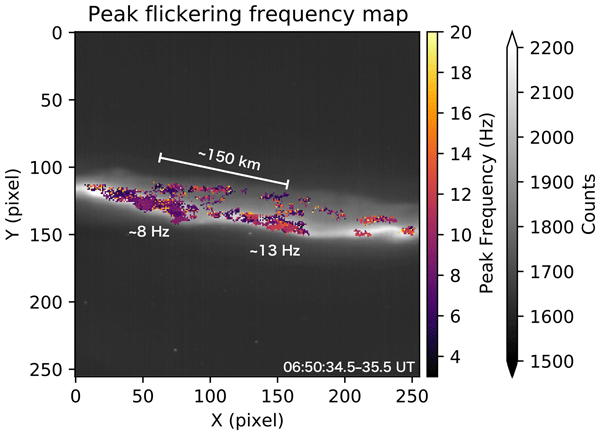
Sota Nanjo, Satoshi Kurita, Tima Sergienko, Yoshizumi Miyoshi, and Ryuho Kataoka
Ann. Geophys., 44, 959–975, https://doi.org/10.5194/angeo-44-959-2026, https://doi.org/10.5194/angeo-44-959-2026, 2026
Short summary
Short summary
Using a high-speed camera with a wide view of the sky, we observed rapidly blinking aurora across several hundred kilometers. We found that different parts of the same auroral arc can blink at different rhythms at the same time, and that these rhythms move together with the arc. Although larger bright patches sometimes blink more slowly, this pattern does not hold overall. These results improve our understanding of how invisible space processes shape the visible northern lights.
Tomoe Taki, Tima Sergienko, Urban Brändström, Yasunobu Ogawa, Sota Nanjo, and Juan Araújo
EGUsphere, https://doi.org/10.5194/egusphere-2026-1133, https://doi.org/10.5194/egusphere-2026-1133, 2026
Short summary
Short summary
This study explored electric forces near a auroral arc during a rocket experiment in northern Sweden. A rocket released glowing clouds high above Earth, and we tracked their motion as an aurora passed through them. By reconstructing their motion in three dimensions, we estimated the magnitude and direction of the surrounding electric field. We found that the field changed direction and became weaker near the arc, revealing the structure of electric currents correspond to auroral activity.

Sota Nanjo, Katie Herlingshaw, Tima Sergienko, Gaël Cessateur, Noora Partamies, Magnar G. Johnsen, Keisuke Hosokawa, Hervé Lamy, Yasunobu Ogawa, Antti Kero, Shin-ichiro Oyama, and Masatoshi Yamauchi
Ann. Geophys., 44, 63–84, https://doi.org/10.5194/angeo-44-63-2026, https://doi.org/10.5194/angeo-44-63-2026, 2026
Short summary
Short summary
During the New Year’s Day storm of 2025, we observed rare auroral features: thin, short-lived green stripes and a “picket fence” near the poleward edge of the auroral oval. Using ground cameras and satellites, we found that the stripes sometimes appeared at widely separated longitudes at the same time and often tracked the motion of nearby red auroras. Some stripes were aligned with the magnetic field, while others were not, implying that multiple local processes contribute to their generation.
Thomas B. Leyser
Ann. Geophys., 43, 319–329, https://doi.org/10.5194/angeo-43-319-2025, https://doi.org/10.5194/angeo-43-319-2025, 2025
Short summary
Short summary
Electromagnetic emissions stimulated by powerful radio waves in the ionosphere exhibit an exponential power spectrum. Such a spectrum is a characteristic of deterministic chaos. A relevant model of parametrically excited localized lower-hybrid oscillations is derived. Numerical simulations show that, for parameter values typical of the ionospheric experiments, the temporal evolution may exhibit deterministic chaos, with an exponential spectrum that is consistent with the experimental results.
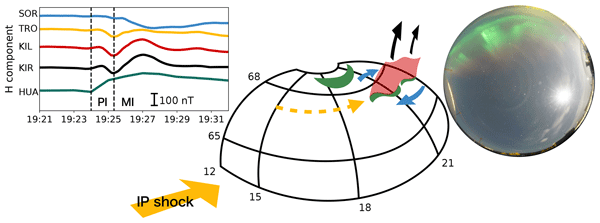
Sota Nanjo, Masatoshi Yamauchi, Magnar Gullikstad Johnsen, Yoshihiro Yokoyama, Urban Brändström, Yasunobu Ogawa, Anna Naemi Willer, and Keisuke Hosokawa
Ann. Geophys., 43, 303–317, https://doi.org/10.5194/angeo-43-303-2025, https://doi.org/10.5194/angeo-43-303-2025, 2025
Short summary
Short summary
Our research explores the shock aurora, which is typically observed on the dayside due to the rapid compression of the Earth's magnetic field. We observed this rare aurora on the nightside, a region where such events are difficult to detect. Using ground-based cameras, we identified new features, including leaping and vortex-like patterns. These findings offer a fresh insight into the interactions between the solar wind and the magnetosphere, enhancing our understanding of space weather and its effects.
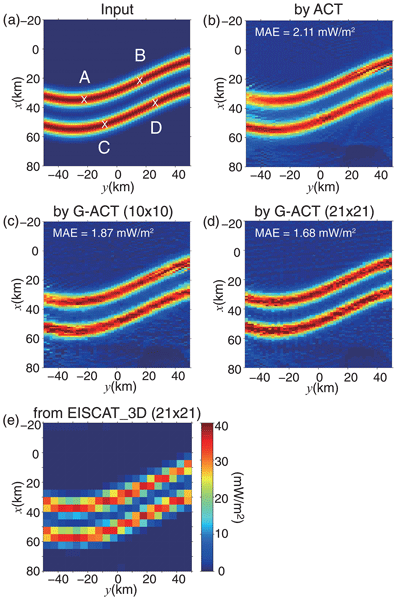
Yoshimasa Tanaka, Yasunobu Ogawa, Akira Kadokura, Takehiko Aso, Björn Gustavsson, Urban Brändström, Tima Sergienko, Genta Ueno, and Satoko Saita
Ann. Geophys., 42, 179–190, https://doi.org/10.5194/angeo-42-179-2024, https://doi.org/10.5194/angeo-42-179-2024, 2024
Short summary
Short summary
We present via simulation how useful monochromatic images taken by a multi-point imager network are for auroral research in the EISCAT_3D project. We apply the generalized-aurora computed tomography (G-ACT) to modeled multiple auroral images and ionospheric electron density data. It is demonstrated that G-ACT provides better reconstruction results than the normal ACT and can interpolate ionospheric electron density at a much higher spatial resolution than observed by the EISCAT_3D radar.
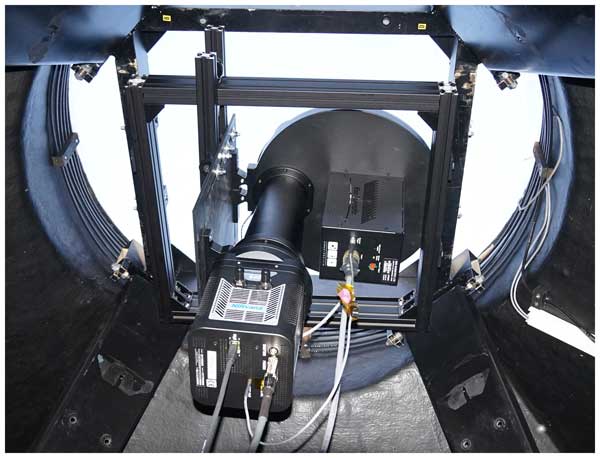
Peter Dalin, Urban Brändström, Johan Kero, Peter Voelger, Takanori Nishiyama, Trond Trondsen, Devin Wyatt, Craig Unick, Vladimir Perminov, Nikolay Pertsev, and Jonas Hedin
Atmos. Meas. Tech., 17, 1561–1576, https://doi.org/10.5194/amt-17-1561-2024, https://doi.org/10.5194/amt-17-1561-2024, 2024
Short summary
Short summary
A novel infrared imaging instrument (OH imager) was put into operation in November 2022 at the Swedish Institute of Space Physics in Kiruna (Sweden). The OH imager is dedicated to the study of nightglow emissions coming from the hydroxyl (OH) and molecular oxygen (O2) layers in the mesopause (80–100 km). Based on a brightness ratio of two OH emission lines, the neutral temperature is estimated at around 87 km. The average daily winter temperature for the period January–April 2023 is 203±10 K.
Thomas B. Leyser, Tima Sergienko, Urban Brändström, Björn Gustavsson, and Michael T. Rietveld
Ann. Geophys., 41, 589–600, https://doi.org/10.5194/angeo-41-589-2023, https://doi.org/10.5194/angeo-41-589-2023, 2023
Short summary
Short summary
Powerful radio waves transmitted into the ionosphere from the ground were used to study electron energization in the pumped ionospheric plasma turbulence, by detecting optical emissions from atomic oxygen. Our results obtained with the EISCAT (European Incoherent Scatter Scientific Association) facilities in northern Norway and optical detection with the ALIS (Auroral Large Imaging System) in northern Sweden suggest that long-wavelength upper hybrid waves are important in accelerating electrons.
Masatoshi Yamauchi and Urban Brändström
Geosci. Instrum. Method. Data Syst., 12, 71–90, https://doi.org/10.5194/gi-12-71-2023, https://doi.org/10.5194/gi-12-71-2023, 2023
Short summary
Short summary
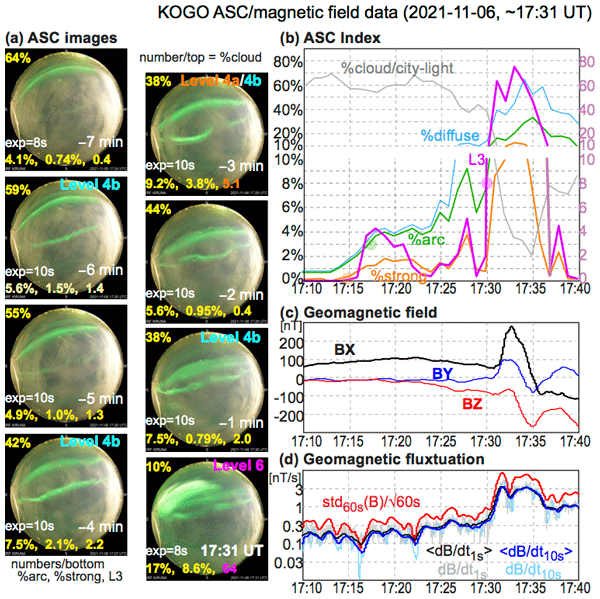
Potential users of all-sky aurora images even include power companies, tourists, and aurora enthusiasts. However, these potential users are normally not familiar with interpreting these images. To make them comprehensive for more users, we developed an automatic evaluation system of auroral activity level. The method involves two steps: first making a simple set of numbers that describes the auroral activity and then further simplifying them into several levels (Level 6 is an auroral explosion).
Mizuki Fukizawa, Takeshi Sakanoi, Yoshimasa Tanaka, Yasunobu Ogawa, Keisuke Hosokawa, Björn Gustavsson, Kirsti Kauristie, Alexander Kozlovsky, Tero Raita, Urban Brändström, and Tima Sergienko
Ann. Geophys., 40, 475–484, https://doi.org/10.5194/angeo-40-475-2022, https://doi.org/10.5194/angeo-40-475-2022, 2022
Short summary
Short summary
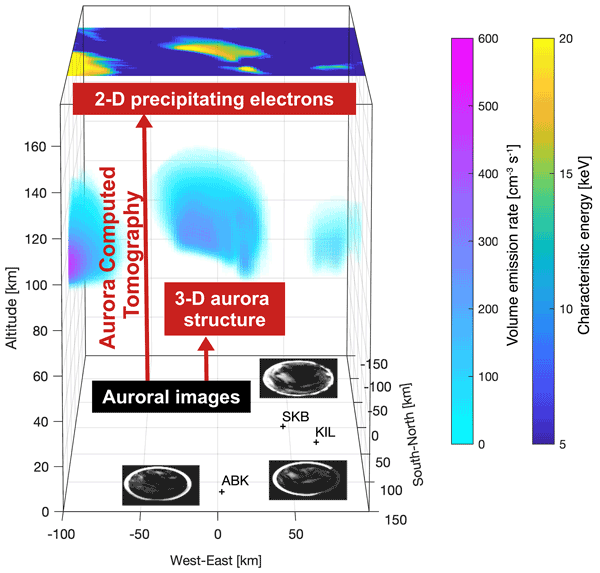
The pulsating auroral generation mechanism has been investigated by observing precipitating electrons using rockets or satellites. However, it is difficult for such observations to distinguish temporal changes from spatial ones. In this study, we reconstructed the horizontal 2-D distribution of precipitating electrons using only auroral images. The 3-D aurora structure was also reconstructed. We found that there were both spatial and temporal changes in the precipitating electron energy.
Cited articles
Best, G. and Hoffman, H.: The initial behavior of high altitude barium releases – I. The particulate ring, J. Atmos. Terr. Phys., 36, 1469–1473, https://doi.org/10.1016/0021-9169(74)90225-6, 1974. a
Chou, M.-Y., Shen, M.-H., Lin, C. C. H., Yue, J., Chen, C.-H., Liu, J.-Y., and Lin, J.-T.: Gigantic Circular Shock Acoustic Waves in the Ionosphere Triggered by the Launch of FORMOSAT-5 Satellite, Space Weather, 16, 172–184, https://doi.org/10.1002/2017SW001738, 2018. a
Emmert, J. T., Drob, D. P., Picone, J. M., Siskind, D. E., Jones Jr., M., Mlynczak, M. G., Bernath, P. F., Chu, X., Doornbos, E., Funke, B., Goncharenko, L. P., Hervig, M. E., Schwartz, M. J., Sheese, P. E., Vargas, F., Williams, B. P., and Yuan, T.: NRLMSIS 2.0: A Whole-Atmosphere Empirical Model of Temperature and Neutral Species Densities, Earth and Space Science, 8, e2020EA001321, https://doi.org/10.1029/2020EA001321, 2021. a
Fahleson, U., Fälthammar, C.-G., Pedersen, A., Knott, K., Brommundt, G., Schumann, G., Haerendel, G., and Rieger, E.: Simultaneous Electric Field Measurements Made in the Auroral Ionosphere by Using three Independent Techniques, Radio Sci., 6, 233–245, https://doi.org/10.1029/RS006i002p00233, 1971. a
Föppl, H., Haerendel, G., Haser, L., Loidl, J., Lütjens, P., Lüst, R., Melzner, F., Meyer, B., Neuss, H., and Rieger, E.: Artificial strontium and barium clouds in the upper atmosphere, Planet. Space Sci., 15, 357–IN2, https://doi.org/10.1016/0032-0633(67)90200-0, 1967. a
Hedin, A. E.: Extension of the MSIS thermosphere model into the middle and lower atmosphere, J. Geophys. Res., 96, 1159–1172, 1991. a
Jia, T.-M., Li, G.-X., Yu, Y.-S., and Xu, Y.-J.: Propagation characteristics of induced shock waves generated by diesel spray under ultra-high injection pressure, Fuel, 180, 521–528, https://doi.org/10.1016/j.fuel.2016.04.009, 2016. a
Kakinami, Y., Yamamoto, M., Chen, C.-H., Watanabe, S., Lin, C., Liu, J.-Y., and Habu, H.: Ionospheric disturbances induced by a missile launched from North Korea on 12 December 2012, J. Geophys. Res.-Space, 118, 5184–5189, https://doi.org/10.1002/jgra.50508, 2013. a
Landau, L. D. and Lifshitz, E. M.: Fluid Mechanics, Pergamon, Oxford, ISBN 0-08-033933-6, 1989. a
Li, X., Xiong, B., Ding, F., Chen, G., Mao, T., and Song, Q.: Ionospheric Disturbances Excited by Launches of China's Long March 2C Rockets, J. Geophys. Res.-Space, 130, e2025JA033845, https://doi.org/10.1029/2025JA033845, 2025. a
Lin, C. H., Lin, J. T., Chen, C. H., Liu, J. Y., Sun, Y. Y., Kakinami, Y., Matsumura, M., Chen, W. H., Liu, H., and Rau, R. J.: Ionospheric shock waves triggered by rockets, Ann. Geophys., 32, 1145–1152, https://doi.org/10.5194/angeo-32-1145-2014, 2014. a
MacPhee, A. G., Tate, M. W., Powell, C. F., Yue, Y., Renzi, M. J., Ercan, A., Narayanan, S., Fontes, E., Walther, J., Schaller, J., Gruner, S. M., and Wang, J.: X-ray Imaging of Shock Waves Generated by High-Pressure Fuel Sprays, Science, 295, 1261–1263, https://doi.org/10.1126/science.1068149, 2002. a
Rosenberg, N. W. and Best, G. T.: Chemistry of barium released at high altitudes, J. Phys. Chem., 75, 1412–1418, https://doi.org/10.1021/j100680a009, 1971. a
Taki, T., Sergienko, T., Brändström, U., Ogawa, Y., Nanjo, S., and Araújo, J.: Electric fields in and around an auroral arc and the inferred current system from the BROR sounding rocket experiment, EGUsphere [preprint], https://doi.org/10.5194/egusphere-2026-1133, 2026. a, b, c
Wang, Y., Yu, Y.-s., Li, G.-x., and Jia, T.-m.: Experimental investigation on the characteristics of supersonic fuel spray and configurations of induced shock waves, Sci. Rep.-UK, 7, 39685, https://doi.org/10.1038/srep39685, 2017. a
Wescott, E. M., Stolarik, J. D., and Heppner, J. P.: Electric fields in the vicinity of auroral forms from motions of barium vapor releases, J. Geophys. Res. (1896–1977), 74, 3469–3487, https://doi.org/10.1029/JA074i014p03469, 1969. a
White, F. M.: Viscous Fluid Flow, McGraw-Hill, Inc., New York, ISBN 0-07-069712-4, 1991. a
Yasyukevich, Y. V., Vesnin, A. M., Astafyeva, E., Maletckii, B. M., Lebedev, V. P., and Padokhin, A. M.: Supersonic Waves Generated by the 18 November 2023 Starship Flight and Explosions: Unexpected Northward Propagation and a Man-Made Non-chemical Depletion, Geophys. Res. Lett., 51, e2024GL109284, https://doi.org/10.1029/2024GL109284, 2024. a
Short summary
The BROR rocket experiment, launched from Esrange near Kiruna, Sweden, involved releases of barium clouds in the thermosphere to study auroral structures. The barium was ejected by the explosion-like combustion of ignited thermite. Shock waves could be observed to follow the ejections when the rocket speed was supersonic, but not when subsonic. The shock waves are attributed to ejected particulate matter from the thermite combustion that traveled at supersonic speed.
The BROR rocket experiment, launched from Esrange near Kiruna, Sweden, involved releases of...


