Articles | Volume 44, issue 1
https://doi.org/10.5194/angeo-44-489-2026
Regular paper
 | 
23 Jun 2026
Regular paper |  | 23 Jun 2026

Equatorial ionospheric plasma bubbles during intense geomagnetic storms of Solar Cycle 25

Nadia Imtiaz, Andres Calabia, Chukwuma Anoruo, Aqsa Zahid, Christine Amory-Mazaudier, and Binod Adhikari

Related authors

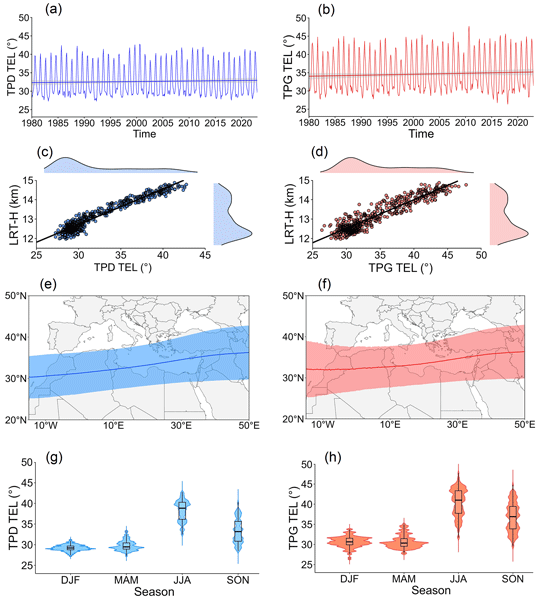
Tropical belt expansion and its impacts on climate variability in the Mediterranean from 1980 to 2022
Mohamed Darrag, Shuanggen Jin, Andres Calabia, Aalaa Samy, Ivan Radevski, and Ali M. Radwan
EGUsphere, https://doi.org/10.5194/egusphere-2025-6521,https://doi.org/10.5194/egusphere-2025-6521, 2026
Short summary
Latitudinal variations of ionospheric-thermospheric responses to Geomagnetic Storms from Multi-Instruments
Rasim Shahzad, Munawar Shah, Ayesha Abbas, Amna Hafeez, Andres Calabia, Angela Melgarejo-Morales, and Najam Abbas Naqvi
Ann. Geophys. Discuss., https://doi.org/10.5194/angeo-2022-18,https://doi.org/10.5194/angeo-2022-18, 2022
Revised manuscript not accepted
Short summary
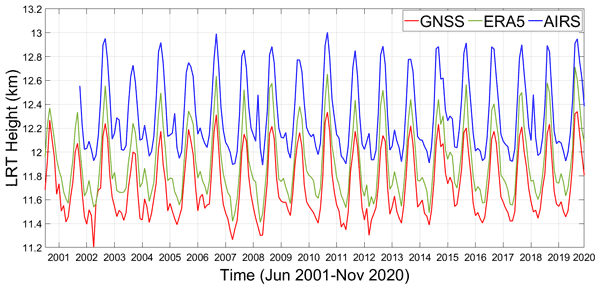
Determination of tropical belt widening using multiple GNSS radio occultation measurements
Mohamed Darrag, Shuanggen Jin, Andrés Calabia, and Aalaa Samy
Ann. Geophys., 40, 359–377, https://doi.org/10.5194/angeo-40-359-2022,https://doi.org/10.5194/angeo-40-359-2022, 2022
Short summary
Climatology of ionosphere over Nepal based on GPS total electron content data from 2008 to 2018
Drabindra Pandit, Basudev Ghimire, Christine Amory-Mazaudier, Rolland Fleury, Narayan Prasad Chapagain, and Binod Adhikari
Ann. Geophys., 39, 743–758, https://doi.org/10.5194/angeo-39-743-2021,https://doi.org/10.5194/angeo-39-743-2021, 2021
Short summary

Cited articles

Aa, E., Zhu, S., and Liu, S.: Statistical Analysis of Equatorial Plasma Irregularities Retrieved From Swarm 2013–2019 Observations, J. Geophys. Res.-Space Phys., 125, https://doi.org/10.1029/2019JA027022, 2020. a
Aa, E., Chen, Y., and Luo, B.: Dynamic Expansion and Merging of the Equatorial Ionization Anomaly During the 10–11 May 2024 Super Geomagnetic Storm, Remote Sens., 16, https://doi.org/10.3390/rs16224290, 2024. a, b, c
Aarons, J.: The role of the ring current in the generation or inhibition of equatorial F layer irregularities during magnetic storms, Radio Sci., 26, 1131–1149, 1991. a, b
Aarons, J.: Global positioning system phase fluctuations at auroral latitudes, J. Geophys. Res.-Space Phys., 102, 17219–17231, 1997. a, b, c
Abdu, M. A.: Major phenomena of the equatorial ionosphere-thermosphere system under disturbed conditions, J. Atmos. Sol.-Terr. Phy., 59, 1505–1519, 1997. a, b, c
Download
Short summary
Comprehensive analysis of geomagnetic storms from 23–25 March, 23–25 April, 4–6 November 2023, and  10–13 May 2024, reveals that solar wind parameters, geomagnetic activity, Joule heating, and Prompt Penetration Electric Fields significantly influence ionospheric Total Electron Content variations, Equatorial Ionization Anomaly crest formations, and post-sunset plasma irregularities. The storms highlighted the importance of inter-hemispheric asymmetries in Joule Heating, which affected the distribution and magnitude of ionospheric disturbances.
Share