
Articles | Volume 44, issue 2
https://doi.org/10.5194/angeo-44-1211-2026
© Author(s) 2026. This work is distributed under
the Creative Commons Attribution 4.0 License.
the Creative Commons Attribution 4.0 License.
https://doi.org/10.5194/angeo-44-1211-2026
© Author(s) 2026. This work is distributed under
the Creative Commons Attribution 4.0 License.
the Creative Commons Attribution 4.0 License.
Regular paper
| 
29 Oct 2026
Regular paper |
| 29 Oct 2026
| 29 Oct 2026
First results from the Juice magnetometer during the Lunar-Earth Gravity Assist
Adrian T. LaMoury
CORRESPONDING AUTHOR

Blackett Laboratory, Imperial College London, London, UK
Leonard Schulz
Institute of Geophysics and Extraterrestrial Physics, Technische Universität Braunschweig, Braunschweig, Germany
Alexander Betzler
Space Research Institute, Austrian Academy of Sciences, Graz, Austria
Institute of Experimental Physics, Graz University of Technology, Graz, Austria
David Hercik
Institute of Atmospheric Physics, Czech Academy of Sciences, Prague, Czechia
Hans-Ulrich Auster
Institute of Geophysics and Extraterrestrial Physics, Technische Universität Braunschweig, Braunschweig, Germany
Patrick Brown
Blackett Laboratory, Imperial College London, London, UK
Werner Magnes
Space Research Institute, Austrian Academy of Sciences, Graz, Austria
Christoph Amtmann
Space Research Institute, Austrian Academy of Sciences, Graz, Austria
Richard Baughen
Blackett Laboratory, Imperial College London, London, UK
Hao Cao
Department of Earth, Planetary, and Space Sciences, University of California, Los Angeles, Los Angeles, USA
Irmgard Jernej
Space Research Institute, Austrian Academy of Sciences, Graz, Austria
Roland Lammegger
Institute of Experimental Physics, Graz University of Technology, Graz, Austria
Adam Masters
Blackett Laboratory, Imperial College London, London, UK
Ferdinand Plaschke
Institute of Geophysics and Extraterrestrial Physics, Technische Universität Braunschweig, Braunschweig, Germany
Xun Yu
Blackett Laboratory, Imperial College London, London, UK
Taylor Pomfret
Blackett Laboratory, Imperial College London, London, UK
Alex Strickland
Blackett Laboratory, Imperial College London, London, UK
Vaibhav Garg
Blackett Laboratory, Imperial College London, London, UK
Michele K. Dougherty
Blackett Laboratory, Imperial College London, London, UK
Related authors
No articles found.
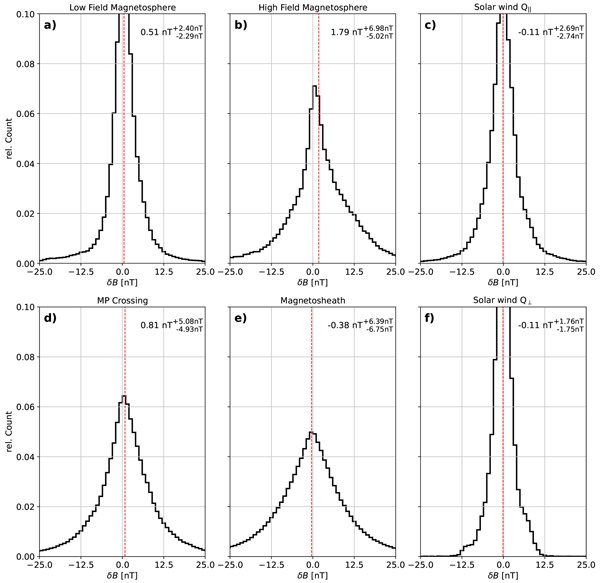
Adrian Pöppelwerth, Hans-Ulrich Auster, Vassilis Angelopoulos, James M. McTiernan, James W. Lewis, and Ferdinand Plaschke
Geosci. Instrum. Method. Data Syst., 15, 273–289, https://doi.org/10.5194/gi-15-273-2026, https://doi.org/10.5194/gi-15-273-2026, 2026
Short summary
Short summary
The Time History of Events and Macroscale Interactions during Substorms mission studies how the solar wind interacts with Earth’s magnetic field using five rotating spacecraft. After one spacecraft lost its measurements along its rotation axis, we used the two remaining magnetometer components with the spacecraft's spin to reconstruct the missing component with lower time resolution. A comparison with earlier data, when all components were available, shows that reconstruction is possible.
Raphael Steinhöfler, Marius Anger, Roman Shalamov, Jaan Praks, David Fischer, Werner Magnes, Josef Wilfinger, Aris Valavanoglou, and Constant Michel Felix Lentz
EGUsphere, https://doi.org/10.5194/egusphere-2026-1579, https://doi.org/10.5194/egusphere-2026-1579, 2026
Short summary
Short summary
This study investigates concepts of measuring magnetic fields with CubeSats. An exemplary instrument including the sensor, electronics, and boom was designed, built and tested. A novel Application-Specific Integrated Circuit has been used and concepts of larger missions have been adapted. Tests have shown the radiation hardness of the electronics and an improved performance over existing concepts. The results validate the technology and set further directions of CubeSat instrument developments.
Marco Pinto, André Rodrigues, Elias Roussos, Daniel Schmid, Martin Volwerk, Stavros Kotsiaros, Patrick Brown, Michele Dougherty, Luísa Arruda, and Olivier Witasse
EGUsphere, https://doi.org/10.5194/egusphere-2026-2055, https://doi.org/10.5194/egusphere-2026-2055, 2026
Short summary
Short summary
During its flyby of the Moon and Earth, the Jupiter Icy Moons Explorer crossed Earth's radiation belts and gave us a rare chance to test the Radiation Hard Electron Monitor in space. By studying how its measurements changed along the path, we showed that the instrument can clearly detect trapped electrons and protons. This gives confidence for future operations at Jupiter, where the radiation environment is far harsher and these measurements will be especially valuable.
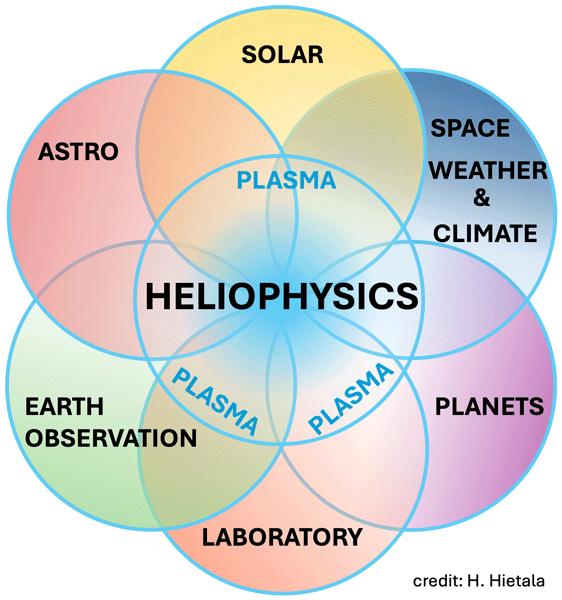
Rumi Nakamura, Thierry Dudok de Wit, Geraint H. Jones, Matt G. G. T. Taylor, Nicolas André, Charlotte Goetz, Lina Z. Hadid, Laura A. Hayes, Heli Hietala, Caitríona M. Jackman, Larry Kepko, Aurélie Marchaudon, Adam Masters, Mathew Owens, Noora Partamies, Stefaan Poedts, Jonathan Rae, Yuri Shprits, Manuela Temmer, Daniel Verscharen, and Robert F. Wimmer-Schweingruber
Ann. Geophys., 43, 855–879, https://doi.org/10.5194/angeo-43-855-2025, https://doi.org/10.5194/angeo-43-855-2025, 2025
Short summary
Short summary
Heliophysics spans a wide range of disciplines covering the study of the Sun and the different Solar System bodies, such as Earth and other planets, moons, comets, and asteroids, and their interactions with the Sun, focusing on plasma and atmospheric processes. A grass-roots effort has been recently started toward establishing a European Heliophysics Community (https://www.heliophysics.eu/). This white paper outlines the motivation, priorities, and a future vision of Heliophysics in Europe.
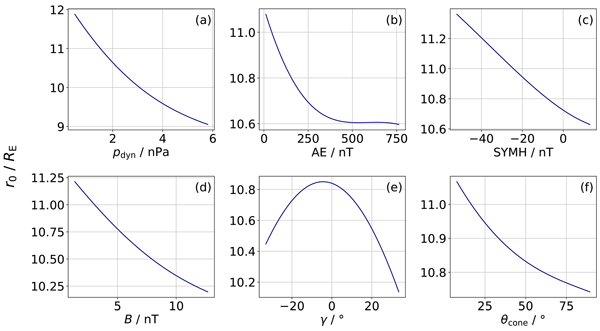
Lars Klingenstein, Niklas Grimmich, Yuri Y. Shprits, Adrian Pöppelwerth, and Ferdinand Plaschke
Ann. Geophys., 43, 835–854, https://doi.org/10.5194/angeo-43-835-2025, https://doi.org/10.5194/angeo-43-835-2025, 2025
Short summary
Short summary
We applied machine learning to investigate how the solar wind and Earth's geomagnetic activity control the position of the magnetopause, the boundary layer of Earth's magnetic field. Our results demonstrate that geomagnetic activity strongly influences this boundary and should be incorporated in predictive models. Using data from multiple spacecraft, we developed a simple mathematical description of the magnetopause distance that improves understanding of solar wind–magnetosphere interactions.
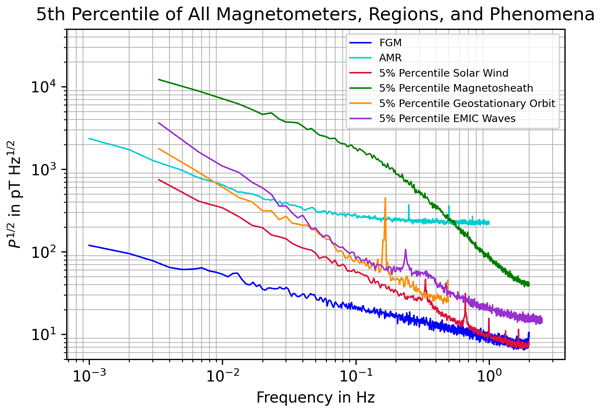
Gerlinde Timmermann, David Fischer, Hans-Ulrich Auster, Ingo Richter, Benjamin Grison, and Ferdinand Plaschke
Geosci. Instrum. Method. Data Syst., 14, 447–458, https://doi.org/10.5194/gi-14-447-2025, https://doi.org/10.5194/gi-14-447-2025, 2025
Short summary
Short summary
We've compared the amplitude spectral densities of a fluxgate magnetometer (FGM) and an anisotropic magnetoresistive (AMR) magnetometer during ground testing with the amplitude spectral densities obtained in different regions of near-Earth space. The FGM can measure the fields in the different space regions and their fluctuations within a frequency range of 1 mHz to 2.5 Hz. The AMR magnetometer is only suitable for more turbulent regions such as the magnetosheath due to its higher noise levels.
Niklas Grimmich, Adrian Pöppelwerth, Martin Owain Archer, David Gary Sibeck, Ferdinand Plaschke, Wenli Mo, Vicki Toy-Edens, Drew Lawson Turner, Hyangpyo Kim, and Rumi Nakamura
Ann. Geophys., 43, 151–173, https://doi.org/10.5194/angeo-43-151-2025, https://doi.org/10.5194/angeo-43-151-2025, 2025
Short summary
Short summary
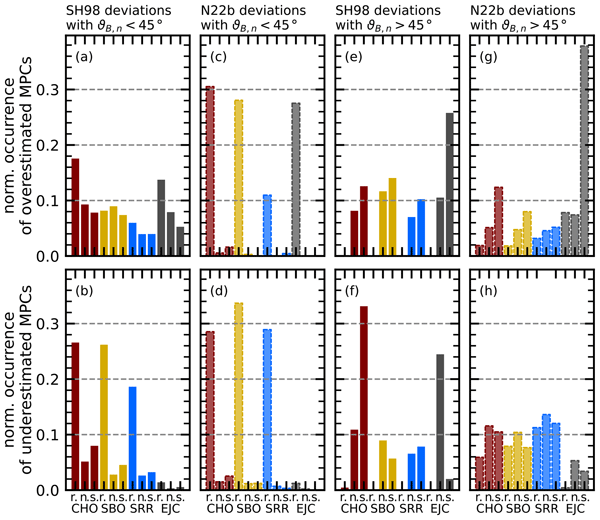
The boundary of Earth's magnetic field, the magnetopause, deflects and reacts to the solar wind, the energetic particles emanating from the Sun. We find that certain types of solar wind favour the occurrence of deviations between the magnetopause locations observed by spacecraft and those predicted by models. In addition, the turbulent region in front of the magnetopause, the foreshock, has a large influence on the location of the magnetopause and thus on the accuracy of the model predictions.
Niklas Grimmich, Ferdinand Plaschke, Benjamin Grison, Fabio Prencipe, Christophe Philippe Escoubet, Martin Owain Archer, Ovidiu Dragos Constantinescu, Stein Haaland, Rumi Nakamura, David Gary Sibeck, Fabien Darrouzet, Mykhaylo Hayosh, and Romain Maggiolo
Ann. Geophys., 42, 371–394, https://doi.org/10.5194/angeo-42-371-2024, https://doi.org/10.5194/angeo-42-371-2024, 2024
Short summary
Short summary
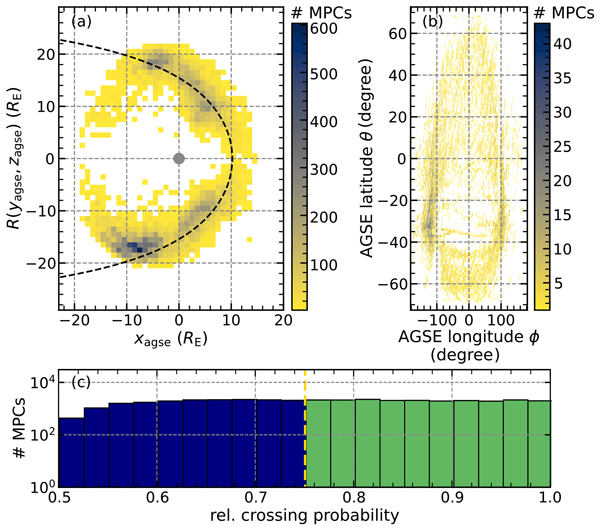
In our study, we looked at the boundary between the Earth's magnetic field and the interplanetary magnetic field emitted by the Sun, called the magnetopause. While other studies focus on the magnetopause motion near Earth's Equator, we have studied it in polar regions. The motion of the magnetopause is faster towards the Earth than towards the Sun. We also found that the occurrence of unusual magnetopause locations is due to similar solar influences in the equatorial and polar regions.
Adrian Pöppelwerth, Georg Glebe, Johannes Z. D. Mieth, Florian Koller, Tomas Karlsson, Zoltán Vörös, and Ferdinand Plaschke
Ann. Geophys., 42, 271–284, https://doi.org/10.5194/angeo-42-271-2024, https://doi.org/10.5194/angeo-42-271-2024, 2024
Short summary
Short summary
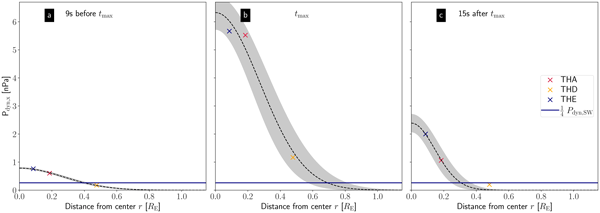
In the magnetosheath, a near-Earth region of space, we observe increases in plasma velocity and density, so-called jets. As they propagate towards Earth, jets interact with the ambient plasma. We study this interaction with three spacecraft simultaneously to infer their sizes. While previous studies have investigated their size almost exclusively statistically, we demonstrate a new method of determining the sizes of individual jets.

Christoph Amtmann, Andreas Pollinger, Michaela Ellmeier, Michele Dougherty, Patrick Brown, Roland Lammegger, Alexander Betzler, Martín Agú, Christian Hagen, Irmgard Jernej, Josef Wilfinger, Richard Baughen, Alex Strickland, and Werner Magnes
Geosci. Instrum. Method. Data Syst., 13, 177–191, https://doi.org/10.5194/gi-13-177-2024, https://doi.org/10.5194/gi-13-177-2024, 2024
Short summary
Short summary
The paper discusses the accuracy of the scalar magnetometer on board the scientific satellite mission
Jupiter Icy Moons Explorerof the European Space Agency. A novel method is described which utilises experiments, performed with a coil system in a geomagnetic observatory, and a mathematical data processing approach to separate the systematic errors of the coil system from the systematic error of the magnetometer. With this, the paper shows that the instrument’s accuracy is below 0.2 nT (1σ).
Tomas Karlsson, Ferdinand Plaschke, Austin N. Glass, and Jim M. Raines
Ann. Geophys., 42, 117–130, https://doi.org/10.5194/angeo-42-117-2024, https://doi.org/10.5194/angeo-42-117-2024, 2024
Short summary
Short summary
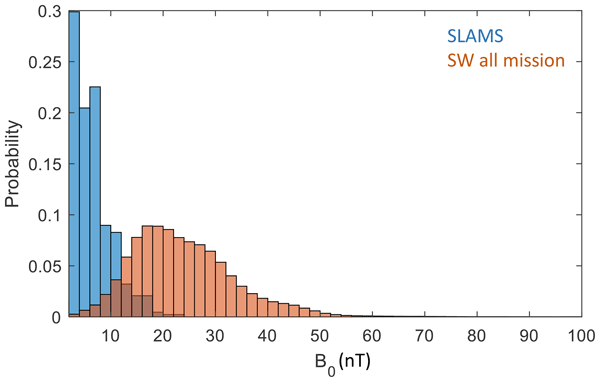
The solar wind interacts with the planets in the solar system and creates a supersonic shock in front of them. The upstream region of this shock contains many complicated phenomena. One such phenomenon is small-scale structures of strong magnetic fields (SLAMS). These SLAMS have been observed at Earth and are important in determining the properties of space around the planet. Until now, SLAMS have not been observed at Mercury, but we show for the first time that SLAMS also exist there.
Leonard Schulz, Karl-Heinz Glassmeier, Ferdinand Plaschke, Simon Toepfer, and Uwe Motschmann
Ann. Geophys., 41, 449–463, https://doi.org/10.5194/angeo-41-449-2023, https://doi.org/10.5194/angeo-41-449-2023, 2023
Short summary
Short summary
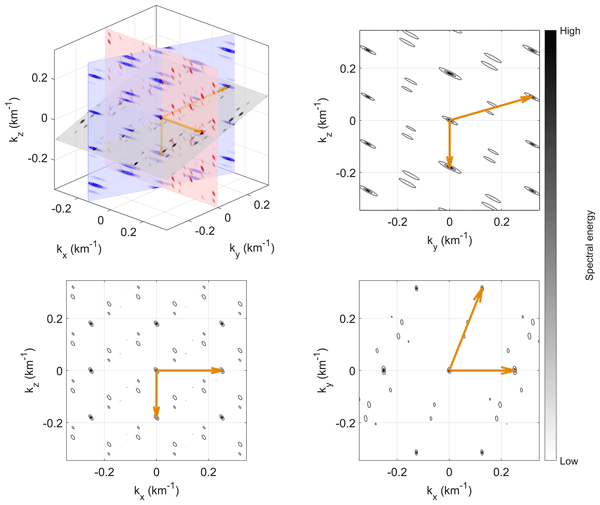
The upper detection limit in reciprocal space, the spatial Nyquist limit, is derived for arbitrary spatial dimensions for the wave telescope analysis technique. This is important as future space plasma missions will incorporate larger numbers of spacecraft (>4). Our findings are a key element in planning the spatial distribution of future multi-point spacecraft missions. The wave telescope is a multi-dimensional power spectrum estimator; hence, this can be applied to other fields of research.
Mohammed Y. Boudjada, Hans U. Eichelberger, Emad Al-Haddad, Werner Magnes, Patrick H. M. Galopeau, Xuemin Zhang, Andreas Pollinger, and Helmut Lammer
Adv. Radio Sci., 20, 77–84, https://doi.org/10.5194/ars-20-77-2023, https://doi.org/10.5194/ars-20-77-2023, 2023
Short summary
Short summary
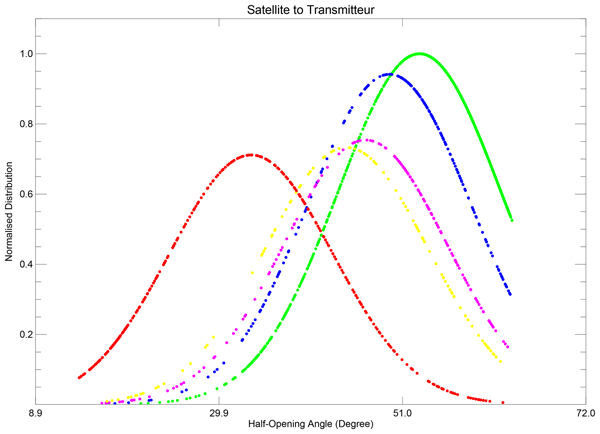
We investigate the variation of the electric power density linked to VLF signals emitted by NWC transmitter. The power density measurements were detected by the Electric Field Detector (EFD) instrument onboard CSES satellite above NWC station and its conjugate region (CR). The beam is subject to disturbances and modulations in CR. Above the NWC station, the beam can be considered as a hollow cone with inconsistency dependence of the half-opening angle on the electric power density.
Cited articles
Alconcel, L.-N., Brown, P., Oddy, T., and Carr, C. M.: Long-term trends in the calibration of the cluster fluxgate magnetometer instruments, J. Geophys. Res.-Space, 131, e2026JA035179, https://doi.org/10.1029/2026JA035179, 2026. a
Alken, P., Thébault, E., Beggan, C. D., Amit, H., Aubert, J., Baerenzung, J., Bondar, T. N., Brown, W. J., Califf, S., Chambodut, A., Chulliat, A., Cox, G. A., Finlay, C. C., Fournier, A., Gillet, N., Grayver, A., Hammer, M. D., Holschneider, M., Huder, L., Hulot, G., Jager, T., Kloss, C., Korte, M., Kuang, W., Kuvshinov, A., Langlais, B., Léger, J.-M., Lesur, V., Livermore, P. W., Lowes, F. J., Macmillan, S., Magnes, W., Mandea, M., Marsal, S., Matzka, J., Metman, M. C., Minami, T., Morschhauser, A., Mound, J. E., Nair, M., Nakano, S., Olsen, N., Pavón-Carrasco, F. J., Petrov, V. G., Ropp, G., Rother, M., Sabaka, T. J., Sanchez, S., Saturnino, D., Schnepf, N. R., Shen, X., Stolle, C., Tangborn, A., Tøffner-Clausen, L., Toh, H., Torta, J. M., Varner, J., Vervelidou, F., Vigneron, P., Wardinski, I., Wicht, J., Woods, A., Yang, Y., Zeren, Z., and Zhou, B.: International geomagnetic reference field: the thirteenth generation, Earth Planets Space, 73, 49, https://doi.org/10.1186/s40623-020-01288-x, 2021. a
Amtmann, C., Pollinger, A., Ellmeier, M., Dougherty, M., Brown, P., Lammegger, R., Betzler, A., Agú, M., Hagen, C., Jernej, I., Wilfinger, J., Baughen, R., Strickland, A., and Magnes, W.: Accuracy of the scalar magnetometer aboard ESA's JUICE mission, Geosci. Instrum. Method. Data Syst., 13, 177–191, https://doi.org/10.5194/gi-13-177-2024, 2024. a
Angelopoulos, V.: The THEMIS mission, Space Sci. Rev., 141, 5–34, https://doi.org/10.1007/s11214-008-9336-1, 2008. a
Angelopoulos, V.: The ARTEMIS Mission, Space Sci. Rev., 165, 3–25, https://doi.org/10.1007/s11214-010-9687-2, 2011. a
Auster, H. U., Apathy, I., Berghofer, G., Remizov, A., Roll, R., Fornacon, K. H., Glassmeier, K. H., Haerendel, G., Hejja, I., Kührt, E., Magnes, W., Moehlmann, D., Motschmann, U., Richter, I., Rosenbauer, H., Russell, C. T., Rustenbach, J., Sauer, K., Schwingenschuh, K., Szemerey, I., and Waesch, R.: ROMAP: Rosetta magnetometer and plasma monitor, Space Sci. Rev., 128, 221–240, https://doi.org/10.1007/s11214-006-9033-x, 2007. a
Auster, H. U., Glassmeier, K. H., Magnes, W., Aydogar, O., Baumjohann, W., Constantinescu, D., Fischer, D., Fornacon, K. H., Georgescu, E., Harvey, P., Hillenmaier, O., Kroth, R., Ludlam, M., Narita, Y., Nakamura, R., Okrafka, K., Plaschke, F., Richter, I., Schwarzl, H., Stoll, B., Valavanoglou, A., and Wiedemann, M.: The THEMIS fluxgate magnetometer, Space Sci. Rev., 141, 235–264, https://doi.org/10.1007/s11214-008-9365-9, 2008. a
Bale, S. D., Balikhin, M. A., Horbury, T. S., Krasnoselskikh, V. V., Kucharek, H., Möbius, E., Walker, S. N., Balogh, A., Burgess, D., Lembège, B., Lucek, E. A., Scholer, M., Schwartz, S. J., and Thomsen, M. F.: Quasi-perpendicular shock structure and processes, Space Sci. Rev., 118, 161–203, https://doi.org/10.1007/s11214-005-3827-0, 2005. a
Borovsky, J. E.: The spatial structure of the oncoming solar wind at Earth and the shortcomings of a solar-wind monitor at L1, J. Atmos. Sol.-Terr. Phy., 177, 2–11, https://doi.org/10.1016/j.jastp.2017.03.014, 2018. a
Brown, P., Auster, U., Bergman, J. E. S., Fredriksson, J., Kasaba, Y., Mansour, M., Pollinger, A., Baughen, R., Berglund, M., Hercik, D., Misawa, H., Retino, A., Bendyk, M., Magnes, W., Cecconi, B., Dougherty, M., and Fischer, G.: Meeting the Magnetic EMC Challenges for the In-Situ Field Measurements on the Juice Mission, in: 2019 ESA Workshop on Aerospace EMC (Aerospace EMC), https://doi.org/10.23919/AeroEMC.2019.8788942, 1–6, 2019. a
Chen, L. and Hasegawa, A.: A theory of long-period magnetic pulsations: 1. Steady state excitation of field line resonance, J. Geophys. Res., 79, 1024–1032, https://doi.org/10.1029/JA079i007p01024, 1974. a
Dougherty, M. K., Kellock, S., Southwood, D. J., Balogh, A., Smith, E. J., Tsurutani, B. T., Gerlach, B., Glassmeier, K.-H., Gleim, F., Russell, C. T., Erdos, G., Neubauer, F. M., and Cowley, S. W. H.: The Cassini magnetic field investigation, Space Sci. Rev., 114, 331–383, https://doi.org/10.1007/s11214-004-1432-2, 2004. a
Eastwood, J. P., Brown, P., Magnes, W., Carr, C. M., Agu, M., Baughen, R., Berghofer, G., Hodgkins, J., Jernej, I., Möstl, C., Oddy, T., Strickland, A., and Vitkova, A.: The Vigil magnetometer for operational space weather services from the Sun-Earth L5 point, Space Weather, 22, e2024SW003867, https://doi.org/10.1029/2024SW003867, 2024. a
Ellmeier, M., Betzler, A., Amtmann, C., Pollinger, A., Hagen, C., Jernej, I., Agú, M., Magnes, W., Windholz, L., Dougherty, M., Brown, P., and Lammegger, R.: Lower magnetic field measurement limit of the coupled dark state magnetometer, Meas. Sci. Technol., 35, 115110, https://doi.org/10.1088/1361-6501/ad6623, 2024. a, b
Engelke, S., Bubeck, K., Baroni, M., Kiss, Z., Verstaen, S., Lange, J., and Faust, M.: Verification of the JUICE Spacecraft Magnetic Cleanliness and Emitted Field Modelling, in: 2023 Photonics and Electromagnetics Research Symposium (PIERS), https://doi.org/10.1109/PIERS59004.2023.10221546, 1250–1259, 2023. a
European Space Agency: ESA-JUICE_LEGA-Special-Issue_v1.0, European Space Agency [data set], https://doi.org/10.57780/esa-2bb387d, 2026. a
Grasset, O., Dougherty, M. K., Coustenis, A., Bunce, E. J., Erd, C., Titov, D., Blanc, M., Coates, A., Drossart, P., Fletcher, L. N., Hussmann, H., Jaumann, R., Krupp, N., Lebreton, J.-P., Prieto-Ballesteros, O., Tortora, P., Tosi, F., and Hoolst, T. V.: JUpiter ICy moons Explorer (JUICE): an ESA mission to orbit Ganymede and to characterise the Jupiter system, Planet. Space Sci., 78, 1–21, https://doi.org/10.1016/j.pss.2012.12.002, 2013. a
Hedgecock, P. C.: A correlation technique for magnetometer zero level determination, Space Science Instrumentation, 1, 83–90, 1975. a
Heyner, D., Auster, H.-U., Fornaçon, K.-H., Carr, C., Richter, I., Mieth, J. Z. D., Kolhey, P., Exner, W., Motschmann, U., Baumjohann, W., Matsuoka, A., Magnes, W., Berghofer, G., Fischer, D., Plaschke, F., Nakamura, R., Narita, Y., Delva, M., Volwerk, M., Balogh, A., Dougherty, M., Horbury, T., Langlais, B., Mandea, M., Masters, A., Oliveira, J. S., Sánchez-Cano, B., Slavin, J. A., Vennerstrøm, S., Vogt, J., Wicht, J., and Glassmeier, K.-H.: The BepiColombo planetary magnetometer MPO-MAG: what can we learn from the Hermean magnetic field?, Space Sci. Rev., 217, 52, https://doi.org/10.1007/s11214-021-00822-x, 2021. a
Horbury, T. S., O'Brien, H., Blazquez, I. C., Bendyk, M., Brown, P., Hudson, R., Evans, V., Oddy, T. M., Carr, C. M., Beek, T. J., Cupido, E., Bhattacharya, S., Dominguez, J.-A., Matthews, L., Myklebust, V. R., Whiteside, B., Bale, S. D., Baumjohann, W., Burgess, D., Carbone, V., Cargill, P., Eastwood, J., Erdös, G., Fletcher, L., Forsyth, R., Giacalone, J., Glassmeier, K.-H., Goldstein, M. L., Hoeksema, T., Lockwood, M., Magnes, W., Maksimovic, M., Marsch, E., Matthaeus, W. H., Murphy, N., Nakariakov, V. M., Owen, C. J., Owens, M., Rodriguez-Pacheco, J., Richter, I., Riley, P., Russell, C. T., Schwartz, S., Vainio, R., Velli, M., Vennerstrom, S., Walsh, R., Wimmer-Schweingruber, R. F., Zank, G., Müller, D., Zouganelis, I., and Walsh, A. P.: The solar orbiter magnetometer, Astron. Astrophys., 642, A9, https://doi.org/10.1051/0004-6361/201937257, 2020. a
King, J. H. and Papitashvili, N. E.: Solar wind spatial scales in and comparisons of hourly Wind and ACE plasma and magnetic field data, J. Geophys. Res.-Space, 110, 1–9, https://doi.org/10.1029/2004JA010649, 2005. a
Kivelson, M. G. and Southwood, D. J.: Resonant ULF waves: a new interpretation, Geophys. Res. Lett., 12, 49–52, https://doi.org/10.1029/GL012i001p00049, 1985. a
Laker, R., Horbury, T. S., O'Brien, H., Fauchon-Jones, E. J., Angelini, V., Fargette, N., Amerstorfer, T., Bauer, M., Möstl, C., Davies, E. E., Davies, J. A., Harrison, R., Barnes, D., and Dumbović, M.: Using solar orbiter as an upstream solar wind monitor for real time space weather predictions, Space Weather, 22, e2023SW003628, https://doi.org/10.1029/2023SW003628, 2024. a
Lepping, R. P., Acũna, M. H., Burlaga, L. F., Farrell, W. M., Slavin, J. A., Schatten, K. H., Mariani, F., Ness, N. F., Neubauer, F. M., Whang, Y. C., Byrnes, J. B., Kennon, R. S., Panetta, P. V., Scheifele, J., and Worley, E. M.: The WIND magnetic field investigation, Space Sci. Rev., 71, 207–229, https://doi.org/10.1007/BF00751330, 1995. a
Madsen, F. D., Beggan, C. D., Brown, W. J., Holme, R., Lauridsen, J. B., and Whaler, K. A.: IGRF-14 secular variation prediction from core surface flow acceleration, Earth Planets Space, 78, 29, https://doi.org/10.1186/s40623-025-02347-x, 2026. a
Magnes, W., Berghofer, G., Mocnik, K., Koren, W., Schwingenschuh, K., Stachel, M., Jernej, I., Riedler, W., Russell, C. T., Means, J., Pierce, D., Snare, B., Balogh, A., and Beek, T. J.: A spaceborne magnetometer tested under extended temperature conditions (experiment MAREMF-OS/MARS-96), Meas. Sci. Technol., 9, 1219, https://doi.org/10.1088/0957-0233/9/8/013, 1998. a
Matsuoka, A., Dougherty, M. K., Brown, P., Auster, H. U., Takahashi, F., Shimizu, H., and Matsushima, M.: In-flight alignment calibration of magnetic field measurement by JACS on JUICE, in: AGU Fall Meeting Abstracts, Vol. 2019 of AGU Fall Meeting Abstracts, 2019AGUFM.P21H3458M, P21H–3458, 2019. a
Ogilvie, K. W., Chornay, D. J., Fritzenreiter, R. J., Hunsaker, F., Keller, J., Lobell, J., Miller, G., Scudder, J. D., Sittler, E. C., Torbert, R. B., Bodet, D., Needell, G., Lazarus, A. J., Steinberg, J. T., Tappan, J. H., Mavretic, A., and Gergin, E.: SWE, a comprehensive plasma instrument for the WIND spacecraft, Space Sci. Rev., 71, 55–77, https://doi.org/10.1007/BF00751326, 1995. a
Pollinger, A., Ellmeier, M., Magnes, W., Hagen, C., Baumjohann, W., Leitgeb, E., and Lammegger, R.: Enable the inherent omni-directionality of an absolute coupled dark state magnetometer for e.g. scientific space applications, in: 2012 IEEE International Instrumentation and Measurement Technology Conference Proceedings, pp. 33–36, https://doi.org/10.1109/I2MTC.2012.6229247, 2012. a
Pollinger, A., Lammegger, R., Magnes, W., Hagen, C., Ellmeier, M., Jernej, I., Leichtfried, M., Kürbisch, C., Maierhofer, R., Wallner, R., Fremuth, G., Amtmann, C., Betzler, A., Delva, M., Prattes, G., and Baumjohann, W.: Coupled dark state magnetometer for the China seismo-electromagnetic satellite, Meas. Sci. Technol., 29, 095103, https://doi.org/10.1088/1361-6501/aacde4, 2018. a
Shue, J.-H., Song, P., Russell, C. T., Steinberg, J. T., Chao, J. K., Zastenker, G., Vaisberg, O. L., Kokubun, S., Singer, H. J., Detman, T. R., and Kawano, H.: Magnetopause location under extreme solar wind conditions, J. Geophys. Res.-Space, 103, 17691–17700, https://doi.org/10.1029/98ja01103, 1998. a, b
Southwood, D.: The hydromagnetic stability of the magnetospheric boundary, Planet. Space Sci., 16, 587–605, https://doi.org/10.1016/0032-0633(68)90100-1, 1968. a
Tsyganenko, N. A.: A model of the near magnetosphere with a dawn-dusk asymmetry 1. Mathematical structure, J. Geophys. Res.-Space, 107, SMP 12–1–SMP 12–15, https://doi.org/10.1029/2001JA000219, 2002a. a
Tsyganenko, N. A.: A model of the near magnetosphere with a dawn-dusk asymmetry 2. Parameterization and fitting to observations, J. Geophys. Res.-Space, 107, SMP 10–1–SMP 10–17, https://doi.org/10.1029/2001JA000220, 2002b. a
Wahlund, J.-E., Bergman, J. E. S., Ahlen, L., Puccio, W., Cecconi, B., Kasaba, Y., Muller-Wodarg, I., Rothkaehl, H., Morawski, M., Santolik, O., Soucek, J., Grygorczuk, J., Wisniewski, L., Henri, P., Rauch, J. L., Le Duff, O., Retino, A., Mansour, M., Stverak, S., Laifr, J., Andrews, D., Andre, M., Benko, I., Berglund, M., Cripps, V., Cully, C., Davidsson, J., Dimmock, A., Edberg, N. J. T., Eriksson, A. I., Fredriksson, J., Gill, R., Gomis, S., Holback, B., Jansson, S.-E., Johansson, F., Johansson, E. P. G., Khotyaintsev, Y., Mårtensson, B., Morooka, M. W., Nilsson, T., Ohlsson, D., Pelikan, D., Richard, L., Shiwa, F., Vigren, E., Wong, H. C., Bonnin, X., Girard, J. N., Grosset, L., Henry, F., Lamy, L., Lebreton, J.-P., Zarka, P., Katoh, Y., Kita, H., Kumamoto, A., Misawa, H., Tsuchiya, F., Galand, M., Barcinski, T., Baran, J., Kowalski, T., Szewczyk, P., Grison, B., Jansky, J., Kolmasova, I., Lan, R., Pisa, D., Taubenschuss, U., Uhlir, L., Bochra, K., Borys, M., Duda, M., Kucinski, T., Ossowski, M., Palma, P., Tokarz, M., Colin, F., Dazzi, P., De Leon, E., Hachemi, T., Millet, A.-L., Randrianboarisson, O., Sene, O., Chust, T., Le Contel, O., Canu, P., Hadid, L., Sahraoui, F., Zouganelis, Y., Alison, D., Ba, N., Jeandet, A., Lebassard, M., Techer, J.-D., Mehrez, F., Varizat, L., Sumant, A. V., Sou, G., Hellinger, P., Travnicek, P., Bylander, L., Giono, G., Ivchenko, N., Kullen, A., Roth, L., Vaivads, A., Tanimoto, K., Mizuno, H., Sawamura, A., Suzuki, T., Namiki, M., Fujishima, S., Asai, K., Shimoyama, T., Fujii, M., Sato, Y., Birch, J., Bakhit, B., Greczynski, G., Gare, P., Landstrom, S., LeLetty, R., Ryszawa, E., Torralba, I., Trescastro, J. L., Osipenco, S., Wiklund, U., Roos, A., Soderstrom, J. C., Bjorneholm, O., Fischer, G., Nyberg, T., Kovi, K. K., Balikhin, M., Yearby, K. H., Holmberg, M., Jackman, C. M., Louis, C. K., Rhouni, A., Leray, V., Geyskens, N., Berthod, C., Lemaire, B., Clemencon, A., Wattieaux, G., Andre, N., Garnier, P., Genot, V., Louarn, P., Marchaudon, A., Modolo, R., Baskevitch, C.-A., Hess, L. G., Leclercq, L., Saur, J., Kimura, T., Kojima, H., Yagitani, S., and Miyoshi, Y.: The Radio & Plasma Wave Investigation (RPWI) for the JUpiter ICy moons Explorer (JUICE), Space Sci. Rev., 221, 1, https://doi.org/10.1007/s11214-024-01110-0, 2024. a
Zhang, H., Fu, S., Pu, Z., Lu, J., Zhong, J., Zhu, C., Wan, W., and Liu, L.: Statistics on the magnetosheath properties related to magnetopause magnetic reconnection, Astrophys. J., 880, 122, https://doi.org/10.3847/1538-4357/ab290e, 2019. a
Zhang, Y., Matsumoto, H., and Kojima, H.: Bursts of whistler mode waves in the upstream of the bow shock: geotail observations, J. Geophys. Res.-Space, 103, 20529–20540, https://doi.org/10.1029/98JA01371, 1998. a
Short summary
The ESA Jupiter Icy Moons Explorer (Juice) spacecraft flew past Earth and the Moon in August 2024, providing an opportunity to test the scientific instruments onboard. We show measurements made by the Juice magnetometer, J-MAG, which measures the magnetic field in space. These are the first reported results from J-MAG since launch. By comparing J-MAG observations with data from other spacecraft we find all parts of the instrument are working extremely well at this early stage in the mission.
The ESA Jupiter Icy Moons Explorer (Juice) spacecraft flew past Earth and the Moon in August...


