
Articles | Volume 43, issue 2
https://doi.org/10.5194/angeo-43-855-2025
© Author(s) 2025. This work is distributed under
the Creative Commons Attribution 4.0 License.
the Creative Commons Attribution 4.0 License.
https://doi.org/10.5194/angeo-43-855-2025
© Author(s) 2025. This work is distributed under
the Creative Commons Attribution 4.0 License.
the Creative Commons Attribution 4.0 License.
Review paper
| 
15 Dec 2025
Review paper |
| 15 Dec 2025
| 15 Dec 2025
Establishing a European Heliophysics Community (EHC)

Space Research Institute (IWF), Austrian Academy of Sciences (OEAW), 8042 Graz, Austria
International Space Science Institute (ISSI), 3012 Bern, Switzerland
Thierry Dudok de Wit
International Space Science Institute (ISSI), 3012 Bern, Switzerland
LPC2E, OSUC, Univ. Orleans, CNRS, CNES, 45071 Orleans, France
Geraint H. Jones
ESA-ESTEC, Noordwijk, the Netherlands
Matt G. G. T. Taylor
ESA-ESTEC, Noordwijk, the Netherlands
Nicolas André
Institut Supérieur de l'Aéronautique et de l'Espace (ISAE‐SUPAERO), Université de Toulouse, Toulouse, France
Institut de Recherche en Astrophysique et Planétologie (IRAP), CNRS, Université de Toulouse, CNES, Toulouse, France
Charlotte Goetz
Northumbria University, Newcastle-upon-Tyne, United Kingdom
Lina Z. Hadid
Laboratoire de Physique des Plasmas (LPP), CNRS, Observatoire de Paris, Sorbonne Université, Université Paris Saclay, Ecole polytechnique, Institut Polytechnique de Paris, 91120 Palaiseau, France
Laura A. Hayes
Astronomy & Astrophysics Section, School of Cosmic Physics, Dublin Institute for Advanced Studies, Dunsink Observatory, Dublin D15 XR2R, Ireland
Heli Hietala
Department of Physics and Astronomy, Queen Mary University of London, London E1 4NS, United Kingdom
Caitríona M. Jackman
Astronomy & Astrophysics Section, School of Cosmic Physics, Dublin Institute for Advanced Studies, Dunsink Observatory, Dublin D15 XR2R, Ireland
Larry Kepko
NASA Goddard Space Flight Center, Greenbelt, MD 20771, USA
Aurélie Marchaudon
Institut de Recherche en Astrophysique et Plant́ologie (IRAP), CNRS, Université de Toulouse, CNES, 31028 Toulouse, France
Adam Masters
The Blackett Laboratory, Imperial College London, London, SW7 2AZ, United Kingdom
Mathew Owens
Department of Meteorology, University of Reading, Reading RG6 6BB, United Kingdom
Noora Partamies
Department of Arctic Geophysics, The University Centre in Svalbard, 9171 Longyearbyen, Norway
Stefaan Poedts
Centre for Mathematical Plasma Astrophysics, Dept. of Mathematics, KU Leuven, 3001 Leuven, Belgium
Institute of Physics, University of M. Curie-Skłodowska, Pl. M. Curie-Skłodowskiej 5, 20-031 Lublin, Poland
Jonathan Rae
Northumbria University, Newcastle-upon-Tyne, United Kingdom
Yuri Shprits
GFZ Helmholtz Centre for Geosciences, 14473 Potsdam, Germany
Manuela Temmer
Institute of Physics, University of Graz, 8010 Graz, Austria
Daniel Verscharen
Mullard Space Science Laboratory, University College London, Dorking, RH5 6NT, United Kingdom
Robert F. Wimmer-Schweingruber
Institute of Experimental & Applied Physics, Kiel University, 24118 Kiel, Germany
Related authors
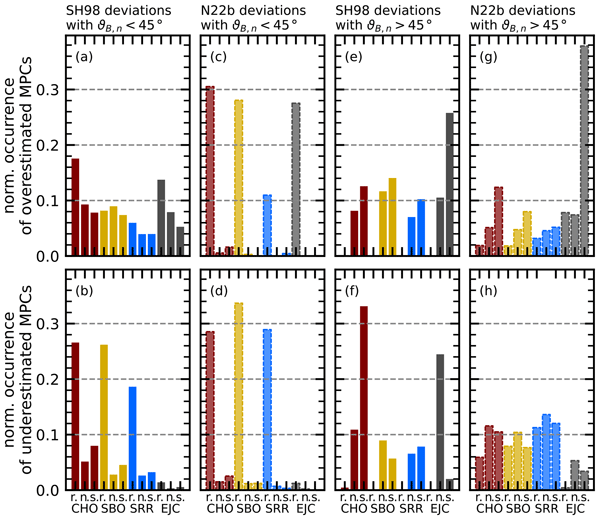
Niklas Grimmich, Adrian Pöppelwerth, Martin Owain Archer, David Gary Sibeck, Ferdinand Plaschke, Wenli Mo, Vicki Toy-Edens, Drew Lawson Turner, Hyangpyo Kim, and Rumi Nakamura
Ann. Geophys., 43, 151–173, https://doi.org/10.5194/angeo-43-151-2025, https://doi.org/10.5194/angeo-43-151-2025, 2025
Short summary
Short summary
The boundary of Earth's magnetic field, the magnetopause, deflects and reacts to the solar wind, the energetic particles emanating from the Sun. We find that certain types of solar wind favour the occurrence of deviations between the magnetopause locations observed by spacecraft and those predicted by models. In addition, the turbulent region in front of the magnetopause, the foreshock, has a large influence on the location of the magnetopause and thus on the accuracy of the model predictions.
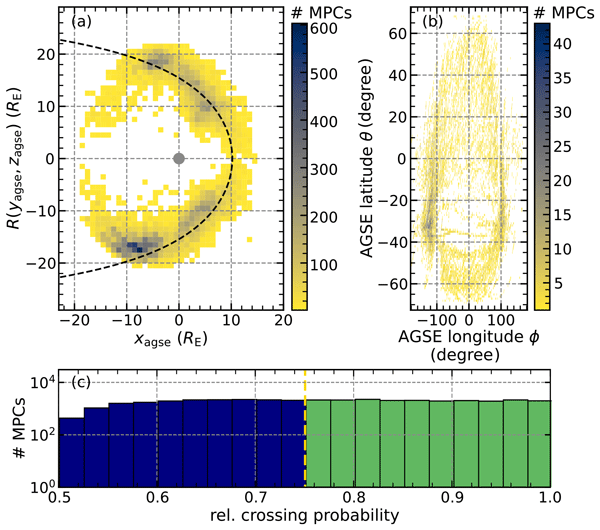
Niklas Grimmich, Ferdinand Plaschke, Benjamin Grison, Fabio Prencipe, Christophe Philippe Escoubet, Martin Owain Archer, Ovidiu Dragos Constantinescu, Stein Haaland, Rumi Nakamura, David Gary Sibeck, Fabien Darrouzet, Mykhaylo Hayosh, and Romain Maggiolo
Ann. Geophys., 42, 371–394, https://doi.org/10.5194/angeo-42-371-2024, https://doi.org/10.5194/angeo-42-371-2024, 2024
Short summary
Short summary
In our study, we looked at the boundary between the Earth's magnetic field and the interplanetary magnetic field emitted by the Sun, called the magnetopause. While other studies focus on the magnetopause motion near Earth's Equator, we have studied it in polar regions. The motion of the magnetopause is faster towards the Earth than towards the Sun. We also found that the occurrence of unusual magnetopause locations is due to similar solar influences in the equatorial and polar regions.
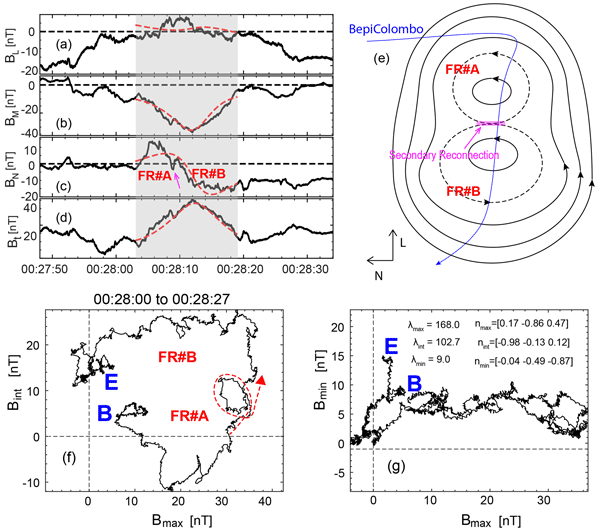
Weijie Sun, James A. Slavin, Rumi Nakamura, Daniel Heyner, Karlheinz J. Trattner, Johannes Z. D. Mieth, Jiutong Zhao, Qiu-Gang Zong, Sae Aizawa, Nicolas Andre, and Yoshifumi Saito
Ann. Geophys., 40, 217–229, https://doi.org/10.5194/angeo-40-217-2022, https://doi.org/10.5194/angeo-40-217-2022, 2022
Short summary
Short summary
This paper presents observations of FTE-type flux ropes on the dayside during BepiColombo's Earth flyby. FTE-type flux ropes are a well-known feature of magnetic reconnection on the magnetopause, and they can be used to constrain the location of reconnection X-lines. Our study suggests that the magnetopause X-line passed BepiColombo from the north as it traversed the magnetopause. Moreover, our results also strongly support coalescence creating larger flux ropes by combining smaller ones.
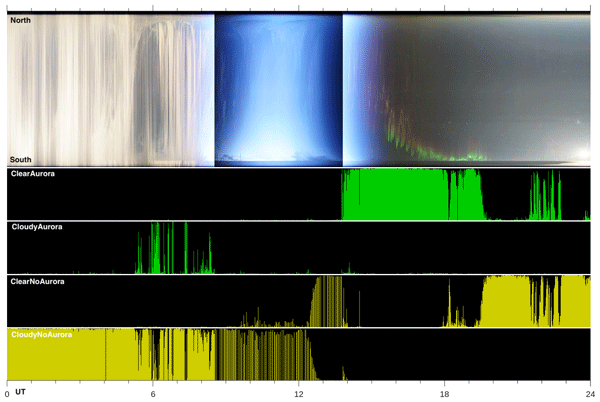
Noora Partamies and Mikko Syrjäsuo
Ann. Geophys., 44, 1003–1022, https://doi.org/10.5194/angeo-44-1003-2026, https://doi.org/10.5194/angeo-44-1003-2026, 2026
Short summary
Short summary
We developed a method to prune colour all-sky images into classes of clear or cloudy skies with and without aurora using supervised learning and pre-trained convolutional neural network. We investigate a 10-year database of auroral images taken from Svalbard. The method accuracy is well over 90 %, and the results show that about 2/3 of auroral images are cloudy with the cloudiest month being November. Aurora are most often observed in the morning hours independent on the solar activity.
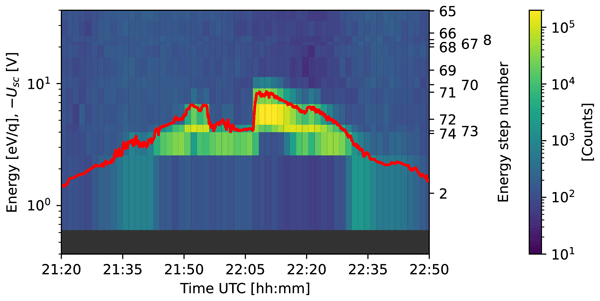
Gabriella Stenberg Wieser, Martin Wieser, Stas Barabash, Philipp Wittmann, Leif Kalla, Markus Fränz, Elias Roussos, Audrey Vorburger, Peter Wurz, Jan-Erik Wahlund, Pontus C. Brandt, Yoshifumi Futaana, Manabu Shimoyama, Angèle Pontoni, André Galli, Andreas Riedo, George Ho, Donald G. Mitchell, George Clark, Peter Kollmann, Malamati Gkioulidou, Leonardo Regoli, Norbert Krupp, Robert Wimmer-Schweingruber, Kazushi Asamura, Esa Kallio, Andrea Opitz, Manuel Grande, Andrew Coates, Geraint Jones, Theodoros Sarris, Andrey Fedorov, Nicolas André, and Ján Baláž
Ann. Geophys., 44, 937–948, https://doi.org/10.5194/angeo-44-937-2026, https://doi.org/10.5194/angeo-44-937-2026, 2026
Short summary
Short summary
We used Juice flyby of Earth in August 2024 to evaluate the performance of the Jovian Plasma Dynamics and Composition analyzer (JDC). JDC measures positive and negative ions as well as electrons. When Juice arrives at Jupiter, one of the most challenging tasks for JDC is to record low energy ion populations. We used the data JDC recorded close to Earth, together with measurement in the laboratory on ground, to improve the future observations the sensor will make around Jupiter’s icy moons.
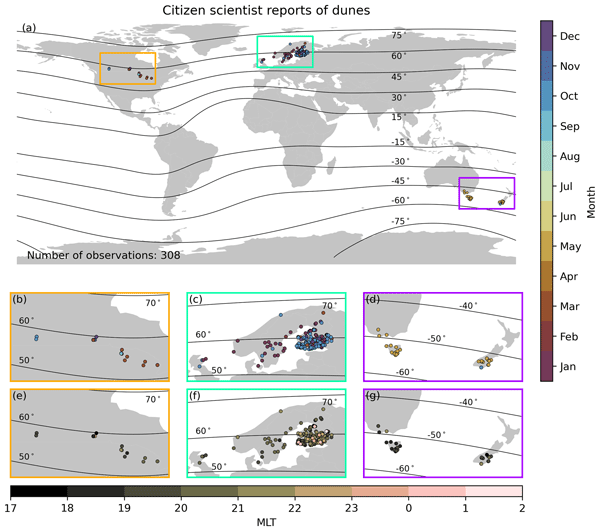
Maxime Grandin, Liisa Juusola, Noora Partamies, Emma Bruus, Joona Rautiainen, Donna Lach, Jia Jia, Max van de Kamp, Eero Karvinen, Kirsti Kauristie, and Theresa Hoppe
Ann. Geophys., 44, 855–880, https://doi.org/10.5194/angeo-44-855-2026, https://doi.org/10.5194/angeo-44-855-2026, 2026
Short summary
Short summary
Dune aurora is an intriguing phenomenon recently discovered thanks to citizen science. It is a dim, diffuse auroral form exhibiting wave-like stripes of brighter emission. We carry out the first statistical study of dune aurora, using 308 observation reports submitted to the Skywarden database by citizen scientists from Europe, North America, and Oceania. We find that dunes are an evening phenomenon, most often reported in March and October and associated with currents in the auroral atmosphere.
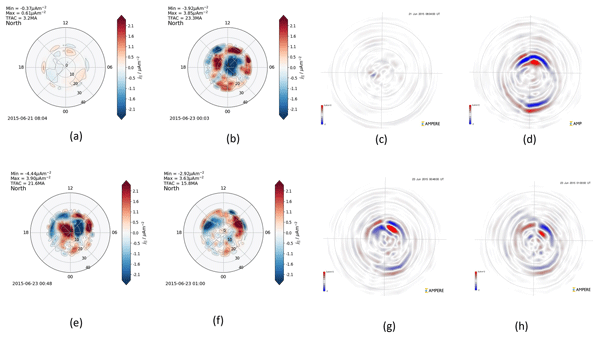
Somaiyeh Sabri and Stefaan Poedts
Ann. Geophys., 44, 743–763, https://doi.org/10.5194/angeo-44-743-2026, https://doi.org/10.5194/angeo-44-743-2026, 2026
Short summary
Short summary
Coronal mass ejections (CMEs) threaten Earth. We studied their interaction with the magnetosphere and ionosphere. Using the European Heliospheric Forecasting Information Asset (EUHFORIA), we calculated CME arrival times and investigated Earth's responses. Results show EUHFORIA and Gorgon-Space codes agree well in simulating CME propagation and interactions.
Markus Fraenz, Henning Fischer, Norbert Krupp, Elias Roussos, Philipp Wittmann, Patrick Bambach, Jan-Erik Wahlund, Gabriella Stenberg Wieser, Stas Barabash, Mika Holmberg, Maryam Zeroual, Pontus Brandt, Peter Wurz, Martin Wieser, Yoshifumi Futaana, Manabu Shimoyama, Angele Pontoni, Audrey Vorburger, Andre Galli, Andreas Riedo, George Ho, Donald Mitchell, George Clark, Peter Kollmann, Malamati Gkioulidou, Leonardo Regoli, Robert Wimmer-Schweingruber, Kazushi Asamura, Esa Kallio, Andrea Opitz, Manuel Grande, Andrew Coates, Geraint Jones, Theodoros Sarris, Andrey Fedorov, Nicolas André, and Ján Baláž
EGUsphere, https://doi.org/10.5194/egusphere-2026-2030, https://doi.org/10.5194/egusphere-2026-2030, 2026
Short summary
Short summary
During the first Earth gravity assist maneuver of the JUICE spacecraft in August 2024 the spacecraft passed through the Earth plasmasphere for about 2 hours. The ion spectrometer PEP JEI was able to make a very rare observation of the molecular ion fraction of the cold and dense plasma in the Earth plasmasphere. The observation shows that cold ions can emanate from the Earth ionosphere even at times when no magnetic storm enhances the ion extraction.
Adrian T. LaMoury, Leonard Schulz, Alexander Betzler, David Hercik, Hans-Ulrich Auster, Patrick Brown, Werner Magnes, Christoph Amtmann, Richard Baughen, Hao Cao, Irmgard Jernej, Roland Lammegger, Adam Masters, Ferdinand Plaschke, Xun Yu, Taylor Pomfret, Alex Strickland, Vaibhav Garg, and Michele K. Dougherty
EGUsphere, https://doi.org/10.5194/egusphere-2026-2054, https://doi.org/10.5194/egusphere-2026-2054, 2026
Short summary
Short summary
The ESA Jupiter Icy Moons Explorer (Juice) mission flew past Earth and the Moon in August 2024, and this provided an opportunity to test the scientific instruments onboard the spacecraft. Here we show the measurements made by the Juice magnetometer, J-MAG, which measures the magnetic field in space. By comparing J-MAG observations with data from other spacecraft, we find that all parts of the instrument are working extremely well at this early stage in the mission.
Stephen Omondi, Spencer Mark Hatch, Andreas Kvammen, Magnar Gullikstad Johnsen, Mathew J. Owens, Kristian Solheim Thinn, and Rodrigo López
EGUsphere, https://doi.org/10.5194/egusphere-2025-6298, https://doi.org/10.5194/egusphere-2025-6298, 2026
Short summary
Short summary
Researchers tested whether combining real-time solar wind data with forecasts can improve predictions of local geomagnetic activity in Norway. Using a machine learning model, they found that accurate solar wind speed and magnetic field direction are key for reliable forecasts over 3 hours ahead, while CME arrival time only helps if magnetic field data is precise.
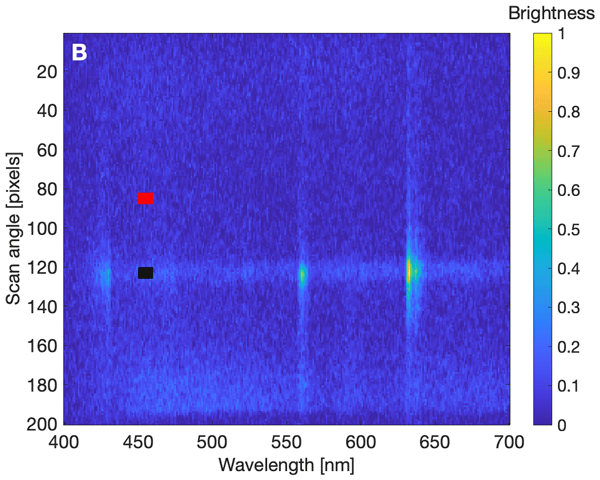
Noora Partamies, Rowan Dayton-Oxland, Katie Herlingshaw, Ilkka Virtanen, Bea Gallardo-Lacourt, Mikko Syrjäsuo, Fred Sigernes, Takanori Nishiyama, Toshi Nishimura, Mathieu Barthelemy, Anasuya Aruliah, Daniel Whiter, Lena Mielke, Maxime Grandin, Eero Karvinen, Marjan Spijkers, and Vincent E. Ledvina
Ann. Geophys., 43, 349–367, https://doi.org/10.5194/angeo-43-349-2025, https://doi.org/10.5194/angeo-43-349-2025, 2025
Short summary
Short summary
We studied the first broad band emissions, called continuum, in the dayside aurora. They are similar to Strong Thermal Emission Velocity Enhancement (STEVE) with white-, pale-pink-, or mauve-coloured light. But unlike STEVE, they follow the dayside aurora forming rays and other dynamic shapes. We used ground optical and radar observations and found evidence of heating and upwelling of both plasma and neutral air. This study provides new information on conditions for continuum emission, but its understanding will require further work.
Niklas Grimmich, Adrian Pöppelwerth, Martin Owain Archer, David Gary Sibeck, Ferdinand Plaschke, Wenli Mo, Vicki Toy-Edens, Drew Lawson Turner, Hyangpyo Kim, and Rumi Nakamura
Ann. Geophys., 43, 151–173, https://doi.org/10.5194/angeo-43-151-2025, https://doi.org/10.5194/angeo-43-151-2025, 2025
Short summary
Short summary
The boundary of Earth's magnetic field, the magnetopause, deflects and reacts to the solar wind, the energetic particles emanating from the Sun. We find that certain types of solar wind favour the occurrence of deviations between the magnetopause locations observed by spacecraft and those predicted by models. In addition, the turbulent region in front of the magnetopause, the foreshock, has a large influence on the location of the magnetopause and thus on the accuracy of the model predictions.
Maxime Grandin, Emma Bruus, Vincent E. Ledvina, Noora Partamies, Mathieu Barthelemy, Carlos Martinis, Rowan Dayton-Oxland, Bea Gallardo-Lacourt, Yukitoshi Nishimura, Katie Herlingshaw, Neethal Thomas, Eero Karvinen, Donna Lach, Marjan Spijkers, and Calle Bergstrand
Geosci. Commun., 7, 297–316, https://doi.org/10.5194/gc-7-297-2024, https://doi.org/10.5194/gc-7-297-2024, 2024
Short summary
Short summary
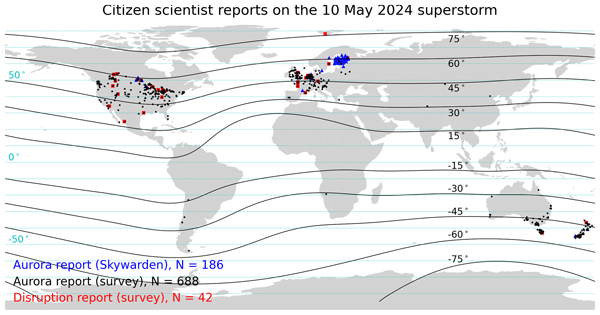
We carried out a citizen science study of aurora sightings and technological disruptions experienced during the extreme geomagnetic storm of 10 May 2024. We collected reports from 696 observers from over 30 countries via an online survey, supplemented with observations logged in the Skywarden database. We found that the aurora was seen from exceptionally low latitudes and had very bright red and pink hues, suggesting that high fluxes of low-energy electrons from space entered the atmosphere.
Niklas Grimmich, Ferdinand Plaschke, Benjamin Grison, Fabio Prencipe, Christophe Philippe Escoubet, Martin Owain Archer, Ovidiu Dragos Constantinescu, Stein Haaland, Rumi Nakamura, David Gary Sibeck, Fabien Darrouzet, Mykhaylo Hayosh, and Romain Maggiolo
Ann. Geophys., 42, 371–394, https://doi.org/10.5194/angeo-42-371-2024, https://doi.org/10.5194/angeo-42-371-2024, 2024
Short summary
Short summary
In our study, we looked at the boundary between the Earth's magnetic field and the interplanetary magnetic field emitted by the Sun, called the magnetopause. While other studies focus on the magnetopause motion near Earth's Equator, we have studied it in polar regions. The motion of the magnetopause is faster towards the Earth than towards the Sun. We also found that the occurrence of unusual magnetopause locations is due to similar solar influences in the equatorial and polar regions.
Maxime Grandin, Noora Partamies, and Ilkka I. Virtanen
Ann. Geophys., 42, 355–369, https://doi.org/10.5194/angeo-42-355-2024, https://doi.org/10.5194/angeo-42-355-2024, 2024
Short summary
Short summary
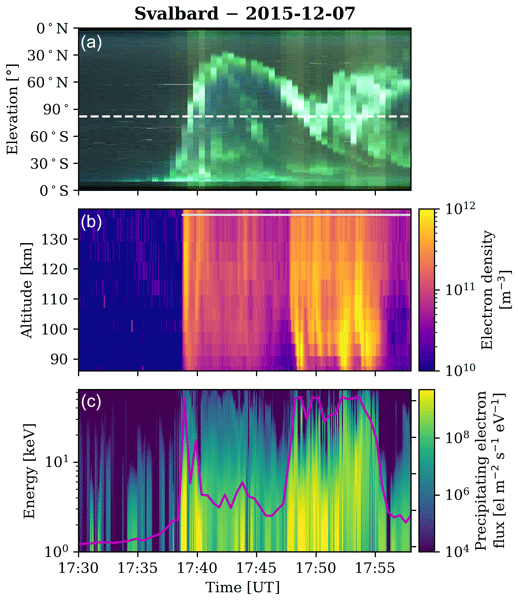
Auroral displays typically take place at high latitudes, but the exact latitude where the auroral breakup occurs can vary. In this study, we compare the characteristics of the fluxes of precipitating electrons from space during auroral breakups occurring above Tromsø (central part of the auroral zone) and above Svalbard (poleward boundary of the auroral zone). We find that electrons responsible for the aurora above Tromsø carry more energy than those precipitating above Svalbard.
Somaiyeh Sabri and Stefaan Poedts
EGUsphere, https://doi.org/10.5194/egusphere-2024-1921, https://doi.org/10.5194/egusphere-2024-1921, 2024
Preprint archived
Short summary
Short summary
The study highlights that interactions of CMEs play a significant role in determining their impact on Earth, highlighting that their initial speeds, while similar, are less influential. Besides, the EUHFORIA numerical model align with the findings of the GFZ German research center, this implies that EUHFORIA has also the capability to compute and potentially forecast the impact of CMEs on the Earth.
Noora Partamies, Bas Dol, Vincent Teissier, Liisa Juusola, Mikko Syrjäsuo, and Hjalmar Mulders
Ann. Geophys., 42, 103–115, https://doi.org/10.5194/angeo-42-103-2024, https://doi.org/10.5194/angeo-42-103-2024, 2024
Short summary
Short summary
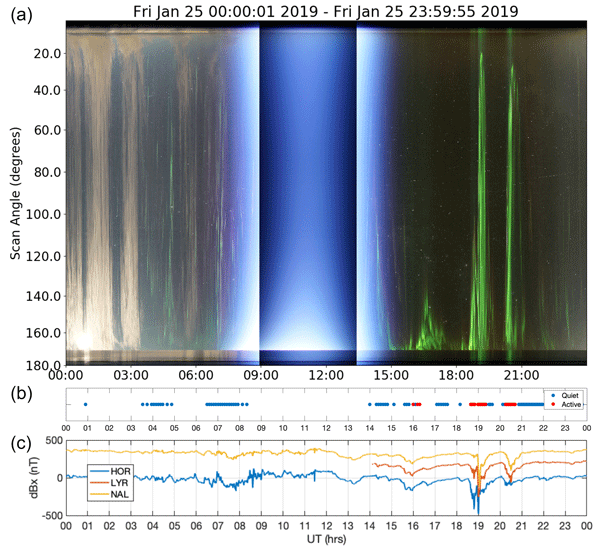
Auroral imaging produces large amounts of image data that can no longer be analyzed by visual inspection. Thus, every step towards automatic analysis tools is crucial. Previously supervised learning methods have been used in auroral physics, with a human expert providing ground truth. However, this ground truth is debatable. We present an unsupervised learning method, which shows promising results in detecting auroral breakups in the all-sky image data.
Alexandra Ruth Fogg, Caitríona M. Jackman, Sandra C. Chapman, James E. Waters, Aisling Bergin, Laurent Lamy, Karine Issautier, Baptiste Cecconi, and Xavier Bonnin
Nonlin. Processes Geophys., 31, 195–206, https://doi.org/10.5194/npg-31-195-2024, https://doi.org/10.5194/npg-31-195-2024, 2024
Short summary
Short summary
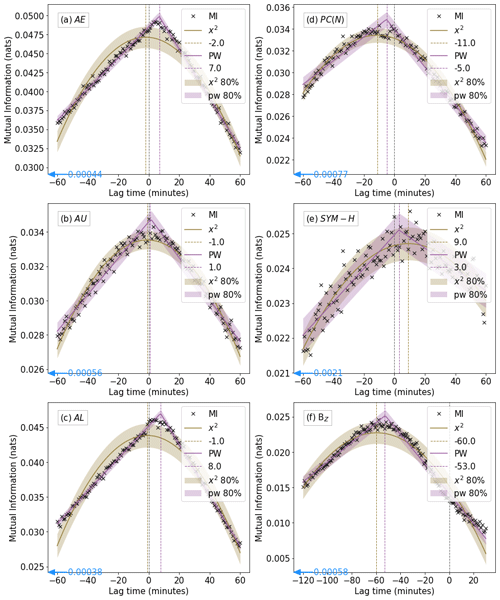
Auroral kilometric radiation (AKR) is a radio emission emitted by Earth. Due to the complex mixture of phenomena in the magnetosphere, it is tricky to estimate the time difference between the excitation of two systems. In this study, AKR is compared with indices describing Earth's system. Time differences between the excitation of AKR and the indices are estimated using mutual information. AKR feels an enhancement before the aurora but after more polar latitude features.
Ariel Tello Fallau, Charlotte Goetz, Cyril Simon Wedlund, Martin Volwerk, and Anja Moeslinger
Ann. Geophys., 41, 569–587, https://doi.org/10.5194/angeo-41-569-2023, https://doi.org/10.5194/angeo-41-569-2023, 2023
Short summary
Short summary
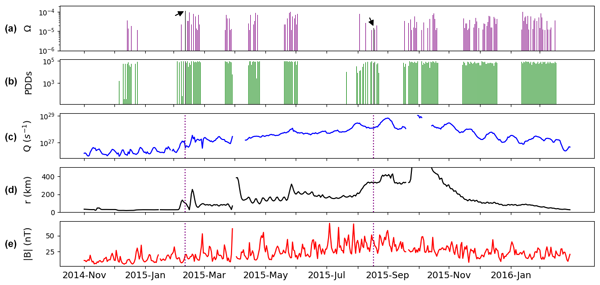
The plasma environment of comet 67P provides a unique laboratory to study plasma phenomena in the solar system. Previous studies have reported the existence of mirror modes at 67P but no further systematic investigation has so far been done. This study aims to learn more about these waves. We investigate the magnetic field measured by Rosetta and find 565 mirror mode signatures. The detected mirror modes are likely generated upstream of the observation and have been modified by the plasma.
Noora Partamies, Daniel Whiter, Kirsti Kauristie, and Stefano Massetti
Ann. Geophys., 40, 605–618, https://doi.org/10.5194/angeo-40-605-2022, https://doi.org/10.5194/angeo-40-605-2022, 2022
Short summary
Short summary
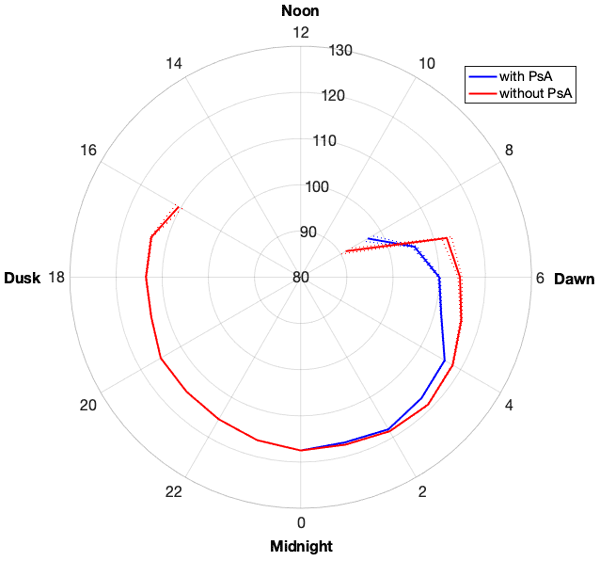
We investigate the local time behaviour of auroral structures and emission height. Data are collected from the Fennoscandian Lapland and Svalbard latitutes from 7 identical auroral all-sky cameras over about 1 solar cycle. The typical peak emission height of the green aurora varies from 110 km on the nightside to about 118 km in the morning over Lapland but stays systematically higher over Svalbard. During fast solar wind, nightside emission heights are 5 km lower than during slow solar wind.
Weijie Sun, James A. Slavin, Rumi Nakamura, Daniel Heyner, Karlheinz J. Trattner, Johannes Z. D. Mieth, Jiutong Zhao, Qiu-Gang Zong, Sae Aizawa, Nicolas Andre, and Yoshifumi Saito
Ann. Geophys., 40, 217–229, https://doi.org/10.5194/angeo-40-217-2022, https://doi.org/10.5194/angeo-40-217-2022, 2022
Short summary
Short summary
This paper presents observations of FTE-type flux ropes on the dayside during BepiColombo's Earth flyby. FTE-type flux ropes are a well-known feature of magnetic reconnection on the magnetopause, and they can be used to constrain the location of reconnection X-lines. Our study suggests that the magnetopause X-line passed BepiColombo from the north as it traversed the magnetopause. Moreover, our results also strongly support coalescence creating larger flux ropes by combining smaller ones.
Cited articles
Akasofu, S. I. and Chapman, S.: Magnetic Storms: The Simultaneous Development of the Main Phase (DR) and of Polar Magnetic Substorms (DP), J. Geophys. Res., 68, 3155–3158, https://doi.org/10.1029/JZ068i010p03155, 1963. a
Alfonsi, L., Bergeot, N., Cilliers, P. J., De Franceschi, G., Baddeley, L., Correia, E., Di Mauro, D., Enell, C.-F., Engebretson, M., Ghoddousi-Fard, R., Häggström, I., Ham, Y.-b., Heygster, G., Jee, G., Kero, A., Kosch, M., Kwon, H.-J., Lee, C., Lotz, S., Macotela, L., Marcucci, M. F., Miloch, W. J., Morton, Y. J., Naoi, T., Negusini, M., Partamies, N., Petkov, B. H., Pottiaux, E., Prikryl, P., Shreedevi, P. R., Slapak, R., Spogli, L., Stephenson, J., Triana-Gómez, A. M., Troshichev, O. A., Van Malderen, R., Weygand, J. M., and Zou, S.: Review of Environmental Monitoring by Means of Radio Waves in the Polar Regions: From Atmosphere to Geospace, Surv. Geoph., 43, 1609–1698, https://doi.org/10.1007/s10712-022-09734-z, 2022. a
Amm, O., Donovan, E. F., Frey, H., Lester, M., Nakamura, R., Wild, J. A., Aikio, A., Dunlop, M., Kauristie, K., Marchaudon, A., McCrea, I. W., Opgenoorth, H.-J., and Strømme, A.: Coordinated studies of the geospace environment using Cluster, satellite and ground-based data: an interim review, Ann. Geophys., 23, 2129–2170, https://doi.org/10.5194/angeo-23-2129-2005, 2005. a
Angelopoulos, V.: The THEMIS Mission, Space Sci. Rev., 141, 5–34, https://doi.org/10.1007/s11214-008-9336-1, 2008. a
Angelopoulos, V., McFadden, J. P., Larson, D., Carlson, C. W., Mende, S. B., Frey, H., Phan, T., Sibeck, D. G., Glassmeier, K.-H., Auster, U., Donovan, E., Mann, I. R., Rae, I. J., Russell, C. T., Runov, A., Zhou, X.-Z., and Kepko, L.: Tail Reconnection Triggering Substorm Onset, Science, 321, 931, https://doi.org/10.1126/science.1160495, 2008. a
Antonucci, E., Harra, L., Susino, R., and Telloni, D.: Observations of the Solar Corona from Space, Space Sci. Rev., 216, 117, https://doi.org/10.1007/s11214-020-00743-1, 2020. a
Arlt, R. and Vaquero, J. M.: Historical sunspot records, Living Rev. Solar Phys., 17, 1, https://doi.org/10.1007/s41116-020-0023-y, 2020. a
Baker, D., Kanekal, S., Li, X., Monk, S., Goldstein, J., and Burch, J.: An extreme distortion of the Van Allen belt arising from the Halloween solar storm in 2003, Nature, 432, 878–880, 2004. a
Baker, D. N., Allen, J. H., Belian, R. D., Blake, J. B., Kanekal, S. G., Klecker, B., Lepping, R. P., Li, X., Mewaldt, R. A., Ogilvie, K., Onsager, T., Reeves, J. D., Rostoker, G., Sheldon, R. B., Singer, H. J., Spence, H. E., and Turner, N. E.: An assessment of space environmental conditions during the recent Anik E1 spacecraft operational failure, ISTP Newsletter, 6, 8–29, 1996. a
Barnes, W. T., Christe, S., Freij, N., Hayes, L. A., Stansby, D., Ireland, J., Mumford, S. J., Ryan, D. F., and Shih, A. Y.: The SunPy Project: An interoperable ecosystem for solar data analysis, Front. Astron. Space Sci., 10, 1076726, https://doi.org/10.3389/fspas.2023.1076726, 2023. a
Barnum, J., Masson, A., Friedel, R. H. W., Roberts, A., and Thomas, B. A.: Python in Heliophysics Community (PyHC): Current status and future outlook, Adv. Space Res., 72, 5636–5649, https://doi.org/10.1016/j.asr.2022.10.006, 2023. a
Baum, A. C., Wright, J. T., Luhn, J. K., and Isaacson, H.: Five Decades of Chromospheric Activity in 59 Sun-like Stars and New Maunder Minimum Candidate HD 166620, Astron. J., 163, 183, https://doi.org/10.3847/1538-3881/ac5683, 2022. a
Benkhoff, J., Murakami, G., Baumjohann, W., Besse, S., Bunce, E., Casale, M., Cremonese, G., Glassmeier, K. H., Hayakawa, H., Heyner, D., Hiesinger, H., Huovelin, J., Hussmann, H., Iafolla, V., Iess, L., Kasaba, Y., Kobayashi, M., Milillo, A., Mitrofanov, I. G., Montagnon, E., Novara, M., Orsini, S., Quemerais, E., Reininghaus, U., Saito, Y., Santoli, F., Stramaccioni, D., Sutherland, O., Thomas, N., Yoshikawa, I., and Zender, J.: BepiColombo – Mission Overview and Science Goals, Space Sci. Rev., 217, 90, https://doi.org/10.1007/s11214-021-00861-4, 2021. a, b
Bertaux, J., Quemerais, E., Lallement, R., Lamassoure, E., Schmidt, W., and Kyrölä, E.: Monitoring solar activity on the far side of the Sun from sky reflected Lyman radiation, Geophys. Res. Lett., 27, 1331–1334, https://doi.org/10.1029/1999GL003722, 2000. a
Berthelier, J.-J., Clemmons, J., Ivchenko, N., Knudsen, D., Matsuo, T., Maute, A., Palmroth, M., Partamies, N., Perry, G., Pfaff, R., Sarris, T. , Stolle, C., Thayer, J., and Vines, S.: Exploring Earth's Interface with Space: The Scientific Case for a Satellite Mission to the Lower Thermosphere-Ionosphere Transition Region, Tech. Rep. ESA-EOPSM-ELTI-RP-4592, European Space Agency [code], https://doi.org/10.5270/ESA-NASA.LTI-SC.2024-07-v1.0, 2024. a
Birkeland, K.: On the Cause of Magnetic Storms and the Origin of Terrestrial Magnetism, no. Bd. 1, in Norwegian Aurora Polaris Expedition, 1902–1903, H. Aschehoug, https://doi.org/10.5962/bhl.title.17857, 1908. a
Blelly, P.-L., Robineau, A., Lilensten, J., and Lummerzheim, D.: 8-moment fluid models of the terrestrial high-latitude ionosphere between 100 and 3000 km, in: Solar Terrestrial Energy Program Ionospheric Model Handbook, edited by Schunk, R., 53–72, Utah State University, Logan, 1996. a
Blelly, P.-L., Lathuillère, C., Emery, B., Lilensten, J., Fontanari, J., and Alcaydé, D.: An extended TRANSCAR model including ionospheric convection: simulation of EISCAT observations using inputs from AMIE, Ann. Geophys., 23, 419–431, https://doi.org/10.5194/angeo-23-419-2005, 2005. a
Blinder, C.: Voyager 1 science resumes after interstellar crisis, Science, 384, 942–943, https://doi.org/10.1126/science.adq7355, 2024. a
Blum, P. W. and Fahr, H. J.: Interaction between Interstellar Hydrogen and the Solar Wind, Astron. Astroph., 4, 280, https://ui.adsabs.harvard.edu/abs/ (last access: November 2025), 1970. a
Branduardi-Raymont, G., Wang, C., Escoubet, C. P., Adamovic, M., Agnolon, D., Berthomier, M., Carter, J., Chen, W., Colangeli, L., and Zhu, Z.: Smile definition study report (red book), ESA, https://doi.org/10.5270/esa.smile.definition_study_report-2018-12, 2018. a
Brehm, N., Bayliss, A., Christl, M., Synal, H.-A., Adolphi, F., Beer, J., Kromer, B., Muscheler, R., Solanki, S. K., Usoskin, I., Bleicher, N., Bollhalder, S., Tyers, C., and Wacker, L.: Eleven-year solar cycles over the last millennium revealed by radiocarbon in tree rings, Nat. Geosci., 14, 10–15, https://doi.org/10.1038/s41561-020-00674-0, 2021. a
Bruinsma, S.: The DTM-2013 thermosphere model, J. Space Weather Space Clim., 5, A1, https://doi.org/10.1051/swsc/2015001, 2015. a
Bruno, R. and Carbone, V.: The Solar Wind as a Turbulence Laboratory, Living Rev. Solar Phys., 2, 4, https://doi.org/10.12942/lrsp-2013-2, 2013. a
Burch, J. L., Moore, T. E., Torbert, R. B., and Giles, B. L.: Magnetospheric Multiscale Overview and Science Objectives, Space Sci. Rev., 199, 5–21, https://doi.org/10.1007/s11214-015-0164-9, 2016. a
Burlaga, L. F., Ness, N. F., Berdichevsky, D. B., Jian, L. K., Kurth, W., Park, J., Rankin, J., and Szabo, A.: Magnetic Field Observations in the Very Local Interstellar Medium by Voyagers 1 and 2, Astroph. J., 932, 59, https://doi.org/10.3847/1538-4357/ac658e, 2022. a
Cappello, G. M., Temmer, M., Vourlidas, A., Braga, C., Liewer, P. C., Qiu, J., Stenborg, G., Kouloumvakos, A., Veronig, A. M., and Bothmer, V.: Internal magnetic field structures observed by PSP/WISPR in a filament-related coronal mass ejection, Astron. Astroph., 688, A162, https://doi.org/10.1051/0004-6361/202449613, 2024. a
Chatzistergos, T., Krivova, N. A., and Yeo, K. L.: Long-term changes in solar activity and irradiance, J. Atmos. Solar-Terr. Phys., 252, 106150, https://doi.org/10.1016/j.jastp.2023.106150, 2023. a
Chicarro, A., Martin, P., and Trautner, R.: The Mars Express mission: an overview, in: Mars Express: the Scientific Payload, edited by: Wilson, A. and Chicarro, A., vol. 1240 of ESA Special Publication, 3–13, https://sci.esa.int/documents/33745/35957/1567254632829-OverviewWeb.pdf (last access: November 2025), 2004. a
Clette, F., Lefèvre, L., Chatzistergos, T., Hayakawa, H., Carrasco, V. M. S., Arlt, R., Cliver, E. W., Dudok de Wit, T., Friedli, T. K., Karachik, N., Kopp, G., Lockwood, M., Mathieu, S., Muñoz-Jaramillo, A., Owens, M., Pesnell, D., Pevtsov, A., Svalgaard, L., Usoskin, I. G., van Driel-Gesztelyi, L., and Vaquero, J. M.: Recalibration of the Sunspot-Number: Status Report, Solar Phys., 298, 44, https://doi.org/10.1007/s11207-023-02136-3, 2023. a
Cranmer, S. R. and Winebarger, A. R.: The Properties of the Solar Corona and Its Connection to the Solar Wind, Ann. Rev. Astron. Astroph., 57, 157–187, https://doi.org/10.1146/annurev-astro-091918-104416, 2019. a
Davies, E. E., Möstl, C., Owens, M. J., Weiss, A. J., Amerstorfer, T., Hinterreiter, J., Bauer, M., Bailey, R. L., Reiss, M. A., Forsyth, R. J., Horbury, T. S., O'Brien, H., Evans, V., Angelini, V., Heyner, D., Richter, I., Auster, H. U., Magnes, W., Baumjohann, W., Fischer, D., Barnes, D., Davies, J. A., and Harrison, R. A.: In situ multi-spacecraft and remote imaging observations of the first CME detected by Solar Orbiter and BepiColombo, Astron. Astroph., 656, A2, https://doi.org/10.1051/0004-6361/202040113, 2021. a, b, c
Domingo, V., Fleck, B., and Poland, A. I.: The SOHO Mission: an Overview, Solar Phys., 162, 1–37, https://doi.org/10.1007/BF00733425, 1995. a
Dougherty, M. K., Khurana, K. K., Neubauer, F. M., Russell, C. T., Saur, J., Leisner, J. S., and Burton, M. E.: Identification of a Dynamic Atmosphere at Enceladus with the Cassini Magnetometer, Science, 311, 1406–1409, https://doi.org/10.1126/science.1120985, 2006. a
Drake, J. F., Opher, M., Swisdak, M., and Chamoun, J. N.: A Magnetic Reconnection Mechanism for the Generation of Anomalous Cosmic Rays, Astroph. J., 709, 963–974, https://doi.org/10.1088/0004-637X/709/2/963, 2010. a
Dreyer, J., Partamies, N., Whiter, D., Ellingsen, P. G., Baddeley, L., and Buchert, S. C.: Characteristics of fragmented aurora-like emissions (FAEs) observed on Svalbard, Ann. Geophys., 39, 277–288, https://doi.org/10.5194/angeo-39-277-2021, 2021. a
Dungey, J. W.: Interplanetary Magnetic Field and the Auroral Zones, Phys. Rev. Lett., 6, 47–48, https://doi.org/10.1103/PhysRevLett.6.47, 1961. a
Ermolli, I., Matthes, K., Dudok de Wit, T., Krivova, N. A., Tourpali, K., Weber, M., Unruh, Y. C., Gray, L., Langematz, U., Pilewskie, P., Rozanov, E., Schmutz, W., Shapiro, A., Solanki, S. K., and Woods, T. N.: Recent variability of the solar spectral irradiance and its impact on climate modelling, Atmos. Chem. Phys., 13, 3945–3977, https://doi.org/10.5194/acp-13-3945-2013, 2013. a
Fimmel, R. O., van Allen, J., and Burgess, E.: Pioneer, first to Jupiter, Saturn, and beyond, vol. SP-446, NASA, Washington DC, USA, 1980. a
Foullon, C., Verwichte, E., Nakariakov, V. M., Nykyri, K., and Farrugia, C. J.: Magnetic Kelvin-Helmholtz Instability at the Sun, Astroph. J. Lett., 729, L8, https://doi.org/10.1088/2041-8205/729/1/L8, 2011. a, b
Fox, N. J., Velli, M. C., Bale, S. D., Decker, R., Driesman, A., Howard, R. A., Kasper, J. C., Kinnison, J., Kusterer, M., Lario, D., Lockwood, M. K., McComas, D. J., Raouafi, N. E., and Szabo, A.: The Solar Probe Plus Mission: Humanity's First Visit to Our Star, Space Sci. Rev., 204, 7–48, https://doi.org/10.1007/s11214-015-0211-6, 2016. a
Friis-Christensen, E., Lühr, H., and Hulot, G.: Swarm: A constellation to study the Earth's magnetic field, Earth Planets Space, 58, 351–358, https://doi.org/10.1186/BF03351933, 2006. a
Futaana, Y., Stenberg Wieser, G., Barabash, S., and Luhmann, J. G.: Solar Wind Interaction and Impact on the Venus Atmosphere, Space Sci. Rev., 212, 1453–1509, https://doi.org/10.1007/s11214-017-0362-8, 2017. a
Galand, M., Feldman, P. D., Bockelée-Morvan, D., Biver, N., Cheng, Y. C., Rinaldi, G., Rubin, M., Altwegg, K., Deca, J., Beth, A., Stephenson, P., Heritier, K. L., Henri, P., Parker, J. W., Carr, C., Eriksson, A. I., and Burch, J.: Far-ultraviolet aurora identified at comet 67P/Churyumov-Gerasimenko, Nat. Astron., 4, 1084–1091, https://doi.org/10.1038/s41550-020-1171-7, 2020. a
Gekelman, W., Pfister, H., Lucky, Z., Bamber, J., Leneman, D., and Maggs, J.: Design, construction, and properties of the large plasma research device – The LAPD at UCLA, Rev. Sci. Instrum., 62, 2875–2883, https://doi.org/10.1063/1.1142175, 1991. a
Glassmeier, K.-H., Boehnhardt, H., Koschny, D., Kührt, E., and Richter, I.: The Rosetta Mission: Flying Towards the Origin of the Solar System, Space Sci. Rev., 128, 1–21, https://doi.org/10.1007/s11214-006-9140-8, 2007. a, b
Goetz, C., Behar, E., Beth, A., Bodewits, D., Bromley, S., Burch, J., Deca, J., Divin, A., Eriksson, A. I., Feldman, P. D., Galand, M., Gunell, H., Henri, P., Heritier, K., Jones, G. H., Mandt, K. E., Nilsson, H., Noonan, J. W., Odelstad, E., Parker, J. W., Rubin, M., Simon Wedlund, C., Stephenson, P., Taylor, M. G. G. T., Vigren, E., Vines, S. K., and Volwerk, M.: The Plasma Environment of Comet 67P/Churyumov-Gerasimenko, Space Sci. Rev., 218, 65, https://doi.org/10.1007/s11214-022-00931-1, 2022. a
Gordillo-Vázquez, F. J. and Pérez-Invernón, F. J.: A review of the impact of transient luminous events on the atmospheric chemistry: Past, present, and future, Atmos. Res., 252, 105432, https://doi.org/10.1016/j.atmosres.2020.105432, 2021. a
Grotzinger, J. P., Crisp, J., Vasavada, A. R., Anderson, R. C., Baker, C. J., Barry, R., Blake, D. F., Conrad, P., Edgett, K. S., Ferdowski, B., Gellert, R., Gilbert, J. B., Golombek, M., Gómez-Elvira, J., Hassler, D. M., Jandura, L., Litvak, M., Mahaffy, P., Maki, J., Meyer, M., Malin, M. C., Mitrofanov, I., Simmonds, J. J., Vaniman, D., Welch, R. V., and Wiens, R. C.: Mars Science Laboratory Mission and Science Investigation, Space Sci. Rev., 170, 5–56, https://doi.org/10.1007/s11214-012-9892-2, 2012. a
Halekas, J., Sarantos, M., Regoli, L., Harada, Y., Zheng, Y., Nishino, M., Vines, S., Szalay, J., Chi, P., Leon, O., Denevi, B., Sibeck, D., Chen, L.-J., Hartzell, C., Horanyi, M., Stanier, A., Lillis, R., Fuqua Haviland, H., Wang, X., Keller, J., Zou, X.-D., Chu, F., Cao, X., Xu, S., Liuzzo, L., Kurth, W., Hospodarsky, G., Angelopoulos, V., Yokota, S., Fatemi, S., Miyoshi, Y., Morrissey, L., Bale, S., Sawyer, R., Jordan, A., Alves, M., Prem, P., Allen, R., Ridenti, M., Waller, D., Blewett, D., Malaspina, D., Tucker, O., Poppe, A., Nord, M., Grava, C., Hood, L., Deca, J., Dudok de Wit, T., Ho, G., Kramer, G., Krasnoselskikh, V., and Saxena, P.: The Value of the Moon for Heliophysics, Bull. Am. Astron. Soc., vol. 55, 149, https://doi.org/10.3847/25c2cfeb.ed6f0be4, 2023. a, b
Hapke, B.: Space weathering from Mercury to the asteroid belt, J. Geophys. Res., 106, 10039–10074, https://doi.org/10.1029/2000JE001338, 2001. a
Harten, R. and Clark, K.: The Design Features of the GGS Wind and Polar Spacecraft, Space Sci. Rev., 71, 23–40, https://doi.org/10.1007/BF00751324, 1995. a
Hasegawa, H., Fujimoto, M., Phan, T. D., Rème, H., Balogh, A., Dunlop, M. W., Hashimoto, C., and TanDokoro, R.: Transport of solar wind into Earth's magnetosphere through rolled-up Kelvin-Helmholtz vortices, Nature, 430, 755–758, https://doi.org/10.1038/nature02799, 2004. a, b
Hassler, D. M., Zeitlin, C., Wimmer-Schweingruber, R. F., Böttcher, S., Martin, C., Andrews, J., Böhm, E., Brinza, D. E., Bullock, M. A., Burmeister, S., Ehresmann, B., Epperly, M., Grinspoon, D., Köhler, J., Kortmann, O., Neal, K., Peterson, J., Posner, A., Rafkin, S., Seimetz, L., Smith, K. D., Tyler, Y., Weigle, G., Reitz, G., and Cucinotta, F. A.: The Radiation Assessment Detector (RAD) Investigation, Space Sci. Rev., 170, 503–558, https://doi.org/10.1007/s11214-012-9913-1, 2012. a
Heinemann, S. G., Pomoell, J., Caplan, R. M., Owens, M. J., Jones, S., Upton, L., Jha, B. K., and Arge, C. N.: Quantifying Uncertainties in Solar Wind Forecasting due to Incomplete Solar Magnetic Field Information, Astroph. J., 986, 166, https://doi.org/10.3847/1538-4357/adcf9e, 2025. a
Herbst, K., Baalmann, L. R., Bykov, A., Engelbrecht, N. E., Ferreira, S. E. S., Izmodenov, V. V., Korolkov, S. D., Levenfish, K. P., Linsky, J. L., Meyer, D. M. A., Scherer, K., and Strauss, R. D. T.: Astrospheres of Planet-Hosting Cool Stars and Beyond ⋅ When Modeling Meets Observations, Space Sci. Rev., 218, 29, https://doi.org/10.1007/s11214-022-00894-3, 2022. a
Horányi, M., Havnes, O., and Morfill, G. E.: Dusty plasmas in the solar system, in: Complex and Dusty Plasmas: From Laboratory to Space, edited by Fortov, V. E. and Morfill, G. E., CRC Press, Boca Raton, USA, p. 291, https://doi.org/10.1201/9780367802882, 2009. a
Horne, R. B., Thorne, R. M., Shprits, Y. Y., Meredith, N. P., Glauert, S. A., Smith, A. J., Kanekal, S. G., Baker, D. N., Engebretson, M. J., Posch, J. L., Spasojevic, M., Inan, U. S., Pickett, J. S., and Décréau, P. M. E.: Wave acceleration of electrons in the Van Allen radiation belts, Nature, 437, 227–230, https://doi.org/10.1038/nature03939, 2005. a
Howes, G. G.: Laboratory space physics: Investigating the physics of space plasmas in the laboratory, Phys. Plasmas, 25, 055501, https://doi.org/10.1063/1.5025421, 2018. a, b
Ishii, M., Costa, J. E., Kuznetsova, M., Bisi, M. M., Meza, A., Veronig, A. M., Denardini, C. M., Plainaki, C., Dasso, S., Temmer, M., Molina, M. G., Berdermann, J., Yoon, K., Gonzalez-Esparza, J. A., Valdivia, J. A., Supnithi, P., Marshall, R., Bruinsma, S. L., Onsager, T., Lanabere, V., Pötzi, W., Bouya, Z., Rodger, C. J., Bothmer, V., Luo, B., Nandy, D., Martini, D., Wintoft, P., Kero, J., Jackson, D., Kholodkov, K., Rabiu, B., Cid, C., Alfonsi, L., Raulin, J. P., Boteler, D., Scipion Castill, D. E., and Tulunay, Y.: Global landscape of space weather observations, research and operations, Adv. Space Res., https://doi.org/10.1016/j.asr.2025.06.021, 2025. a
Jackman, C. M., Arridge, C. S., André, N., Bagenal, F., Birn, J., Freeman, M. P., Jia, X., Kidder, A., Milan, S. E., Radioti, A., Slavin, J. A., Vogt, M. F., Volwerk, M., and Walsh, A. P.: Large-Scale Structure and Dynamics of the Magnetotails of Mercury, Earth, Jupiter and Saturn, Space Sci. Rev., 182, 85–154, https://doi.org/10.1007/s11214-014-0060-8, 2014. a
Ji, H., Daughton, W., Jara-Almonte, J., Le, A., Stanier, A., and Yoo, J.: Magnetic reconnection in the era of exascale computing and multiscale experiments, Nat. Rev. Phys., 4, 263–282, https://doi.org/10.1038/s42254-021-00419-x, 2022. a
Ji, H., Yoo, J., Fox, W., Yamada, M., Argall, M., Egedal, J., Liu, Y. H., Wilder, R., Eriksson, S., Daughton, W., Bergstedt, K., Bose, S., Burch, J., Torbert, R., Ng, J., and Chen, L. J.: Laboratory Study of Collisionless Magnetic Reconnection, Space Sci. Rev., 219, 76, https://doi.org/10.1007/s11214-023-01024-3, 2023. a
Jokipii, J. R.: Particle acceleration at a termination shock 1. Application to the solar wind and the anomalous component, J. Geoph. Res., 91, 2929–2932, https://doi.org/10.1029/JA091iA03p02929, 1986. a
Jones, G. H., Snodgrass, C., Tubiana, C., Küppers, M., Kawakita, H., Lara, L. M., Agarwal, J., André, N., Attree, N., Auster, U., Bagnulo, S., Bannister, M., Beth, A., Bowles, N., Coates, A., Colangeli, L., Corral van Damme, C., Da Deppo, V., De Keyser, J., Della Corte, V., Edberg, N., El-Maarry, M. R., Faggi, S., Fulle, M., Funase, R., Galand, M., Goetz, C., Groussin, O., Guilbert-Lepoutre, A., Henri, P., Kasahara, S., Kereszturi, A., Kidger, M., Knight, M., Kokotanekova, R., Kolmasova, I., Kossacki, K., Kührt, E., Kwon, Y., La Forgia, F., Levasseur-Regourd, A.-C., Lippi, M., Longobardo, A., Marschall, R., Morawski, M., Muñoz, O., Näsilä, A., Nilsson, H., Opitom, C., Pajusalu, M., Pommerol, A., Prech, L., Rando, N., Ratti, F., Rothkaehl, H., Rotundi, A., Rubin, M., Sakatani, N., Sánchez, J. P., Simon Wedlund, C., Stankov, A., Thomas, N., Toth, I., Villanueva, G., Vincent, J.-B., Volwerk, M., Wurz, P., Wielders, A., Yoshioka, K., Aleksiejuk, K., Alvarez, F., Amoros, C., Aslam, S., Atamaniuk, B., Baran, J., Barciński, T., Beck, T., Behnke, T., Berglund, M., Bertini, I., Bieda, M., Binczyk, P., Busch, M.-D., Cacovean, A., Capria, M. T., Carr, C., Castro Marín, J. M., Ceriotti, M., Chioetto, P., Chuchra-Konrad, A., Cocola, L., Colin, F., Crews, C., Cripps, V., Cupido, E., Dassatti, A., Davidsson, B. J. R., De Roche, T., Deca, J., Del Togno, S., Dhooghe, F., Donaldson Hanna, K., Eriksson, A., Fedorov, A., Fernández-Valenzuela, E., Ferretti, S., Floriot, J., Frassetto, F., Fredriksson, J., Garnier, P., Gaweł, D., Génot, V., Gerber, T., Glassmeier, K.-H., Granvik, M., Grison, B., Gunell, H., Hachemi, T., Hagen, C., Hajra, R., Harada, Y., Hasiba, J., Haslebacher, N., Herranz De La Revilla, M. L., Hestroffer, D., Hewagama, T., Holt, C., Hviid, S., Iakubivskyi, I., Inno, L., Irwin, P., Ivanovski, S., Jansky, J., Jernej, I., Jeszenszky, H., Jimenéz, J., Jorda, L., Kama, M., Kameda, S., Kelley, M. S. P., Klepacki, K., Kohout, T., Kojima, H., Kowalski, T., Kuwabara, M., Ladno, M., Laky, G., Lammer, H., Lan, R., Lavraud, B., Lazzarin, M., Le Duff, O., Lee, Q.-M., Lesniak, C., Lewis, Z., Lin, Z.-Y., Lister, T., Lowry, S., Magnes, W., Markkanen, J., Martinez Navajas, I., Martins, Z., Matsuoka, A., Matyjasiak, B., Mazelle, C., Mazzotta Epifani, E., Meier, M., Michaelis, H., Micheli, M., Migliorini, A., Millet, A.-L., Moreno, F., Mottola, S., Moutounaick, B., Muinonen, K., Müller, D. R., Murakami, G., Murata, N., Myszka, K., Nakajima, S., Nemeth, Z., Nikolajev, A., Nordera, S., Ohlsson, D., Olesk, A., Ottacher, H., Ozaki, N., Oziol, C., Patel, M., Savio Paul, A., Penttilä, A., Pernechele, C., Peterson, J., Petraglio, E., Piccirillo, A. M., Plaschke, F., Polak, S., Postberg, F., Proosa, H., and Protopapa, S.: The Comet Interceptor Mission, Space Sci. Rev., 220, 9, https://doi.org/10.1007/s11214-023-01035-0, 2024. a
Kaiser, M. L., Kucera, T. A., Davila, J. M., St. Cyr, O. C., Guhathakurta, M., and Christian, E.: The STEREO Mission: An Introduction, Space Sci. Rev., 136, 5–16, https://doi.org/10.1007/s11214-007-9277-0, 2008. a
Kallenbach, R., Geiss, J., Gloeckler, G., and von Steiger, R.: Pick-up Ion Measurements in the Heliosphere – A Review, Astroph. Space Sci., 274, 97–114, https://doi.org/10.1023/A:1026587620772, 2000. a
Kepko, L., Nakamura, R., Saito, Y., Vourlidas, A., Taylor, M. G., Mandrini, C. H., Blanco-Cano, X., Chakrabarty, D., Daglis, I. A., De Nardin, C. M., Petrukovich, A., Palmroth, M., Ho, G., Harra, L., Rae, J., Owens, M., Donovan, E., Lavraud, B., Reeves, G., Tripathi, D., Vilmer, N., Hwang, J., Antiochos, S., and Wang, C.: Heliophysics Great Observatories and international cooperation in Heliophysics: An orchestrated framework for scientific advancement and discovery, Adv. Space Res., https://doi.org/10.1016/j.asr.2024.01.011, 2024. a, b, c, d
King, J. H. and Papitashvili, N. E.: Solar Wind Spatial Scales in and Comparisons of Hourly Wind and ACE Plasma and Magnetic Field Data, J. Geophys. Res., 110, https://doi.org/10.1029/2004JA010649, 2005. a
Koepke, M. E.: Interrelated laboratory and space plasma experiments, Rev. Geoph., 46, RG3001, https://doi.org/10.1029/2005RG000168, 2008. a
Koller, F., Raptis, S., Temmer, M., and Karlsson, T.: The Effect of Fast Solar Wind on Ion Distribution Downstream of Earth's Bow Shock, Astroph. J. Lett., 964, L5, https://doi.org/10.3847/2041-8213/ad2ddf, 2024. a
Kouloumvakos, A., Papaioannou, A., Waterfall, C. O. G., Dalla, S., Vainio, R., Mason, G. M., Heber, B., Kühl, P., Allen, R. C., Cohen, C. M. S., Ho, G., Anastasiadis, A., Rouillard, A. P., Rodríguez-Pacheco, J., Guo, J., Li, X., Hörlöck, M., and Wimmer-Schweingruber, R. F.: The multi-spacecraft high-energy solar particle event of 28 October 2021, Astron. Astroph., 682, A106, https://doi.org/10.1051/0004-6361/202346045, 2024. a
Krivova, N. A., Solanki, S. K., Hofer, B., Wu, C.-J., Usoskin, I. G., and Cameron, R.: Modelling the evolution of the Sun’s open and total magnetic flux, Astron. Astroph., 650, A70, https://doi.org/10.1051/0004-6361/202140504, 2021. a
Laundal, K. M., Reistad, J. P., Hatch, S. M., Madelaire, M., Walker, S., Hovland, A. Ø., Ohma, A., Merkin, V. G., and Sorathia, K. A.: Local Mapping of Polar Ionospheric Electrodynamics, J. Geoph. Res., 127, e30356, https://doi.org/10.1029/2022JA030356, 2022. a
Lilensten, J., Dumbović, M., Spogli, L., Belehaki, A., Van der Linden, R., Poedts, S., Barata, T., Bisi, M. M., Cessateur, G., De Donder, E., Guerrero, A., Kilpua, E., Korsos, M. B., Pinto, R. F., Temmer, M., Tsagouri, I., Urbář, J., and Zuccarello, F.: Quo vadis, European Space Weather community?, J. Space Weather Space Clim., 11, 26, https://doi.org/10.1051/swsc/2021009, 2021. a
Lindsey, C. and Braun, D.: Seismic imaging of the Sun's far hemisphere and its applications in space weather forecasting, Space Weather, 15, 761–781, https://doi.org/10.1002/2016SW001547, 2017. a
Linsky, J. L., Redfield, S., and Tilipman, D.: The Interface between the Outer Heliosphere and the Inner Local ISM: Morphology of the Local Interstellar Cloud, Its Hydrogen Hole, Strömgren Shells, and 60Fe Accretion, Astroph. J., 886, 41, https://doi.org/10.3847/1538-4357/ab498a, 2019. a
Lockwood, M. and Owens, M. J.: Centennial changes in the heliospheric magnetic field and open solar flux: The consensus view from geomagnetic data and cosmogenic isotopes and its implications, J. Geophys. Res., 116, A04109, https://doi.org/10.1029/2010JA016220, 2011. a
Lynch, B. J., Viall, N. M., Higginson, A. K., Zhao, L., Lepri, S. T., and Sun, X.: The S-Web Origin of Composition Enhancement in the Slow-to-moderate Speed Solar Wind, Astroph. J., 949, 14, https://doi.org/10.3847/1538-4357/acc38c, 2023. a
MacDonald, E. A., Donovan, E., Nishimura, Y., Case, N. A., Gillies, D. M., Gallardo-Lacourt, B., Archer, W. E., Spanswick, E. L., Bourassa, N., Connors, M., Heavner, M., Jackel, B., Kosar, B., Knudsen, D. J., Ratzlaff, C., and Schofield, I.: New science in plain sight: Citizen scientists lead to the discovery of optical structure in the upper atmosphere, Sci. Adv., 4, eaaq0030, https://doi.org/10.1126/sciadv.aaq0030, 2018. a
Marchaudon, A. and Blelly, P.-L.: A new interhemispheric 16-moment model of the plasmasphere-ionosphere system: IPIM, J. Geophys. Res. (Space Physics), 120, 5728–5745, https://doi.org/10.1002/2015JA021193, 2015. a
Marchaudon, A. and Blelly, P.-L.: Impact of the Dipole Tilt Angle on the Ionospheric Plasma as Modeled with IPIM, J. Geophys. Res. (Space Physics), 125, e2019JA027672, https://doi.org/10.1029/2019JA027672, 2020. a
Marchaudon, A., Blelly, P.-L., Grandin, M., Aikio, A., Kozlovsky, A., and Virtanen, I.: IPIM Modeling of the Ionospheric F2 Layer Depletion at High Latitudes during a High-Speed Stream Event, J. Geophys. Res. (Space Physics), 123, 7051–7066, https://doi.org/10.1029/2018JA025744, 2018. a
Martin, P., Titov, D., Wilson, C., Cardesín-Moinelo, A., Godfrey, J., Bibring, J. P., González-Galindo, F., Jaumann, R., Määttänen, A., Spohn, T., Kminek, G., and Sefton-Nash, E.: Mars Express: From the Launch Pad to a 20-Year Success Record at Mars, Space Sci. Rev., 221, 48, https://doi.org/10.1007/s11214-025-01174-6, 2025. a
Masson, A., Escoubet, C. P., Taylor, M. G. G. T., Sieg, D., Sanvido, S., Abascal Palacios, B., Lemmens, S., and Sousa, B.: The pioneer Cluster mission: preparation of its legacy phase near re-entry, Earth Planets Space, 76, 114, https://doi.org/10.1186/s40623-024-02060-1, 2024. a
Masson, A., Fung, S. F., Camporeale, E., Kuznetsova, M. M., Poedts, S., Barnum, J., Ringuette, R., De Zeeuw, D., Polson, S., Sadykov, V. M., Navarro, V., Thomas, B., Caplan, R. M., Linker, J., Rastaetter, L., Wiegand, C., McGranaghan, R. M., Petrenko, M., Didigu, C., Reerink, J., Ireland, J., and Cecconi, B.: Heliophysics and space weather information architecture and innovative solutions: Current status and ways forward, Adv. Space Res., https://doi.org/10.1016/j.asr.2024.05.052, 2024. a
Masters, A., Achilleos, N., Kivelson, M. G., Sergis, N., Dougherty, M. K., Thomsen, M. F., Arridge, C. S., Krimigis, S. M., McAndrews, H. J., Kanani, S. J., Krupp, N., and Coates, A. J.: Cassini observations of a Kelvin-Helmholtz vortex in Saturn's outer magnetosphere, J. Geophys. Res. (Space Physics), 115, A07225, https://doi.org/10.1029/2010JA015351, 2010. a, b
Mauk, B. H. and Fox, N. J.: Electron radiation belts of the solar system, J. Geophys. Res., 115, A12220, https://doi.org/10.1029/2010JA015660, 2010. a
McComas, D. J. and Schwadron, N. A.: An explanation of the Voyager paradox: Particle acceleration at a blunt termination shock, Geoph. Res. Lett., 33, L04102, https://doi.org/10.1029/2005GL025437, 2006. a
McComas, D. J., Allegrini, F., Bochsler, P., Bzowski, M., Collier, M., Fahr, H., Fichtner, H., Frisch, P., Funsten, H. O., Fuselier, S. A., Gloeckler, G., Gruntman, M., Izmodenov, V., Knappenberger, P., Lee, M., Livi, S., Mitchell, D., Möbius, E., Moore, T., Pope, S., Reisenfeld, D., Roelof, E., Scherrer, J., Schwadron, N., Tyler, R., Wieser, M., Witte, M., Wurz, P., and Zank, G.: IBEX–Interstellar Boundary Explorer, Space Sci. Rev., 146, 11–33, https://doi.org/10.1007/s11214-009-9499-4, 2009. a
McComas, D. J., Alexashov, D., Bzowski, M., Fahr, H., Heerikhuisen, J., Izmodenov, V., Lee, M. A., Möbius, E., Pogorelov, N., Schwadron, N. A., and Zank, G. P.: The Heliosphere's Interstellar Interaction: No Bow Shock, Science, 336, 1291, https://doi.org/10.1126/science.1221054, 2012. a
McCracken, K. G., Beer, J., and McDonald, F. B.: The Long-Term Variability of the Cosmic Radiation Intensity at Earth as Recorded by the Cosmogenic Nuclides, ISSI Scientific Reports Series, 3, 83, https://www.issibern.ch/wp-content/uploads/SR-003.pdf (last access: November 2025), 2005. a
McDonald, F. B., Stone, E. C., Cummings, A. C., Heikkila, B., Lal, N., and Webber, W. R.: Enhancements of energetic particles near the heliospheric termination shock, Nature, 426, 48–51, https://doi.org/10.1038/nature02066, 2003. a
Morosan, D. E., Gallagher, P. T., Zucca, P., Fallows, R., Carley, E. P., Mann, G., Bisi, M. M., Kerdraon, A., Konovalenko, A. A., MacKinnon, A. L., Rucker, H. O., Thidé, B., Magdalenić, J., Vocks, C., Reid, H., Anderson, J., Asgekar, A., Avruch, I. M., Bentum, M. J., Bernardi, G., Best, P., Bonafede, A., Bregman, J., Breitling, F., Broderick, J., Brüggen, M., Butcher, H. R., Ciardi, B., Conway, J. E., de Gasperin, F., de Geus, E., Deller, A., Duscha, S., Eislöffel, J., Engels, D., Falcke, H., Ferrari, C., Frieswijk, W., Garrett, M. A., Grießmeier, J., Gunst, A. W., Hassall, T. E., Hessels, J. W. T., Hoeft, M., Hörandel, J., Horneffer, A., Iacobelli, M., Juette, E., Karastergiou, A., Kondratiev, V. I., Kramer, M., Kuniyoshi, M., Kuper, G., Maat, P., Markoff, S., McKean, J. P., Mulcahy, D. D., Munk, H., Nelles, A., Norden, M. J., Orru, E., Paas, H., Pandey-Pommier, M., Pandey, V. N., Pietka, G., Pizzo, R., Polatidis, A. G., Reich, W., Röttgering, H., Scaife, A. M. M., Schwarz, D., Serylak, M., Smirnov, O., Stappers, B. W., Stewart, A., Tagger, M., Tang, Y., Tasse, C., Thoudam, S., Toribio, C., Vermeulen, R., van Weeren, R. J., Wucknitz, O., Yatawatta, S., and Zarka, P.: LOFAR tied-array imaging of Type III solar radio bursts, Astron. Astroph., 568, A67, https://doi.org/10.1051/0004-6361/201423936, 2014. a
Müller, D., St. Cyr, O. C., Zouganelis, I., Gilbert, H. R., Marsden, R., Nieves-Chinchilla, T., Antonucci, E., Auchère, F., Berghmans, D., Horbury, T. S., Howard, R. A., Krucker, S., Maksimovic, M., Owen, C. J., Rochus, P., Rodriguez-Pacheco, J., Romoli, M., Solanki, S. K., Bruno, R., Carlsson, M., Fludra, A., Harra, L., Hassler, D. M., Livi, S., Louarn, P., Peter, H., Schühle, U., Teriaca, L., del Toro Iniesta, J. C., Wimmer-Schweingruber, R. F., Marsch, E., Velli, M., De Groof, A., Walsh, A., and Williams, D.: The Solar Orbiter mission. Science overview, Astron. Astroph., 642, A1, https://doi.org/10.1051/0004-6361/202038467, 2020. a
Müller, H. R., Frisch, P. C., Fields, B. D., and Zank, G. P.: The Heliosphere in Time, Space Sci. Rev., 143, 415–425, https://doi.org/10.1007/s11214-008-9448-7, 2009. a
Muscheler, R., Joos, F., Beer, J., Müller, S. A., Vonmoos, M., and Snowball, I.: Solar activity during the last 1000yr inferred from radionuclide records, Quater. Sci. Rev., 26, 82–97, https://doi.org/10.1016/j.quascirev.2006.07.012, 2007. a
Nykyri, K.: Giant Kelvin-Helmholtz (KH) Waves at the Boundary Layer of the Coronal Mass Ejections (CMEs) Responsible for the Largest Geomagnetic Storm in 20 Years, Geophys. Res. Lett., 51, e2024GL110477, https://doi.org/10.1029/2024GL110477, 2024. a, b
Oberheide, J., Shiokawa, K., Gurubaran, S., Ward, W. E., Fujiwara, H., Kosch, M. J., Makela, J. J., and Takahashi, H.: The geospace response to variable inputs from the lower atmosphere: a review of the progress made by Task Group 4 of CAWSES-II, Prog. Earth Planet. Sci., 2, 2, https://doi.org/10.1186/s40645-014-0031-4, 2015. a
Opher, M., Liewer, P. C., Gombosi, T. I., Manchester, W., DeZeeuw, D. L., Sokolov, I., and Toth, G.: Probing the Edge of the Solar System: Formation of an Unstable Jet-Sheet, Astroph. J. Lett., 591, L61–L65, https://doi.org/10.1086/376960, 2003. a, b
Owens, M. J. and Forsyth, R. J.: The Heliospheric Magnetic Field, Living Rev. Solar Phys., 10, https://doi.org/10.12942/lrsp-2013-5, 2013. a
Owens, M. J. and Lockwood, M.: Cyclic loss of open solar flux since 1868: The link to heliospheric current sheet tilt and implications for the Maunder Minimum, J. Geophys. Res., 117, A04102, https://doi.org/10.1029/2011JA017193, 2012. a
Owens, M. J., Lockwood, M., Riley, P., and Barnard, L.: Long-term variations in the heliosphere, in: Long-term Datasets for the Understanding of Solar and Stellar Magnetic Cycles, edited by: Banerjee, D., Jiang, J., Kusano, K., and Solanki, S., vol. 340 of IAU Symposium, 108–114, https://doi.org/10.1017/S1743921318000972, 2018. a
Owens, M. J., Lockwood, M., Barnard, L. A., Scott, C. J., Haines, C., and Macneil, A.: Extreme Space-Weather Events and the Solar Cycle, Solar Phys., 296, 82, https://doi.org/10.1007/s11207-021-01831-3, 2021. a
Palmerio, E., Carcaboso, F., Khoo, L. Y., Salman, T. M., Sánchez-Cano, B., Lynch, B. J., Rivera, Y. J., Pal, S., Nieves-Chinchilla, T., Weiss, A. J., Lario, D., Mieth, J. Z. D., Heyner, D., Stevens, M. L., Romeo, O. M., Zhukov, A. N., Rodriguez, L., Lee, C. O., Cohen, C. M. S., Rodríguez-García, L., Whittlesey, P. L., Dresing, N., Oleynik, P., Jebaraj, I. C., Fischer, D., Schmid, D., Richter, I., Auster, H.-U., Fraschetti, F., and Mierla, M.: On the Mesoscale Structure of Coronal Mass Ejections at Mercury’s Orbit: BepiColombo and Parker Solar Probe Observations, Astroph. J., 963, 108, https://doi.org/10.3847/1538-4357/ad1ab4, 2024. a
Partamies, N., Dayton-Oxland, R., Herlingshaw, K., Virtanen, I., Gallardo-Lacourt, B., Syrjäsuo, M., Sigernes, F., Nishiyama, T., Nishimura, T., Barthelemy, M., Aruliah, A., Whiter, D., Mielke, L., Grandin, M., Karvinen, E., Spijkers, M., and Ledvina, V. E.: First observations of continuum emission in dayside aurora, Ann. Geoph., 43, 349–367, https://doi.org/10.5194/angeo-43-349-2025, 2025. a
Pasko, V. P., Yair, Y., and Kuo, C.-L.: Lightning Related Transient Luminous Events at High Altitude in the Earth's Atmosphere: Phenomenology, Mechanisms and Effects, Space Sci. Rev., 168, 475–516, https://doi.org/10.1007/s11214-011-9813-9, 2012. a
Pedersen, M. N., Vanhamäki, H., Aikio, A. T., Käki, S., Workayehu, A. B., Waters, C. L., and Gjerloev, J. W.: Field-Aligned and Ionospheric Currents by AMPERE and SuperMAG During HSS/SIR-Driven Storms, J. Geophys. Res. (Space Physics), 126, e2021JA029437, https://doi.org/10.1029/2021JA029437, 2021. a
Pick, M. and Vilmer, N.: Sixty-five years of solar radioastronomy: flares, coronal mass ejections and Sun Earth connection, Astron. Astroph. Rev., 16, 1–153, https://doi.org/10.1007/s00159-008-0013-x, 2008. a
Pitout, F., Marchaudon, A., Blelly, P.-L., Bai, X., Forme, F., Buchert, S. C., and Lorentzen, D. A.: Swarm and ESR observations of the ionospheric response to a field-aligned current system in the high-latitude midnight sector, Geophys. Res. Lett., 42, 4270–4279, https://doi.org/10.1002/2015GL064231, 2015. a
Popel, S. I., Zelenyi, L. M., Golub', A. P., and Dubinskii, A. Y.: Lunar dust and dusty plasmas: Recent developments, advances, and unsolved problems, Planet. Space Sci., 156, 71–84, https://doi.org/10.1016/j.pss.2018.02.010, 2018. a
Porco, C. C., Helfenstein, P., Thomas, P. C., Ingersoll, A. P., Wisdom, J., West, R., Neukum, G., Denk, T., Wagner, R., Roatsch, T., Kieffer, S., Turtle, E., McEwen, A., Johnson, T. V., Rathbun, J., Veverka, J., Wilson, D., Perry, J., Spitale, J., Brahic, A., Burns, J. A., Del Genio, A. D., Dones, L., Murray, C. D., and Squyres, S.: Cassini Observes the Active South Pole of Enceladus, Science, 311, 1393–1401, https://doi.org/10.1126/science.1123013, 2006. a
Porsche, H.: General aspects of the mission Helios 1 and 2. Introduction to a special issue on initial scientific results of the Helios Mission., J. Geophys.-Z. Geophys., 42, 551–559, 1977. a
Prangé, R., Pallier, L., Hansen, K. C., Howard, R., Vourlidas, A., Courtin, R., and Parkinson, C.: An interplanetary shock traced by planetary auroral storms from the Sun to Saturn, Nature, 432, 78–81, https://doi.org/10.1038/nature02986, 2004. a
Price, O., Jones, G. H., Morrill, J., Owens, M., Battams, K., Morgan, H., Drückmuller, M., and Deiries, S.: Fine-scale structure in cometary dust tails I: Analysis of striae in Comet C/2006 P1 (McNaught) through temporal mapping, Icarus, 319, 540–557, https://doi.org/10.1016/j.icarus.2018.09.013, 2019. a
Rae, I. J., Mann, I. R., Angelopoulos, V., Murphy, K. R., Milling, D. K., Kale, A., Frey, H. U., Rostoker, G., Russell, C. T., Watt, C. E. J., Engebretson, M. J., Moldwin, M. B., Mende, S. B., Singer, H. J., and Donovan, E. F.: Near-Earth initiation of a terrestrial substorm, J. Geoph. Res., 114, A07220, https://doi.org/10.1029/2008JA013771, 2009. a
Rae, J., Forsyth, C., Dunlop, M., Palmroth, M., Lester, M., Friedel, R., Reeves, G., Kepko, L., Turc, L., Watt, C., Hajdas, W., Sarris, T., Saito, Y., Santolik, O., Shprits, Y., Wang, C., Marchaudon, A., Berthomier, M., Marghitu, O., Hubert, B., Volwerk, M., Kronberg, E. A., Mann, I., Murphy, K., Miles, D., Yao, Z., Fazakerley, A., Sandhu, J., Allison, H., and Shi, Q.: What are the fundamental modes of energy transfer and partitioning in the coupled Magnetosphere-Ionosphere system?, Exp. Astron., 54, 391–426, https://doi.org/10.1007/s10686-022-09861-w, 2022. a
Reeves, G., McAdams, K., Friedel, R., and O'Brien, T.: Acceleration and loss of relativistic electrons during geomagnetic storms, Geophys. Res. Lett., 30, 1529, https://doi.org/10.1029/2002GL016513, 2003. a
Retinò, A., Khotyaintsev, Y., Le Contel, O., Marcucci, M. F., Plaschke, F., Vaivads, A., Angelopoulos, V., Blasi, P., Burch, J., De Keyser, J., Dunlop, M., Dai, L., Eastwood, J., Fu, H., Haaland, S., Hoshino, M., Johlander, A., Kepko, L., Kucharek, H., Lapenta, G., Lavraud, B., Malandraki, O., Matthaeus, W., McWilliams, K., Petrukovich, A., Pinçon, J.-L., Saito, Y., Sorriso-Valvo, L., Vainio, R., and Wimmer-Schweingruber, R.: Particle energization in space plasmas: towards a multi-point, multi-scale plasma observatory, Exp. Astron., 54, 427–471, https://doi.org/10.1007/s10686-021-09797-7, 2022. a
Richardson, J. D. and Stone, E. C.: The Solar Wind in the Outer Heliosphere, Space Sci. Rev., 143, 7–20, https://doi.org/10.1007/s11214-008-9443-z, 2009. a
Roussos, E., Allanson, O., André, N., Bertucci, B., Branduardi-Raymont, G., Clark, G., Dialynas, K., Dandouras, I., Desai, R. T., Futaana, Y., Gkioulidou, M., Jones, G. H., Kollmann, P., Kotova, A., Kronberg, E. A., Krupp, N., Murakami, G., Nénon, Q., Nordheim, T., Palmaerts, B., Plainaki, C., Rae, J., Santos-Costa, D., Sarris, T., Shprits, Y., Sulaiman, A., Woodfield, E., Wu, X., and Yao, Z.: The in-situ exploration of Jupiter's radiation belts, Exp. Astron., 54, 745–789, https://doi.org/10.1007/s10686-021-09801-0, 2022. a
Sánchez-Cano, B., Lester, M., Andrews, D. J., Opgenoorth, H., Lillis, R., Leblanc, F., Fowler, C. M., Fang, X., Vaisberg, O., Mayyasi, M., Holmberg, M., Guo, J., Hamrin, M., Mazelle, C., Peter, K., Pätzold, M., Stergiopoulou, K., Goetz, C., Ermakov, V. N., Shuvalov, S., Wild, J. A., Blelly, P.-L., Mendillo, M., Bertucci, C., Cartacci, M., Orosei, R., Chu, F., Kopf, A. J., Girazian, Z., and Roman, M. T.: Mars' plasma system. Scientific potential of coordinated multipoint missions: “The next generation”, Exp. Astron, 54, 641–676, https://doi.org/10.1007/s10686-021-09790-0, 2022. a
Sánchez-Cano, B., Hadid, L. Z., Aizawa, S., Murakami, G., Bamba, Y., Chiba, S., Hara, T., Heyner, D., Ho, G., Iwai, K., Kilpua, E., Kinoshita, G., Lavraud, B., Miyoshi, Y., Pinto, M., Schmid, D., Shiota, D., Vainio, R., Andre, N., Aronica, A., Asmar, S., Auster, H.-U., Barabash, S., Barthe, A., Baumjohann, W., Benkhoff, J., Bentley, M., Bunce, E., Cappuccio, P., Delcourt, D., di Stefano, I., Doria, I., Dresing, N., Fedorov, A., Fischer, D., Fiethe, B., Fränz, M., Gieseler, J., Giner, F., Giono, G., Harada, Y., Hussmann, H., Iess, L., Imamura, T., Jeszenszky, H., Jones, G., Katra, B., Kazakov, A., Kozyrev, A., Laky, G., Lefevre, C., Lichtenegger, H., Lindsay, S., Lucente, M., Magnafico, C., Magnes, W., Martindale, A., Matsuoka, A., Milillo, A., Mitrofanov, I., Nishiyama, G., Oleynik, P., Orsini, S., Paik, M., Palmroos, C., Plainaki, C., Penou, E., Persson, M., Quarati, F., Quémerais, E., Richter, I., Robidel, R., Rojo, M., Saito, Y., Santoli, F., Stark, A., Stumpo, M., Tian, R., Varsani, A., Verdeil, C., Williamson, H., Witasse, O., and Yokota, S.: BepiColombo cruise science: overview of the mission contribution to heliophysics, Earth Planets Space, 77, 114, https://doi.org/10.1186/s40623-025-02256-z, 2025. a
Sarris, T. E.: Understanding the ionosphere thermosphere response to solar and magnetospheric drivers: status, challenges and open issues, Phil. Trans. Royal Soc. A, 377, 20180101, https://doi.org/10.1098/rsta.2018.0101, 2019. a, b
Scherer, K. and Fichtner, H.: The Return of the Bow Shock, Astroph. J., 782, 25, https://doi.org/10.1088/0004-637X/782/1/25, 2014. a
Scherer, K., Fichtner, H., Borrmann, T., Beer, J., Desorgher, L., Flükiger, E., Fahr, H.-J., Ferreira, S. E. S., Langner, U. W., Potgieter, M. S., Heber, B., Masarik, J., Shaviv, N., and Veizer, J.: Interstellar-Terrestrial Relations: Variable Cosmic Environments, The Dynamic Heliosphere, and Their Imprints on Terrestrial Archives and Climate, Space. Sci. Rev., 127, 327–465, https://doi.org/10.1007/s11214-006-9126-6, 2006. a
Schrijver, C. J. and Siscoe, G. L.: Heliophysics: Plasma Physics of the Local Cosmos, Cambridge University Press, Cambridge, UK, ISBN 9781107340657, 2009. a
Schrijver, C. J. and Siscoe, G. L.: Heliophysics: Evolving Solar Activity and the Climates of Space and Earth, Cambridge University Press, Cambridge, UK, ISBN 9780511760358, 2010a. a
Schrijver, C. J. and Siscoe, G. L.: Heliophysics: Space Storms and Radiation: Causes and Effects, Cambridge University Press, Cambridge, UK, ISBN 9781139194532, 2010b. a
Schrijver, C. J., Bagenal, F., and Sojka, J. J.: Heliophysics: Active Stars, their Astrospheres, and Impacts on Planetary Environments, Cambridge Univeristy Press, Cambridge, UK, ISBN 9781316106778, 2016. a
Schrijver, K., Bagenal, F., Bastian, T., Beer, J., Bisi, M., Bogdan, T., Bougher, S., Boteler, D., Brain, D., Brasseur, G., Brownlee, D., Charbonneau, P., Cohen, O., Christensen, U., Crowley, T., Fischer, D., Forbes, T., Fuller-Rowell, T., Galand, M., Giacalone, J., Gloeckler, G., Gosling, J., Green, J., Guetersloh, S., Hansteen, V., Hartmann, L., Horanyi, M., Hudson, H., Jakowski, N., Jokipii, R., Kivelson, M., Krauss-Varban, D., Krupp, N., Lean, J., Linsky, J., Longcope, D., Marsh, D., Miesch, M., Moldwin, M., Moore, L., Odenwald, S., Opher, M., Osten, R., Rempel, M., Schmidt, H., Siscoe, G., Siskind, D., Smith, C., Solomon, S., Stallard, T., Stanley, S., Sojka, J., Tobiska, K., Toffoletto, F., Tribble, A., Vasyliunas, V., Walterscheid, R., Wang, J., Wood, B., Woods, T., and Zapp, N.: Principles Of Heliophysics: a textbook on the universal processes behind planetary habitability, arXiv [preprint], https://doi.org/10.48550/arXiv.1910.14022, 2022. a, b
Schwadron, N. A., Möbius, E., Leonard, T., Fuselier, S. A., McComas, D. J., Heirtzler, D., Kucharek, H., Rahmanifard, F., Bzowski, M., Kubiak, M. A., Sokół, J. M., Swaczyna, P., and Frisch, P.: Determination of Interstellar He Parameters Using Five Years of Data from the IBEX: Beyond Closed Form Approximations, Astroph. J. Suppl., 220, 25, https://doi.org/10.1088/0067-0049/220/2/25, 2015. a
Schwehm, G. and Schulz, R.: Rosetta Goes to Comet Wirtanen, Space Sci. Rev., 90, 313–319, https://doi.org/10.1023/A:1005231006010, 1999. a
Semkova, J., Koleva, R., Benghin, V., Dachev, T., Matvilichuk, M., Tomov, B., Kratzec, K., Maltchev, S., Dimitrov, P., Mitrofanov, I., Malahov, A., Golovin, D., Mokrousov, M., Sanin, A., Litvak, M., Kozyrev, A., Tretyakov, V., Nikiforov, S., Vostrukhin, A., Fedosov, F., and Drobishev, S.: Charged particles radiation measurements with Liulin-MO dosimeter of FREND instrument aboard ExoMars Trace Gas Orbiter during the transit and in high elliptic Mars orbit, Icarus, 303, 53–66, https://doi.org/10.1016/j.icarus.2017.12.034, 2018. a
Seppälä, A., Matthes, K., and Randall, C. e. a.: What is the solar influence on climate? Overview of activities during CAWSES-II, Prog. Earth Planet. Sci., 24, https://doi.org/10.1186/s40645-014-0024-3, 2014. a
Shi, P., Srivastav, P., Barbhuiya, M. H., Cassak, P. A., Scime, E. E., Swisdak, M., Beatty, C., Gilbert, T., John, R., Lazo, M., Nirwan, R. S., Paul, M., Scime, E. E., Stevenson, K., and Steinberger, T.: Electron-only reconnection and associated electron heating and acceleration in PHASMA, Phys. Plasmas, 29, 032101, https://doi.org/10.1063/5.0082633, 2022. a
Shprits, Y., Thorne, R., Glauert, S., Cartwright, M., Russell, C., Baker, D., and Kanekal, S.: Acceleration mechanism responsible for the formation of th enew radiation belt during the 2003 Halloween solar storm, Geophys. Res. Lett., 33, https://doi.org/10.1029/2005GL024256, 2006. a
Spencer, J. R., Pearl, J. C., Segura, M., Flasar, F. M., Mamoutkine, A., Romani, P., Buratti, B. J., Hendrix, A. R., Spilker, L. J., and Lopes, R. M. C.: Cassini Encounters Enceladus: Background and the Discovery of a South Polar Hot Spot, Science, 311, 1401–1405, https://doi.org/10.1126/science.1121661, 2006. a
Stern, D. P.: A brief history of magnetospheric physics during the space age, Rev. Geoph., 34, 1–32, https://doi.org/10.1029/95RG03508, 1996. a
Stone, E. C.: The Voyager Missions to the Outer System, Space Sci. Rev., 21, 75–75, https://doi.org/10.1007/BF00200845, 1977. a
Stone, E. C., Frandsen, A. M., Mewaldt, R. A., Christian, E. R., Margolies, D., Ormes, J. F., and Snow, F.: The Advanced Composition Explorer, Space Sci. Rev., 86, 1–22, https://doi.org/10.1023/A:1005082526237, 1998. a
Stone, E. C., Cummings, A. C., McDonald, F. B., Heikkila, B. C., Lal, N., and Webber, W. R.: Voyager 1 Explores the Termination Shock Region and the Heliosheath Beyond, Science, 309, 2017–2020, https://doi.org/10.1126/science.1117684, 2005. a, b
Stone, E. C., Cummings, A. C., McDonald, F. B., Heikkila, B. C., Lal, N., and Webber, W. R.: Voyager 1 Observes Low-Energy Galactic Cosmic Rays in a Region Depleted of Heliospheric Ions, Science, 341, 150–153, https://doi.org/10.1126/science.1236408, 2013. a
Stone, E. C., Cummings, A. C., Heikkila, B. C., and Lal, N.: Cosmic ray measurements from Voyager 2 as it crossed into interstellar space, Nature Astron., 3, 1013–1018, https://doi.org/10.1038/s41550-019-0928-3, 2019. a
SunPy Community, Barnes, W. T., Bobra, M. G., Christe, S. D., Freij, N., Hayes, L. A., Ireland, J., Mumford, S., Perez-Suarez, D., Ryan, D. F., Shih, A. Y., Chanda, P., Glogowski, K., Hewett, R., Hughitt, V. K., Hill, A., Hiware, K., Inglis, A., Kirk, M. S. F., Konge, S., Mason, J. P., Maloney, S. A., Murray, S. A., Panda, A., Park, J., Pereira, T. M. D., Reardon, K., Savage, S., Sipőcz, B. M., Stansby, D., Jain, Y., Taylor, G., Yadav, T., Rajul, and Dang, T. K.: The SunPy Project: Open Source Development and Status of the Version 1.0 Core Package, Astroph. J., 890, 68, https://doi.org/10.3847/1538-4357/ab4f7a, 2020. a
Svedhem, H., Titov, D. V., McCoy, D., Lebreton, J. P., Barabash, S., Bertaux, J. L., Drossart, P., Formisano, V., Häusler, B., Korablev, O., Markiewicz, W. J., Nevejans, D., Pätzold, M., Piccioni, G., Zhang, T. L., Taylor, F. W., Lellouch, E., Koschny, D., Witasse, O., Eggel, H., Warhaut, M., Accomazzo, A., Rodriguez-Canabal, J., Fabrega, J., Schirmann, T., Clochet, A., and Coradini, M.: Venus Express – The first European mission to Venus, Planet. Space Sci., 55, 1636–1652, https://doi.org/10.1016/j.pss.2007.01.013, 2007. a
Telloni, D., Andretta, V., Antonucci, E., Bemporad, A., Capuano, G. E., Fineschi, S., Giordano, S., Habbal, S., Perrone, D., Pinto, R. F., Sorriso-Valvo, L., Spadaro, D., Susino, R., Woodham, L. D., Zank, G. P., Romoli, M., Bale, S. D., Kasper, J. C., Auchère, F., Bruno, R., Capobianco, G., Case, A. W., Casini, C., Casti, M., Chioetto, P., Corso, A. J., Da Deppo, V., De Leo, Y., Dudok de Wit, T., Frassati, F., Frassetto, F., Goetz, K., Guglielmino, S. L., Harvey, P. R., Heinzel, P., Jerse, G., Korreck, K. E., Landini, F., Larson, D., Liberatore, A., Livi, R., MacDowall, R. J., Magli, E., Malaspina, D. M., Massone, G., Messerotti, M., Moses, J. D., Naletto, G., Nicolini, G., Nisticò, G., Panasenco, O., Pancrazzi, M., Pelizzo, M. G., Pulupa, M., Reale, F., Romano, P., Sasso, C., Schühle, U., Stangalini, M., Stevens, M. L., Strachan, L., Straus, T., Teriaca, L., Uslenghi, M., Velli, M., Verscharen, D., Volpicelli, C. A., Whittlesey, P., Zangrilli, L., Zimbardo, G., and Zuppella, P.: Exploring the Solar Wind from Its Source on the Corona into the Inner Heliosphere during the First Solar Orbiter-Parker Solar Probe Quadrature, Astroph. J. Lett., 920, L14, https://doi.org/10.3847/2041-8213/ac282f, 2021. a
Telloni, D., Romoli, M., Velli, M., Zank, G. P., Adhikari, L., Downs, C., Burtovoi, A., Susino, R., Spadaro, D., Zhao, L., Liberatore, A., Shi, C., De Leo, Y., Abbo, L., Frassati, F., Jerse, G., Landini, F., Nicolini, G., Pancrazzi, M., Russano, G., Sasso, C., Andretta, V., Da Deppo, V., Fineschi, S., Grimani, C., Heinzel, P., Moses, J. D., Naletto, G., Stangalini, M., Teriaca, L., Uslenghi, M., Berlicki, A., Bruno, R., Capobianco, G., Capuano, G. E., Casini, C., Casti, M., Chioetto, P., Corso, A. J., D'Amicis, R., Fabi, M., Frassetto, F., Giarrusso, M., Giordano, S., Guglielmino, S. L., Magli, E., Massone, G., Messerotti, M., Nisticò, G., Pelizzo, M. G., Reale, F., Romano, P., Schühle, U., Solanki, S. K., Straus, T., Ventura, R., Volpicelli, C. A., Zangrilli, L., Zimbardo, G., Zuppella, P., Bale, S. D., and Kasper, J. C.: Coronal Heating Rate in the Slow Solar Wind, Astroph. J. Lett., 955, L4, https://doi.org/10.3847/2041-8213/ace112, 2023. a
Temmer, M.: Space weather: the solar perspective: An update to Schwenn (2006), Living Rev. Solar Phys., 18, 4, https://doi.org/10.1007/s41116-021-00030-3, 2021. a
Temmer, M., Thalmann, J. K., Dissauer, K., Veronig, A. M., Tschernitz, J., Hinterreiter, J., and Rodriguez, L.: On Flare-CME Characteristics from Sun to Earth Combining Remote-Sensing Image Data with In Situ Measurements Supported by Modeling, Solar Phys., 292, 93, https://doi.org/10.1007/s11207-017-1112-5, 2017. a
Thomas, E. G. and Shepherd, S. G.: Statistical Patterns of Ionospheric Convection Derived From Mid-latitude, High-Latitude, and Polar SuperDARN HF Radar Observations, J. Geophys. Res. (Space Physics), 123, 3196–3216, https://doi.org/10.1002/2018JA025280, 2018. a
Thorne, R., Shprits, Y., Meredith, N., Horne, R., Li, W., and Lyons, R.: Refilling of the slot region between the inner and outer electron radiation belts during geomagnetic storms, J. Geophys. Res., 112, https://doi.org/10.1029/2006JA012176, 2007. a
Trotta, D., Horbury, T. S., Lario, D., Vainio, R., Dresing, N., Dimmock, A., Giacalone, J., Hietala, H., Wimmer-Schweingruber, R. F., Berger, L., and Yang, L.: Irregular Proton Injection to High Energies at Interplanetary Shocks, Astroph. J. Lett., 957, L13, https://doi.org/10.3847/2041-8213/ad03f6, 2023. a
Trotta, D., Larosa, A., Nicolaou, G., Horbury, T. S., Matteini, L., Hietala, H., Blanco-Cano, X., Franci, L., Chen, C. H. K., Zhao, L., Zank, G. P., Cohen, C. M. S., Bale, S. D., Laker, R., Fargette, N., Valentini, F., Khotyaintsev, Y., Kieokaew, R., Raouafi, N., Davies, E., Vainio, R., Dresing, N., Kilpua, E., Karlsson, T., Owen, C. J., and Wimmer-Schweingruber, R. F.: Properties of an Interplanetary Shock Observed at 0.07 and 0.7 au by Parker Solar Probe and Solar Orbiter, Astroph. J., 962, 147, https://doi.org/10.3847/1538-4357/ad187d, 2024. a
Usoskin, I. G., Alanko-Huotari, K., Kovaltsov, G. A., and Mursula, K.: Heliospheric modulation of cosmic rays: Monthly reconstruction for 1951–2004, J. Geophys. Res., 110, https://doi.org/10.1029/2005JA011250, 2005. a
Vaisberg, O. L., Ermakov, V. N., Shuvalov, S. D., Zelenyi, L. M., Halekas, J., DiBraccio, G. A., McFadden, J., and Dubinin, E. M.: The Structure of Martian Magnetosphere at the Dayside Terminator Region as Observed on MAVEN Spacecraft, J. Geophys. Res. (Space Physics), 123, 2679–2695, https://doi.org/10.1002/2018JA025202, 2018. a
Van Allen, J. A., Ludwig, G. H., Ray, E. C., and McIlwain, C. E.: Observation of high intensity radiation by satellites 1958 alpha and gamma, Journal of Jet Propulsion. 28, 9, 588–592, https://doi.org/10.2514/8.7396, 1958. a
Van Allen, J. and Frank, L.: Radiation around the Earth to a radial distance of 107,400 km, Nature, 183, 430–434, 1959. a
Vasyliunas, V. M. and Siscoe, G. L.: On the flux and the energy spectrum of interstellar ions in the solar system, J. Geoph. Res., 81, 1247, https://doi.org/10.1029/JA081i007p01247, 1976. a
Velli, M., Harra, L. K., Vourlidas, A., Schwadron, N., Panasenco, O., Liewer, P. C., Müller, D., Zouganelis, I., St Cyr, O. C., Gilbert, H., Nieves-Chinchilla, T., Auchère, F., Berghmans, D., Fludra, A., Horbury, T. S., Howard, R. A., Krucker, S., Maksimovic, M., Owen, C. J., Rodríguez-Pacheco, J., Romoli, M., Solanki, S. K., Wimmer-Schweingruber, R. F., Bale, S., Kasper, J., McComas, D. J., Raouafi, N., Martinez-Pillet, V., Walsh, A. P., De Groof, A., and Williams, D.: Understanding the origins of the heliosphere: integrating observations and measurements from Parker Solar Probe, Solar Orbiter, and other space- and ground-based observatories, Astron. Astroph., 642, A4, https://doi.org/10.1051/0004-6361/202038245, 2020. a
Verronen, P. T., Santee, M. L., Manney, G. L., Lehmann, R., Salmi, S. M., and SeppäLä, A.: Nitric acid enhancements in the mesosphere during the January 2005 and December 2006 solar proton events, J. Geoph. Res., 116, D17301, https://doi.org/10.1029/2011JD016075, 2011. a
Verscharen, D., Klein, K. G., and Maruca, B. A.: The multi-scale nature of the solar wind, Living Rev. Solar Phys., 16, 5, https://doi.org/10.1007/s41116-019-0021-0, 2019. a
Viall, N. M., DeForest, C. E., and Kepko, L.: Mesoscale Structure in the Solar Wind, Front. Astron. Space Sci., 8, 139, https://doi.org/10.3389/fspas.2021.735034, 2021. a
Walker, R. C., Hardee, P. E., Davies, F. B., Ly, C., and Junor, W.: The Structure and Dynamics of the Subparsec Jet in M87 Based on 50 VLBA Observations over 17 Years at 43 GHz, Astroph. J., 855, 128, https://doi.org/10.3847/1538-4357/aaafcc, 2018. a, b
Wallner, A., Feige, J., Fifield, L. K., Froehlich, M. B., Golser, R., Hotchkis, M. A. C., Koll, D., Leckenby, G., Martschini, M., Merchel, S., Panjkov, S., Pavetich, S., Rugel, G., and Tims, S. G.: 60Fe deposition during the late Pleistocene and the Holocene echoes past supernova activity, Proc. Nat. Acad. Sci., 117, 21873–21879, https://doi.org/10.1073/pnas.1916769117, 2020. a
Wang, X., Xu, X., Ye, Y., Wang, J., Wang, M., Zhou, Z., Chang, Q., Xu, Q., Xu, J., Luo, L., He, P., and Cheng, S.: MAVEN Observations of the Kelvin-Helmholtz Instability Developing at the Ionopause of Mars, Geophy. Res. Lett., 49, e98673, https://doi.org/10.1029/2022GL098673, 2022. a, b
Weaver, R., McCray, R., Castor, J., Shapiro, P., and Moore, R.: Interstellar bubbles. II. Structure and evolution., Astroph. J., 218, 377–395, https://doi.org/10.1086/155692, 1977. a
Weiss, A. J., Möstl, C., Davies, E. E., Amerstorfer, T., Bauer, M., Hinterreiter, J., Reiss, M. A., Bailey, R. L., Horbury, T. S., O’Brien, H., Evans, V., Angelini, V., Heyner, D., Richter, I., Auster, H.-U., Magnes, W., Fischer, D., and Baumjohann, W.: Multi-point analysis of coronal mass ejection flux ropes using combined data from Solar Orbiter, BepiColombo, and Wind, Astron. Astroph., 656, A13, https://doi.org/10.1051/0004-6361/202140919, 2021. a
Wenzel, K. P., Marsden, R. G., Page, D. E., and Smith, E. J.: The ULYSSES Mission, Astron. Astroph. Suppl., 92, 207, https://articles.adsabs.harvard.edu/full/1992A&AS...92..207W (last access: November 2025), 1992. a
Witasse, O., Sánchez-Cano, B., Mays, M. L., Kajdič, P., Opgenoorth, H., Elliott, H. A., Richardson, I. G., Zouganelis, I., Zender, J., Wimmer-Schweingruber, R. F., Turc, L., Taylor, M. G. G. T., Roussos, E., Rouillard, A., Richter, I., Richardson, J. D., Ramstad, R., Provan, G., Posner, A., Plaut, J. J., Odstrcil, D., Nilsson, H., Niemenen, P., Milan, S. E., Mandt, K., Lohf, H., Lester, M., Lebreton, J. P., Kuulkers, E., Krupp, N., Koenders, C., James, M. K., Intzekara, D., Holmstrom, M., Hassler, D. M., Hall, B. E. S., Guo, J., Goldstein, R., Goetz, C., Glassmeier, K. H., Génot, V., Evans, H., Espley, J., Edberg, N. J. T., Dougherty, M., Cowley, S. W. H., Burch, J., Behar, E., Barabash, S., Andrews, D. J., and Altobelli, N.: Interplanetary coronal mass ejection observed at STEREO-A, Mars, comet 67P/Churyumov-Gerasimenko, Saturn, and New Horizons en route to Pluto: Comparison of its Forbush decreases at 1.4, 3.1, and 9.9 AU, J. Geophys. Res. (Space Physics), 122, 7865–7890, https://doi.org/10.1002/2017JA023884, 2017. a, b
Workayehu, A. B., Vanhamäki, H., and Aikio, A. T.: Field-Aligned and Horizontal Currents in the Northern and Southern Hemispheres From the Swarm Satellite, J. Geophys. Res. (Space Physics), 124, 7231–7246, https://doi.org/10.1029/2019JA026835, 2019. a
Yang, L., Heidrich-Meisner, V., Berger, L., Wimmer-Schweingruber, R. F., Wang, L., He, J., Zhu, X., Duan, D., Kollhoff, A., Pacheco, D., Kühl, P., Xu, Z., Keilbach, D., Rodríguez-Pacheco, J., and Ho, G. C.: Acceleration of suprathermal protons near an interplanetary shock, Astron. Astroph., 673, A73, https://doi.org/10.1051/0004-6361/202245681, 2023. a
Zank, G. P., Heerikhuisen, J., Wood, B. E., Pogorelov, N. V., Zirnstein, E., and McComas, D. J.: Heliospheric Structure: The Bow Wave and the Hydrogen Wall, Astroph. J., 763, 20, https://doi.org/10.1088/0004-637X/763/1/20, 2013. a
Zhang, J., Temmer, M., Gopalswamy, N., Malandraki, O., Nitta, N. V., Patsourakos, S., Shen, F., Vršnak, B., Wang, Y., Webb, D., Desai, M. I., Dissauer, K., Dresing, N., Dumbović, M., Feng, X., Heinemann, S. G., Laurenza, M., Lugaz, N., and Zhuang, B.: Earth-affecting solar transients: a review of progresses in solar cycle 24, Prog. Earth Planet. Science, 8, 56, https://doi.org/10.1186/s40645-021-00426-7, 2021. a
Short summary
Heliophysics spans a wide range of disciplines covering the study of the Sun and the different Solar System bodies, such as Earth and other planets, moons, comets, and asteroids, and their interactions with the Sun, focusing on plasma and atmospheric processes. A grass-roots effort has been recently started toward establishing a European Heliophysics Community (https://www.heliophysics.eu/). This white paper outlines the motivation, priorities, and a future vision of Heliophysics in Europe.
Heliophysics spans a wide range of disciplines covering the study of the Sun and the different...


