
Articles | Volume 44, issue 1
https://doi.org/10.5194/angeo-44-435-2026
© Author(s) 2026. This work is distributed under
the Creative Commons Attribution 4.0 License.
the Creative Commons Attribution 4.0 License.
https://doi.org/10.5194/angeo-44-435-2026
© Author(s) 2026. This work is distributed under
the Creative Commons Attribution 4.0 License.
the Creative Commons Attribution 4.0 License.
Regular paper
| 
04 Jun 2026
Regular paper |
| 04 Jun 2026
| 04 Jun 2026
Spectroscopic detection of terrestrial lightning from space by JUICE-MAJIS during Earth Gravity Assist
Emiliano D'Aversa
CORRESPONDING AUTHOR

Istituto di Astrofisica e Planetologia Spaziali, Istituto Nazionale di Astrofisica INAF-IAPS, Rome, 00133, Italy
Fabrizio Oliva
Istituto di Astrofisica e Planetologia Spaziali, Istituto Nazionale di Astrofisica INAF-IAPS, Rome, 00133, Italy
Giuseppe Piccioni
Istituto di Astrofisica e Planetologia Spaziali, Istituto Nazionale di Astrofisica INAF-IAPS, Rome, 00133, Italy
François Poulet
Institut d'Astrophysique Spatiale, CNRS/Université Paris-Saclay, 91405 Orsay CEDEX, France
Ivana Kolmašová
Department of Space Physics, Institute of Atmospheric Physics of the Czech Academy of Sciences, Prague, Czech Republic
Benoît Seignovert
OSUNA, UAR-3281, LPG UMR-6112, CNRS, Nantes Université, Nantes, France
Alessandra Migliorini
Osservatorio Astronomico di Padova, Istituto Nazionale di Astrofisica INAF-OAPd, 35122, Padova, Italy
Gianrico Filacchione
Istituto di Astrofisica e Planetologia Spaziali, Istituto Nazionale di Astrofisica INAF-IAPS, Rome, 00133, Italy
Leigh Fletcher
School of Physics and Astronomy, University of Leicester, Leicester, LE1 7RH, UK
Alessandro Mura
Istituto di Astrofisica e Planetologia Spaziali, Istituto Nazionale di Astrofisica INAF-IAPS, Rome, 00133, Italy
Yves Langevin
Institut d'Astrophysique Spatiale, CNRS/Université Paris-Saclay, 91405 Orsay CEDEX, France
Davide Grassi
Istituto di Astrofisica e Planetologia Spaziali, Istituto Nazionale di Astrofisica INAF-IAPS, Rome, 00133, Italy
Sébastien Rodriguez
Institut de physique du globe de Paris (IPGP), CNRS/Université Paris Cité, Paris, France
Federico Tosi
Istituto di Astrofisica e Planetologia Spaziali, Istituto Nazionale di Astrofisica INAF-IAPS, Rome, 00133, Italy
Nicolas Ligier
Institut d'Astrophysique Spatiale, CNRS/Université Paris-Saclay, 91405 Orsay CEDEX, France
Giuseppe Sindoni
Agenzia Spaziale Italiana ASI, Rome, 00133, Italy
Marco Giardino
Agenzia Spaziale Italiana ASI, Rome, 00133, Italy
Christina Plainaki
Istituto di Astrofisica e Planetologia Spaziali, Istituto Nazionale di Astrofisica INAF-IAPS, Rome, 00133, Italy
Related authors
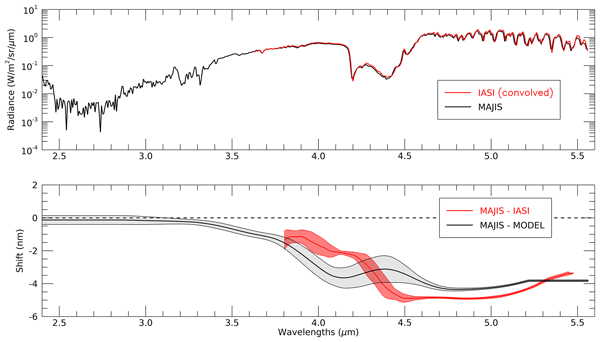
Yves Langevin, Sébastien Rodriguez, Sandrine Guerlet, François Poulet, Giuseppe Piccioni, Livio Agostini, Raymond Armante, Emiliano D'Aversa, Gianrico Filacchione, Leigh Fletcher, Fabrizio Oliva, Clément Royer, Benoît Seignovert, Katrin Stephan, Federico Tosi, and Tim Trent
Ann. Geophys., 44, 825–853, https://doi.org/10.5194/angeo-44-825-2026, https://doi.org/10.5194/angeo-44-825-2026, 2026
Short summary
Short summary
We present an updated spectral and radiometric calibration of the Moons and Jupiter Imaging Spectrometer (MAJIS) aboard the Jupiter Icy Moons Explorer (JUICE), based on results of Earth and Moon observations in August 2024 and on observations of the MAJIS internal calibration unit. Very good agreements were obtained with results of other instruments and models. These MAJIS observations provide a promising teaser of what will be achieved by MAJIS in the system of Jupiter.
Fabrizio Oliva, Emiliano D'Aversa, Alessandra Migliorini, Giuseppe Piccioni, François Poulet, Yves Langevin, Gianrico Filacchione, Mauro Ciarniello, Sébastien Rodriguez, Benoît Seignovert, Alessandro Mura, Leigh N. Fletcher, Sandrine Guerlet, Angelo Zinzi, Marco Giardino, Ettore Lopinto, Giuseppe Sindoni, and Christina Plainaki
Ann. Geophys., 44, 511–545, https://doi.org/10.5194/angeo-44-511-2026, https://doi.org/10.5194/angeo-44-511-2026, 2026
Short summary
Short summary
During its first Earth flyby, the JUpiter Icy Moons Explorer (Juice) spacecraft acquired observations over the Western Pacific. We identify several gaseous compounds (O2, H2O, CO2, O3, CH4, N2O), liquid/ice clouds over the ocean and atmospheric waves at high altitudes. We find good agreement with similar observations of Earth-orbiting PRISMA spectrometer. This study helps in planning future observations from the Moon and Jupiter Imaging Spectrometer (Majis) when it comes to the Jupiter system.
Benoît Seignovert, François Poulet, Yves Langevin, Emiliano D'Aversa, Nicolas Ligier, Cydalise Dumesnil, Magali Mesbout, Cédric Leyrat, Sophie Jacquinod, Stéphane Le Mouélic, Gabriel Tobie, Nicolas Mangold, Giuseppe Piccioni, Federico Tosi, Katrin Stephan, Pasquale Palumbo, Livio Agostini, Luca Penasa, Laetitia Le Deit, Thomas Cornet, Ines Belgacem, Marc Costa-Sitja, Alfredo Escalante Lopez, and Simeon Schmauß
EGUsphere, https://doi.org/10.5194/egusphere-2026-2655, https://doi.org/10.5194/egusphere-2026-2655, 2026
This preprint is open for discussion and under review for Annales Geophysicae (ANGEO).
Short summary
Short summary
This paper is the first in-flight geometric calibration of the MAJIS visible and infrared mapping spectrometer instrument onboard the ESA-Juice mission. It contains an overview of the spatial distribution of the MAJIS signal collected at different scan angles and their position in MAJIS field of view; the first two starfields in-flight calibration and multiple comparisons with the data collected by other Juice instruments during the first Lunar and Earth Gravity Assist (LEGA) by Juice in 2024.

François Poulet, Giuseppe Piccioni, Yves Langevin, Cydalise Dumesnil, Vincent Carlier, Benoit Seignovert, Marc Dexet, Leigh N. Fletcher, Cédric Leyrat, Francesca Altieri, John Carter, Emiliano D'Aversa, Maria De Sanctis, Davide Grassi, Sandrine Guerlet, Stéphane Le Mouélic, Alessandra Migliorini, Fabrizio Oliva, Clément Royer, Sébastien Rodriguez, Katrin Stephan, Federico Tosi, Francesca Zambon, Alberto Adriani, Gabriele Arnold, Jean-Pierre Bibring, Dominique Bockelée, Rosario Brunetto, Fabrizio Capaccioni, Cristian Carli, Thibault Cavalié, Miriam Cisneros González, Mauro Ciarnello, Simone De Angelis, Pierre Drossart, Gianrico Filacchione, Thierry Fouchet, Jean-Claude Gérard, Denis Grodent, Patrick Irwin, Sophie Jacquinod, Ozgur Karatekin, Emmanuel Lellouch, Nicolas Ligier, Nicolas Mangold, Magali Mebsout, Frédéric Merlin, Alessandro Morbidelli, Alessandro Mura, Andreas Nathues, Maria E. Palumbo, Cédric Pilorget, Olivier Poch, Eric Quirico, Andrea Raponi, Séverine Robert, Elias Roussos, Agustin Sanchez-Lavega, Bernard Schmitt, Giuseppe Sindoni, Marcel Snels, Roberto Sordini, Stefania Stefani, Giovanni Strazzulla, Tim Trent, Gabriel Tobie, Diego Turrini, Ann-Carine Vandaele, Mathieu Vincendon, Olivier Witasse, Claire Vallat, and Alessandro Moraino
Ann. Geophys., 44, 163–193, https://doi.org/10.5194/angeo-44-163-2026, https://doi.org/10.5194/angeo-44-163-2026, 2026
Short summary
Short summary
During the double Lunar-Earth Gravitational Assist with the ESA/JUICE (Jupiter Icy Moons Explorer) spacecraft in August 2024, we acquired hyperspectral data cubes of both the Moon and Earth with the MAJIS (Moons And Jupiter Imaging Spectrometer) imaging spectrometer under challenging, real in-flight conditions. This allowed to characterize surface materials and thermophysical properties on the Moon, identify various cloud phases and gases in Earth's atmosphere, and thoroughly validate the performance of the instrument.
Yves Langevin, Sébastien Rodriguez, Sandrine Guerlet, François Poulet, Giuseppe Piccioni, Livio Agostini, Raymond Armante, Emiliano D'Aversa, Gianrico Filacchione, Leigh Fletcher, Fabrizio Oliva, Clément Royer, Benoît Seignovert, Katrin Stephan, Federico Tosi, and Tim Trent
Ann. Geophys., 44, 825–853, https://doi.org/10.5194/angeo-44-825-2026, https://doi.org/10.5194/angeo-44-825-2026, 2026
Short summary
Short summary
We present an updated spectral and radiometric calibration of the Moons and Jupiter Imaging Spectrometer (MAJIS) aboard the Jupiter Icy Moons Explorer (JUICE), based on results of Earth and Moon observations in August 2024 and on observations of the MAJIS internal calibration unit. Very good agreements were obtained with results of other instruments and models. These MAJIS observations provide a promising teaser of what will be achieved by MAJIS in the system of Jupiter.
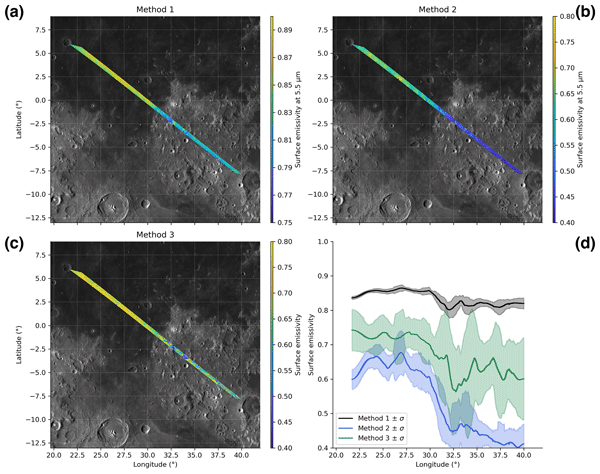
Federico Tosi, Clément Royer, Federico Colaiuta, François Poulet, Tyler M. Powell, Benjamin T. Greenhagen, Yves Langevin, Alessandro Mura, Giuseppe Piccioni, Cédric Pilorget, Cristian Carli, and Francesca Zambon
Ann. Geophys., 44, 547–576, https://doi.org/10.5194/angeo-44-547-2026, https://doi.org/10.5194/angeo-44-547-2026, 2026
Short summary
Short summary
Using mid-infrared data acquired by Moons and Jupiter Imaging Spectrometer (MAJIS) aboard the European Space Agency’s JUpiter ICy moons Explorer (JUICE) spacecraft during the 2024 lunar flyby, we retrieved lunar surface temperature and effective emissivity at high spatial and spectral resolution. By comparing three independent thermal-retrieval methods, we confirmed the main mare–highland contrasts and showed how roughness and observing geometry shape the infrared signal, providing a methodological test case for future MAJIS studies of Jupiter’s icy moons.
Fabrizio Oliva, Emiliano D'Aversa, Alessandra Migliorini, Giuseppe Piccioni, François Poulet, Yves Langevin, Gianrico Filacchione, Mauro Ciarniello, Sébastien Rodriguez, Benoît Seignovert, Alessandro Mura, Leigh N. Fletcher, Sandrine Guerlet, Angelo Zinzi, Marco Giardino, Ettore Lopinto, Giuseppe Sindoni, and Christina Plainaki
Ann. Geophys., 44, 511–545, https://doi.org/10.5194/angeo-44-511-2026, https://doi.org/10.5194/angeo-44-511-2026, 2026
Short summary
Short summary
During its first Earth flyby, the JUpiter Icy Moons Explorer (Juice) spacecraft acquired observations over the Western Pacific. We identify several gaseous compounds (O2, H2O, CO2, O3, CH4, N2O), liquid/ice clouds over the ocean and atmospheric waves at high altitudes. We find good agreement with similar observations of Earth-orbiting PRISMA spectrometer. This study helps in planning future observations from the Moon and Jupiter Imaging Spectrometer (Majis) when it comes to the Jupiter system.
Benoît Seignovert, François Poulet, Yves Langevin, Emiliano D'Aversa, Nicolas Ligier, Cydalise Dumesnil, Magali Mesbout, Cédric Leyrat, Sophie Jacquinod, Stéphane Le Mouélic, Gabriel Tobie, Nicolas Mangold, Giuseppe Piccioni, Federico Tosi, Katrin Stephan, Pasquale Palumbo, Livio Agostini, Luca Penasa, Laetitia Le Deit, Thomas Cornet, Ines Belgacem, Marc Costa-Sitja, Alfredo Escalante Lopez, and Simeon Schmauß
EGUsphere, https://doi.org/10.5194/egusphere-2026-2655, https://doi.org/10.5194/egusphere-2026-2655, 2026
This preprint is open for discussion and under review for Annales Geophysicae (ANGEO).
Short summary
Short summary
This paper is the first in-flight geometric calibration of the MAJIS visible and infrared mapping spectrometer instrument onboard the ESA-Juice mission. It contains an overview of the spatial distribution of the MAJIS signal collected at different scan angles and their position in MAJIS field of view; the first two starfields in-flight calibration and multiple comparisons with the data collected by other Juice instruments during the first Lunar and Earth Gravity Assist (LEGA) by Juice in 2024.
Alice Lucchetti, Matteo Massironi, Klaus Gwinner, Thomas Kenkmann, Luca Penasa, Namitha R. Baby, Laura Rotzoll, Oguzcan Karagoz, Juan L. Rizos, Maurizio Pajola, Federico Tosi, Sonia Fornasier, Filippo Tusberti, Katrin Stephan, Riccardo Pozzobon, Javier E. Suarez-Valencia, Davide Cagnin, Francesca Zambon, Gianluca Chiarolanza, Athena Coustenis, Lorenza Giacomini, Ernst Hauber, Simone Marchi, Pietro Matteoni, Giuseppe Mitri, Costanza Rossi, Ricardo Hueso, Alessio Aboudan, Livio Agostini, Elke Kersten, Klaus D. Matz, Romolo Politi, Frank Trauthan, Cecilia Tubiana, Michael Aye, Angelo Zinzi, Ry Evill, Ines Belgacem, Jose M. Castro-Marin, Vincenzo Della Corte, Stubbe Hviid, Thomas Roatsch, Nicole Schmitz, Luisa M. Lara, Manish R. Patel, Ganna Portyankina, Pasquale Palumbo, and the JANUS team
EGUsphere, https://doi.org/10.5194/egusphere-2026-1901, https://doi.org/10.5194/egusphere-2026-1901, 2026
Short summary
Short summary
During a lunar flyby, the JANUS camera on board the Jupiter Icy Moons Explorer mission captured detailed images of the Moon’s surface. We studied a large impact crater and a nearby highland region, finding evidence of complex surface changes over time and signs of unusual volcanic activity. These results improve our understanding of how the Moon evolved and confirm that the JANUS camera is ready for future exploration of Jupiter’s moons.
Cecilia Tubiana, Luca Penasa, Livio Agostini, Alessio Aboudan, Michael Aye, Klaus-Dieter Matz, Matthew Read, Thomas Bilotta, Ricardo Hueso, Alice Lucchetti, Elke Kersten, Romolo Politi, Ganna Portyankina, Benoit Seignovert, Frank Trauthan, Angelo Zinzi, Ry Evill, Angela Dietz, Ines Belgacem, Thomas Cornet, Jose María Castro-Marin, Vincenzo Della Corte, Stubbe Hviid, Thomas Roatsch, Nicole Schmitz, Manish R. Patel, Luisa M. Lara, and Pasquale Palumbo
EGUsphere, https://doi.org/10.5194/egusphere-2026-2008, https://doi.org/10.5194/egusphere-2026-2008, 2026
Short summary
Short summary
This paper describes the observations of Moon and the Earth carried on by JANUS during LEGA in Aug 2024 and the in Sept 2024 when JUICE looked back to the Moon-Earth system following the flyby. The observation sequences are described together with the limitations that had to be taken into account during the design process. Some highlights are lessons learned from the campaigns are provided, including the importance of science-like activities during the long cruise phase of planetary missions.
François Poulet, Giuseppe Piccioni, Yves Langevin, Cydalise Dumesnil, Vincent Carlier, Benoit Seignovert, Marc Dexet, Leigh N. Fletcher, Cédric Leyrat, Francesca Altieri, John Carter, Emiliano D'Aversa, Maria De Sanctis, Davide Grassi, Sandrine Guerlet, Stéphane Le Mouélic, Alessandra Migliorini, Fabrizio Oliva, Clément Royer, Sébastien Rodriguez, Katrin Stephan, Federico Tosi, Francesca Zambon, Alberto Adriani, Gabriele Arnold, Jean-Pierre Bibring, Dominique Bockelée, Rosario Brunetto, Fabrizio Capaccioni, Cristian Carli, Thibault Cavalié, Miriam Cisneros González, Mauro Ciarnello, Simone De Angelis, Pierre Drossart, Gianrico Filacchione, Thierry Fouchet, Jean-Claude Gérard, Denis Grodent, Patrick Irwin, Sophie Jacquinod, Ozgur Karatekin, Emmanuel Lellouch, Nicolas Ligier, Nicolas Mangold, Magali Mebsout, Frédéric Merlin, Alessandro Morbidelli, Alessandro Mura, Andreas Nathues, Maria E. Palumbo, Cédric Pilorget, Olivier Poch, Eric Quirico, Andrea Raponi, Séverine Robert, Elias Roussos, Agustin Sanchez-Lavega, Bernard Schmitt, Giuseppe Sindoni, Marcel Snels, Roberto Sordini, Stefania Stefani, Giovanni Strazzulla, Tim Trent, Gabriel Tobie, Diego Turrini, Ann-Carine Vandaele, Mathieu Vincendon, Olivier Witasse, Claire Vallat, and Alessandro Moraino
Ann. Geophys., 44, 163–193, https://doi.org/10.5194/angeo-44-163-2026, https://doi.org/10.5194/angeo-44-163-2026, 2026
Short summary
Short summary
During the double Lunar-Earth Gravitational Assist with the ESA/JUICE (Jupiter Icy Moons Explorer) spacecraft in August 2024, we acquired hyperspectral data cubes of both the Moon and Earth with the MAJIS (Moons And Jupiter Imaging Spectrometer) imaging spectrometer under challenging, real in-flight conditions. This allowed to characterize surface materials and thermophysical properties on the Moon, identify various cloud phases and gases in Earth's atmosphere, and thoroughly validate the performance of the instrument.
Francesca Zambon, Francesca Altieri, Maria Cristina De Sanctis, Stéphane Le Mouélic, Giuseppe Piccioni, François Poulet, Yves Langevin, Clément Royer, Federico Tosi, Ozgur Karatekin, Alessandro Mura, and Cristian Carli
EGUsphere, https://doi.org/10.5194/egusphere-2026-876, https://doi.org/10.5194/egusphere-2026-876, 2026
Short summary
Short summary
We analyzed new detailed measurements of the Moon’s surface acquired by the Jupiter Icy Moon Explorer mission. Our study maps the distribution of key minerals in both maria and highland regions, revealing differences in composition. The results confirm previous findings and show that this instrument can provide reliable data for future planetary exploration, helping to better understand the Moon and other planetary bodies.
Sandrine Guerlet, Raymond Armante, Ninon Lauzanne, François Poulet, Yves Langevin, Sébastien Rodriguez, Leigh Fletcher, Thierry Fouchet, Giuseppe Piccioni, and Alessandra Migliorini
EGUsphere, https://doi.org/10.5194/egusphere-2026-805, https://doi.org/10.5194/egusphere-2026-805, 2026
Short summary
Short summary
The JUpiter ICy moons Explorer spacecraft (JUICE) flew by the Moon and Earth on 19 and 20th August 2024, which was an excellent opportunity to test its instruments before its arrival at Jupiter in 2031. Here we evaluate the performances of one of its instruments, the Moon and Jupiter Imaging Spectrometer (MAJIS). We compared MAJIS observations of the Earth with measurements acquired on the same day by another instrument orbiting the Earth, and find an excellent match between the two instruments.
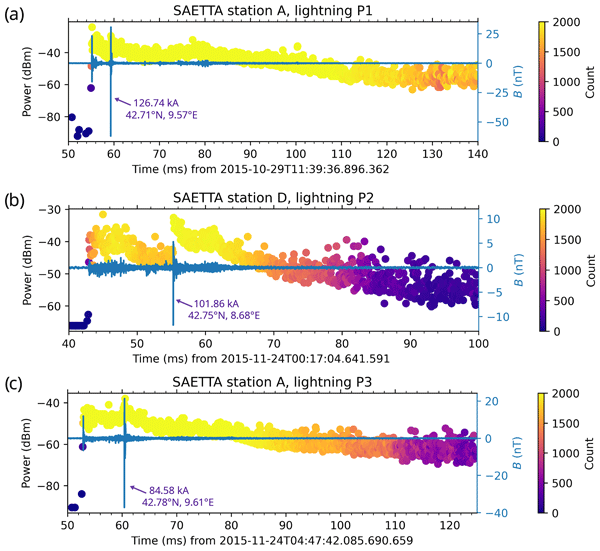
Andrea Kolínská, Ivana Kolmašová, Eric Defer, Ondřej Santolík, and Stéphane Pédeboy
Atmos. Chem. Phys., 25, 1791–1803, https://doi.org/10.5194/acp-25-1791-2025, https://doi.org/10.5194/acp-25-1791-2025, 2025
Short summary
Short summary
We contribute to understanding differences in lightning flashes of opposite polarity by explaining distinct in-cloud processes after return strokes. Using data from multiple sensors, including individual Lightning Mapping Array stations, we reveal that positive flashes sustain strong high-frequency radiation due to the recharging of their in-cloud leader; this is in contrast to negative flashes, for which this activity declines rapidly.
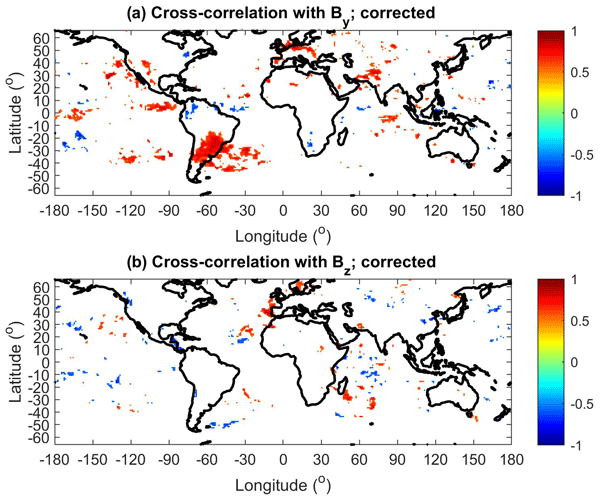
Jaroslav Chum, Ronald Langer, Ivana Kolmašová, Ondřej Lhotka, Jan Rusz, and Igor Strhárský
Atmos. Chem. Phys., 24, 9119–9130, https://doi.org/10.5194/acp-24-9119-2024, https://doi.org/10.5194/acp-24-9119-2024, 2024
Short summary
Short summary
Lightning and extreme weather can endanger people and technology. Despite advances in science, not all the factors that lead to the formation of thunderclouds, to their charging and to lightning ignition are known in detail. This paper shows that lightning frequency may, to some extent, be modulated by solar activity and solar wind. Namely, in the region of the South Atlantic Anomaly of the Earth's magnetic field, it correlates with the polarity and intensity of the solar wind.
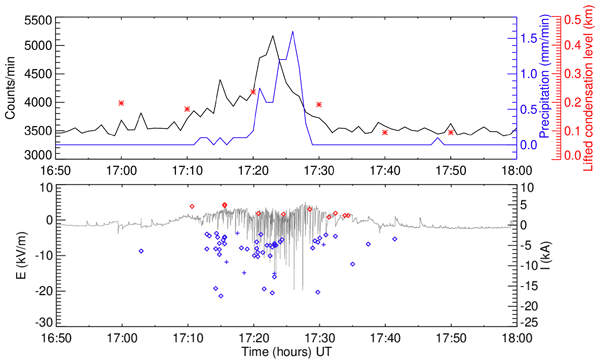
Ivana Kolmašová, Ondřej Santolík, Jakub Šlegl, Jana Popová, Zbyněk Sokol, Petr Zacharov, Ondřej Ploc, Gerhard Diendorfer, Ronald Langer, Radek Lán, and Igor Strhárský
Atmos. Chem. Phys., 22, 7959–7973, https://doi.org/10.5194/acp-22-7959-2022, https://doi.org/10.5194/acp-22-7959-2022, 2022
Short summary
Short summary
Gamma ray radiation related to thunderstorms was previously observed at the high-altitude mountain observatories or on the western coast of Japan, usually being terminated by lightning discharges. We show unusual observations of gamma rays at an altitude below 1000 m, coinciding with peculiar rapid variations in the vertical electric field, which are linked to inverted intracloud lightning discharges. This indicates that a strong, lower positive-charge region was present inside the thundercloud.
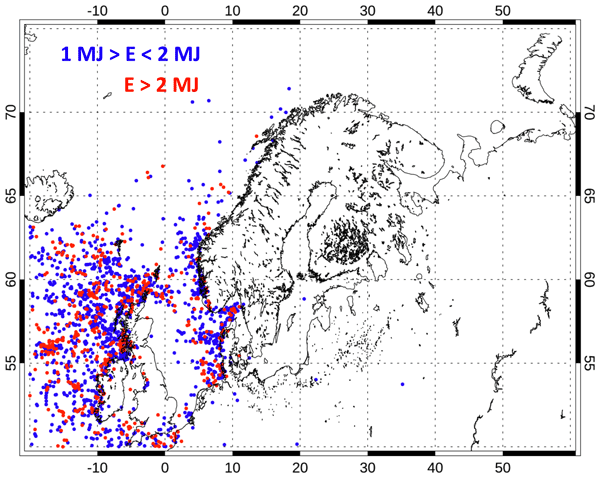
Ivana Kolmašová, Ondřej Santolík, and Kateřina Rosická
Atmos. Chem. Phys., 22, 3379–3389, https://doi.org/10.5194/acp-22-3379-2022, https://doi.org/10.5194/acp-22-3379-2022, 2022
Short summary
Short summary
The 2014–2015 winter brought an enormous number of lightning strokes to northern Europe, about 4 times more than their long-term median over the last decade. This unusual production of lightning, concentrated above the ocean and along the western coastal areas, was probably due to a combination of large-scale climatic events like El Niño and the North Atlantic Oscillation, causing increased sea surface temperatures and updraft strengths, which acted as additional thundercloud-charging drivers.
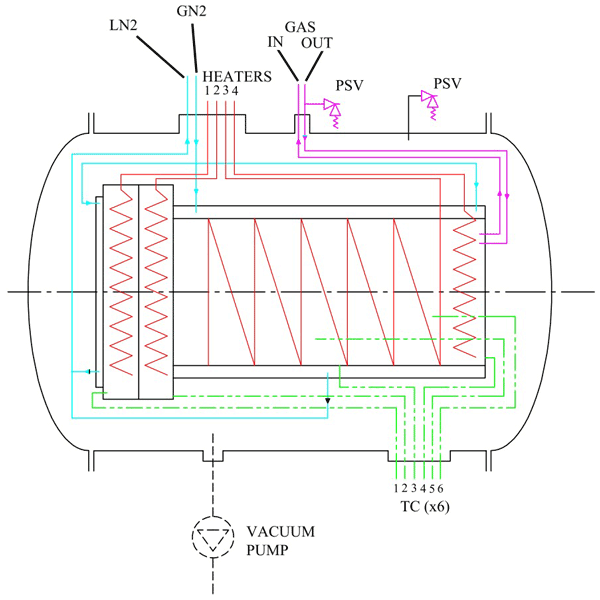
Marcel Snels, Stefania Stefani, Angelo Boccaccini, David Biondi, and Giuseppe Piccioni
Atmos. Meas. Tech., 14, 7187–7197, https://doi.org/10.5194/amt-14-7187-2021, https://doi.org/10.5194/amt-14-7187-2021, 2021
Short summary
Short summary
A novel simulation chamber, PASSxS (Planetary Atmosphere Simulation System for Spectroscopy), has been developed for absorption measurements with a Fourier transform spectrometer (FTS) and possibly a cavity ring-down (CRD) spectrometer, with a sample temperature ranging from 100 K up to 550 K, while the pressure of the gas can be varied up to 60 bar. These temperature and pressure ranges cover a significant part of the planetary atmospheres in the solar system and possibly extrasolar planets.
Cited articles
Acton, C., Bachman, N., Semenov, B., and Wright, E.: A look towards the future in the handling of space science mission geometry, Planet. Space Sci., 150, 9–12, https://doi.org/10.1016/j.pss.2017.02.013, 2018.
Acton Jr., C. H.: Ancillary data services of NASA's Navigation and Ancillary Information Facility, Planet. Space Sci., 44, 65–70, https://doi.org/10.1016/0032-0633(95)00107-7, 1996.
Aplin, K. L. and Fischer, G.: Lightning detection in planetary atmospheres, Weather, 72, 46–50, https://doi.org/10.1002/wea.2817, 2017.
Bai, X., Füllekrug, M., Chanrion, O., Soula, S., Peverell, A., Mashao, D., Kosch, M., Husbjerg, L., Østgaard, N., Neubert, T., and Reglero, V.: Height determination of a blue discharge observed by ASIM/MMIA on the International Space Station, J. Geophys. Res.-Atmos., 128, e2022JD037460, https://doi.org/10.1029/2022jd037460, 2023.
Baines, K. H., Simon-Miller, A. A., Orton, G. S., Weaver, H. A., Lunsford, A., Momary, T. W., Spencer, J., Cheng, A. F., Reuter, D. C., Jennings, D. E., Gladstone, G. R., Moore, J., Stern, S. A., Young, L. A., Throop, H., Yanamandra-Fisher, P., Fisher, B. M., Hora, J., and Ressler, M. E.: Polar Lightning and Decadal-Scale Cloud Variability on Jupiter, Science, 318, 226–229, https://doi.org/10.1126/science.1147912, 2007.
Barnes, D. E., Splitt, M. E., Dwyer, J. R., Lazarus, S., Smith, D. M., and Rassoul, H. K.: A study of thunderstorm microphysical properties and lightning flash counts associated with terrestrial gamma-ray flashes, J. Geophys. Res.-Atmos., 120, 3453–3464, https://doi.org/10.1002/2014jd021495, 2015.
Barvir, P., Kubes, P., Krawarik, J., Scholz, M., Karpinski, L., Sadowska-Skladnik, E., and Malinowski, K.: Research of the discharge with parameters of lightning channel, Czechoslovak Journal of Physics, 54, C274–C278, https://doi.org/10.1007/bf03166412, 2004.
Becker, H. N., Alexander, J. W., Atreya, S. K., Bolton, S. J., Brennan, M. J., Brown, S. T., Guillaume, A., Guillot, T., Ingersoll, A. P., Levin, S. M., Lunine, J. I., Aglyamov, Y. S., and Steffes, P. G.: Small lightning flashes from shallow electrical storms on Jupiter, Nature, 584, 55–58, https://doi.org/10.1038/s41586-020-2532-1, 2020.
Beirle, S., Borger, C., Dörner, S., Li, A., Hu, Z., Liu, F., Wang, Y., and Wagner, T.: Pinpointing nitrogen oxide emissions from space, Sci. Adv., 5, eaax9800, https://doi.org/10.1126/sciadv.aax9800, 2019.
Bjørge-Engeland, I., Østgaard, N., Marisaldi, M., Luque, A., Mezentsev, A., Lehtinen, N., Chanrion, O., Fuglestad, A. N., Neubert, T., and Gordillo-Vazquez, F. J.: High peak current lightning and the production of elves. J. Geophys. Res.-Atmos., 129, https://doi.org/10.1029/2023jd039849, 2024.
Blakeslee, R. J., Lang, T. J., Koshak, W. J., Buechler, D., Gatlin, P., Mach, D. M., Stano, G. T., Virts, K. S., Walker, T. D., Cecil, D. J., Ellett, W., Goodman, S. J., Harrison, S., Hawkins, D. L., Heumesser, M., Lin, H., Maskey, M., Schultz, C. J., Stewart, M., Bateman, M., Chanrion, O., and Christian, H.: Three years of the lightning imaging sensor onboard the international space station: Expanded global coverage and enhanced applications, J. Geophys. Res.-Atmos., 125, https://doi.org/10.1029/2020jd032918, 2020.
Boccippio, D. J., Cummins, K. L., Christian, H. J., and Goodman, S. J.: Combined satellite- and surface-based estimation of the intracloud–cloud-to-ground lightning ratio over the continental United States, Mon. Weather Rev., 129, 108–122, https://doi.org/10.1175/1520-0493(2001)129<0108:csasbe>2.0.co;2, 2001.
Boggs, L. D., Liu, N., Nag, A., Walker, T. D., Christian, H. J., da Silva, C. L., Austin, M., Aguirre, F., and Rassoul, H. K.: Vertical temperature profile of natural lightning return strokes derived from optical spectra, J. Geophys. Res.-Atmos., 126, e2020JD034438, https://doi.org/10.1029/2020jd034438, 2021.
Brown, S., Janssen, M., Adumitroaie, V., Atreya, S., Bolton, S., Gulkis, S., Ingersoll, A., Levin, S., Li, C., Li, L., Lunine, J., Misra, S., Orton, G., Steffes, P., Tabataba-Vakili, F., Kolmašová, I., Imai, M., Santolík, O., Kurth, W., Hospodarsky, G., Gurnett, D., and Connerney, J.: Prevalent lightning sferics at 600 megahertz near Jupiter's poles, Nature, 558, 87–90, https://doi.org/10.1038/s41586-018-0156-5, 2018.
Cardesín Moinelo, A., Abildgaard, S., García Muñoz, A., Piccioni, G., and Grassi, D.: No statistical evidence of lightning in Venus night-side atmosphere from VIRTIS-Venus Express Visible observations, Icarus, 277, 395–400, https://doi.org/10.1016/j.icarus.2016.05.027, 2016.
Carvalho, F. L., Uman, M. A., Jordan, D. M., Wilkes, R. A., and Kotovsky, D. A.: Triggered lightning return stroke luminosity up to 1 km in two optical bands, J. Geophys. Res.-Atmos., 123, 9724–9740, https://doi.org/10.1029/2018jd028644, 2018.
Cecil, D. J., Buechler, D. E., and Blakeslee, R. J.: Gridded lightning climatology from TRMM-LIS and OTD: Dataset description, Atmos. Res., 135–136, 404–414, https://doi.org/10.1016/j.atmosres.2012.06.028, 2014.
Christian, H. J. and Goodman, S. J.: Optical observations of lightning from a high-altitude airplane, J. Atmos. Ocean. Tech., 4, 701–711, https://doi.org/10.1175/1520-0426(1987)004<0701:ooolfa>2.0.co;2, 1987.
Christian, H. J., Blakeslee, R. J., Boccippio, D. J., Boeck, W. L., Buechler, D. E., Driscoll, K. T., Goodman, S. J., Hall, J. M., Koshak, W. J., Mach, D. M., and Stewart, M. F.: Global frequency and distribution of lightning as observed from space by the Optical Transient Detector, J. Geophys. Res.-Atmos., 108, https://doi.org/10.1029/2002jd002347, 2003.
Cox, A. N. (Ed.): 11. Earth, Allen's Astrophysical Quantities, 4th edn., Springer New York, New York, NY, https://doi.org/10.1007/978-1-4612-1186-0, ISBN 978-1-4612-7037-9, 2002.
Darwent, B. de B.: Bond Dissociation Energies in Simple Molecules. U.S. National Bureau of Standards, NSRDS-NBS 31, Washington, DC, LCCN 70602101, https://lccn.loc.gov/70602101 (last access: 17 February 2025), 1970.
Dyudina, U., Delgenio, A., Ingersoll, A., Porco, C., West, R., Vasavada, A., and Barbara, J.: Lightning on Jupiter observed in the line by the Cassini imaging science subsystem, Icarus, 172, 24–36, https://doi.org/10.1016/j.icarus.2004.07.014, 2004.
ESA SPICE Service: JUICE Operational SPICE Kernel Dataset, Cosmos Portal [data set], https://doi.org/10.5270/esa-ybmj68p, 2019.
Filacchione, G., Haffoud, P., Poulet, F., Piccioni, G., Langevin, Y., Tommasi, L., Barbis, A., Carter, J., Guerri, I., Dumesnil, C., De Angelis, S., Vincendon, M., Stefani, S., Pilorget, C., Tosi, F., and Rodriguez, S.: Calibration of MAJIS (Moons And Jupiter Imaging Spectrometer). II. Spatial calibration, Rev. Sci. Instrum., 95, 041301, https://doi.org/10.1063/5.0203872, 2024.
Fischer, G., Desch, M., Zarka, P., Kaiser, M., Gurnett, D., Kurth, W., MacHer, W., Rucker, H., Lecacheux, A., and Farrell, W.: Saturn lightning recorded by Cassini/RPWS in 2004, Icarus, 183, 135–152, https://doi.org/10.1016/j.icarus.2006.02.010, 2006.
Fletcher, L. N., Zhang, Z., Brown, S., Oyafuso, F. A., Rogers, J. H., Wong, M. H., Mura, A., Eichstädt, G., Orton, G. S., Brueshaber, S., Sankar, R., Li, C., Levin, S. M., Biagiotti, F., Guillot, T., Ingersoll, A. P., Grassi, D., Hansen, C. J., Bolton, S., and Waite, J. H.: Structure of Jupiter's high-latitude storms: Folded filamentary regions revealed by Juno, J. Geophys. Res.-Planets, 131, e2025JE009315, https://doi.org/10.1029/2025JE009315, 2026.
Franzblau, E. and Popp, C. J.: Nitrogen oxides produced from lightning. J. Geophys. Res.-Atmos., 94, 11089–11104, https://doi.org/10.1029/jd094id08p11089, 1989.
Frost, D. C. and McDowell, C. A.: The dissociation energy of the nitrogen molecule, Proc. A, 236 , 278–284, https://doi.org/10.1098/rspa.1956.0135, 1956.
Gierasch, P., Ingersoll, A., Banfield, D., Ewald, S. P., Helfenstein, P., Simon-Miller, A., Vasavada, A., Breneman, H. H., Senske, D. A., and Galileo Imaging Team: Observation of moist convection in Jupiter's atmosphere, Nature, 403, 628–630, https://doi.org/10.1038/35001017, 2000.
Giles, R. S., Greathouse, T. K., Bonfond, B., Gladstone, G. R., Kammer, J. A., Hue, V., Grodent, D. C., Gérard, J., Versteeg, M. H., Wong, M. H., Bolton, S. J., Connerney, J. E. P., and Levin, S. M.: Possible transient luminous events observed in Jupiter's upper atmosphere, J. Geophys. Res.-Planets, 125, e2020JE006659, https://doi.org/10.1029/2020je006659, 2020.
Gjesteland, T., Østgaard, N., Bitzer, P., and Christian, H. J.: On the timing between terrestrial gamma ray flashes, radio atmospherics, and optical lightning emission, J. Geophys. Res.-Space Phys., 122, 7734–7741, https://doi.org/10.1002/2017ja024285, 2017.
Goodman, S. J., Blakeslee, R. J., Koshak, W. J., Mach, D., Bailey, J., Buechler, D., Carey, L., Schultz, C., Bateman, M., McCaul Jr., E., and Stano, G.: The GOES-R Geostationary Lightning Mapper (GLM), Atmos. Res., 125–126, 34–49, https://doi.org/10.1016/j.atmosres.2013.01.006, 2013.
Gordillo-Vázquez, F. J. and Pérez-Invernón, F. J.: A review of the impact of transient luminous events on the atmospheric chemistry: Past, present, and future, Atmos. Res., 252, 105432, https://doi.org/10.1016/j.atmosres.2020.105432, 2021.
Gorog, F., Arnolfo, M.-C., Belmana, S., Dervaux, S., and Gherardi, D.: JUICE navigation camera design, Proc. SPIE 11180, International Conference on Space Optics – ICSO 2018, 111804N (12 July 2019), https://doi.org/10.1117/12.2536086, 2019.
Gosse, L., Favre, A., Bultel, A., Morel, V., Djurović, S., Simić, N., and Gavanski, L.: In-depth Stark broadening study of neutral oxygen 777 nm triplet, Spectrochim. Acta Part B, 230, 107222, https://doi.org/10.1016/j.sab.2025.107222, 2025.
Gurnett, D. A., Shaw, R. R., Anderson, R. R., Kurth, W. S., and Scarf, F. L.: Whistlers observed by Voyager 1: Detection of lightning on Jupiter, Geophys. Res. Lett., 6, 511–514, https://doi.org/10.1029/gl006i006p00511, 1979.
Gurnett, D. A., Kurth, W. S., Cairns, I. H., and Granroth, L. J.: Whistlers in Neptune's magnetosphere: Evidence of atmospheric lightning, J. Geophys. Res.-Space Phys., 95, 20967–20976, https://doi.org/10.1029/ja095ia12p20967, 1990.
Gutsol, K., Nunnally, T., Rabinovich, A., Fridman, A., Starikovsky, A., Gutsol, A., and Potter, R. W.: Mechanisms of non-equilibrium dissociation of hydrogen sulfide in low-temperature plasma, 2010 Abstracts IEEE International Conference on Plasma Science, Norfolk, VA, USA, 2010, 1, https://doi.org/10.1109/plasma.2010.5534017, 2010.
Haffoud, P., Poulet, F., Vincendon, M., Filacchione, G., Barbis, A., Guiot, P., Lecomte, B., Langevin, Y., Piccioni, G., Dumesnil, C., Rodriguez, S., Carter, J., Stefania, S., Tommasi, L., Tosi, F., and Pilorget, C.: Calibration of MAJIS (Moons And Jupiter Imaging Spectrometer). III. Spectral calibration, Rev. Sci. Instrum., 95, https://doi.org/10.1063/5.0188944, 2024.
Hueso, R., Antuñano, A., Lara, L. M., Stephan, K., Zinzi, A., Coustenis, A., Yair, Y., Sato, M., Haruyama, J., Simon, A., Tubiana, C., Penasa, L., Agostini, L., Luchetti, A., Aboudan, A., Aye, M., Kersten, E., Matz, K.-D., Politti, R., Trauthan, F., Evill, R., Belgacem, I., Yukihiro, T., Castro-Marín, J. M., Della Corte, V., Hviid, S., Roatsch, T., Schmitz, N., Patel, M., Portyankina, G., and Palumbo, P.: JUICE-JANUS observations of Earth in preparation for the JANUS investigation of Jupiter’s atmosphere, EGUsphere [preprint], https://doi.org/10.5194/egusphere-2026-710, 2026.
Hutchins, M. L., Holzworth, R. H., Rodger, C. J., and Brundell, J. B.: Far-field power of lightning strokes as measured by the World Wide Lightning Location Network, J. Atmos. Ocean. Tech., 29, 1102–1110, https://doi.org/10.1175/jtech-d-11-00174.1, 2012.
Ievenko, I. B., Parnikov, S. G., and Alekseev, V. N.: Variations of the Nightglow 557.7 nm Emission Intensity during Solar Cycle 23, Geomag. Aeron, 59, 738–742, https://doi.org/10.1134/s0016793219050050, 2019.
Imai, M., Kolmašová, I., Kurth, W. S., Santolík, O., Hospodarsky, G. B., Gurnett, D. A., Brown, S. T., Bolton, S. J., Connerney, J. E. P., and Levin, S. M.: Evidence for low density holes in Jupiter's ionosphere, Nat. Commun., 10, https://doi.org/10.1038/s41467-019-10708-w, 2019.
Jadhav, D. B., Londhe, A. L., and Bose, S.: Observations of NO2 and O3 during thunderstorm activity using visible spectroscopy, Adv. Atmos. Sci., 13, 359–374, https://doi.org/10.1007/bf02656853, 1996.
Joule, J. P.: Spectrum of lightning. Nature, 6, 161, https://doi.org/10.1038/006161b0, 1872.
Kieu, N., Gordillo-Vázquez, F. J., Passas, M., Sánchez, J., Pérez-Invernón, F. J., Luque, A., Montanyá, J., and Christian, H.: Submicrosecond spectroscopy of lightning-like discharges: Exploring new time regimes, Geophys. Res. Lett., 47, https://doi.org/10.1029/2020gl088755, 2020.
Kieu, N., Gordillo-Vázquez, F. J., Passas, M., Sánchez, J., and Pérez-Invernón, F. J.: High-speed spectroscopy of lightning-like discharges: Evidence of molecular optical emissions, J. Geophys. Res.-Atmos., 126, https://doi.org/10.1029/2021jd035016, 2021.
Köhn, C., Heumesser, M., Chanrion, O., Reglero, V., Østgaard, N., Christian, H. J., Lang, T. J., Blakeslee, R. J., and Neubert, T.: Employing optical lightning data to identify lightning flashes associated to terrestrial gamma-ray flashes, Bull. Atmos. Sci. Technol., 5, https://doi.org/10.1007/s42865-024-00065-y, 2024.
Kolmašová, I., Imai, M., Santolík, O., Kurth, W. S., Hospodarsky, G. B., Gurnett, D. A., Connerney, J. E. P., and Bolton, S. J.: Discovery of rapid whistlers close to Jupiter implying lightning rates similar to those on Earth, Nat. Astron., 2, 544–548, https://doi.org/10.1038/s41550-018-0442-z, 2018.
Kolmašová, I., Santolík, O., Imai, M., Kurth, W. S., Hospodarsky, G. B., Connerney, J. E. P., Bolton, S. J., and Lán, R.: Lightning at Jupiter pulsates with a similar rhythm as in-cloud lightning at Earth, Nat. Commun., 14, https://doi.org/10.1038/s41467-023-38351-6, 2023a.
Kolmašová, I., Scholten, O., Santolík, O., Hare, B. M., Zacharov, P., Lán, R., Liu, N., and Dwyer, J. R.: A strong pulsing nature of negative intracloud dart leaders accompanied by regular trains of microsecond-scale pulses, Geophys. Res. Lett., 50, e2023GL103864, https://doi.org/10.1029/2023GL103864, 2023b.
Kolmašová, I., Soula, S., Santolík, O., Defer, E., Zhu, Y., Pédeboy, S., Lán, R., Kolínská, A., and Uhlíř, L.: Properties of positive narrow bipolar events observed in South-Eastern France, J. Geophys. Res.-Atmos., 131, e2025JD045415, https://doi.org/10.1029/2025JD045415, 2026.
Kramida, A.: Evaluation of uncertainties in atomic data on spectral lines and transition probabilities, Eur. Phys. J. D, 78, 36, https://doi.org/10.1140/epjd/s10053-024-00820-y, 2024.
Kramida, A., Ralchenko, Yu., Reader, J., and NIST ASD Team: NIST Atomic Spectra Database (version 5.12), National Institute of Standards and Technology, Gaithersburg, MD, https://physics.nist.gov/asd (last access: 29 December 2025), https://doi.org/10.18434/T4W30F, 2024.
Krider, E. P.: Time-resolved spectral emissions from individual return strokes in lightning discharges, J. Geophys. Res., 70, 2459–2460, https://doi.org/10.1029/jz070i010p02459, 1965.
Krider, E. P.: Lightning spectroscopy, Nuclear Instruments and Methods, 110, 411–419, https://doi.org/10.1016/0029-554x(73)90720-9, 1973.
Langevin, Y., Zambelli, M., and Guiot, P.: On-board de-spiking implemented by MAJIS, the VIS/NIR imaging spectrometer of JUICE, Proc. SPIE 11443, Space Telescopes and Instrumentation 2020, Optical, Infrared, and Millimeter Wave, 1144378, https://doi.org/10.1117/12.2562464, 2020.
Langevin, Y., Poulet, F., Piccioni, G., Filacchione, G., Dumesnil, C., Tosi, F., Carter, J., Barbis, A., Haffoud, P., Tommasi, L., Vincendon, M., De Angelis, S., Guerri, I., Pilorget, C., Rodriguez, S., Stefani, S., Bolsée, D., Cisneros, M., Van Laeken, L., Pereira, N., and Carapelle, A.: Calibration of MAJIS (Moons and Jupiter Imaging Spectrometer). IV. Radiometric calibration (invited), Rev. Sci.Instrum., 95, https://doi.org/10.1063/5.0202702, 2024.
Langford, A. O., Portmann, R. W., Daniel, J. S., Miller, H. L., and Solomon, S.: Spectroscopic measurements of NO2 in a Colorado thunderstorm: Determination of the mean production by cloud-to-ground lightning flashes, J. Geophys. Res.-Atmos., 109, https://doi.org/10.1029/2003jd004158, 2004.
Larigaldie, S., Labaune, G., and Moreau, J. P.: Lightning leader laboratory simulation by means of rectilinear surface discharges, J. Appl. Phys., 52, 7114–7120, https://doi.org/10.1063/1.328420, 1981.
Li, D., Luque, A., Gordillo-Vázquez, F. J., Liu, F., Lu, G., Neubert, T., Chanrion, O., Zhu, B., Østgaard, N., and Reglero, V.: Blue flashes as counterparts to narrow bipolar events: the optical signal of shallow in-cloud discharges, J. Geophys. Res.-Atmos., 126, https://doi.org/10.1029/2021jd035013, 2021.
Li, X., Zhang, J., Chen, L., Xue, Q., and Zhu, R.: Measuring method for lightning channel temperature, Sci. Rep., 6, https://doi.org/10.1038/srep33906, 2016.
Little, B. Anger, C. D., Ingersoll, A. P., Vasavada, A. R., Senske, D. A., Herbert, H. B., Borucki, W. J., and The Galileo SSI Team: Galileo Images of Lightning on Jupiter, Icarus, 142, 306–323, https://doi.org/10.1006/icar.1999.6195, 1999.
Liu, F., Lu, G., Neubert, T., Lei, J., Chanrion, O., Østgaard, N., Li, D., Luque, A., Gordillo-Vázquez, F. J., Reglero, V., Lyu, W., and Zhu, B.: Optical emissions associated with narrow bipolar events from thunderstorm clouds penetrating into the stratosphere, Nat. Commun., 12, https://doi.org/10.1038/s41467-021-26914-4, 2021.
López, J. A., Pineda, N., Montanyà, J., Velde, O. van der, Fabró, F., and Romero, D.: Spatio-temporal dimension of lightning flashes based on three-dimensional Lightning Mapping Array, Atmos. Res., 197, 255–264, https://doi.org/10.1016/j.atmosres.2017.06.030, 2017.
Lorenz, R. D.: Lightning detection on Venus: A critical review. Prog. Earth Planet. Sci., 5, https://doi.org/10.1186/s40645-018-0181-x, 2018.
McCarthy, M. I., Rosmus, P., Werner, H.-J., Botschwina, P., and Vaida, V.: Dissociation of NH3 to NH2+ H, J. Chem. Phys., 86, 6693–6700, https://doi.org/10.1063/1.452417, 1987.
Nag, A. and Rakov, V. A.: Compact intracloud lightning discharges: 1. Mechanism of electromagnetic radiation and modeling, J. Geophys. Res., 115, D20102, https://doi.org/10.1029/2010JD014235, 2010.
Narita, T., Wanke, E., Sato, M., Sakanoi, T., Kumada, A., Kamogawa, M., Hirohiko, I., Harada, S., Kameda, T., Tsuchiya, F., and Kaneko, E.: A study of lightning location system (Blitz) based on VLF sferics, 2018 34th International Conference on Lightning Protection (ICLP), 1–7, https://doi.org/10.1109/iclp.2018.8503311, 2018.
Oliva, F., D'Aversa, E., Migliorini, A., Piccioni, G., Poulet, F., Langevin, Y., Filacchione, G., Ciarniello, M., Rodriguez, S., Seignovert, B., Mura, A., Fletcher, L. N., Zinzi, A., Giardino, M., Lopinto, E., Sindoni, G., and Plainaki, C.: JUICE-MAJIS Earth observations during the 2024 gravity assist: first analysis and comparison with PRISMA data, EGUsphere [preprint], https://doi.org/10.5194/egusphere-2025-6455, 2026.
Orville, R. E.: High-speed, time-resolved spectrum of a lightning stroke, Science, 151, 451–452, https://doi.org/10.1126/science.151.3709.451, 1966.
Orville, R. E.: Spectrum of the lightning stepped leader. J. Geophys. Res., 73, 6999–7008, https://doi.org/10.1029/jb073i022p06999, 1968.
Pérez-Invernón, F. J., Gordillo-Vázquez, F. J., Passas-Varo, M., Neubert, T., Chanrion, O., Reglero, V., and Østgaard, N.: Multispectral optical diagnostics of lightning from space, Remote Sens., 14, 2057, https://doi.org/10.3390/rs14092057, 2022.
Petersen, D. A. and Beasley, W. H.: High-speed video observations of a natural negative stepped leader and subsequent dart-stepped leader, J. Geophys. Res.-Atmos., 118, 12110–12119, https://doi.org/10.1002/2013JD019910, 2013.
Petersen, W. A., Christian, H. J., and Rutledge, S. A.: TRMM observations of the global relationship between ice water content and lightning, Geophys. Res. Lett., 32, https://doi.org/10.1029/2005gl023236, 2005.
Peterson, M.: Making a Superbolt: Reconciling observations of the optically brightest lightning on Earth from different satellites, Earth Space Sci., 10, https://doi.org/10.1029/2023ea003001, 2023.
Peterson, M. and Rudlosky, S.: The time evolution of optical lightning flashes, J. Geophys. Res.-Atmos., 124, 333–349, https://doi.org/10.1029/2018jd028741, 2019.
Poulet, F., Langevin, Y., and Piccioni, G.: Calibration of the Moons And Jupiter Imaging Spectrometer (MAJIS): Introduction to the special collection and summary of the performances, Rev. Sci. Instrum., 95, https://doi.org/10.1063/5.0209679, 2024a.
Poulet, F., Piccioni, G., Langevin, Y., Dumesnil, C., Tommasi, L., Carlier, V., Filacchione, G., Amoroso, M., Arondel, A., D'Aversa, E., Barbis, A., Bini, A., Bolsée, D., Bousquet, P., Caprini, C., Carter, J., Dubois, J.-P., Condamin, M., Couturier, S., Dassas, K., Dexet, M., Fletcher, L., Grassi, D., Guerri, I., Haffoud, P., Larigauderie, C., Le Du, M., Mugnuolo, R., Pilato, G., Rossi, M., Stefani, S., Tosi, F., Vincendon, M., Zambelli, M., Arnold, G., Bibring, J.-P., Biondi, D., Boccaccini, A., Brunetto, R., Carapelle, A., Cisneros González, M., Hannou, C., Karatekin, O., Le Cle'ch, J.-C., Leyrat, C., Migliorini, A., Nathues, A., Rodriguez, S., Saggin, B., Sanchez-Lavega, A., Schmitt, B., Seignovert, B., Sordini, R., Stephan, K., Tobie, G., Zambon, F., Adriani, A., Altieri, F., Bockelée, D., Capaccioni, F., De Angelis, S., De Sanctis,M.-C., Drossart, P., Fouchet, T., Gérard, J.-C., Grodent, D., Ignatiev, N., Irwin, P., Ligier,N., Manaud, N., Mangold, N., Mura, A., Pilorget, C., Quirico, E., Renotte, E., Strazzulla, G., Turrini, D., Vandaele, A.-C., Carli, C., Ciarniello, M., Guerlet, S., Lellouch, E., Mancarella, F., Morbidelli, A., Le Mouélic, S., Raponi, A., Sindoni, G., and Snels, M.: Moons and Jupiter Imaging Spectrometer (MAJIS) on Jupiter Icy Moons Explorer (JUICE), Space Sci. Rev., 220, https://doi.org/10.1007/s11214-024-01057-2, 2024b.
Poulet, F., Piccioni, G., Langevin, Y., Dumesnil, C., Carlier, V., Seignovert, B., Dexet, M., Fletcher, L. N., Leyrat, C., Altieri, F., Carter, J., D'Aversa, E., De Sanctis, M., Grassi, D., Guerlet, S., Le Mouélic, S., Migliorini, A., Oliva, F., Royer, C., Rodriguez, S., Stephan, K., Tosi, F., Zambon, F., Adriani, A., Arnold, G., Bibring, J.-P., Bockelée, D., Brunetto, R., Capaccioni, F., Carli, C., Cavalié, T., Cisneros González, M., Ciarnello, M., De Angelis, S., Drossart, P., Filacchione, G., Fouchet, T., Gérard, J.-C., Grodent, D., Irwin, P., Jacquinod, S., Karatekin, O., Lellouch, E., Ligier, N., Mangold, N., Mebsout, M., Merlin, F., Morbidelli, A., Mura, A., Nathues, A., Palumbo, M. E., Pilorget, C., Poch, O., Quirico, E., Raponi, A., Robert, S., Roussos, E., Sanchez-Lavega, A., Schmitt, B., Sindoni, G., Snels, M., Sordini, R., Stefani, S., Strazzulla, G., Trent, T., Tobie, G., Turrini, D., Vandaele, A.-C., Vincendon, M., Witasse, O., Vallat, C., and Moraino, A.: ESA/JUICE encounters Earth/Moon in 2024: overview of the Moons And Jupiter Imaging Spectrometer (MAJIS) observations, Ann. Geophys., 44, 163–193, https://doi.org/10.5194/angeo-44-163-2026, 2026.
Prueitt, M. L.: The excitation temperature of lightning, J. Geophys. Res., 68, 803–811, https://doi.org/10.1029/jz068i003p00803, 1963.
Rakov, V. A., Uman, M. A., and Rambo, K. J.: A review of ten years of triggered-lightning experiments at Camp Blanding, Florida, Atmos. Res., 76, https://doi.org/10.1016/j.atmosres.2004.11.028, 2005.
Rinnert, K., Lanzerotti, L. J., Uman, M. A., Dehmel, G., Gliem, F. O., Krider, E. P., and Bach, J.: Measurements of radio frequency signals from lightning in Jupiter's atmosphere, J. Geophys. Res., 103, 22979–22992, https://doi.org/10.1029/98JE00830, 1998.
Rodriguez, S., Vincendon, M., Haffoud, P., Langevin, Y., Poulet, F., Quirico, E., Pilorget, C., Filacchione, G., Carter, J., Brunetto, R., Lecomte, B., Guiot, P., Dumesnil, C., and Piccioni, G.: Calibration of MAJIS (Moons and Jupiter Imaging Spectrometer): V. Validation with mineral samples and reference materials. Rev. Sci. Instrum., 95, https://doi.org/10.1063/5.0215249, 2024.
Rudlosky, S. D., Goodman, S. J., Virts, K. S., and Bruning, E. C.: Initial geostationary lightning mapper observations, Geophys. Res. Lett., 46, 1097–1104, https://doi.org/10.1029/2018gl081052, 2019.
Ruscic, B.: Active thermochemical tables: Sequential bond dissociation enthalpies of methane, ethane, and methanol and the related thermochemistry, J. Phys. Chem. A, 119, 7810–7837, https://doi.org/10.1021/acs.jpca.5b01346, 2015.
Salanave, L. E.: The optical spectrum of lightning, Adv. Geophys., 10, 83–98, https://doi.org/10.1016/s0065-2687(08)60006-0, 1964.
Salanave, L. E., Orville, R. E., and Richards, C. N.: Slitless spectra of lightning in the region from 3850 to 6900 Angstroms, J. Geophys. Res., 67, 1877–1884, https://doi.org/10.1029/jz067i005p01877, 1962.
Schumann, U. and Huntrieser, H.: The global lightning-induced nitrogen oxides source, Atmos. Chem. Phys., 7, 3823–3907, https://doi.org/10.5194/acp-7-3823-2007, 2007.
Stefani, S., Piccioni, G., Poulet, F., Filacchione, G., Vincendon, M., Barbis, A., Tommasi, L., Guerri, I., Langevin, Y., Dumesnil, C., Haffoud, P., Rodriguez, S., Carter, J., Biondi, D., Boccaccini, A., De Angelis, S., Tosi, F., Pilorget, C., Guiot, P., and Lecomte, B.: Calibration of MAJIS (Moons and Jupiter Imaging Spectrometer): VI. The inflight calibration unit (ICU), Rev. Sci. Instrum., 96, 011301, https://doi.org/10.1063/5.0221810, 2025.
Uman, M. A. and Orville, R. E.: Electron density measurement in lightning from stark-broadening of Hα, J. Geophys. Res., 69, 5151–5154, https://doi.org/10.1029/jz069i024p05151, 1964.
Vincendon, M., Guiot, P., Lecomte, B., Condamin, M., Poulet, F., Arondel, A., Barbay, J., Carter, J., De Angelis, S., Dumesnil, C., Filacchione, G., Haffoud, P., Hansotte, J., Langevin, Y., Mayeur, P.-L., Piccioni, G., Pilorget, C., Quirico, E., and Rodriguez, S.: Calibration of MAJIS (Moons And Jupiter Imaging Spectrometer). I. On-ground setup description and characterization, Rev. Sci. Instrum., 95, 121301, https://doi.org/10.1063/5.0226567, 2024.
Walker, T. D. and Christian, H. J.: Triggered lightning spectroscopy: 2. A quantitative analysis. J. Geophys. Res.-Atmos., 124, 3930–3942, https://doi.org/10.1029/2018jd029901, 2019.
Wang, P., Gong, S., and Mo, Y.: Bond dissociation energy of O2 measured by fully state-to-state resolved threshold fragment yield spectra, J. Chem. Phys., 160, 164302, https://doi.org/10.1063/5.0207288, 2024.
Warwick, J. W., Evans, D. R., Romig, J. H., Alexander, J. K., Desch, M. D., Kaiser, M. L., Aubier, M., Leblanc, Y., Lecacheux, A., and Pedersen, B. M.: Planetary radio astronomy observations from Voyager 2 near Saturn, Science, 215, 582–587, https://doi.org/10.1126/science.215.4532.582, 1982.
Wemhoner, J., da Silva, C. L., Leal, A. F. R., Bandara, S., Pantuso, J. G., and Sonnenfeld, R. G.: Near-infrared atomic oxygen photometry of lightning. J. Geophys. Res.-Atmos., 130, e2024JD042256, https://doi.org/10.1029/2024JD042256, 2025.
Wong, M. H., Kolmašová, I., Oyafuso, F. A., Imai, M., Mizumoto, S., Levin, S. M., Sankar, R. G., Simon, A. A., Brueshaber, S., Orton, G. S., Atreya, S. K., Li, C., and Bolton, S. J.: Radio pulse power distribution of lightning in Jupiter's 2021–2022 stealth superstorms, AGU Adv., 7, e2025AV002083, https://doi.org/10.1029/2025AV002083, 2026.
Xu, L., Gou, X., Yuan, P., An, T., Jiang, R., and Deng, H.: Spectral study of rare upward developing, circling, and branching cloud-to-ground lightning, J. Geophys. Res.-Atmos., 129, https://doi.org/10.1029/2023jd040696, 2024.
Yingying, A., Ping, Y., Tingting, A., Hong, D., and Shengxin, H.: Hydrogen concentration in lightning plasma channel and its effect on discharge characteristics, J. Appl. Phys., 138, 063302, https://doi.org/10.1063/5.0276142, 2025.
Zarka, P. and Pedersen, B. M.: Radio detection of uranian lightning by Voyager 2, Nature, 323, 605–608, https://doi.org/10.1038/323605a0, 1986.
Zhu, Y., Rakov, V. A., Tran, M. D., Stock, M. G., Heckman, S., Liu, C., Sloop, C. D., Jordan, D. M., Uman, M. A., Caicedo, J. A., Kotovsky, D. A., Wilkes, R. A., Carvalho, F. L., Ngin, T., Gamerota, W. R., Pilkey, J. T., and Hare, B. M.: Evaluation of ENTLN performance characteristics based on the ground truth natural and rocket-triggered lightning data acquired in Florida, J. Geophys. Res.-Atmos., 122, 9858–9866, https://doi.org/10.1002/2017jd027270, 2017.
Short summary
Terrestrial lightning has been spectroscopically observed from Juice (JUpiter ICy moons Explorer) spacecraft, for the first time from space in a wide wavelength range. Though not detected by ground sensors, Juice confirmed neutral atomic oxygen and nitrogen emissions, with energies and temperatures consistent with average lightning. This observation is a benchmark for Jupiter, a primary Juice target, where simultaneous hydrogen emissions in different wavelengths could identify lightning.
Terrestrial lightning has been spectroscopically observed from Juice (JUpiter ICy moons...


