
Articles | Volume 44, issue 2
https://doi.org/10.5194/angeo-44-1201-2026
© Author(s) 2026. This work is distributed under
the Creative Commons Attribution 4.0 License.
the Creative Commons Attribution 4.0 License.
https://doi.org/10.5194/angeo-44-1201-2026
© Author(s) 2026. This work is distributed under
the Creative Commons Attribution 4.0 License.
the Creative Commons Attribution 4.0 License.
Regular paper
| 
03 Nov 2026
Regular paper |
| 03 Nov 2026
| 03 Nov 2026
High temporal- and spatial-resolution photographs of the “Christmas” red-green auroras taken over Germany during a main phase of the 10–11 May 2024 superstorm
Bruce T. Tsurutani
CORRESPONDING AUTHOR
formerly at: NASA Jet Propulsion Laboratory, California Institute of Technology, Pasadena, California, USA
retired
Gurbax S. Lakhina
formerly at: Indian Institute of Geomagnetism, Navi Mumbai, India
retired
Rajkumar Hajra
CAS Key Laboratory of Geospace Environment, School of Earth and Space Sciences, University of Science and Technology of China, Hefei, China
Masatomi Iizawa
Institut für Theoretische Physik, Technische Universität Braunschweig, Braunschweig, Germany
Yasuhito Narita
CORRESPONDING AUTHOR

Institut für Theoretische Physik, Technische Universität Braunschweig, Braunschweig, Germany
Max-Planck-Institut für Sonnensystemforschung, Göttingen, Germany
Richard B. Horne
British Antarctic Survey, Cambridge, UK
Ingo von Borstel
Institut für Geophysik und Extraterrestrische Physik, Technische Universität Braunschweig, Braunschweig, Germany
Volker Bothmer
Institut für Astrophysik und Geophysik, Georg-August-Universität Göttingen, Göttingen, Germany
deceased, 23 April 2026
Karl-Heinz Glassmeier
Institut für Geophysik und Extraterrestrische Physik, Technische Universität Braunschweig, Braunschweig, Germany
Max-Planck-Institut für Sonnensystemforschung, Göttingen, Germany
Klaus Reinsch
Institut für Astrophysik und Geophysik, Georg-August-Universität Göttingen, Göttingen, Germany
Philipp Schulz
Fraunhofer-Institut für Schicht-und Oberflächentechnik IST, Braunschweig, Germany
Sami K. Solanki
Max-Planck-Institut für Sonnensystemforschung, Göttingen, Germany
School of Space Research, Kyung Hee University, Yongin, Gyeonggi 17104, Republic of Korea
Related authors
Bruce T. Tsurutani, Rajkumar Hajra, and Gurbax S. Lakhina
EGUsphere, https://doi.org/10.5194/egusphere-2026-3506, https://doi.org/10.5194/egusphere-2026-3506, 2026
Short summary
Short summary
We discuss the early history of quasiperiodic ~27-day recurrent geomagnetic activity and the corotating interaction region/CIR. Latter, the term stream interaction region/SIR was introduced to describe physically the same event (CIR). It is suggested to identify specific interplanetary phenomena, such as interplanetary coronal mass ejections, CIRs, high-speed streams and slow streams, all of which have different solar and interplanetary origins and different plasma and magnetic field properties.
Bruce T. Tsurutani, Rajkumar Hajra, and Gurbax S. Lakhina
EGUsphere, https://doi.org/10.5194/egusphere-2026-5, https://doi.org/10.5194/egusphere-2026-5, 2026
Preprint archived
Short summary
Short summary
We discuss the history of quasiperiodic ~27-day recurrent geomagnetic activity and the origin of the names "interaction region", "corotating interaction region" and "stream interaction region". The latter three names have an identical meaning. We recommend the most commonly used name "corotating interaction region" or CIR for sole usage in the literature to avoid confusion.
Fernando L. Guarnieri, Bruce T. Tsurutani, Rajkumar Hajra, Ezequiel Echer, and Gurbax S. Lakhina
Nonlin. Processes Geophys., 32, 75–88, https://doi.org/10.5194/npg-32-75-2025, https://doi.org/10.5194/npg-32-75-2025, 2025
Short summary
Short summary
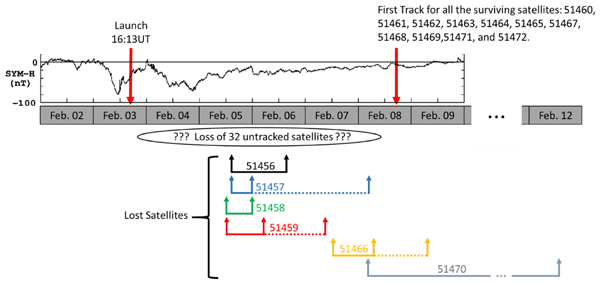
On February 03 2022, SpaceX launched a new group of satellites for its Starlink constellation. This launch simultaneously released 49 satellites into orbits between 200 km and 250 km height. The launches occurred during a geomagnetic storm that was followed by a second storm. There was an immediate loss of 32 satellites. The satellite losses may have been caused by an unusually high level of atmospheric drag (unexplained by current theory or modeling) or a high level of satellite collisions.
Bruce T. Tsurutani, Rajkumar Hajra, and Gurbax S. Lakhina
EGUsphere, https://doi.org/10.5194/egusphere-2026-3506, https://doi.org/10.5194/egusphere-2026-3506, 2026
Short summary
Short summary
We discuss the early history of quasiperiodic ~27-day recurrent geomagnetic activity and the corotating interaction region/CIR. Latter, the term stream interaction region/SIR was introduced to describe physically the same event (CIR). It is suggested to identify specific interplanetary phenomena, such as interplanetary coronal mass ejections, CIRs, high-speed streams and slow streams, all of which have different solar and interplanetary origins and different plasma and magnetic field properties.
Bruce T. Tsurutani, Rajkumar Hajra, and Gurbax S. Lakhina
EGUsphere, https://doi.org/10.5194/egusphere-2026-5, https://doi.org/10.5194/egusphere-2026-5, 2026
Preprint archived
Short summary
Short summary
We discuss the history of quasiperiodic ~27-day recurrent geomagnetic activity and the origin of the names "interaction region", "corotating interaction region" and "stream interaction region". The latter three names have an identical meaning. We recommend the most commonly used name "corotating interaction region" or CIR for sole usage in the literature to avoid confusion.
Yasuhito Narita, Daniel Schmid, and Uwe Motschmann
Ann. Geophys., 43, 417–425, https://doi.org/10.5194/angeo-43-417-2025, https://doi.org/10.5194/angeo-43-417-2025, 2025
Short summary
Short summary
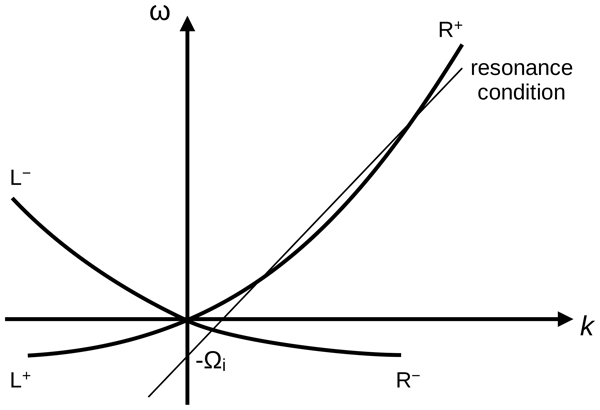
It is often the case that only magnetic field data are available for in situ planetary studies using spacecraft. Either plasma data are not available or the data resolution is limited. Nevertheless, the theory of plasma instability tells us how to interpret the magnetic field data (wave frequency) in terms of flow speed and beam velocity, generating the instability. We invent an analysis tool for Mercury's upstream waves as an example.
Fernando L. Guarnieri, Bruce T. Tsurutani, Rajkumar Hajra, Ezequiel Echer, and Gurbax S. Lakhina
Nonlin. Processes Geophys., 32, 75–88, https://doi.org/10.5194/npg-32-75-2025, https://doi.org/10.5194/npg-32-75-2025, 2025
Short summary
Short summary
On February 03 2022, SpaceX launched a new group of satellites for its Starlink constellation. This launch simultaneously released 49 satellites into orbits between 200 km and 250 km height. The launches occurred during a geomagnetic storm that was followed by a second storm. There was an immediate loss of 32 satellites. The satellite losses may have been caused by an unusually high level of atmospheric drag (unexplained by current theory or modeling) or a high level of satellite collisions.
Yasuhito Narita, Daniel Schmid, and Simon Toepfer
Ann. Geophys., 42, 79–89, https://doi.org/10.5194/angeo-42-79-2024, https://doi.org/10.5194/angeo-42-79-2024, 2024
Short summary
Short summary
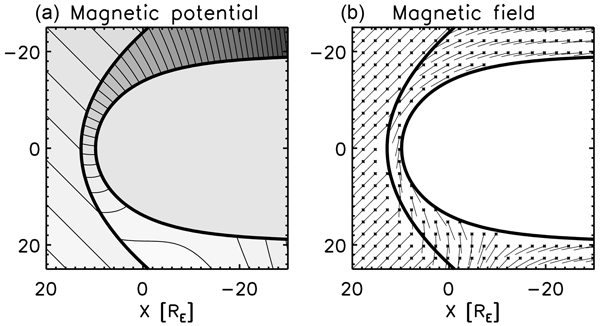
The magnetosheath is a transition layer surrounding the planetary magnetosphere. We develop an algorithm to compute the plasma flow velocity and magnetic field for a more general shape of magnetosheath using the concept of potential field and suitable coordinate transformation. Application to the empirical Earth magnetosheath region is shown in the paper. The developed algorithm is useful when interpreting the spacecraft data or simulation of the planetary magnetosheath region.
Leonard Schulz, Karl-Heinz Glassmeier, Ferdinand Plaschke, Simon Toepfer, and Uwe Motschmann
Ann. Geophys., 41, 449–463, https://doi.org/10.5194/angeo-41-449-2023, https://doi.org/10.5194/angeo-41-449-2023, 2023
Short summary
Short summary
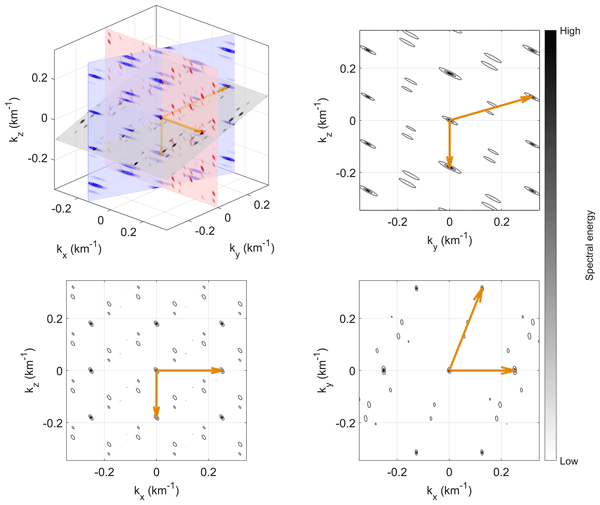
The upper detection limit in reciprocal space, the spatial Nyquist limit, is derived for arbitrary spatial dimensions for the wave telescope analysis technique. This is important as future space plasma missions will incorporate larger numbers of spacecraft (>4). Our findings are a key element in planning the spatial distribution of future multi-point spacecraft missions. The wave telescope is a multi-dimensional power spectrum estimator; hence, this can be applied to other fields of research.

Simon Toepfer, Karl-Heinz Glassmeier, and Uwe Motschmann
Ann. Geophys., 41, 253–267, https://doi.org/10.5194/angeo-41-253-2023, https://doi.org/10.5194/angeo-41-253-2023, 2023
Short summary
Short summary
The present study discusses the modeling and interpretation of magnetospheric structures via electromagnetic knots for the first time. The mathematical foundations of electromagnetic knots are presented, and the formalism is reformulated in terms of the classical wave telescope technique. The method is tested against synthetically generated magnetic field data describing a plasmoid as a two-dimensional magnetic ring structure.
Yasuhito Narita, Simon Toepfer, and Daniel Schmid
Ann. Geophys., 41, 87–91, https://doi.org/10.5194/angeo-41-87-2023, https://doi.org/10.5194/angeo-41-87-2023, 2023
Short summary
Short summary
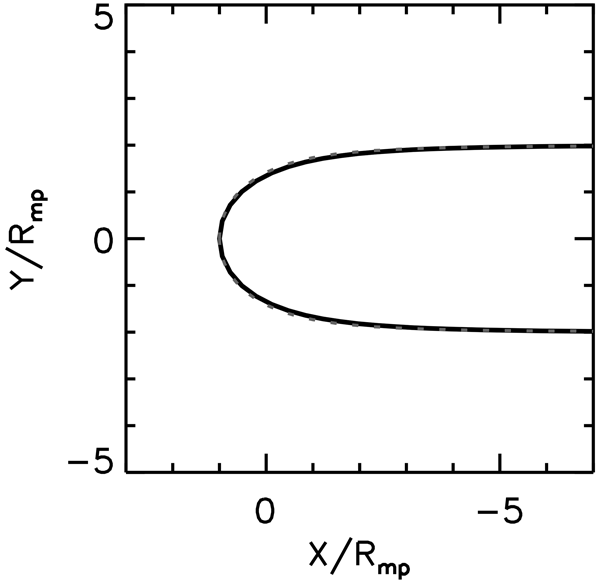
Magnetopause is a shielding boundary of planetary magnetic field. Many mathematical models have been proposed to describe or to reproduce the magnetopause location, but they are restricted to the real-number functions. In this work, we analytically develop a magnetopause model in the complex-number domain, which is advantageous in deforming the magnetopause shape in a conformal (angle-preserving) way, and is suited to compare different models or map one model onto another.
Daniel Schmid and Yasuhito Narita
Ann. Geophys. Discuss., https://doi.org/10.5194/angeo-2022-30, https://doi.org/10.5194/angeo-2022-30, 2023
Revised manuscript not accepted
Short summary
Short summary
Here we present a useful tool to diagnose the bow shock condition around planets on basis of magnetic field observations. From the upstream and downstream shock normal angle of the magnetic field, it is possible to approximate the relation between compression ratio, Alfvenic Mach number and the solar wind plasma beta. The tool is particularly helpful to study the solar wind conditions and bow shock characteristics during the planetary flybys of the ongoing BepiColombo mission.
Simon Toepfer, Ida Oertel, Vanita Schiron, Yasuhito Narita, Karl-Heinz Glassmeier, Daniel Heyner, Patrick Kolhey, and Uwe Motschmann
Ann. Geophys., 40, 91–105, https://doi.org/10.5194/angeo-40-91-2022, https://doi.org/10.5194/angeo-40-91-2022, 2022
Short summary
Short summary
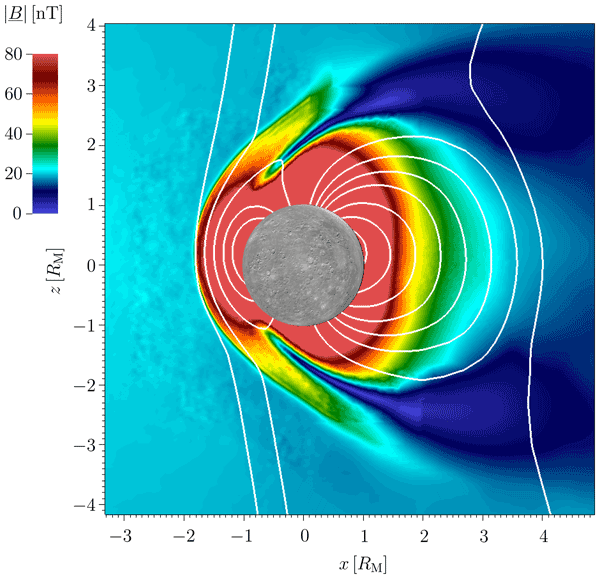
Revealing the nature of Mercury’s internal magnetic field is one of the primary goals of the BepiColombo mission. Besides the parametrization of the magnetic field contributions, the application of a robust inversion method is of major importance. The present work provides an overview of the most commonly used inversion methods and shows that Capon’s method as well as the Tikhonov regularization enable a high-precision determination of Mercury’s internal magnetic field up to the fifth degree.
Cited articles
Barbier, D.: L'activite aurorale aux basses latitudes, Ann. Geophys., 14, 334–355, 1958. a
Belon, A. E. and Clark, K. C.: Spectroscopic observations of the great aurora of 10 February 1958– II. Unusual atomic features, J. Atmos. Terr. Phys., 16, 220–227, https://doi.org/10.1016/0021-9169(59)90070-4, 1959. a
Block, L. P.: A double layer review, Astrophys. Space Sci., 55, 59–83, https://doi.org/10.1007/BF00642580, 1978. a
Boardsen, S. A., Gallagher, D. L., Gurnett, D. A., Peterson, W. K., and Green, J. L.: Funnel-shaped, low-frequency equatorial waves, J. Geophys. Res.-Space, 97, 14967–14976, https://doi.org/10.1029/92JA00827, 1992. a
Carlson, C. W., and Kelley, M. C.: Observation and interpretation of particle and electric field measurements inside and adjacent to an active auroral arc, J. Geophys. Res., 82, 2349–2360, https://doi.org/10.1029/JA082i016p02349, 1977. a
Carpenter, D. L. and Anderson, R. R.: An ISEE/whistler model of equatorial electron density in the magnetosphere, J. Geophys. Res.-Space, 97, 1097–1108, https://doi.org/10.1029/91JA01548, 1992. a
Cole, K. D.: Stable auroral red arcs, sinks for energy of Dst main phase, J. Geophys. Res., 70, 1689–1706, https://doi.org/10.1029/JZ070i007p01689, 1965. a, b
Cornwall, J. M., Coroniti, F. V., and Thorne, R. M.: Turbulent loss of ring current protons, J. Geophys. Res., 75, 4699–4709, https://doi.org/10.1029/JA075i025p04699, 1970. a, b
Cornwall, J. M., Coroniti, F. V., and Thorne, R. M.: Unified theory of SAR arc formation at the plasmapause, J. Geophys. Res., 76, 4428–4445, https://doi.org/10.1029/JA076i019p04428, 1971. a, b
Evans, D. S.: Precipitating electron fluxes formed by a magnetic field aligned potential difference, J. Geophys. Res., 79, 2853–2858, https://doi.org/10.1029/JA079i019p02853, 1974. a
Foster, J. C., Erickson, P. J., Nishimura, Y., Zhang, S. R., Bush, D. C., Coster, A. J., Meade, P. E., and Franco-Diaz, E.: Imaging the May 2024 extreme aurora with ionospheric total electron content, Geophys. Res. Lett., 51, e2024GL111981, https://doi.org/10.1029/2024GL111981, 2024. a, b
Gonzalez-Esparza, J. A., Sanchez-Garcia, E., Sergeeva, M., Corona-Romero, P., Gonzalez-Mendez, L. X., Valdes-Galicia, J. F., Aguilar-Rodriguez, E., Rodriguez-Martinez, M., Ramirez-Pacheco, C., Castellanos, C. I., Pazos, M., Mendoza, B., Gatica-Acevedo, V. J., Melgarejo-Morales, A., Caraballo, R., Andrade-Mascote, E., Villanueva-Hernandez, P., Bonifaz-Alfonzo, R., Sierra, P., Romero-Hernandez, E., Peralta-Mendoza, I., Perez-Tijerina, E., Mejia-Ambriz, J. C., Guerrero-Peña, C., Caccavari, A., Cifuentes-Nava, G., and Hernandez-Quintero, E.: The Mother's Day geomagnetic storm on 10 May 2024: Aurora observations and low latitude space weather effects in Mexico, Space Weather, 22, e2024SW004111, https://doi.org/10.1029/2024SW004111, 2024. a
Grandin, M., Bruus, E., Ledvina, V. E., Partamies, N., Barthelemy, M., Martinis, C., Dayton-Oxland, R., Gallardo-Lacourt, B., Nishimura, Y., Herlingshaw, K., Thomas, N., Karvinen, E., Lach, D., Spijkers, M., and Bergstrand, C.: The Gannon Storm: citizen science observations during the geomagnetic superstorm of 10 May 2024, Geosci. Commun., 7, 297–316, https://doi.org/10.5194/gc-7-297-2024, 2024. a, b
Gurnett, D. A.: Plasma wave interactions with energetic ions near the magnetic equator, J. Geophys. Res., 81, 2765–2770, https://doi.org/10.1029/JA081i016p02765, 1976. a
Hajra, R., Tsurutani, B. T., Lakhina, G. S., Lu, Q., and Du, A.: Interplanetary causes and impacts of the 2024 May superstorm on the geosphere: An Overview, Astrophys. J., 974, 264, https://doi.org/10.3847/1538-4357/ad7462, 2024. a, b, c
Hajra, R., Tsurutani, B. T., Lu, Q., Du, A., and Lakhina, G. S.: Supersubstorms during the May 2024 superstorm, J. Space Weather Space Clim., 15, 51, https://doi.org/10.1051/swsc/2025047, 2025. a
Hasegawa, A.: Particle acceleration by MHD surface wave and formation of aurora, J. Geophys. Res., 81, 5083–5090, https://doi.org/10.1029/JA081i028p05083, 1976. a, b, c
Horne, R. B., Wheeler, G. V., and Alleyne, H. St. C. K.: Proton and electron heating by radially propagating fast magnetosonic waves, J. Geophys. Res.-Space, 105, 27597–27610, https://doi.org/10.1029/2000JA000018, 2000. a
Kataoka, R., Miyoshi, Y., Shiokawa, K., Nishitani, N., Keika, K., Amano, T., and Seki, K.: Magnetic storm-time red aurora as seen from Hokkaido, Japan on 1 December 2023 associated with high-density solar wind, Geophys. Res. Lett., 51, e2024GL108778, https://doi.org/10.1029/2024GL108778, 2024a. a
Kataoka, R., Reddy, S. A., Nakano, S., Pettit, J., and Nakamura, Y.: Extended magenta aurora as revealed by citizen science, Sci. Rep., 14, 25849, https://doi.org/10.1038/s41598-024-75184-9, 2024b. a, b, c
Kataoka, R., Nakano, S., Uchino, S. and Reddy, S.A. Extended red aurora associated with super substorm igniting the October 10, 2024 magnetic storm as revealed by citizen science, Earth Planets Space, 77, 64, https://doi.org/10.1186/s40623-025-02178-w, 2025. a
Kozyra, J. U., Chandler, M. O., Hamilton, D. C., Peterson, W. K., Klumpar, D. M., Slater, D. W., Buonsanto, M. J., and Carlson, H. C.: The role of ring current nose events in producing stable auroral red arc intensifications during the main phase: Observations during the September 19–24, 1984, Equinox Transition Study, J. Geophys. Res.-Space, 98, 9267–9283, https://doi.org/10.1029/92JA02554, 1993. a, b, c
Kozyra, J. U., Nagy, A. F., and Slater, D. W.: High-altitude energy source(s) for stable auroral red arcs, Rev. Geophys., 35, 155–190, https://doi.org/10.1029/96RG03194, 1997. a
Lawrence, E., Beggan, C. D., Richardson, G. S., Reay, S., Thompson, V., Clarke, E., Orr, L., Hübert, J., and Smedley, A. R. D.: The geomagnetic and geoelectric response to the May 2024 geomagnetic storm in the United Kingdom, Frontiers in Astronomy and Space Sciences, 12, 1550923, https://doi.org/10.3389/fspas.2025.1550923, 2025. a, b
Lemaire, J. and Scherer, M.: Ionosphere-plasmasheet field-aligned currents and parallel electric fields, Planet. Space Sci., 22, 1485–1490, https://doi.org/10.1016/0032-0633(74)90013-0, 1974. a
Lummerzheim, D.: Modeling and forecasting aurora, Comp. Sci. Eng., 9, 53–61, https://doi.org/10.1109/MCSE.2007.103, 2007. a
Mendillo, M., Finan, R., Baumgardner, J., Wroten, J., Martinis, C., and Casillas, M.: A stable auroral red (SAR) arc with multiple emission features, J. Geophys. Res.-Space, 121, 10564–10577, https://doi.org/10.1002/2016JA023258, 2016. a, b
Meredith, N. P., Horne, R. B., and Anderson, R. R.: Survey of magnetosonic waves and proton ring distributions in the Earth's inner magnetosphere, J. Geophys. Res.-Space, 113, A06213, https://doi.org/10.1029/2007JA012975, 2008. a
Nanjo, S. and Shiokawa, K.: Spatial structures of blue low-latitude aurora observed from Japan during the extreme geomagnetic storm of May 2024, Earth Planets Space, 76, 156, https://doi.org/10.1186/s40623-024-02090-9, 2024. a, b, c
Němec, F., Santolík, O., Pickett, J. S., Hrbáčková, Z., and Cornilleau-Wehrlin, N.: Azimuthal directions of equatorial noise propagation determined using 10 years of data from the Cluster spacecraft, J. Geophys. Res.-Space, 118, 7160–7169, https://doi.org/10.1002/2013JA019373, 2013. a
O'Brien, T. P. and Moldwin, M. B.: Empirical plasmapause models from magnetic indices, Geophys. Res. Lett., 30, 2002GL016007, https://doi.org/10.1029/2002GL016007, 2003. a, b
Perraut, S., Roux, A., Robert, P., Gendrin, R., Sauvaud, J. A., Bosqued, J. M., Kremser, G., and Korth, A.: A systematic study of ULF waves above FH+ from GEOS 1 and 2 measurements and their relationships with proton ring distributions, J. Geophys. Res.-Space, 87, 6219–6236, https://doi.org/10.1029/JA087iA08p06219, 1982. a
Pokhotelov, O. A., Sagdeev, R. Z., Balikhin, M. A., Onishchenko, O. G., and Fedun, V. N.: Nonlinear mirror waves in non-Maxwellian space plasmas, J. Geophys. Res.-Space, 113, 2007JA012642, https://doi.org/10.1029/2007JA012642, 2008. a
Rassoul, H. K., Rohrbaugh, R. P., Tinsley, B. A., and Slater, D. W.: Spectrometric and photometric observations of low-latitude aurorae, J. Geophys. Res.-Space, 98, 7695–7709, https://doi.org/10.1029/92JA02269, 1993. a
Rees, M. H.: Physics and Chemistry of the Upper Atmosphere, 1st edn., Cambridge University Press, https://doi.org/10.1017/CBO9780511573118, 1989. a
Rees, M. H. and Deehr, C. S., The aurora of 27 November 1959 at College, Alaska including observations of a high altitude red arc, Planet. Space Sci., 8, 49–58, https://doi.org/10.1016/0032-0633(61)90155-6, 1961. a
Rees, M. H., Walker, J. C. G., and Dalgarno, A.: Auroral excitation of the forbidden lines of atomic oxygen, Planet. Space Sci., 15, 1097–1110, https://doi.org/10.1016/0032-0633(67)90096-7, 1967. a, b, c
Roach, F. E. and Marovich, E.: A monochromatic low-latitude aurora, J. Res. Nat. Bureau Standard, Section D: Radio Propagation, 63D, 297, https://doi.org/10.6028/jres.063D.029, 1959. a
Roach, F. E. and Roach, J. R.: Stable 6300 Å auroral arcs in mid-latitudes. Planet. Space Sci., 11, 523–549, https://doi.org/10.1016/0032-0633(63)90076-X, 1963. a
Santolík, O., Pickett, J. S., Gurnett, D. A., Maksimovic, M., and Cornilleau-Wehrlin, N.: Spatiotemporal variability and propagation of equatorial noise observed by Cluster, J. Geophys. Res.-Space, 107, SMP 43, https://doi.org/10.1029/2001JA009159, 2002. a
Shiokawa, K., Meng, C.-I, Reeves, G. D., Rich, F. J., and Yumoto, K.: multievent study of broadband electrons observed by the DMSP satellites and their relation to red aurora observed at midlatitude stations, J. Geophys. Res.-Space, 102, 14237–14253, https://doi.org/10.1029/97JA00741, 1997. a, b
Shiokawa, K., Ogawa, T., and Kamide, Y.: Low-latitude auroras observed in Japan: 1999–2004, J. Geophys. Res., 110, A05202, https://doi.org/10.1029/2004JA010706, 2005. a
Thorne, R. M.: Radiation belt dynamics: The importance of wave-particle interactions, Geophys. Res. Lett., 37, L22107, https://doi.org/10.1029/2010GL044990, 2010. a
Tsurutani, B. T. and Gonzalez, W. D.: A new perspective on the relationship between substorms and magnetic storms, Adv. Geosci., 8, 25–45, https://doi.org/10.1142/9789812708939_0002, 2007. a
Tsurutani, B. T., Falkowski, B. J., Pickett, J. S., Verkhoglyadova, O. P., Santolik, O., and Lakhina, G. S.: Extremely intense ELF magnetosonic waves: A survey of polar observations, J. Geophys. Res.-Space, 119, 964–977, https://doi.org/10.1002/2013JA019284, 2014. a
Tsurutani, B. T., Hajra, R., Echer, E., and Gjerloev, J. W.: Extremely intense (SML
Short summary
During the massive geomagnetic storm on 10–11 May 2024, sky-watchers in Braunschweig and Göttingen, Germany, captured rare red and green auroras. Photographs revealed vertical streaks connecting high-altitude red auroras to lower green ones. This study concludes both colors were caused by high-energy electrons raining down along Earth's magnetic field lines, pushing the space environment far enough south to align with northern Germany.
During the massive geomagnetic storm on 10–11 May 2024, sky-watchers in Braunschweig and...


