
Articles | Volume 44, issue 2
https://doi.org/10.5194/angeo-44-645-2026
© Author(s) 2026. This work is distributed under
the Creative Commons Attribution 4.0 License.
the Creative Commons Attribution 4.0 License.
https://doi.org/10.5194/angeo-44-645-2026
© Author(s) 2026. This work is distributed under
the Creative Commons Attribution 4.0 License.
the Creative Commons Attribution 4.0 License.
Regular paper
| 
09 Jul 2026
Regular paper |
| 09 Jul 2026
| 09 Jul 2026
Juice/SWI during the Lunar-Earth-Gravity-Assist (LEGA) – Part 1: General overview

Max-Planck-Institut für Sonnensystemforschung, 37077 Göttingen, Germany
Ladislav Rezac
Max-Planck-Institut für Sonnensystemforschung, 37077 Göttingen, Germany
Thibault Cavalié
Univ. Bordeaux, CNRS, LAB, UMR 5804, 33600 Pessac, France
Christopher Jarchow
Max-Planck-Institut für Sonnensystemforschung, 37077 Göttingen, Germany
Raphael Moreno
LIRA – Laboratoire d'Instrumentation et de Recherche en Astrophysique, Observatoire de Paris, Section de Meudon, 5, place Jules Janssen – 92195 MEUDON, France
Ali Schulz-Ravanbakhsh
Max-Planck-Institut für Sonnensystemforschung, 37077 Göttingen, Germany
Alberto Carrasco Gallardo
Max-Planck-Institut für Sonnensystemforschung, 37077 Göttingen, Germany
Borys Dabrowski
Max-Planck-Institut für Sonnensystemforschung, 37077 Göttingen, Germany
Samuel Goodyear
Max-Planck-Institut für Sonnensystemforschung, 37077 Göttingen, Germany
Miriam Rengel
Max-Planck-Institut für Sonnensystemforschung, 37077 Göttingen, Germany
Fabrice Herpin
Univ. Bordeaux, CNRS, LAB, UMR 5804, 33600 Pessac, France
Yasuko Kasai
National Institute of Information and Communications Technology, 4-2-1 Nukuikita-Machi, Koganei, Tokyo, 184-8795, Japan
Mikko Kotiranta
Institute of Applied Physics, University of Bern, Sidlerstrasse 5, 3012 Bern, Switzerland
Emmanuel Lellouch
LIRA – Laboratoire d'Instrumentation et de Recherche en Astrophysique, Observatoire de Paris, Section de Meudon, 5, place Jules Janssen – 92195 MEUDON, France
Axel Murk
Institute of Applied Physics, University of Bern, Sidlerstrasse 5, 3012 Bern, Switzerland
Michael Olberg
Department of Space, Earth, and Environment, Chalmers University of Technology, 412 96 Gothenburg, Sweden
Slawomira Szutowicz
Centrum Badań Kosmicznych PAN, Bartycka 18A, Warsaw, Poland
Eva Wirström
Department of Space, Earth, and Environment, Chalmers University of Technology, 412 96 Gothenburg, Sweden
Related authors
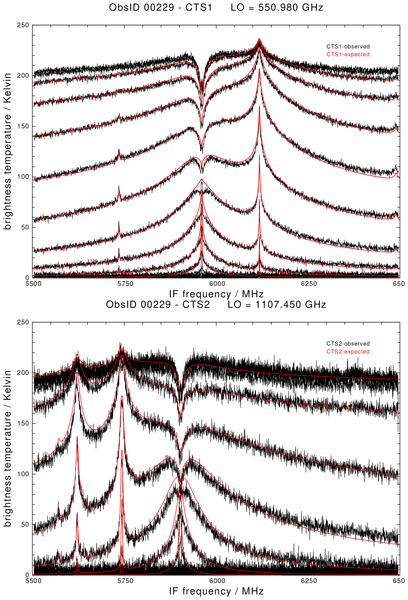
Christopher Jarchow, Ladislav Rezac, Paul Hartogh, Ali Schulz-Ravanbakhsh, Thibault Cavalié, Fabrice Herpin, Raphael Moreno, and Axel Murk
Ann. Geophys., 44, 795–809, https://doi.org/10.5194/angeo-44-795-2026, https://doi.org/10.5194/angeo-44-795-2026, 2026
Short summary
Short summary
The Jupiter Icy Moons Explorer is a spacecraft sent towards Jupiter to perform detailed observations of the giant gas planet & its Galilean satellites. The Submillimetre Wave Instrument onboard this spacecraft is a newly built instrument, which first of all has to demonstrate proper performance before the observed data can be trusted. Using the Earth as a well-known observation target, proper functionality of this instrument has been verified during the Lunar Earth Gravity Assist in August 2024.
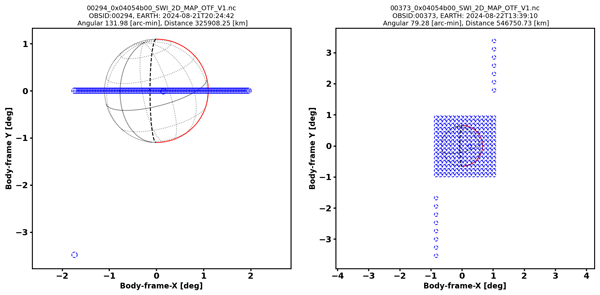
Thibault Cavalié, Raphael Moreno, Ladislav Rezac, Fabrice Herpin, Christopher Jarchow, Paul Hartogh, Alberto Carrasco Gallardo, Samuel Goodyear, Pierre Mancini, Ali Schulz-Ravanbakhsh, Borys Dabrowski, Yasuko Kasai, Emmanuel Lellouch, Axel Murk, Donal Murtagh, Michael Olberg, Miriam Rengel, Hideo Sagawa, Slawomira Szutowicz, and Eva Wirström
Ann. Geophys., 44, 461–487, https://doi.org/10.5194/angeo-44-461-2026, https://doi.org/10.5194/angeo-44-461-2026, 2026
Short summary
Short summary
The Submillimetre Wave Instrument (SWI) aboard the Juice mission is a sophisticated and first-of-its-kind payload. SWI is designed to support the diverse science objectives of the Juice mission targeting Jupiter's middle atmosphere, icy-moon's exospheres as well as near sub-surface thermophysical properties. This presents significant planning, operations and commanding challenges which are described in this paper in the context of the Lunar and Earth Gravity Assist (LEGA).
Raphael Moreno, Ladislav Rezac, Tomáš Formánek, Thibault Cavalié, Christopher Jarchow, Emmanuel Lellouch, Paul Hartogh, Axel Murk, Mikko Kotiranta, Alberto Carrasco Gallardo, Samuel Goodyear, Ali Schulz-Ravanbakhsh, Borys Dabrowski, Fabrice Herpin, Yasuko Kasai, Donal Murtagh, Michael Olberg, Miriam Rengel, Hideo Sagawa, Slawomira Szutowicz, and Eva Wirström
EGUsphere, https://doi.org/10.5194/egusphere-2026-2064, https://doi.org/10.5194/egusphere-2026-2064, 2026
Short summary
Short summary
The Submillimetre Wave Instrument (SWI) onboard the Jupiter Icy Moons Explorer (Juice) spacecraft consists of a 29 cm antenna and two radio receivers operating at submillimeter wavelength. This instrument is designed to study Jupiter's atmosphere and the thin atmospheres of its moons.
We used Earth observations obtained during the Lunar-Earth-Gravity-Assist (LEGA) . This data analysis allows us to characterise the antenna beam and pointing corrections.
Hyunkwang Lim, Tamaki Fujinawa, Takafumi Sugita, Satoshi Inomata, Hiroshi Tanimoto, Christoph Mahnke, Andreas Petzold, Ulrich Bundke, Yugo Kanaya, Yasuko Kasai, Tomohiro O. Sato, Sang Seo Park, Minseok Kim, Yun Gon Lee, and Ukkyo Jeong
EGUsphere, https://doi.org/10.5194/egusphere-2026-4968, https://doi.org/10.5194/egusphere-2026-4968, 2026
This preprint is open for discussion and under review for Atmospheric Measurement Techniques (AMT).
Short summary
Short summary
Satellite measurements of nitrogen dioxide can be biased when the assumed vertical distribution of pollution does not match reality. We combined satellite, aircraft, and ground-based observations near major Asian airports and found that using aircraft-measured profiles generally reduced this bias. However, improvements varied by location, showing that spatial representativeness and other retrieval uncertainties also remain important.
Christopher Jarchow, Ladislav Rezac, Paul Hartogh, Ali Schulz-Ravanbakhsh, Thibault Cavalié, Fabrice Herpin, Raphael Moreno, and Axel Murk
Ann. Geophys., 44, 795–809, https://doi.org/10.5194/angeo-44-795-2026, https://doi.org/10.5194/angeo-44-795-2026, 2026
Short summary
Short summary
The Jupiter Icy Moons Explorer is a spacecraft sent towards Jupiter to perform detailed observations of the giant gas planet & its Galilean satellites. The Submillimetre Wave Instrument onboard this spacecraft is a newly built instrument, which first of all has to demonstrate proper performance before the observed data can be trusted. Using the Earth as a well-known observation target, proper functionality of this instrument has been verified during the Lunar Earth Gravity Assist in August 2024.
Thibault Cavalié, Raphael Moreno, Ladislav Rezac, Fabrice Herpin, Christopher Jarchow, Paul Hartogh, Alberto Carrasco Gallardo, Samuel Goodyear, Pierre Mancini, Ali Schulz-Ravanbakhsh, Borys Dabrowski, Yasuko Kasai, Emmanuel Lellouch, Axel Murk, Donal Murtagh, Michael Olberg, Miriam Rengel, Hideo Sagawa, Slawomira Szutowicz, and Eva Wirström
Ann. Geophys., 44, 461–487, https://doi.org/10.5194/angeo-44-461-2026, https://doi.org/10.5194/angeo-44-461-2026, 2026
Short summary
Short summary
The Submillimetre Wave Instrument (SWI) aboard the Juice mission is a sophisticated and first-of-its-kind payload. SWI is designed to support the diverse science objectives of the Juice mission targeting Jupiter's middle atmosphere, icy-moon's exospheres as well as near sub-surface thermophysical properties. This presents significant planning, operations and commanding challenges which are described in this paper in the context of the Lunar and Earth Gravity Assist (LEGA).
Witali Krochin, Axel Murk, and Gunter Stober
EGUsphere, https://doi.org/10.5194/egusphere-2026-2364, https://doi.org/10.5194/egusphere-2026-2364, 2026
This preprint is open for discussion and under review for Annales Geophysicae (ANGEO).
Short summary
Short summary
This manuscript presents measurements of the microwave emission spectra of oxygen. These spectra depend strongly on the geomagnetic field, since oxygen's magnetic dipole couples to it what produces measurable spectral shifts. The interaction is analyzed in detail, including observation geometry and polarization. Using the relation between magnetic field and spectral characteristics, a method is proposed for remote monitoring of geomagnetic variations.
Raphael Moreno, Ladislav Rezac, Tomáš Formánek, Thibault Cavalié, Christopher Jarchow, Emmanuel Lellouch, Paul Hartogh, Axel Murk, Mikko Kotiranta, Alberto Carrasco Gallardo, Samuel Goodyear, Ali Schulz-Ravanbakhsh, Borys Dabrowski, Fabrice Herpin, Yasuko Kasai, Donal Murtagh, Michael Olberg, Miriam Rengel, Hideo Sagawa, Slawomira Szutowicz, and Eva Wirström
EGUsphere, https://doi.org/10.5194/egusphere-2026-2064, https://doi.org/10.5194/egusphere-2026-2064, 2026
Short summary
Short summary
The Submillimetre Wave Instrument (SWI) onboard the Jupiter Icy Moons Explorer (Juice) spacecraft consists of a 29 cm antenna and two radio receivers operating at submillimeter wavelength. This instrument is designed to study Jupiter's atmosphere and the thin atmospheres of its moons.
We used Earth observations obtained during the Lunar-Earth-Gravity-Assist (LEGA) . This data analysis allows us to characterise the antenna beam and pointing corrections.
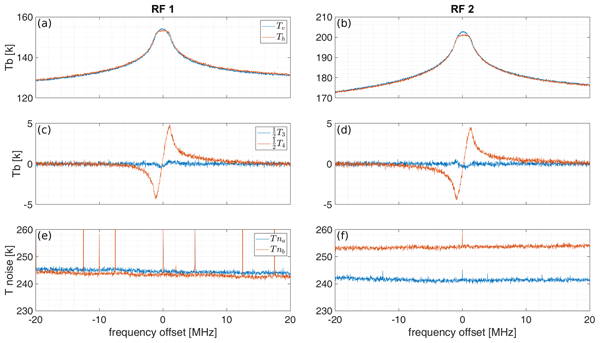
Witali Krochin, Axel Murk, Andres Luder, and Gunter Stober
Atmos. Meas. Tech., 19, 2103–2123, https://doi.org/10.5194/amt-19-2103-2026, https://doi.org/10.5194/amt-19-2103-2026, 2026
Short summary
Short summary
In this manuscript a new fully polarimetric radiometer for ground-based temperature sounding, TEMPERA-C (Campaign Temperature Radiometer), is presented. The advantages of the fully polarimetric approach are discussed, and a fully polarimetric calibration method is described in detail. The final measurements and the continuous series of temperature retrievals from the high altitude research station on the Jungfraujoch are also shown in this manuscript.
Adrianos Filinis, Alistair Bell, Axel Murk, and Gunter Stober
Atmos. Meas. Tech., 19, 1783–1799, https://doi.org/10.5194/amt-19-1783-2026, https://doi.org/10.5194/amt-19-1783-2026, 2026
Short summary
Short summary
Water vapor is an essential climate variable in the Earth's atmosphere and plays an important role in the radiative balance, serving as the most significant greenhouse gas in the upper troposphere. Hence, high-quality and continuous measurements are required. In this paper, we present the breadboard design of a newly developed radiometer, which will retrieve vertical profiles of middle atmospheric water vapor.

François Poulet, Giuseppe Piccioni, Yves Langevin, Cydalise Dumesnil, Vincent Carlier, Benoit Seignovert, Marc Dexet, Leigh N. Fletcher, Cédric Leyrat, Francesca Altieri, John Carter, Emiliano D'Aversa, Maria De Sanctis, Davide Grassi, Sandrine Guerlet, Stéphane Le Mouélic, Alessandra Migliorini, Fabrizio Oliva, Clément Royer, Sébastien Rodriguez, Katrin Stephan, Federico Tosi, Francesca Zambon, Alberto Adriani, Gabriele Arnold, Jean-Pierre Bibring, Dominique Bockelée, Rosario Brunetto, Fabrizio Capaccioni, Cristian Carli, Thibault Cavalié, Miriam Cisneros González, Mauro Ciarnello, Simone De Angelis, Pierre Drossart, Gianrico Filacchione, Thierry Fouchet, Jean-Claude Gérard, Denis Grodent, Patrick Irwin, Sophie Jacquinod, Ozgur Karatekin, Emmanuel Lellouch, Nicolas Ligier, Nicolas Mangold, Magali Mebsout, Frédéric Merlin, Alessandro Morbidelli, Alessandro Mura, Andreas Nathues, Maria E. Palumbo, Cédric Pilorget, Olivier Poch, Eric Quirico, Andrea Raponi, Séverine Robert, Elias Roussos, Agustin Sanchez-Lavega, Bernard Schmitt, Giuseppe Sindoni, Marcel Snels, Roberto Sordini, Stefania Stefani, Giovanni Strazzulla, Tim Trent, Gabriel Tobie, Diego Turrini, Ann-Carine Vandaele, Mathieu Vincendon, Olivier Witasse, Claire Vallat, and Alessandro Moraino
Ann. Geophys., 44, 163–193, https://doi.org/10.5194/angeo-44-163-2026, https://doi.org/10.5194/angeo-44-163-2026, 2026
Short summary
Short summary
During the double Lunar-Earth Gravitational Assist with the ESA/JUICE (Jupiter Icy Moons Explorer) spacecraft in August 2024, we acquired hyperspectral data cubes of both the Moon and Earth with the MAJIS (Moons And Jupiter Imaging Spectrometer) imaging spectrometer under challenging, real in-flight conditions. This allowed to characterize surface materials and thermophysical properties on the Moon, identify various cloud phases and gases in Earth's atmosphere, and thoroughly validate the performance of the instrument.
Patrick Eriksson, Anders Emrich, Kalle Kempe, Johan Riesbeck, Alhassan Aljarosha, Olivier Auriacombe, Joakim Kugelberg, Enne Hekma, Roland Albers, Axel Murk, Søren Møller Pedersen, Laurenz John, Jan Stake, Peter McEvoy, Bengt Rydberg, Adam Dybbroe, Anke Thoss, Alessio Canestri, Christophe Accadia, Paolo Colucci, Daniele Gherardi, and Ville Kangas
Atmos. Meas. Tech., 18, 4709–4729, https://doi.org/10.5194/amt-18-4709-2025, https://doi.org/10.5194/amt-18-4709-2025, 2025
Short summary
Short summary
The Arctic Weather Satellite (AWS), developed by the European Space Agency, highlights a new approach in satellite design, aiming to expand the network of operational microwave sensors cost-effectively. Launched in August 2024, AWS features a 19-channel microwave cross-track radiometer. Notably, it introduces groundbreaking channels at 325.15 GHz. In addition, AWS acts as the stepping stone to a suggested constellation of satellites, denoted as EUMETSAT Polar System Sterna.
Alistair Bell, Axel Murk, and Gunter Stober
EGUsphere, https://doi.org/10.5194/egusphere-2025-1396, https://doi.org/10.5194/egusphere-2025-1396, 2025
Short summary
Short summary
Increases in middle atmospheric water vapour from the 2022 Hunga eruption have been measured worldwide. This study uses remote sensing measurements at two latitudes and accurate radiative transfer modeling to show significant long-wave heating effects. Though minimal at the surface, the water vapour enhancement can alter middle-atmospheric dynamics, potentially affecting ozone chemistry and weather patterns.
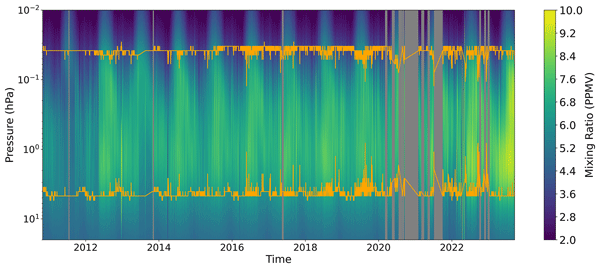
Alistair Bell, Eric Sauvageat, Gunter Stober, Klemens Hocke, and Axel Murk
Atmos. Meas. Tech., 18, 555–567, https://doi.org/10.5194/amt-18-555-2025, https://doi.org/10.5194/amt-18-555-2025, 2025
Short summary
Short summary
Hardware and software developments have been made on a 22 GHz microwave radiometer for the measurement of middle-atmospheric water vapour near Bern, Switzerland. Previous measurements dating back to 2010 have been re-calibrated and an improved optimal estimation retrieval performed on these measurements, giving a 13-year dataset. Measurements made with new and improved instrumental hardware are used to correct previous measurements, which show better agreement than the non-corrected dataset.
Witali Krochin, Axel Murk, and Gunter Stober
Atmos. Meas. Tech., 17, 5015–5028, https://doi.org/10.5194/amt-17-5015-2024, https://doi.org/10.5194/amt-17-5015-2024, 2024
Short summary
Short summary
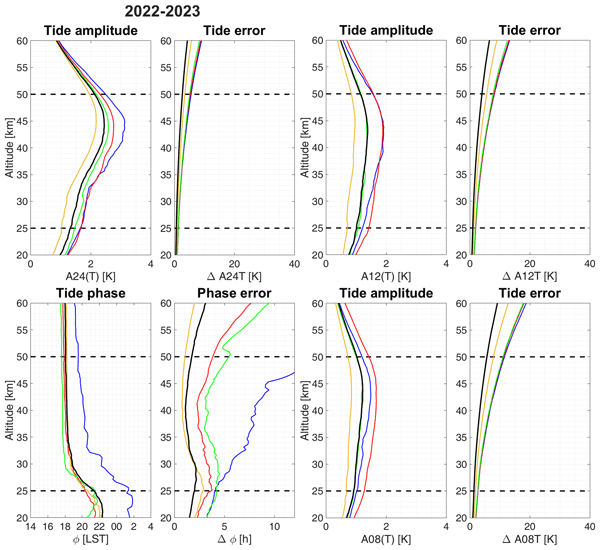
Atmospheric tides are global-scale oscillations with periods of a fraction of a day. Their observation in the middle atmosphere is challenging and rare, as it requires continuous measurements with a high temporal resolution. In this paper, temperature time series of a ground-based microwave radiometer were analyzed with a spectral filter to derive thermal tide amplitudes and phases in an altitude range of 25–50 km at the geographical locations of Payerne and Bern (Switzerland).
Yajun Xu, Tomohiro O. Sato, Ayano Nakamura, Tamaki Fujinawa, Suyun Wang, and Yasuko Kasai
EGUsphere, https://doi.org/10.5194/egusphere-2024-194, https://doi.org/10.5194/egusphere-2024-194, 2024
Preprint withdrawn
Short summary
Short summary
Usually, the vertical column density of NO2 is obtained by converting the slant column density derived from the measured spectra using an air mass factor (AMF). This work proposes two deep neural network models for calculating the tropospheric AMF and altitude-dependent AMF. Experiments shown that the RMSPE and computation time are approximately 30 times smaller and two times shorter compared to the traditional method.
Michael Kiefer, Dale F. Hurst, Gabriele P. Stiller, Stefan Lossow, Holger Vömel, John Anderson, Faiza Azam, Jean-Loup Bertaux, Laurent Blanot, Klaus Bramstedt, John P. Burrows, Robert Damadeo, Bianca Maria Dinelli, Patrick Eriksson, Maya García-Comas, John C. Gille, Mark Hervig, Yasuko Kasai, Farahnaz Khosrawi, Donal Murtagh, Gerald E. Nedoluha, Stefan Noël, Piera Raspollini, William G. Read, Karen H. Rosenlof, Alexei Rozanov, Christopher E. Sioris, Takafumi Sugita, Thomas von Clarmann, Kaley A. Walker, and Katja Weigel
Atmos. Meas. Tech., 16, 4589–4642, https://doi.org/10.5194/amt-16-4589-2023, https://doi.org/10.5194/amt-16-4589-2023, 2023
Short summary
Short summary
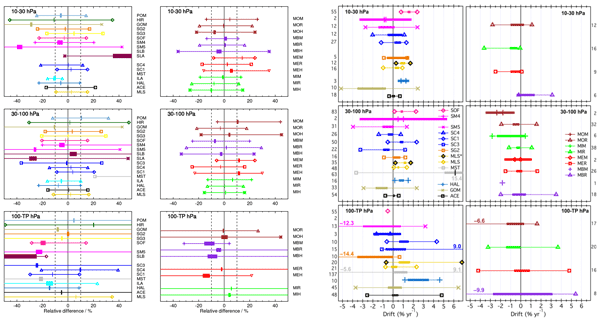
We quantify biases and drifts (and their uncertainties) between the stratospheric water vapor measurement records of 15 satellite-based instruments (SATs, with 31 different retrievals) and balloon-borne frost point hygrometers (FPs) launched at 27 globally distributed stations. These comparisons of measurements during the period 2000–2016 are made using robust, consistent statistical methods. With some exceptions, the biases and drifts determined for most SAT–FP pairs are < 10 % and < 1 % yr−1.
Eric Sauvageat, Klemens Hocke, Eliane Maillard Barras, Shengyi Hou, Quentin Errera, Alexander Haefele, and Axel Murk
Atmos. Chem. Phys., 23, 7321–7345, https://doi.org/10.5194/acp-23-7321-2023, https://doi.org/10.5194/acp-23-7321-2023, 2023
Short summary
Short summary
In Switzerland, two microwave radiometers can measure continuous ozone profiles in the middle atmosphere. From these instruments, we can study the diurnal variation of ozone, which is difficult to observe otherwise. It is valuable to validate the model simulations of diurnal variations in this region. We present results obtained during the last decade and compare them against various models. For the first time, we also show that the winter diurnal variations have some short-term fluctuations.

Eric Sauvageat, Eliane Maillard Barras, Klemens Hocke, Alexander Haefele, and Axel Murk
Atmos. Meas. Tech., 15, 6395–6417, https://doi.org/10.5194/amt-15-6395-2022, https://doi.org/10.5194/amt-15-6395-2022, 2022
Short summary
Short summary
We present new harmonized ozone time series from two ground-based microwave radiometers in Switzerland. The new series consist of hourly ozone profiles in the middle atmosphere (~ 20–70 km) from 2009 until 2021. Cross-validation of the new data series shows the benefit of the harmonization process compared to the previous versions. Comparisons with collocated satellite observations is used to further validate these time series for long-term ozone monitoring over central Europe.
William G. Read, Gabriele Stiller, Stefan Lossow, Michael Kiefer, Farahnaz Khosrawi, Dale Hurst, Holger Vömel, Karen Rosenlof, Bianca M. Dinelli, Piera Raspollini, Gerald E. Nedoluha, John C. Gille, Yasuko Kasai, Patrick Eriksson, Christopher E. Sioris, Kaley A. Walker, Katja Weigel, John P. Burrows, and Alexei Rozanov
Atmos. Meas. Tech., 15, 3377–3400, https://doi.org/10.5194/amt-15-3377-2022, https://doi.org/10.5194/amt-15-3377-2022, 2022
Short summary
Short summary
This paper attempts to provide an assessment of the accuracy of 21 satellite-based instruments that remotely measure atmospheric humidity in the upper troposphere of the Earth's atmosphere. The instruments made their measurements from 1984 to the present time; however, most of these instruments began operations after 2000, and only a few are still operational. The objective of this study is to quantify the accuracy of each satellite humidity data set.
Witali Krochin, Francisco Navas-Guzmán, David Kuhl, Axel Murk, and Gunter Stober
Atmos. Meas. Tech., 15, 2231–2249, https://doi.org/10.5194/amt-15-2231-2022, https://doi.org/10.5194/amt-15-2231-2022, 2022
Short summary
Short summary
This study leverages atmospheric temperature measurements performed with a ground-based radiometer making use of data that was collected during a 4-year observational campaign applying a new retrieval algorithm that improves the maximal altitude range from 45 to 55 km. The measurements are validated against two independent data sets, MERRA2 reanalysis data and the meteorological analysis of NAVGEM-HA.
Cited articles
Beaudin, G., Gulkis, S., Frerking, M., Hartogh, P., Allen, M., Bockelee-Morvan, D. Crovisier, J., Despois, D., Encrenaz, P., Encrenaz, T., Germain, B., Hofstadter, M., Ip, W., Janssen, M., Lellouch, E., Mann, I., Muhleman, D., Rauer, H., Schloerb, F. P., and Spilker, T.: A microwave radiometer/spectrometer for the ROSETTA orbiter, in: Proceedings of the 2nd ESA Workshop on Millimetre Wave Technology and Applications: Antennas, Circuits and Systems, edited by:Mallat, J., Räisänen, A. , and Tuovinen, J., ESA WPP-149, ESA Publ. Div., ESPOO, Finland, pp. 43–48, 1998.
Boutonnet, A., Langevin, Y., and Erd, C.: Designing the JUICE Trajectory, SSRv, 220, 67, https://doi.org/10.1007/s11214-024-01093-y, 2024.
Cavalié, T., Benmahi, B., Hue, V., Moreno, R., Lellouch, E., Fouchet, T., Hartogh, P., Rezac, L., Greathouse, T. K., Gladstone, G. R., Sinclair, J. A., Dobrijevic, M., Billebaud, F., and Jarchow, C.: First direct measurement of auroral and equatorial jets in the stratosphere of Jupiter, Astron. Astrophys., 647, L8, https://doi.org/10.1051/0004-6361/202140330, 2021.
Cavalié, T., Rezac, L., Moreno, R., Lellouch, E., Fouchet, T., Benmahi, B., Greathouse, T. K., Sinclair, J. A., Hue, V., Hartogh, P., Dobrijevic, M., Carrasco, N., and Perrin, Z.: Evidence for auroral influence on Jupiter's nitrogen and oxygen chemistry revealed by ALMA, Nature Astronomy, 7, 1048–1055, https://doi.org/10.1038/s41550-023-02016-7, 2023.
Cavalié, T., Moreno, R., Rezac, L., Herpin, F., Jarchow, C., Hartogh, P., Carrasco Gallardo, A., Goodyear, S., Mancini, P., Schulz-Ravanbakhsh, A., Dabrowski, B., Kasai, Y., Lellouch, E., Murk, A., Murtagh, D., Olberg, M., Rengel, M., Sagawa, H., Szutowicz, S., and Wirström, E.: Juice-SWI during the Lunar-Earth-Gravity-Assist (LEGA) – Part 2: Instrument operations, Ann. Geophys., 44, 461–487, https://doi.org/10.5194/angeo-44-461-2026, 2026.
de Graauw, T., Whyborn, N. D., van de Stadt, H., Beaudin, G., Beintema, D. A., Belitsky, V., Cais, P., Caux, E., Gheudin, M., Cros, A., de Groene, P., Emrich, A., Erickson, N. R., Gaier, T. C., Gallego-Puyol, J. D., Gao, J., Hartogh, P., Honingh, N., Horn, J., Jacobs, K., Kruisinga, R., Lura, F., Lecacheux, A., Natale, V., Orfei, R., Pearson, J. C., Phillips, T. G., Roelfsema, P. R., Rosolen, C., Salez, M., Schieder, R. T., Schuster, K.-F., Schwaab, G. W., Starsky, J. P., Stutzki, J., Torchinsky, S., van Leeuwen, B., Visser, H., Wildeman, K. J., Withington, S., and Zmuidzinas, J.: Heterodyne instrument for FIRST (HIFI): preliminary design, in: Advanced Technology MMW, Radio, and Terahertz Telescopes, edited by: Phillips, T. G., vol. 3357 of Society of Photo-Optical Instrumentation Engineers (SPIE) Conference Series, 336–347, https://doi.org/10.1117/12.317368, 1998.
Fletcher, L. N., Cavalié, T., Grassi, D., Hueso, R., Lara, L. M., Kaspi, Y., Galanti, E., Greathouse, T. K., Molyneux, P. M., Galand, M., Vallat, C., Witasse, O., Lorente, R., Hartogh, P., Poulet, F., Langevin, Y., Palumbo, P., Gladstone, G. R., Retherford, K. D., Dougherty, M. K., Wahlund, J.-E., Barabash, S., Iess, L., Bruzzone, L., Hussmann, H., Gurvits, L. I., Santolik, O., Kolmasova, I., Fischer, G., Müller-Wodarg, I., Piccioni, G., Fouchet, T., Gérard, J.-C., Sánchez-Lavega, A., Irwin, P. G. J., Grodent, D., Altieri, F., Mura, A., Drossart, P., Kammer, J., Giles, R., Cazaux, S., Jones, G., Smirnova, M., Lellouch, E., Medvedev, A. S., Moreno, R., Rezac, L., Coustenis, A., and Costa, M.: Jupiter Science Enabled by ESA’s Jupiter Icy Moons Explorer, Space Sci. Rev., 219, 53, https://doi.org/10.1007/s11214-023-00996-6, 2023.
Grasset, O., Dougherty, M. K., Coustenis, A., Bunce, E. J., Erd, C., Titov, D., Blanc, M., Coates, A., Drossart, P., Fletcher, L. N., Hussmann, H., Jaumann, R., Krupp, N., Lebreton, J.-P., Prieto-Ballesteros, O., Tortora, P., Tosi, F., and Van Hoolst, T.: JUpiter ICy moons Explorer (Juice): An ESA mission to orbit Ganymede and to characterise the Jupiter system, Planet. Space Sci., 78, 1–21, https://doi.org/10.1016/j.pss.2012.12.002, 2013.
Guesten, R., Hartogh, P., Huebers, H.-W., Graf, U. U., Jacobs, K., Roeser, H.-P., Schaefer, F., Schieder, R. T., Stark, R., Stutzki, J., Van der Wal, P., and Wunsch, A.: GREAT: the first-generation German heterodyne receiver for SOFIA, in: Airborne Telescope Systems, edited by: Melugin, R. K. and Röser, H.-P., vol. 4014 of Society of Photo-Optical Instrumentation Engineers (SPIE) Conference Series, 23–30, https://doi.org/10.1117/12.389122, 2000.
Gulkis, S., Frerking, M., Crovisier, J., Beaudin, G., Hartogh, P., Encrenaz, P., Koch, T., Kahn, C., Salinas, Y., Nowicki, R., Irigoyen, R., Janssen, M., Stek, P., Hofstadter, M., Allen, M., Backus, C., Kamp, L., Jarchow, C., Steinmetz, E., Deschamps, A., Krieg, J., Gheudin, M., Bockelée-Morvan, D., Biver, N., Encrenaz, T., Despois, D., Ip, W., Lellouch, E., Mann, I., Muhleman, D., Rauer, H., Schloerb, P., and Spilker, T.: MIRO: Microwave Instrument for Rosetta Orbiter, Space. Sci. Rev., 128, 561–597, https://doi.org/10.1007/s11214-006-9032-y, 2007.
Hartogh, P. and Hartmann, G. K.: A high-resolution chirp transform spectrometer for microwave measurements, Meas. Sci. Technol., 1, 592–595, https://doi.org/10.1088/0957-0233/1/7/008, 1990.
Hartogh, P.: Present and future chirp transform spectrometers for microwave remote sensing, in: Sensors, Systems, and Next-Generation Satellites, edited by: Fujisada, H., vol. 3221 of Society of Photo-Optical Instrumentation Engineers (SPIE) Conference Series, 328–339, https://doi.org/10.1117/12.298099, 1997.
Hartogh, P.: A new microwave heterodyne spectrometer backend: The ASIC-CTS, in: Proceedings of the 2nd ESA Workshop on Millimetre Wave Technology and Applications: Antennas, Circuits and Systems, edited by: Mallat, J., Räisänen, A., and Tuovinen, J., ESA WPP-149, MilliLab, ESPOO, Finland, pp. 333–338, 1998.
Hartogh, P., Lellouch, E., Rezac, L., and others: SubmillimetreWave Instrument (SWI) on board ESA's Jupiter Icy Moons Explorer (Juice), Space Sci. Rev., in preparation, 2026.
Heyminck, S., Graf, U. U., Güsten, R., Stutzki, J., Hübers, H. W., and Hartogh, P.: GREAT: the SOFIA high-frequency heterodyne instrument, Astron. Astrophys., 542, L1, https://doi.org/10.1051/0004-6361/201218811, 2012.
Ilyushin, Y. A. and Hartogh, P.: Submillimeter Wave Instrument radiometry of the Jovian icy moons. Numerical simulation of the microwave thermal radiative transfer and Bayesian retrieval of the physical properties, Astron. Astrophys., 644, A24, https://doi.org/10.1051/0004-6361/201937220, 2020.
Jacob, K., Schröder, A., and Murk, A.: Design, Manufacturing, and Characterization of Conical Blackbody Targets With Optimized Profile, IEEE T. Thz. Sci. Techn., 8, 76–84, https://doi.org/10.1109/TTHZ.2017.2762309, 2018.
Jarchow, C., Rezac, L., Hartogh, P., Schulz-Ravanbakhsh, A., Cavalie, T., Herpin, F., Moreno, R., and Murk, A.: Juice/SWI during the Lunar-Earth-Gravity-Assist. III. Observations of the Earth as Calibration Target, EGUsphere [preprint], https://doi.org/10.5194/egusphere-2026-1096, 2026.
Kotiranta, M., Jacob, K., Kim, H., Hartogh, P., and Murk, A.: Optical Design and Analysis of the Submillimeter-Wave Instrument on Juice, IEEE T. Thz. Sci. Techn., 8, 588–595, https://doi.org/10.1109/TTHZ.2018.2866116, 2018.
Moreno, R., Rezac, L., Formánek, T., Cavalié, T., Jarchow, C., Lellouch, E., Hartogh, P., Murk, A., Kotiranta, M., Carrasco Gallardo, A., Goodyear, S., Schulz-Ravanbakhsh, A., Dabrowski, B., Herpin, F., Kasai, Y., Murtagh, D., Olberg, M., Rengel, M., Sagawa, H., Szutowicz, S., and Wirström, E.: Juice/SWI during the Lunar-Earth-Gravity-Assist (LEGA). IV. Antenna pointing and beam characterisation, EGUsphere [preprint], https://doi.org/10.5194/egusphere-2026-2064, 2026.
Ostrovsky, P., Tittelbach-Helmrich, K., Herzel, F., Schrape, O., Fischer, G., Kissinger, D., Börner, P., Loose, A., Hellmann, D., and Hartogh, P.: A single chip 16
Ostrovskyy, P., Schrape, O., Tittelbach-Helmrich, K., Herzel, F., Fischer, G., Hellmann, D., Börner, P., Loose, A., Hartogh, P., and Kissinger, D.: A Radiation Hardened 16
Tosi, F., Roatsch, T., Galli, A., Hauber, E., Lucchetti, A., Molyneux, P., Stephan, K., Achilleos, N., Bovolo, F., Carter, J., Cavalié, T., Cimò, G., D'Aversa, E., Gwinner, K., Hartogh, P., Huybrighs, H., Langevin, Y., Lellouch, E., Migliorini, A., Palumbo, P., Piccioni, G., Plaut, J. J., Postberg, F., Poulet, F., Retherford, K., Rezac, L., Roth, L., Solomonidou, A., Tobie, G., Tortora, P., Tubiana, C., Wagner, R., Wirström, E., Wurz, P., Zambon, F., Zannoni, M., Barabash, S., Bruzzone, L., Dougherty, M., Gladstone, R., Gurvits, L. I., Hussmann, H., Iess, L., Wahlund, J.-E., Witasse, O., Vallat, C., and Lorente, R.: Characterization of the Surfaces and Near-Surface Atmospheres of Ganymede, Europa and Callisto by JUICE, SSRv, 220, 59, https://doi.org/10.1007/s11214-024-01089-8, 2024.
Treuttel, J., Gatilova, L., Caroopen, S., Feret, A., Gay, G., Vacelet, T., Valentin, J., Jin, Y., Cavanna, A., Jacob, K. F., Mignoni, S., Lavignolle, V., Krieg, J.-M., Goldstein, C., Courtade, F., Larigauderie, C., Ravanbakhsh, A., Garcia, J.-P., Maestrini, A. E., and Hartogh, P.: 1200 GHz High Spectral Resolution Receiver Front-End of Submillimeter Wave Instrument for JUpiter ICy Moon Explorer: Part I – RF Performance Optimization for Cryogenic Operation, IEEE T. Thz. Sci. Techn., 13, 324–336, https://doi.org/10.1109/TTHZ.2023.3263623, 2023.
Wirström, E. S., Bjerkeli, P., Rezac, L., Brinch, C., and Hartogh, P.: Effect of the 3D distribution on water observations made with the SWI. I. Ganymede, Astron. Astrophys., 637, A90, https://doi.org/10.1051/0004-6361/202037609, 2020.
Short summary
We provide an introduction and overview about the initial Submillimetre Wave Instrument (SWI) characterization, operation, and in-flight calibration during the Lunar Earth Gravity Assist (LEGA) campaign of the Juice (Jupiter icy moons) spacecraft. A preliminary analysis on the frequency calibration is provided. For detailed analyses on total power and beam calibration and the observation and operations planning we refer to three other SWI papers prepared for this special issue of Annales Geophysicae (ANGEO).
We provide an introduction and overview about the initial Submillimetre Wave Instrument (SWI)...


