
Articles | Volume 44, issue 1
https://doi.org/10.5194/angeo-44-405-2026
© Author(s) 2026. This work is distributed under
the Creative Commons Attribution 4.0 License.
the Creative Commons Attribution 4.0 License.
https://doi.org/10.5194/angeo-44-405-2026
© Author(s) 2026. This work is distributed under
the Creative Commons Attribution 4.0 License.
the Creative Commons Attribution 4.0 License.
Regular paper
| 
29 May 2026
Regular paper |
| 29 May 2026
| 29 May 2026
New technique for isolating the auroral contribution in UV imagery: IMF By dependence of seasonal differences in auroral oval location during positive IMF Bz
Jens Christian Hessen
CORRESPONDING AUTHOR

Department of Physics and Technology, University of Bergen, Bergen, Norway
Jone Peter Reistad
OneSubsea Processing AS, Sandsli, Bergen, Norway
Spencer Mark Hatch
Department of Physics and Technology, University of Bergen, Bergen, Norway
Karl Magnus Laundal
Division of Geomagnetism and Geospace, DTU Space, Technical University of Denmark, Kongens Lyngby, Denmark
Yongliang Zhang
Applied Physics Laboratory, The Johns Hopkins University, Laurel, Maryland, USA
Related authors
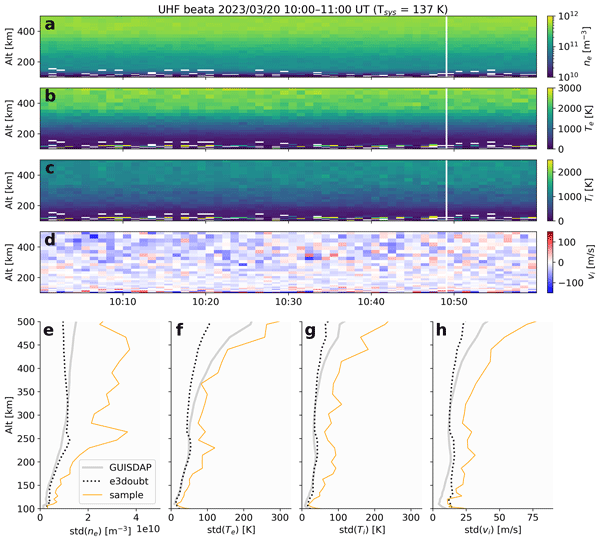
Spencer Mark Hatch, Ilkka Virtanen, Karl Magnus Laundal, Habtamu Wubie Tesfaw, Juha Vierinen, Devin Ray Huyghebaert, Andres Spicher, and Jens Christian Hessen
Ann. Geophys., 43, 633–649, https://doi.org/10.5194/angeo-43-633-2025, https://doi.org/10.5194/angeo-43-633-2025, 2025
Short summary
Short summary
This study addresses the design of next-generation incoherent scatter radar experiments used to study the ionosphere, particularly with systems that have multiple sites. We have developed a method to estimate uncertainties of measurements of plasma density, temperature, and ion drift. Our method is open-source, and helps to optimize radar configurations and assess the effectiveness of an experiment. This method ultimately serves to enhance our understanding of Earth's space environment.
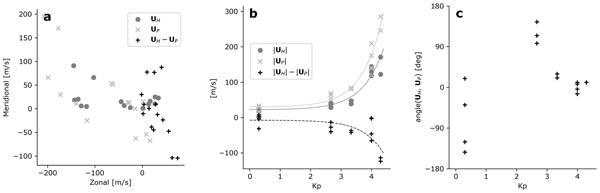
Spencer Mark Hatch, Johnathan Burchill, Heikki Vanhamäki, Rafael Luiz Araujo de Mesquita, and Karl Magnus Laundal
Ann. Geophys., 44, 715–729, https://doi.org/10.5194/angeo-44-715-2026, https://doi.org/10.5194/angeo-44-715-2026, 2026
Short summary
Short summary
Atmospheric winds at high altitudes (> 100 km) can play an important role in the electrodynamic processes that govern how ionospheric plasma interacts with Earth's neutral atmosphere. Here we investigate how a common idea in studies of ionospheric electrodynamics—that atmospheric winds can be ignored or represented via an average value—ignores the high variability of these winds. This variability forces a different formulation of the equations that govern ionosphere-thermosphere electrodynamics.
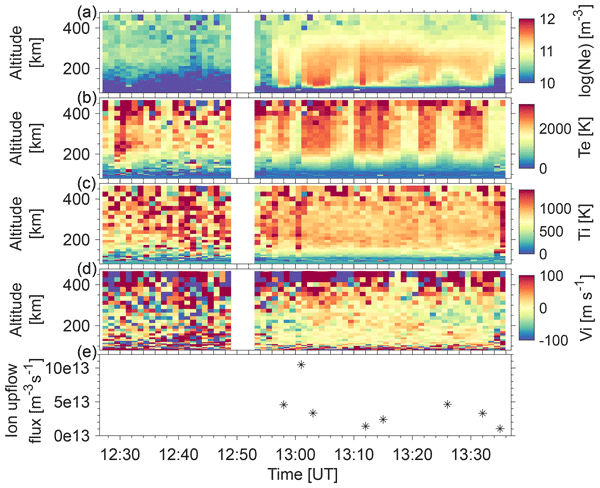
Charlotte M. van Hazendonk, Lisa J. Baddeley, Karl M. Laundal, and Noora Partamies
Ann. Geophys., 44, 697–714, https://doi.org/10.5194/angeo-44-697-2026, https://doi.org/10.5194/angeo-44-697-2026, 2026
Short summary
Short summary
This study shows the first observations of the upflow of ions in the Earth's ionosphere generated by ultra-low frequency waves. These waves are visible as auroral arcs. Using various instruments and models, their complex dynamics and the coupling between the ionosphere and magnetosphere were highlighted. Results show significant energy dissipation and currents, even from small-scale waves, highlighting the importance of a multi-instrument approach to understanding such phenomena.
Stephen Omondi, Spencer Mark Hatch, Andreas Kvammen, Magnar Gullikstad Johnsen, Mathew J. Owens, Kristian Solheim Thinn, and Rodrigo López
EGUsphere, https://doi.org/10.5194/egusphere-2025-6298, https://doi.org/10.5194/egusphere-2025-6298, 2026
Short summary
Short summary
Researchers tested whether combining real-time solar wind data with forecasts can improve predictions of local geomagnetic activity in Norway. Using a machine learning model, they found that accurate solar wind speed and magnetic field direction are key for reliable forecasts over 3 hours ahead, while CME arrival time only helps if magnetic field data is precise.
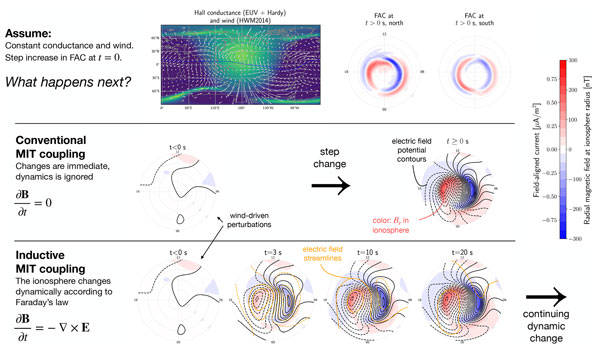
Karl M. Laundal, Andreas S. Skeidsvoll, Beatrice Popescu Braileanu, Spencer M. Hatch, Nils Olsen, and Heikki Vanhamäki
Ann. Geophys., 43, 803–833, https://doi.org/10.5194/angeo-43-803-2025, https://doi.org/10.5194/angeo-43-803-2025, 2025
Short summary
Short summary
The ionosphere is where Earth’s atmosphere overlaps with a gas of charged particles in space. There, collisions with neutral air and electromagnetic forces driven by the solar wind control plasma motion. We created a global model that includes magnetic induction, explaining how electric currents and fields change, offering a more accurate view of atmosphere–space coupling than conventional models based on electric circuits.
Liisa Juusola, Ilkka Virtanen, Spencer Mark Hatch, Heikki Vanhamäki, Maxime Grandin, Noora Partamies, Urs Ganse, Ilja Honkonen, Abiyot Workayehu, Antti Kero, and Minna Palmroth
Ann. Geophys., 43, 755–781, https://doi.org/10.5194/angeo-43-755-2025, https://doi.org/10.5194/angeo-43-755-2025, 2025
Short summary
Short summary
Key properties of the ionospheric electrodynamics are electric fields, currents, and conductances. They provide a window to the vast and distant near-Earth space, cause Joule heating that affect satellite orbits, and drive geomagnetically induced currents (GICs) in technological conductor networks. We have developed a new method for solving the key properties of ionospheric electrodynamics from ground-based magnetic field observations.
Spencer Mark Hatch, Ilkka Virtanen, Karl Magnus Laundal, Habtamu Wubie Tesfaw, Juha Vierinen, Devin Ray Huyghebaert, Andres Spicher, and Jens Christian Hessen
Ann. Geophys., 43, 633–649, https://doi.org/10.5194/angeo-43-633-2025, https://doi.org/10.5194/angeo-43-633-2025, 2025
Short summary
Short summary
This study addresses the design of next-generation incoherent scatter radar experiments used to study the ionosphere, particularly with systems that have multiple sites. We have developed a method to estimate uncertainties of measurements of plasma density, temperature, and ion drift. Our method is open-source, and helps to optimize radar configurations and assess the effectiveness of an experiment. This method ultimately serves to enhance our understanding of Earth's space environment.
Devin Huyghebaert, Björn Gustavsson, Juha Vierinen, Andreas Kvammen, Matthew Zettergren, John Swoboda, Ilkka Virtanen, Spencer M. Hatch, and Karl M. Laundal
Ann. Geophys., 43, 99–113, https://doi.org/10.5194/angeo-43-99-2025, https://doi.org/10.5194/angeo-43-99-2025, 2025
Short summary
Short summary
The EISCAT_3D radar is a new ionospheric radar under construction in the Fennoscandia region. The radar will make measurements of plasma characteristics at altitudes above approximately 60 km. The capability of the system to make these measurements at spatial scales of less than 100 m using multiple digitised signals from each of the radar antenna panels is highlighted. There are many ionospheric small-scale processes that will be further resolved using the techniques discussed here.
Spencer Mark Hatch, Heikki Vanhamäki, Karl Magnus Laundal, Jone Peter Reistad, Johnathan K. Burchill, Levan Lomidze, David J. Knudsen, Michael Madelaire, and Habtamu Tesfaw
Ann. Geophys., 42, 229–253, https://doi.org/10.5194/angeo-42-229-2024, https://doi.org/10.5194/angeo-42-229-2024, 2024
Short summary
Short summary
In studies of the Earth's ionosphere, a hot topic is how to estimate ionospheric conductivity. This is hard to do for a variety of reasons that mostly amount to a lack of measurements. In this study we use satellite measurements to estimate electromagnetic work and ionospheric conductances in both hemispheres. We identify where our model estimates are inconsistent with laws of physics, which partially solves a previous problem with unrealistic predictions of ionospheric conductances.
Cited articles
Cosgrove, R. B., Bahcivan, H., Chen, S., Sanchez, E., and Knipp, D.: Violation of Hemispheric Symmetry in Integrated Poynting Flux via an Empirical Model, Geophys. Res. Lett., 49, https://doi.org/10.1029/2021GL097329, 2022. a
Cowley, S. W. H. and Lockwood, M.: Excitation and decay of solar wind-driven flows in the magnetosphere-ionosphere system, Ann. Geophys., 10, 103–115, 1992. a
Cowley, S. W. H., Morelli, J. P., and Lockwood, M.: Dependence of convective flows and particle precipitation in the high-latitude dayside ionosphere on the X and Y components of the interplanetary magnetic field, J. Geophys. Res.-Space, 96, 5557–5564, https://doi.org/10.1029/90JA02063, 1991. a, b, c
Crooker, N. U.: Reverse convection, J. Geophys. Res.-Space, 97, 19363–19372, https://doi.org/10.1029/92JA01532, 1992. a
Crooker, N. U. and Rich, F. J.: Lobe cell convection as a summer phenomenon, J. Geophys. Res.-Space, 98, 13403–13407, https://doi.org/10.1029/93JA01037, 1993. a, b
Decotte, M., Laundal, K. M., Hatch, S. M., and Reistad, J. P.: Auroral Oval Morphology: Dawn-Dusk Asymmetry Partially Induced by Earth's Rotation, J. Geophys. Res.-Space, 128, https://doi.org/10.1029/2023JA031345, 2023. a, b
Dorelli, J. C., Bhattacharjee, A., and Raeder, J.: Separator reconnection at Earth's dayside magnetopause under generic northward interplanetary magnetic field conditions, J. Geophys. Res.-Space, 112, https://doi.org/10.1029/2006JA011877, 2007. a
Dungey, J.: The structure of the exosphere, or adventures in velocity space, in: Geophysics, the Earth's environment, 1963. a
Frey, H., Østgaard, N., Immel, T., Korth, H., and Mende, S.: Seasonal dependence of localized, high-latitude dayside aurora (HiLDA), J. Geophys. Res.-Space, 109, https://doi.org/10.1029/2003JA010293, 2004. a
Frey, H. U.: Properties of localized, high latitude, dayside aurora, J. Geophys. Res., 108, 8008, https://doi.org/10.1029/2002JA009332, 2003. a
Frey, H. U.: Localized aurora beyond the auroral oval, Rev. Geophys., 45, https://doi.org/10.1029/2005RG000174, 2007. a
Haaland, S. E., Paschmann, G., Förster, M., Quinn, J. M., Torbert, R. B., McIlwain, C. E., Vaith, H., Puhl-Quinn, P. A., and Kletzing, C. A.: High-latitude plasma convection from Cluster EDI measurements: method and IMF-dependence, Ann. Geophys., 25, 239–253, https://doi.org/10.5194/angeo-25-239-2007, 2007. a, b
Haaland, S., Lybekk, B., Maes, L., Laundal, K., Pedersen, A., Tenfjord, P., Ohma, A., Østgaard, N., Reistad, J., and Snekvik, K.: North-south asymmetries in cold plasma density in the magnetotail lobes: Cluster observations, J. Geophys. Res.-Space, 122, 136–149, https://doi.org/10.1002/2016JA023404, 2017. a
Hatch, S.: pySwipe: Python implementation of Swarm Ionospheric Polar Electrodynamics empirical model, Zenodo [data set], https://doi.org/10.5281/zenodo.10148940, 2023. a, b
Hatch, S. M., Haaland, S., Laundal, K. M., Moretto, T., Yau, A. W., Bjoland, L., Reistad, J. P., Ohma, A., and Oksavik, K.: Seasonal and Hemispheric Asymmetries of F Region Polar Cap Plasma Density: Swarm and CHAMP Observations, J. Geophys. Res.-Space, 125, https://doi.org/10.1029/2020JA028084, 2020. a
Hatch, S. M., Laundal, K. M., and Reistad, J. P.: Testing the mirror symmetry of Birkeland and ionospheric currents with respect to magnetic latitude, dipole tilt angle, and IMF By, Frontiers in Astronomy and Space Sciences, 9, https://doi.org/10.3389/fspas.2022.958977, 2022. a
Hatch, S. M., Vanhamäki, H., Laundal, K. M., Reistad, J. P., Burchill, J. K., Lomidze, L., Knudsen, D. J., Madelaire, M., and Tesfaw, H.: Does high-latitude ionospheric electrodynamics exhibit hemispheric mirror symmetry?, Ann. Geophys., 42, 229–253, https://doi.org/10.5194/angeo-42-229-2024, 2024. a
Hesse, M. and Cassak, P. A.: Magnetic Reconnection in the Space Sciences: Past, Present, and Future, J. Geophys. Res.-Space, 125, https://doi.org/10.1029/2018JA025935, 2020. a
Hessen, J. C.: jchessen/data_processing_ssusi: Python scripts to process the data (0.1), Zenodo [code], https://doi.org/10.5281/zenodo.20393217, 2026. a
Hill, T.: Theoretical models of polar-cap convection under the influence of a northward interplanetary magnetic field, J. Atmos. Terr. Phys., 56, 185–194, 1994. a
Holappa, L. and Mursula, K.: Explicit IMF By Dependence in High-Latitude Geomagnetic Activity, J. Geophys. Res.-Space, 123, 4728–4740, https://doi.org/10.1029/2018JA025517, 2018. a
Holzworth, R. and Meng, C.-I.: Mathematical representation of the auroral oval, Geophys. Res. Lett., 2, 377–380, 1975. a
King, J. and Papitashvili, N.: Solar wind spatial scales in and comparisons of hourly Wind and ACE plasma and magnetic field data, J. Geophys. Res.-Space, 110, https://doi.org/10.1029/2004JA010649D, 2005. a
Knipp, D., Kilcommons, L., Hairston, M., and Coley, W. R.: Hemispheric Asymmetries in Poynting Flux Derived From DMSP Spacecraft, Geophys. Res. Lett., 48, https://doi.org/10.1029/2021GL094781, 2021. a
Knudsen, D., Burchill, J., Buchert, S., Eriksson, A., Gill, R., Wahlund, J.-E., Åhlén, L., Smith, M., and Moffat, B.: Thermal ion imagers and Langmuir probes in the Swarm electric field instruments, J. Geophys. Res.-Space, 122, 2655–2673, 2017. a
Laundal, K. M. and Richmond, A. D.: Magnetic coordinate systems, Space Sci. Rev., 206, 27–59, 2017. a
Laundal, K. M., Cnossen, I., Milan, S. E., Haaland, S. E., Coxon, J., Pedatella, N. M., Förster, M., and Reistad, J. P.: North–South Asymmetries in Earth’s Magnetic Field, Space Sci. Rev., 206, 225–257, https://doi.org/10.1007/s11214-016-0273-0, 2017. a
Laundal, K. M., Finlay, C. C., Olsen, N., and Reistad, J. P.: Solar Wind and Seasonal Influence on Ionospheric Currents From Swarm and CHAMP Measurements, J. Geophys. Res.-Space, 123, 4402–4429, https://doi.org/10.1029/2018JA025387, 2018. a
Laundal, K. M., Reistad, J. P., Hatch, S. M., Moretto, T., Ohma, A., Østgaard, N., Tenfjord, P. A. R., Finlay, C. C., and Kloss, C.: Time-scale dependence of solar wind-based regression models of ionospheric electrodynamics, Sci. Rep., 10, 16406, https://doi.org/10.1038/s41598-020-73532-z, 2020. a
Le, G., Lu, G., Strangeway, R. J., and Pfaff Jr., R. F.: Strong interplanetary magnetic field By-related plasma convection in the ionosphere and cusp field-aligned currents under northward interplanetary magnetic field conditions, J. Geophys. Res.-Space, 107, SMP 34-1–SMP 34-14, https://doi.org/10.1029/2001JA007546, 2002. a
Maezawa, K.: Magnetospheric convection induced by the positive and negative Z components of the interplanetary magnetic field: Quantitative analysis using polar cap magnetic records, J. Geophys. Res., 81, 2289–2303, https://doi.org/10.1029/JA081i013p02289, 1976. a
Meng, C.-I.: Polar cap variations and the interplanetary magnetic field, in: Dynamics of the Magnetosphere: Proceedings of the AGU Chapman Conference “Magnetospheric Substorms and Related Plasma Processes” held at Los Alamos Scientific Laboratory, Los Alamos, NM, USA, 9–13 October 1978, Springer, 23–46, https://doi.org/10.1007/978-94-009-9519-2_2, 1979. a
Milan, S. E., Gosling, J. S., and Hubert, B.: Relationship between interplanetary parameters and the magnetopause reconnection rate quantified from observations of the expanding polar cap, J. Geophys. Res.-Space, 117, https://doi.org/10.1029/2011JA017082, 2012. a
Milan, S. E., Bower, G. E., Carter, J. A., Paxton, L. J., Anderson, B. J., and Hairston, M. R.: Lobe Reconnection and cusp-aligned auroral arcs, J. Geophys. Res.-Space, 127, e2021JA030089, https://doi.org/10.1029/2021JA030089, 2022. a, b
Moyal, J.: Theory of ionization fluctuations, The London, Edinburgh, and Dublin Philosophical Magazine and Journal of Science, 46, 263–280, 1955. a
Newville, M., Stensitzki, T., Allen, D. B., and Ingargiola, A.: LMFIT: Non-Linear Least-Square Minimization and Curve-Fitting for Python, Zenodo [code], https://doi.org/10.5281/zenodo.11813, 2014. a
Ohma, A., Østgaard, N., Reistad, J. P., Tenfjord, P., Laundal, K. M., Moretto Jørgensen, T., Haaland, S. E., Krcelic, P., and Milan, S.: Observations of Asymmetric Lobe Convection for Weak and Strong Tail Activity, J. Geophys. Res.-Space, 124, 9999–10017, https://doi.org/10.1029/2019JA026773, 2019. a
Ohma, A., Østgaard, N., Laundal, K. M., Reistad, J. P., Hatch, S. M., and Tenfjord, P.: Evolution of IMF By Induced Asymmetries: The Role of Tail Reconnection, J. Geophys. Res.-Space, 126, e2021JA029577, https://doi.org/10.1029/2021JA029577, 2021. a
Ohma, A., Laundal, K., Madelaire, M., Hatch, S. M., Gasparini, S., Reistad, J. P., Walker, S. J., and Decotte, M.: Excitation and decay of the auroral oval, https://doi.org/10.22541/essoar.169447428.84472457/v1, 2023. a
Oliveira, D. M., Welling, D. T., Kim, H., Gabrielse, C. E., Reistad, J. P., and Laundal, K.: Editorial: Understanding the causes of asymmetries in Earth’s magnetosphere-ionosphere system, Frontiers in Astronomy and Space Sciences, 10, https://doi.org/10.3389/fspas.2023.1173630, 2023. a
Østgaard, N., Reistad, J. P., Tenfjord, P., Laundal, K. M., Snekvik, K., Milan, S., and Haaland, S.: Mechanisms that Produce Auroral Asymmetries in Conjugate Hemispheres, John Wiley & Sons, Inc, 131–143, https://doi.org/10.1002/9781118978719.ch10, 2015. a
Pakhotin, I. P., Mann, I. R., Xie, K., Burchill, J. K., and Knudsen, D. J.: Northern preference for terrestrial electromagnetic energy input from space weather, Nat. Commun., 12, 199, https://doi.org/10.1038/s41467-020-20450-3, 2021. a
Papitashvili, N., Bilitza, D., and King, J.: OMNI: a description of near-Earth solar wind environment, 40th COSPAR scientific assembly, 40, C0–1, 2014. a
Paxton, L. J., Meng, C.-I., Fountain, G. H., Ogorzalek, B. S., Darlington, E. H., Gary, S. A., Goldsten, J. O., Kusnierkiewicz, D. Y., Lee, S. C., Linstrom, L. A., Maynard J. J., Peacock, K., Persons, D. F., Smith, B. E., Strickland, D. J., and Daniell Jr., R. E.: Special sensor ultraviolet spectrographic imager: An instrument description, in: Instrumentation for planetary and terrestrial atmospheric remote sensing, vol. 1745, SPIE, 2–15, https://doi.org/10.1117/12.140846, 1992. a
Paxton, L. J., Meng, C.-I., Fountain, G. H., Ogorzalek, B. S., Darlington, E. H., Gary, S. A., Goldsten, J. O., Kusnierkiewicz, D. Y., Lee, S. C., Linstrom, L. A., Maynard, J. J., Peacock, K., Persons, D. F., Smith, B. E., Strickland, D. J., and Daniell Jr., R. E.: SSUSI – Horizon-to-horizon and limb-viewing spectrographic imager for remote sensing of environmental parameters, Society of Photo-Optical Instrumentation Engineers (SPIE), 161–176, https://doi.org/10.1117/12.140846, 1993. a
Pettigrew, E. D., Shepherd, S. G., and Ruohoniemi, J. M.: Climatological patterns of high-latitude convection in the Northern and Southern hemispheres: Dipole tilt dependencies and interhemispheric comparisons, J. Geophys. Res.-Space, 115, https://doi.org/10.1029/2009JA014956, 2010. a, b, c
Reiff, P. H. and Burch, J.: IMF By-dependent plasma flow and Birkeland currents in the dayside magnetosphere: 2. A global model for northward and southward IMF, J. Geophys. Res.-Space, 90, 1595–1609, 1985. a
Reistad, J. P., Østgaard, N., Laundal, K. M., Ohma, A., Snekvik, K., Tenfjord, P., Grocott, A., Oksavik, K., Milan, S. E., and Haaland, S.: Observations of Asymmetries in Ionospheric Return Flow During Different Levels of Geomagnetic Activity, J. Geophys. Res.-Space, 123, 4638–4651, https://doi.org/10.1029/2017JA025051, 2018. a
Reistad, J. P., Laundal, K. M., Østgaard, N., Ohma, A., Burrell, A. G., Hatch, S. M., Haaland, S., and Thomas, E. G.: Quantifying the lobe reconnection rate during dominant IMF By periods and different dipole tilt orientations, J. Geophys. Res.-Space, 126, e2021JA029742, https://doi.org/10.1029/2021JA029742, 2021. a, b, c
Rich, F. J. and Hairston, M.: Large-scale convection patterns observed by DMSP, J. Geophys. Res.-Space, 99, 3827–3844, https://doi.org/10.1029/93JA03296, 1994. a
Shue, J.-H., Newell, P. T., Liou, K., and Meng, C.-I.: Influence of interplanetary magnetic field on global auroral patterns, J. Geophys. Res.-Space, 106, 5913–5926, https://doi.org/10.1029/2000JA003010, 2001. a
Sotirelis, T., Korth, H., Hsieh, S.-Y., Zhang, Y., Morrison, D., and Paxton, L.: Empirical relationship between electron precipitation and far-ultraviolet auroral emissions from DMSP observations, J. Geophys. Res.-Space, 118, 1203–1209, https://doi.org/10.1002/jgra.50157, 2013. a
Stone, E. C., Frandsen, A., Mewaldt, R., Christian, E., Margolies, D., Ormes, J., and Snow, F.: The advanced composition explorer, Space Sci. Rev., 86, 1–22, 1998. a
Tenfjord, P., Østgaard, N., Snekvik, K., Laundal, K. M., Reistad, J. P., Haaland, S., and Milan, S. E.: How the IMF By induces a By component in the closed magnetosphere and how it leads to asymmetric currents and convection patterns in the two hemispheres, J. Geophys. Res.-Space, 120, 9368–9384, https://doi.org/10.1002/2015JA021579, 2015. a
The Johns Hopkins University Applied Physics Laboratory: SSUSI Data Products Algorithms version 1.13, 2013. a
Walck, C.: Hand-book on statistical distributions for experimentalists, Stockholms Universitet, 1996. a
Walker, S. J., Laundal, K. M., Reistad, J. P., Ohma, A., Hatch, S. M., Chisham, G., and Decotte, M.: A Comparison of Auroral Oval Proxies With the Boundaries of the Auroral Electrojets, Space Weather, 22, https://doi.org/10.1029/2023SW003689, 2024. a
Watanabe, M., Kabin, K., Sofko, G. J., Rankin, R., Gombosi, T. I., Ridley, A. J., and Clauer, C. R.: Internal reconnection for northward interplanetary magnetic field, J. Geophys. Res.-Space, 110, https://doi.org/10.1029/2004JA010832, 2005. a
Wilder, F. D., Clauer, C. R., and Baker, J. B. H.: Polar cap electric field saturation during interplanetary magnetic field Bz north and south conditions, J. Geophys. Res.-Space, 115, https://doi.org/10.1029/2010JA015487, 2010. a
Wolfram Research: MoyalDistribution, https://reference.wolfram.com/language/ref/MoyalDistribution.html (last access: 20 September 2023), 2016. a
Workayehu, A. B., Vanhamäki, H., and Aikio, A. T.: Seasonal effect on hemispheric asymmetry in ionospheric horizontal and field-aligned currents, J. Geophys. Res.-Space, 125, https://doi.org/10.1029/2020JA028051, 2020. a
Zhang, Y., Paxton, L. J., and Schaefer, R.: Comments on “A new method to subtract dayglow for auroral observation of SSUSI in LBH ranges based on the improved AURIC” by Wang et al. (2021), J. Atmos. Sol.-Terr. Phy., 229, 105833, https://doi.org/10.1016/j.jastp.2022.105833, 2022. a, b
Short summary
Auroras, the natural lights seen in Earth's sky near the poles, are shaped by both Earth's and the solar wind's magnetic fields, as well as charged solar particles. This study examines how auroras change when the solar wind's magnetic field is dawn-dusk oriented. Daytime observations are challenging due to sunlight, so we developed a method to further separate auroras from background light. In summer, auroras shift east or west with/against the solar wind's magnetic field.
Auroras, the natural lights seen in Earth's sky near the poles, are shaped by both Earth's and...


