
Articles | Volume 44, issue 1
https://doi.org/10.5194/angeo-44-163-2026
© Author(s) 2026. This work is distributed under
the Creative Commons Attribution 4.0 License.
the Creative Commons Attribution 4.0 License.
https://doi.org/10.5194/angeo-44-163-2026
© Author(s) 2026. This work is distributed under
the Creative Commons Attribution 4.0 License.
the Creative Commons Attribution 4.0 License.
Regular paper
| 
03 Mar 2026
Regular paper |
| 03 Mar 2026
| 03 Mar 2026
ESA/JUICE encounters Earth/Moon in 2024: overview of the Moons And Jupiter Imaging Spectrometer (MAJIS) observations
François Poulet
CORRESPONDING AUTHOR

IAS, CNRS/Université Paris-Saclay, 91405 Orsay CEDEX, France
Giuseppe Piccioni
Istituto Nazionale di Astrofisica – Istituto di Astrofisica e Planetologia Spaziali (INAF-IAPS), 00133, Roma, Italy
Yves Langevin
IAS, CNRS/Université Paris-Saclay, 91405 Orsay CEDEX, France
Cydalise Dumesnil
IAS, CNRS/Université Paris-Saclay, 91405 Orsay CEDEX, France
Vincent Carlier
IAS, CNRS/Université Paris-Saclay, 91405 Orsay CEDEX, France
LAB, CNRS/Université de Bordeaux, Bordeaux, France
Benoit Seignovert
LPG, UMR-CNRS 6112, OSUNA, Nantes Université, 44322 Nantes CEDEX, France
Marc Dexet
IAS, CNRS/Université Paris-Saclay, 91405 Orsay CEDEX, France
Leigh N. Fletcher
School of Physics and Astronomy, University of Leicester, University Road, Leicester, LE1 7RH, UK
Cédric Leyrat
LIRA, Observatoire de Paris, Université PSL, CNRS, Sorbonne Université, Université de Paris, 92195 Meudon CEDEX, France
Francesca Altieri
Istituto Nazionale di Astrofisica – Istituto di Astrofisica e Planetologia Spaziali (INAF-IAPS), 00133, Roma, Italy
John Carter
IAS, CNRS/Université Paris-Saclay, 91405 Orsay CEDEX, France
Emiliano D'Aversa
Istituto Nazionale di Astrofisica – Istituto di Astrofisica e Planetologia Spaziali (INAF-IAPS), 00133, Roma, Italy
Maria De Sanctis
Istituto Nazionale di Astrofisica – Istituto di Astrofisica e Planetologia Spaziali (INAF-IAPS), 00133, Roma, Italy
Davide Grassi
Istituto Nazionale di Astrofisica – Istituto di Astrofisica e Planetologia Spaziali (INAF-IAPS), 00133, Roma, Italy
Sandrine Guerlet
LMD, CNRS, Sorbonne Université, Université PSL, Institut Polytechnique, Paris, France
Stéphane Le Mouélic
LPG, UMR-CNRS 6112, OSUNA, Nantes Université, 44322 Nantes CEDEX, France
Alessandra Migliorini
Istituto Nazionale di Astrofisica – Istituto di Astrofisica e Planetologia Spaziali (INAF-IAPS), 00133, Roma, Italy
Fabrizio Oliva
Istituto Nazionale di Astrofisica – Istituto di Astrofisica e Planetologia Spaziali (INAF-IAPS), 00133, Roma, Italy
Clément Royer
IAS, CNRS/Université Paris-Saclay, 91405 Orsay CEDEX, France
Sébastien Rodriguez
Institut de physique du globe de Paris (IPGP), Université Paris Cité, CNRS, Paris, France
Katrin Stephan
Institute of Planetary Research, German Aerospace Center (DLR), 12489 Berlin, Germany
Federico Tosi
Istituto Nazionale di Astrofisica – Istituto di Astrofisica e Planetologia Spaziali (INAF-IAPS), 00133, Roma, Italy
Francesca Zambon
Istituto Nazionale di Astrofisica – Istituto di Astrofisica e Planetologia Spaziali (INAF-IAPS), 00133, Roma, Italy
Alberto Adriani
Istituto Nazionale di Astrofisica – Istituto di Astrofisica e Planetologia Spaziali (INAF-IAPS), 00133, Roma, Italy
Gabriele Arnold
Institute of Planetary Research, German Aerospace Center (DLR), 12489 Berlin, Germany
Jean-Pierre Bibring
IAS, CNRS/Université Paris-Saclay, 91405 Orsay CEDEX, France
Dominique Bockelée
LIRA, Observatoire de Paris, Université PSL, CNRS, Sorbonne Université, Université de Paris, 92195 Meudon CEDEX, France
Rosario Brunetto
IAS, CNRS/Université Paris-Saclay, 91405 Orsay CEDEX, France
Fabrizio Capaccioni
Istituto Nazionale di Astrofisica – Istituto di Astrofisica e Planetologia Spaziali (INAF-IAPS), 00133, Roma, Italy
Cristian Carli
Istituto Nazionale di Astrofisica – Istituto di Astrofisica e Planetologia Spaziali (INAF-IAPS), 00133, Roma, Italy
Thibault Cavalié
LAB, CNRS/Université de Bordeaux, Bordeaux, France
Miriam Cisneros González
Royal Belgian Institute for Space Aeronomy, 1180 Brussels, Belgium
Mauro Ciarnello
Istituto Nazionale di Astrofisica – Istituto di Astrofisica e Planetologia Spaziali (INAF-IAPS), 00133, Roma, Italy
Simone De Angelis
Istituto Nazionale di Astrofisica – Istituto di Astrofisica e Planetologia Spaziali (INAF-IAPS), 00133, Roma, Italy
Pierre Drossart
IAP, 75014 Paris, France
Gianrico Filacchione
Istituto Nazionale di Astrofisica – Istituto di Astrofisica e Planetologia Spaziali (INAF-IAPS), 00133, Roma, Italy
Thierry Fouchet
LIRA, Observatoire de Paris, Université PSL, CNRS, Sorbonne Université, Université de Paris, 92195 Meudon CEDEX, France
Jean-Claude Gérard
LPAP, STAR Institute, Université de Liège, 4000 Liège, Belgium
Denis Grodent
LPAP, STAR Institute, Université de Liège, 4000 Liège, Belgium
Patrick Irwin
School of Physics and Astronomy, University of Leicester, University Road, Leicester, LE1 7RH, UK
Sophie Jacquinod
LIRA, Observatoire de Paris, Université PSL, CNRS, Sorbonne Université, Université de Paris, 92195 Meudon CEDEX, France
Ozgur Karatekin
Royal Belgian Institute for Space Aeronomy, 1180 Brussels, Belgium
Emmanuel Lellouch
LIRA, Observatoire de Paris, Université PSL, CNRS, Sorbonne Université, Université de Paris, 92195 Meudon CEDEX, France
Nicolas Ligier
IAS, CNRS/Université Paris-Saclay, 91405 Orsay CEDEX, France
Nicolas Mangold
LPG, UMR-CNRS 6112, OSUNA, Nantes Université, 44322 Nantes CEDEX, France
Magali Mebsout
IAS, CNRS/Université Paris-Saclay, 91405 Orsay CEDEX, France
Frédéric Merlin
LIRA, Observatoire de Paris, Université PSL, CNRS, Sorbonne Université, Université de Paris, 92195 Meudon CEDEX, France
Alessandro Morbidelli
Observatoire de la Côte d'Azur, 06304 Nice CEDEX 4, France
Alessandro Mura
Istituto Nazionale di Astrofisica – Istituto di Astrofisica e Planetologia Spaziali (INAF-IAPS), 00133, Roma, Italy
Andreas Nathues
MPI for Solar System Research, 37077 Goettingen, Germany
Maria E. Palumbo
Istituto Nazionale di Astrofisica – Osservatorio Astrofisico di Catania, 95123 Catania, Italy
Cédric Pilorget
IAS, CNRS/Université Paris-Saclay, 91405 Orsay CEDEX, France
Olivier Poch
Université Grenoble Alpes, CNRS, IPAG, 38000 Grenoble, France
Eric Quirico
Université Grenoble Alpes, CNRS, IPAG, 38000 Grenoble, France
Andrea Raponi
Istituto Nazionale di Astrofisica – Istituto di Astrofisica e Planetologia Spaziali (INAF-IAPS), 00133, Roma, Italy
Séverine Robert
Royal Belgian Institute for Space Aeronomy, 1180 Brussels, Belgium
Elias Roussos
MPI for Solar System Research, 37077 Goettingen, Germany
Agustin Sanchez-Lavega
Escuela Ingenieria de Bilbao, Universidad del País Vasco UPV/EHU, Bilbao, Spain
Bernard Schmitt
Université Grenoble Alpes, CNRS, IPAG, 38000 Grenoble, France
Giuseppe Sindoni
ASI, 00133 Roma, Italy
Marcel Snels
Istituto Nazionale di Astrofisica – Istituto di Astrofisica e Planetologia Spaziali (INAF-IAPS), 00133, Roma, Italy
Roberto Sordini
Istituto Nazionale di Astrofisica – Istituto di Astrofisica e Planetologia Spaziali (INAF-IAPS), 00133, Roma, Italy
Stefania Stefani
Istituto Nazionale di Astrofisica – Istituto di Astrofisica e Planetologia Spaziali (INAF-IAPS), 00133, Roma, Italy
Giovanni Strazzulla
Istituto Nazionale di Astrofisica – Osservatorio Astrofisico di Catania, 95123 Catania, Italy
Tim Trent
School of Physics and Astronomy, University of Leicester, University Road, Leicester, LE1 7RH, UK
Gabriel Tobie
LPG, UMR-CNRS 6112, OSUNA, Nantes Université, 44322 Nantes CEDEX, France
Diego Turrini
Istituto Nazionale di Astrofisica – Istituto di Astrofisica e Planetologia Spaziali (INAF-IAPS), 00133, Roma, Italy
Ann-Carine Vandaele
Royal Belgian Institute for Space Aeronomy, 1180 Brussels, Belgium
Mathieu Vincendon
IAS, CNRS/Université Paris-Saclay, 91405 Orsay CEDEX, France
Olivier Witasse
ESA, ESTEC, Noordwijk, the Netherlands
Claire Vallat
ESA, ESOC, Madrid, Spain
Alessandro Moraino
LPAP, STAR Institute, Université de Liège, 4000 Liège, Belgium
Istituto Nazionale di Astrofisica – Istituto di Astrofisica e Planetologia Spaziali (INAF-IAPS), 00133, Roma, Italy
Related authors
Yves Langevin, Sébastien Rodriguez, Sandrine Guerlet, François Poulet, Giuseppe Piccioni, Livio Agostini, Raymond Armante, Emiliano D'Aversa, Gianrico Filacchione, Leigh Fletcher, Fabrizio Oliva, Clément Royer, Benoît Seignovert, Katrin Stephan, Federico Tosi, and Tim Trent
Ann. Geophys., 44, 825–853, https://doi.org/10.5194/angeo-44-825-2026, https://doi.org/10.5194/angeo-44-825-2026, 2026
Short summary
Short summary
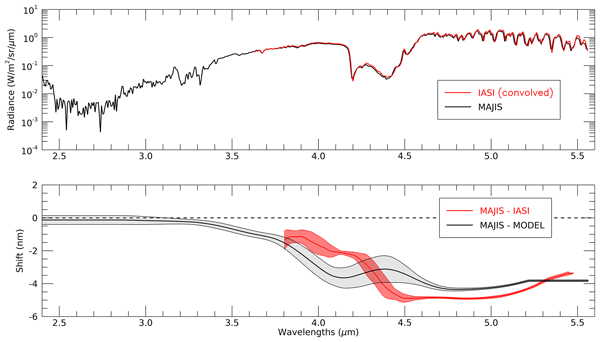
We present an updated spectral and radiometric calibration of the Moons and Jupiter Imaging Spectrometer (MAJIS) aboard the Jupiter Icy Moons Explorer (JUICE), based on results of Earth and Moon observations in August 2024 and on observations of the MAJIS internal calibration unit. Very good agreements were obtained with results of other instruments and models. These MAJIS observations provide a promising teaser of what will be achieved by MAJIS in the system of Jupiter.
Federico Tosi, Clément Royer, Federico Colaiuta, François Poulet, Tyler M. Powell, Benjamin T. Greenhagen, Yves Langevin, Alessandro Mura, Giuseppe Piccioni, Cédric Pilorget, Cristian Carli, and Francesca Zambon
Ann. Geophys., 44, 547–576, https://doi.org/10.5194/angeo-44-547-2026, https://doi.org/10.5194/angeo-44-547-2026, 2026
Short summary
Short summary
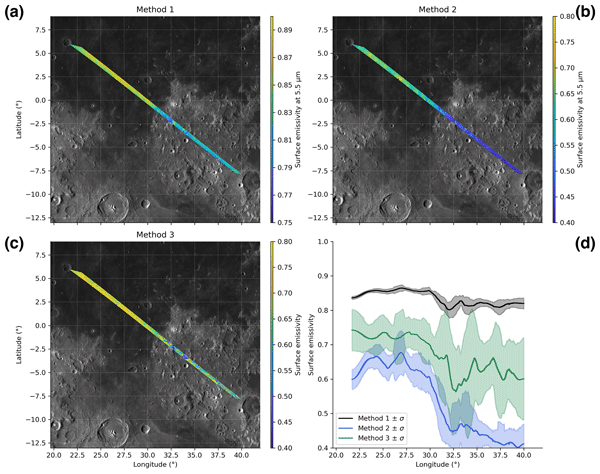
Using mid-infrared data acquired by Moons and Jupiter Imaging Spectrometer (MAJIS) aboard the European Space Agency’s JUpiter ICy moons Explorer (JUICE) spacecraft during the 2024 lunar flyby, we retrieved lunar surface temperature and effective emissivity at high spatial and spectral resolution. By comparing three independent thermal-retrieval methods, we confirmed the main mare–highland contrasts and showed how roughness and observing geometry shape the infrared signal, providing a methodological test case for future MAJIS studies of Jupiter’s icy moons.
Fabrizio Oliva, Emiliano D'Aversa, Alessandra Migliorini, Giuseppe Piccioni, François Poulet, Yves Langevin, Gianrico Filacchione, Mauro Ciarniello, Sébastien Rodriguez, Benoît Seignovert, Alessandro Mura, Leigh N. Fletcher, Sandrine Guerlet, Angelo Zinzi, Marco Giardino, Ettore Lopinto, Giuseppe Sindoni, and Christina Plainaki
Ann. Geophys., 44, 511–545, https://doi.org/10.5194/angeo-44-511-2026, https://doi.org/10.5194/angeo-44-511-2026, 2026
Short summary
Short summary
During its first Earth flyby, the JUpiter Icy Moons Explorer (Juice) spacecraft acquired observations over the Western Pacific. We identify several gaseous compounds (O2, H2O, CO2, O3, CH4, N2O), liquid/ice clouds over the ocean and atmospheric waves at high altitudes. We find good agreement with similar observations of Earth-orbiting PRISMA spectrometer. This study helps in planning future observations from the Moon and Jupiter Imaging Spectrometer (Majis) when it comes to the Jupiter system.
Emiliano D'Aversa, Fabrizio Oliva, Giuseppe Piccioni, François Poulet, Ivana Kolmašová, Benoît Seignovert, Alessandra Migliorini, Gianrico Filacchione, Leigh Fletcher, Alessandro Mura, Yves Langevin, Davide Grassi, Sébastien Rodriguez, Federico Tosi, Nicolas Ligier, Giuseppe Sindoni, Marco Giardino, and Christina Plainaki
Ann. Geophys., 44, 435–460, https://doi.org/10.5194/angeo-44-435-2026, https://doi.org/10.5194/angeo-44-435-2026, 2026
Short summary
Short summary
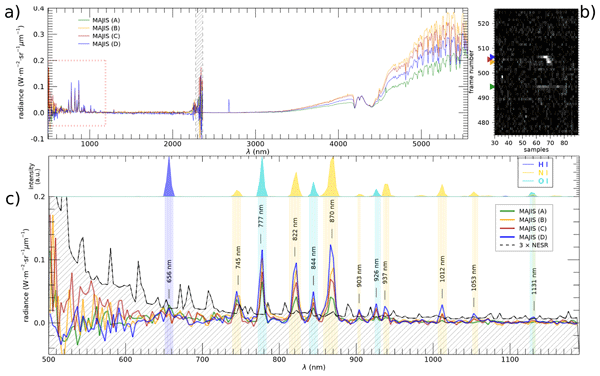
Terrestrial lightning has been spectroscopically observed from Juice (JUpiter ICy moons Explorer) spacecraft, for the first time from space in a wide wavelength range. Though not detected by ground sensors, Juice confirmed neutral atomic oxygen and nitrogen emissions, with energies and temperatures consistent with average lightning. This observation is a benchmark for Jupiter, a primary Juice target, where simultaneous hydrogen emissions in different wavelengths could identify lightning.
Benoît Seignovert, François Poulet, Yves Langevin, Emiliano D'Aversa, Nicolas Ligier, Cydalise Dumesnil, Magali Mesbout, Cédric Leyrat, Sophie Jacquinod, Stéphane Le Mouélic, Gabriel Tobie, Nicolas Mangold, Giuseppe Piccioni, Federico Tosi, Katrin Stephan, Pasquale Palumbo, Livio Agostini, Luca Penasa, Laetitia Le Deit, Thomas Cornet, Ines Belgacem, Marc Costa-Sitja, Alfredo Escalante Lopez, and Simeon Schmauß
EGUsphere, https://doi.org/10.5194/egusphere-2026-2655, https://doi.org/10.5194/egusphere-2026-2655, 2026
This preprint is open for discussion and under review for Annales Geophysicae (ANGEO).
Short summary
Short summary
This paper is the first in-flight geometric calibration of the MAJIS visible and infrared mapping spectrometer instrument onboard the ESA-Juice mission. It contains an overview of the spatial distribution of the MAJIS signal collected at different scan angles and their position in MAJIS field of view; the first two starfields in-flight calibration and multiple comparisons with the data collected by other Juice instruments during the first Lunar and Earth Gravity Assist (LEGA) by Juice in 2024.
Francesca Zambon, Francesca Altieri, Maria Cristina De Sanctis, Stéphane Le Mouélic, Giuseppe Piccioni, François Poulet, Yves Langevin, Clément Royer, Federico Tosi, Ozgur Karatekin, Alessandro Mura, and Cristian Carli
EGUsphere, https://doi.org/10.5194/egusphere-2026-876, https://doi.org/10.5194/egusphere-2026-876, 2026
Short summary
Short summary
We analyzed new detailed measurements of the Moon’s surface acquired by the Jupiter Icy Moon Explorer mission. Our study maps the distribution of key minerals in both maria and highland regions, revealing differences in composition. The results confirm previous findings and show that this instrument can provide reliable data for future planetary exploration, helping to better understand the Moon and other planetary bodies.
Sandrine Guerlet, Raymond Armante, Ninon Lauzanne, François Poulet, Yves Langevin, Sébastien Rodriguez, Leigh Fletcher, Thierry Fouchet, Giuseppe Piccioni, and Alessandra Migliorini
EGUsphere, https://doi.org/10.5194/egusphere-2026-805, https://doi.org/10.5194/egusphere-2026-805, 2026
Short summary
Short summary
The JUpiter ICy moons Explorer spacecraft (JUICE) flew by the Moon and Earth on 19 and 20th August 2024, which was an excellent opportunity to test its instruments before its arrival at Jupiter in 2031. Here we evaluate the performances of one of its instruments, the Moon and Jupiter Imaging Spectrometer (MAJIS). We compared MAJIS observations of the Earth with measurements acquired on the same day by another instrument orbiting the Earth, and find an excellent match between the two instruments.
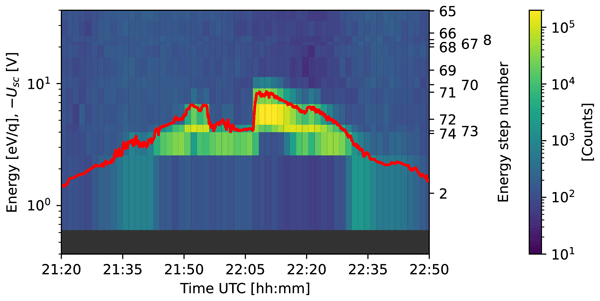
Gabriella Stenberg Wieser, Martin Wieser, Stas Barabash, Philipp Wittmann, Leif Kalla, Markus Fränz, Elias Roussos, Audrey Vorburger, Peter Wurz, Jan-Erik Wahlund, Pontus C. Brandt, Yoshifumi Futaana, Manabu Shimoyama, Angèle Pontoni, André Galli, Andreas Riedo, George Ho, Donald G. Mitchell, George Clark, Peter Kollmann, Malamati Gkioulidou, Leonardo Regoli, Norbert Krupp, Robert Wimmer-Schweingruber, Kazushi Asamura, Esa Kallio, Andrea Opitz, Manuel Grande, Andrew Coates, Geraint Jones, Theodoros Sarris, Andrey Fedorov, Nicolas André, and Ján Baláž
Ann. Geophys., 44, 937–948, https://doi.org/10.5194/angeo-44-937-2026, https://doi.org/10.5194/angeo-44-937-2026, 2026
Short summary
Short summary
We used Juice flyby of Earth in August 2024 to evaluate the performance of the Jovian Plasma Dynamics and Composition analyzer (JDC). JDC measures positive and negative ions as well as electrons. When Juice arrives at Jupiter, one of the most challenging tasks for JDC is to record low energy ion populations. We used the data JDC recorded close to Earth, together with measurement in the laboratory on ground, to improve the future observations the sensor will make around Jupiter’s icy moons.
Yves Langevin, Sébastien Rodriguez, Sandrine Guerlet, François Poulet, Giuseppe Piccioni, Livio Agostini, Raymond Armante, Emiliano D'Aversa, Gianrico Filacchione, Leigh Fletcher, Fabrizio Oliva, Clément Royer, Benoît Seignovert, Katrin Stephan, Federico Tosi, and Tim Trent
Ann. Geophys., 44, 825–853, https://doi.org/10.5194/angeo-44-825-2026, https://doi.org/10.5194/angeo-44-825-2026, 2026
Short summary
Short summary
We present an updated spectral and radiometric calibration of the Moons and Jupiter Imaging Spectrometer (MAJIS) aboard the Jupiter Icy Moons Explorer (JUICE), based on results of Earth and Moon observations in August 2024 and on observations of the MAJIS internal calibration unit. Very good agreements were obtained with results of other instruments and models. These MAJIS observations provide a promising teaser of what will be achieved by MAJIS in the system of Jupiter.
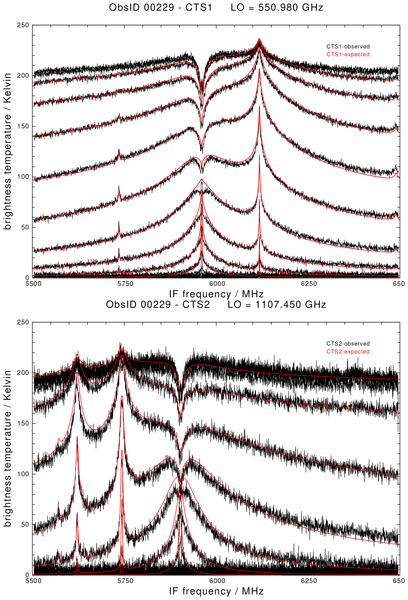
Christopher Jarchow, Ladislav Rezac, Paul Hartogh, Ali Schulz-Ravanbakhsh, Thibault Cavalié, Fabrice Herpin, Raphael Moreno, and Axel Murk
Ann. Geophys., 44, 795–809, https://doi.org/10.5194/angeo-44-795-2026, https://doi.org/10.5194/angeo-44-795-2026, 2026
Short summary
Short summary
The Jupiter Icy Moons Explorer is a spacecraft sent towards Jupiter to perform detailed observations of the giant gas planet & its Galilean satellites. The Submillimetre Wave Instrument onboard this spacecraft is a newly built instrument, which first of all has to demonstrate proper performance before the observed data can be trusted. Using the Earth as a well-known observation target, proper functionality of this instrument has been verified during the Lunar Earth Gravity Assist in August 2024.
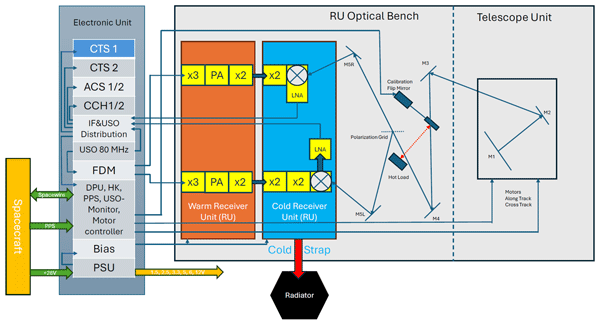
Paul Hartogh, Ladislav Rezac, Thibault Cavalié, Christopher Jarchow, Raphael Moreno, Ali Schulz-Ravanbakhsh, Alberto Carrasco Gallardo, Borys Dabrowski, Samuel Goodyear, Miriam Rengel, Fabrice Herpin, Yasuko Kasai, Mikko Kotiranta, Emmanuel Lellouch, Axel Murk, Michael Olberg, Slawomira Szutowicz, and Eva Wirström
Ann. Geophys., 44, 645–654, https://doi.org/10.5194/angeo-44-645-2026, https://doi.org/10.5194/angeo-44-645-2026, 2026
Short summary
Short summary
We provide an introduction and overview about the initial Submillimetre Wave Instrument (SWI) characterization, operation, and in-flight calibration during the Lunar Earth Gravity Assist (LEGA) campaign of the Juice (Jupiter icy moons) spacecraft. A preliminary analysis on the frequency calibration is provided. For detailed analyses on total power and beam calibration and the observation and operations planning we refer to three other SWI papers prepared for this special issue of Annales Geophysicae (ANGEO).
Federico Tosi, Clément Royer, Federico Colaiuta, François Poulet, Tyler M. Powell, Benjamin T. Greenhagen, Yves Langevin, Alessandro Mura, Giuseppe Piccioni, Cédric Pilorget, Cristian Carli, and Francesca Zambon
Ann. Geophys., 44, 547–576, https://doi.org/10.5194/angeo-44-547-2026, https://doi.org/10.5194/angeo-44-547-2026, 2026
Short summary
Short summary
Using mid-infrared data acquired by Moons and Jupiter Imaging Spectrometer (MAJIS) aboard the European Space Agency’s JUpiter ICy moons Explorer (JUICE) spacecraft during the 2024 lunar flyby, we retrieved lunar surface temperature and effective emissivity at high spatial and spectral resolution. By comparing three independent thermal-retrieval methods, we confirmed the main mare–highland contrasts and showed how roughness and observing geometry shape the infrared signal, providing a methodological test case for future MAJIS studies of Jupiter’s icy moons.
Fabrizio Oliva, Emiliano D'Aversa, Alessandra Migliorini, Giuseppe Piccioni, François Poulet, Yves Langevin, Gianrico Filacchione, Mauro Ciarniello, Sébastien Rodriguez, Benoît Seignovert, Alessandro Mura, Leigh N. Fletcher, Sandrine Guerlet, Angelo Zinzi, Marco Giardino, Ettore Lopinto, Giuseppe Sindoni, and Christina Plainaki
Ann. Geophys., 44, 511–545, https://doi.org/10.5194/angeo-44-511-2026, https://doi.org/10.5194/angeo-44-511-2026, 2026
Short summary
Short summary
During its first Earth flyby, the JUpiter Icy Moons Explorer (Juice) spacecraft acquired observations over the Western Pacific. We identify several gaseous compounds (O2, H2O, CO2, O3, CH4, N2O), liquid/ice clouds over the ocean and atmospheric waves at high altitudes. We find good agreement with similar observations of Earth-orbiting PRISMA spectrometer. This study helps in planning future observations from the Moon and Jupiter Imaging Spectrometer (Majis) when it comes to the Jupiter system.
Claire Vallat, Olivier Witasse, Nicolas Altobelli, Angela Dietz, Miriam Aberasturi, Clement Aldebert, Rafael Andres, Arnaud Boutonnet, Frank Budnik, Thomas Cornet, and Marc Costa
EGUsphere, https://doi.org/10.5194/egusphere-2026-3074, https://doi.org/10.5194/egusphere-2026-3074, 2026
Short summary
Short summary
The first ever double gravity assist of Moon and Earth on the 19th and 20th of August 2024 by the ESA JUICE spacecraft provided a unique opportunity for payload calibration in preparation for the nominal science phase. Despite the complex set of constraints applicable to such operationally critical phases, the payload and facility instruments were able to operate. The excellent scientific dataset acquired confirmed the instrument performances.
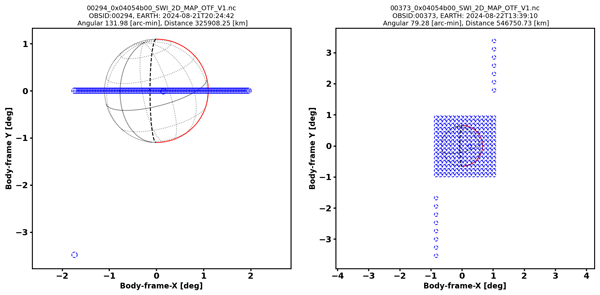
Thibault Cavalié, Raphael Moreno, Ladislav Rezac, Fabrice Herpin, Christopher Jarchow, Paul Hartogh, Alberto Carrasco Gallardo, Samuel Goodyear, Pierre Mancini, Ali Schulz-Ravanbakhsh, Borys Dabrowski, Yasuko Kasai, Emmanuel Lellouch, Axel Murk, Donal Murtagh, Michael Olberg, Miriam Rengel, Hideo Sagawa, Slawomira Szutowicz, and Eva Wirström
Ann. Geophys., 44, 461–487, https://doi.org/10.5194/angeo-44-461-2026, https://doi.org/10.5194/angeo-44-461-2026, 2026
Short summary
Short summary
The Submillimetre Wave Instrument (SWI) aboard the Juice mission is a sophisticated and first-of-its-kind payload. SWI is designed to support the diverse science objectives of the Juice mission targeting Jupiter's middle atmosphere, icy-moon's exospheres as well as near sub-surface thermophysical properties. This presents significant planning, operations and commanding challenges which are described in this paper in the context of the Lunar and Earth Gravity Assist (LEGA).
Emiliano D'Aversa, Fabrizio Oliva, Giuseppe Piccioni, François Poulet, Ivana Kolmašová, Benoît Seignovert, Alessandra Migliorini, Gianrico Filacchione, Leigh Fletcher, Alessandro Mura, Yves Langevin, Davide Grassi, Sébastien Rodriguez, Federico Tosi, Nicolas Ligier, Giuseppe Sindoni, Marco Giardino, and Christina Plainaki
Ann. Geophys., 44, 435–460, https://doi.org/10.5194/angeo-44-435-2026, https://doi.org/10.5194/angeo-44-435-2026, 2026
Short summary
Short summary
Terrestrial lightning has been spectroscopically observed from Juice (JUpiter ICy moons Explorer) spacecraft, for the first time from space in a wide wavelength range. Though not detected by ground sensors, Juice confirmed neutral atomic oxygen and nitrogen emissions, with energies and temperatures consistent with average lightning. This observation is a benchmark for Jupiter, a primary Juice target, where simultaneous hydrogen emissions in different wavelengths could identify lightning.
Benoît Seignovert, François Poulet, Yves Langevin, Emiliano D'Aversa, Nicolas Ligier, Cydalise Dumesnil, Magali Mesbout, Cédric Leyrat, Sophie Jacquinod, Stéphane Le Mouélic, Gabriel Tobie, Nicolas Mangold, Giuseppe Piccioni, Federico Tosi, Katrin Stephan, Pasquale Palumbo, Livio Agostini, Luca Penasa, Laetitia Le Deit, Thomas Cornet, Ines Belgacem, Marc Costa-Sitja, Alfredo Escalante Lopez, and Simeon Schmauß
EGUsphere, https://doi.org/10.5194/egusphere-2026-2655, https://doi.org/10.5194/egusphere-2026-2655, 2026
This preprint is open for discussion and under review for Annales Geophysicae (ANGEO).
Short summary
Short summary
This paper is the first in-flight geometric calibration of the MAJIS visible and infrared mapping spectrometer instrument onboard the ESA-Juice mission. It contains an overview of the spatial distribution of the MAJIS signal collected at different scan angles and their position in MAJIS field of view; the first two starfields in-flight calibration and multiple comparisons with the data collected by other Juice instruments during the first Lunar and Earth Gravity Assist (LEGA) by Juice in 2024.
Markus Fraenz, Henning Fischer, Norbert Krupp, Elias Roussos, Philipp Wittmann, Patrick Bambach, Jan-Erik Wahlund, Gabriella Stenberg Wieser, Stas Barabash, Mika Holmberg, Maryam Zeroual, Pontus Brandt, Peter Wurz, Martin Wieser, Yoshifumi Futaana, Manabu Shimoyama, Angele Pontoni, Audrey Vorburger, Andre Galli, Andreas Riedo, George Ho, Donald Mitchell, George Clark, Peter Kollmann, Malamati Gkioulidou, Leonardo Regoli, Robert Wimmer-Schweingruber, Kazushi Asamura, Esa Kallio, Andrea Opitz, Manuel Grande, Andrew Coates, Geraint Jones, Theodoros Sarris, Andrey Fedorov, Nicolas André, and Ján Baláž
EGUsphere, https://doi.org/10.5194/egusphere-2026-2030, https://doi.org/10.5194/egusphere-2026-2030, 2026
Short summary
Short summary
During the first Earth gravity assist maneuver of the JUICE spacecraft in August 2024 the spacecraft passed through the Earth plasmasphere for about 2 hours. The ion spectrometer PEP JEI was able to make a very rare observation of the molecular ion fraction of the cold and dense plasma in the Earth plasmasphere. The observation shows that cold ions can emanate from the Earth ionosphere even at times when no magnetic storm enhances the ion extraction.
Raphael Moreno, Ladislav Rezac, Tomáš Formánek, Thibault Cavalié, Christopher Jarchow, Emmanuel Lellouch, Paul Hartogh, Axel Murk, Mikko Kotiranta, Alberto Carrasco Gallardo, Samuel Goodyear, Ali Schulz-Ravanbakhsh, Borys Dabrowski, Fabrice Herpin, Yasuko Kasai, Donal Murtagh, Michael Olberg, Miriam Rengel, Hideo Sagawa, Slawomira Szutowicz, and Eva Wirström
EGUsphere, https://doi.org/10.5194/egusphere-2026-2064, https://doi.org/10.5194/egusphere-2026-2064, 2026
Short summary
Short summary
The Submillimetre Wave Instrument (SWI) onboard the Jupiter Icy Moons Explorer (Juice) spacecraft consists of a 29 cm antenna and two radio receivers operating at submillimeter wavelength. This instrument is designed to study Jupiter's atmosphere and the thin atmospheres of its moons.
We used Earth observations obtained during the Lunar-Earth-Gravity-Assist (LEGA) . This data analysis allows us to characterise the antenna beam and pointing corrections.
Konstantinos Dialynas, Matina Gkioulidou, Donald Mitchell, Pontus Brandt, George Clark, Elias Roussos, Peter Kollmann, Leonardo Regoli, Frederic Allegrini, Nicolas Andre, Xianzhe Jia, Krishan Khurana, Carol Paty, Stas Barabash, and Peter Wurz
EGUsphere, https://doi.org/10.5194/egusphere-2026-2062, https://doi.org/10.5194/egusphere-2026-2062, 2026
Short summary
Short summary
We analyze the first ENA images of Earth's magnetosphere that were captured by the PEP/JENI detector on the JUICE spacecraft, at distances of ~17 to ~150 Earth Radii during the Lunar and Earth Gravity Assist (LEGA), to discern substorm dynamics around Earth. We show increased ENA emissions associated with the onsets of substorm events, suggesting direct responses to the increased energetic ion activity.
Alice Lucchetti, Matteo Massironi, Klaus Gwinner, Thomas Kenkmann, Luca Penasa, Namitha R. Baby, Laura Rotzoll, Oguzcan Karagoz, Juan L. Rizos, Maurizio Pajola, Federico Tosi, Sonia Fornasier, Filippo Tusberti, Katrin Stephan, Riccardo Pozzobon, Javier E. Suarez-Valencia, Davide Cagnin, Francesca Zambon, Gianluca Chiarolanza, Athena Coustenis, Lorenza Giacomini, Ernst Hauber, Simone Marchi, Pietro Matteoni, Giuseppe Mitri, Costanza Rossi, Ricardo Hueso, Alessio Aboudan, Livio Agostini, Elke Kersten, Klaus D. Matz, Romolo Politi, Frank Trauthan, Cecilia Tubiana, Michael Aye, Angelo Zinzi, Ry Evill, Ines Belgacem, Jose M. Castro-Marin, Vincenzo Della Corte, Stubbe Hviid, Thomas Roatsch, Nicole Schmitz, Luisa M. Lara, Manish R. Patel, Ganna Portyankina, Pasquale Palumbo, and the JANUS team
EGUsphere, https://doi.org/10.5194/egusphere-2026-1901, https://doi.org/10.5194/egusphere-2026-1901, 2026
Short summary
Short summary
During a lunar flyby, the JANUS camera on board the Jupiter Icy Moons Explorer mission captured detailed images of the Moon’s surface. We studied a large impact crater and a nearby highland region, finding evidence of complex surface changes over time and signs of unusual volcanic activity. These results improve our understanding of how the Moon evolved and confirm that the JANUS camera is ready for future exploration of Jupiter’s moons.
Marco Pinto, André Rodrigues, Elias Roussos, Daniel Schmid, Martin Volwerk, Stavros Kotsiaros, Patrick Brown, Michele Dougherty, Luísa Arruda, and Olivier Witasse
EGUsphere, https://doi.org/10.5194/egusphere-2026-2055, https://doi.org/10.5194/egusphere-2026-2055, 2026
Short summary
Short summary
During its flyby of the Moon and Earth, the Jupiter Icy Moons Explorer crossed Earth's radiation belts and gave us a rare chance to test the Radiation Hard Electron Monitor in space. By studying how its measurements changed along the path, we showed that the instrument can clearly detect trapped electrons and protons. This gives confidence for future operations at Jupiter, where the radiation environment is far harsher and these measurements will be especially valuable.
Cecilia Tubiana, Luca Penasa, Livio Agostini, Alessio Aboudan, Michael Aye, Klaus-Dieter Matz, Matthew Read, Thomas Bilotta, Ricardo Hueso, Alice Lucchetti, Elke Kersten, Romolo Politi, Ganna Portyankina, Benoit Seignovert, Frank Trauthan, Angelo Zinzi, Ry Evill, Angela Dietz, Ines Belgacem, Thomas Cornet, Jose María Castro-Marin, Vincenzo Della Corte, Stubbe Hviid, Thomas Roatsch, Nicole Schmitz, Manish R. Patel, Luisa M. Lara, and Pasquale Palumbo
EGUsphere, https://doi.org/10.5194/egusphere-2026-2008, https://doi.org/10.5194/egusphere-2026-2008, 2026
Short summary
Short summary
This paper describes the observations of Moon and the Earth carried on by JANUS during LEGA in Aug 2024 and the in Sept 2024 when JUICE looked back to the Moon-Earth system following the flyby. The observation sequences are described together with the limitations that had to be taken into account during the design process. Some highlights are lessons learned from the campaigns are provided, including the importance of science-like activities during the long cruise phase of planetary missions.
Francesca Zambon, Francesca Altieri, Maria Cristina De Sanctis, Stéphane Le Mouélic, Giuseppe Piccioni, François Poulet, Yves Langevin, Clément Royer, Federico Tosi, Ozgur Karatekin, Alessandro Mura, and Cristian Carli
EGUsphere, https://doi.org/10.5194/egusphere-2026-876, https://doi.org/10.5194/egusphere-2026-876, 2026
Short summary
Short summary
We analyzed new detailed measurements of the Moon’s surface acquired by the Jupiter Icy Moon Explorer mission. Our study maps the distribution of key minerals in both maria and highland regions, revealing differences in composition. The results confirm previous findings and show that this instrument can provide reliable data for future planetary exploration, helping to better understand the Moon and other planetary bodies.
Ricardo Hueso, Arrate Antuñano, Luisa María Lara, Katrin Stephan, Angelo Zinzi, Athena Coustenis, Yoav Yair, Mitsuteru Sato, Junichi Haruyama, Amy Simon, Cecilia Tubiana, Luca Penasa, Livio Agostini, Alice Luchetti, Alessio Aboudan, Michael Aye, Elke Kersten, Klaus-Dieter Matz, Romolo Politti, Frank Trauthan, Ry Evill, Ines Belgacem, Takahashi Yukihiro, Jose María Castro-Marín, Vincenzo Della Corte, Stubbe Hviid, Thomas Roatsch, Nicole Schmitz, Manish Patel, Ganna Portyankina, and Pasquale Palumbo
EGUsphere, https://doi.org/10.5194/egusphere-2026-710, https://doi.org/10.5194/egusphere-2026-710, 2026
Short summary
Short summary
JANUS, the high-resolution camera on ESA’s JUICE mission, observed Earth during the August 2024 Lunar–Earth Gravity Assist. Images from a close flyby captured night- and day-side atmospheric phenomena, and a distant view resulted in a low-resolution Earth portrait. These observations validate JANUS performance and demonstrate the instrument’s capabilities. We focus our analysis on characterizing atmospheric systems that provide relevant examples for future studies of Jupiter’s atmosphere.
Sandrine Guerlet, Raymond Armante, Ninon Lauzanne, François Poulet, Yves Langevin, Sébastien Rodriguez, Leigh Fletcher, Thierry Fouchet, Giuseppe Piccioni, and Alessandra Migliorini
EGUsphere, https://doi.org/10.5194/egusphere-2026-805, https://doi.org/10.5194/egusphere-2026-805, 2026
Short summary
Short summary
The JUpiter ICy moons Explorer spacecraft (JUICE) flew by the Moon and Earth on 19 and 20th August 2024, which was an excellent opportunity to test its instruments before its arrival at Jupiter in 2031. Here we evaluate the performances of one of its instruments, the Moon and Jupiter Imaging Spectrometer (MAJIS). We compared MAJIS observations of the Earth with measurements acquired on the same day by another instrument orbiting the Earth, and find an excellent match between the two instruments.
Vinícius Ludwig-Barbosa, Johannes Kristoffer Nielsen, Kent Bækgaard Lauritsen, Brian Kerridge, Richard Siddans, and Tim Trent
EGUsphere, https://doi.org/10.5194/egusphere-2025-5578, https://doi.org/10.5194/egusphere-2025-5578, 2025
Short summary
Short summary
Water vapour data from microwave, infrared (RAL IMS), and radio occultation (GRAS-RO) instruments onboard Metop-A are compared during 9.5 years under a set of cloud scenarios, land and water coverage, and time of day, while accounting for differences in resolutions. RAL IMS is wetter and GRAS-RO is drier than ERA-Interim analysis and GRUAN (references) in the lower troposphere. Mid-troposphere statistics are similar, suggesting a potential synergy could be exploited in climate data records.
Christopher Johannes Diekmann, Matthias Schneider, Peter Knippertz, Tim Trent, Hartmut Boesch, Amelie Ninja Roehling, John Worden, Benjamin Ertl, Farahnaz Khosrawi, and Frank Hase
Atmos. Chem. Phys., 25, 5409–5431, https://doi.org/10.5194/acp-25-5409-2025, https://doi.org/10.5194/acp-25-5409-2025, 2025
Short summary
Short summary
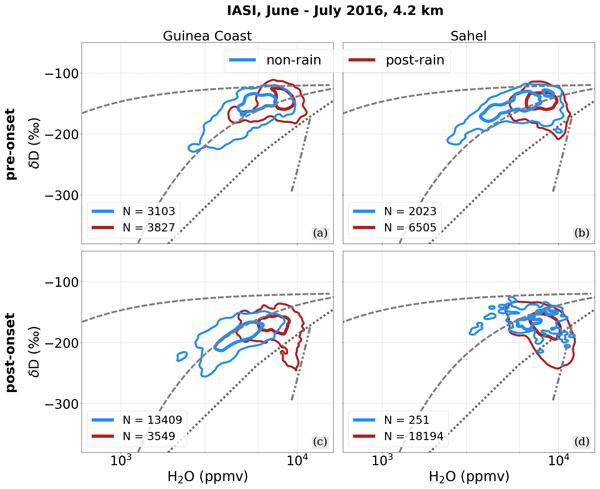
The West African Monsoon is the main source of rainfall over West Africa, and understanding the development of the monsoon remains challenging due to complex interactions of atmospheric processes. We make use of new satellite datasets of isotopes in tropospheric water vapour to characterize processes controlling the monsoon convection. We find that comparing different water vapour isotopes reveals effects of rain–vapour interactions and air mass transport.
Tim Trent, Marc Schröder, Shu-Peng Ho, Steffen Beirle, Ralf Bennartz, Eva Borbas, Christian Borger, Helene Brogniez, Xavier Calbet, Elisa Castelli, Gilbert P. Compo, Wesley Ebisuzaki, Ulrike Falk, Frank Fell, John Forsythe, Hans Hersbach, Misako Kachi, Shinya Kobayashi, Robert E. Kursinski, Diego Loyola, Zhengzao Luo, Johannes K. Nielsen, Enzo Papandrea, Laurence Picon, Rene Preusker, Anthony Reale, Lei Shi, Laura Slivinski, Joao Teixeira, Tom Vonder Haar, and Thomas Wagner
Atmos. Chem. Phys., 24, 9667–9695, https://doi.org/10.5194/acp-24-9667-2024, https://doi.org/10.5194/acp-24-9667-2024, 2024
Short summary
Short summary
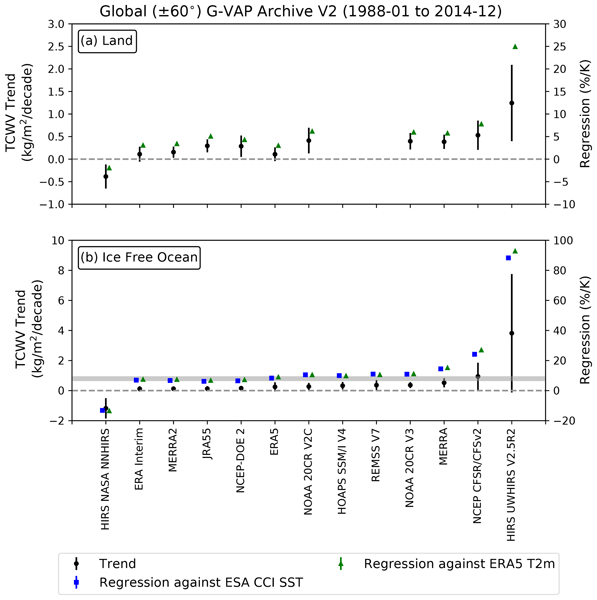
In a warmer future, water vapour will spend more time in the atmosphere, changing global rainfall patterns. In this study, we analysed the performance of 28 water vapour records between 1988 and 2014. We find sensitivity to surface warming generally outside expected ranges, attributed to breakpoints in individual record trends and differing representations of climate variability. The implication is that longer records are required for high confidence in assessing climate trends.
Francesco Cairo, Martina Krämer, Armin Afchine, Guido Di Donfrancesco, Luca Di Liberto, Sergey Khaykin, Lorenza Lucaferri, Valentin Mitev, Max Port, Christian Rolf, Marcel Snels, Nicole Spelten, Ralf Weigel, and Stephan Borrmann
Atmos. Meas. Tech., 16, 4899–4925, https://doi.org/10.5194/amt-16-4899-2023, https://doi.org/10.5194/amt-16-4899-2023, 2023
Short summary
Short summary
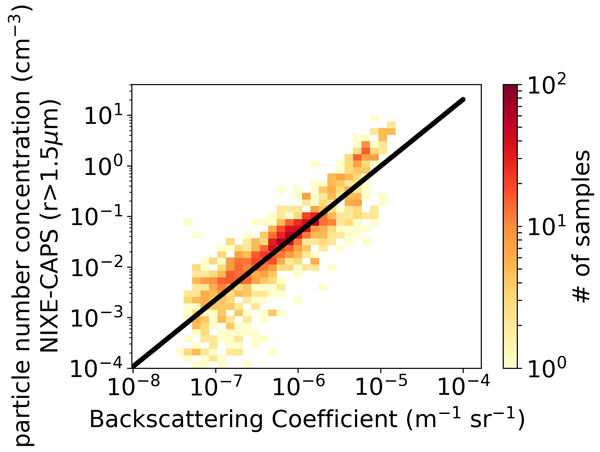
Cirrus clouds have been observed over the Himalayan region between 10 km and the tropopause at 17–18 km. Data from backscattersonde, hygrometers, and particle cloud spectrometers have been compared to assess their consistency. Empirical relationships between optical parameters accessible with remote sensing lidars and cloud microphysical parameters (such as ice water content, particle number and surface area density, and particle aspherical fraction) have been established.
Tim Trent, Richard Siddans, Brian Kerridge, Marc Schröder, Noëlle A. Scott, and John Remedios
Atmos. Meas. Tech., 16, 1503–1526, https://doi.org/10.5194/amt-16-1503-2023, https://doi.org/10.5194/amt-16-1503-2023, 2023
Short summary
Short summary
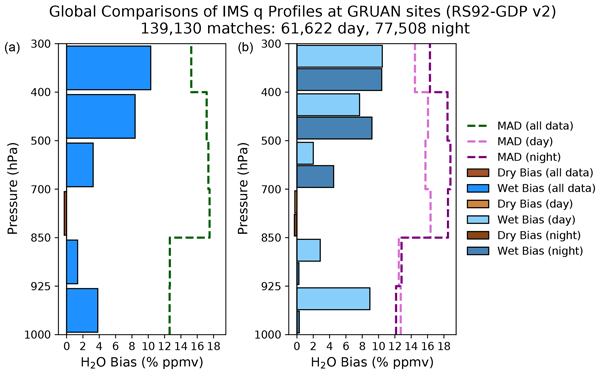
Modern weather satellites provide essential information on our lower atmosphere's moisture content and temperature structure. This measurement record will span over 40 years, making it a valuable resource for climate studies. This study characterizes atmospheric temperature and humidity profiles from a European Space Agency climate project. Using weather balloon measurements, we demonstrated the performance of this dataset was within the tolerances required for future climate studies.
Francesco Cairo, Terry Deshler, Luca Di Liberto, Andrea Scoccione, and Marcel Snels
Atmos. Meas. Tech., 16, 419–431, https://doi.org/10.5194/amt-16-419-2023, https://doi.org/10.5194/amt-16-419-2023, 2023
Short summary
Short summary
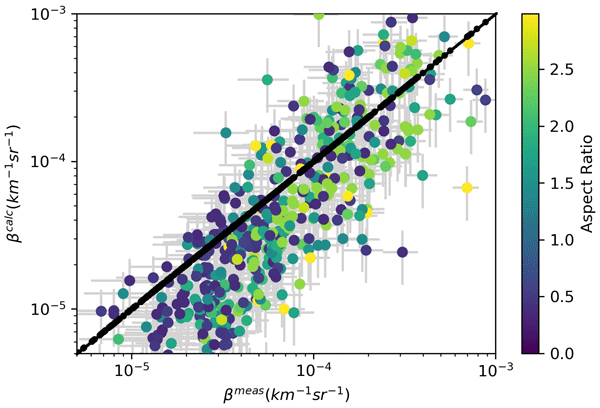
The T-matrix theory was used to compute the backscatter and depolarization of mixed-phase PSC, assuming that particles are solid (NAT or possibly ice) above a threshold radius R and liquid (STS) below, and a single shape is common to all solid particles. We used a dataset of coincident lidar and balloon-borne backscattersonde and OPC measurements. The agreement between modelled and measured backscatter is reasonable and allows us to constrain the parameters R and AR.
Francesco Cairo, Terry Deshler, Luca Di Liberto, Andrea Scoccione, and Marcel Snels
Atmos. Meas. Tech. Discuss., https://doi.org/10.5194/amt-2022-28, https://doi.org/10.5194/amt-2022-28, 2022
Publication in AMT not foreseen
Short summary
Short summary
We study Mie theory on aspherical scatterers, computing on coincident measurements of PSC by lidar and Particle Counters, the backscatter and depolarization of mixed phase PSC. WParticles are assumed solid if larger than R; for these, Mie results are reduced by C < 1 and only a common fraction X < 1 of the backscattering is polarized. We retrieve R, C and X. The match of model and measurement is good for backscattering, poor for depolarization. The hypothesis on X may be not fulfilled.
Marcel Snels, Stefania Stefani, Angelo Boccaccini, David Biondi, and Giuseppe Piccioni
Atmos. Meas. Tech., 14, 7187–7197, https://doi.org/10.5194/amt-14-7187-2021, https://doi.org/10.5194/amt-14-7187-2021, 2021
Short summary
Short summary
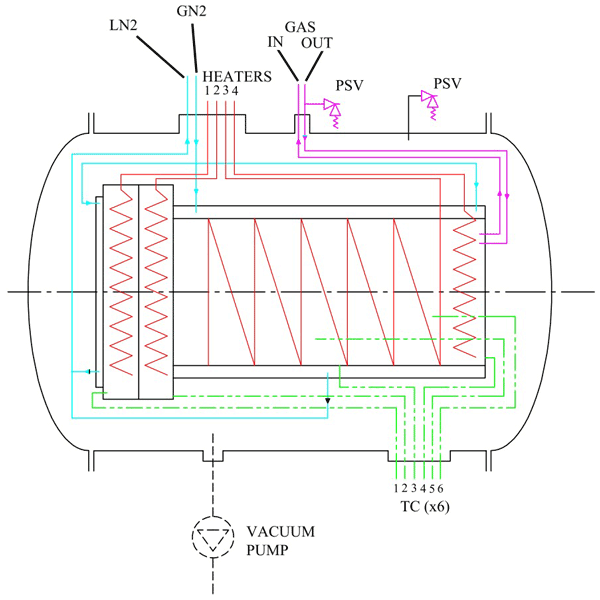
A novel simulation chamber, PASSxS (Planetary Atmosphere Simulation System for Spectroscopy), has been developed for absorption measurements with a Fourier transform spectrometer (FTS) and possibly a cavity ring-down (CRD) spectrometer, with a sample temperature ranging from 100 K up to 550 K, while the pressure of the gas can be varied up to 60 bar. These temperature and pressure ranges cover a significant part of the planetary atmospheres in the solar system and possibly extrasolar planets.
Cited articles
Adriani, A., Filacchione, G., Di Iorio, T., Turrini, D., Noschese, R., Cicchetti, A., Grassi, D., Mura, A., Sindoni, G., Zambelli, M., Piccioni, G., Capria, M. T., Tosi, F., Orosei, R., Dinelli, B. M., Moriconi, M. L., Roncon, E., Lunine, J. I., Becker, H. N., Bini, A., Barbis, A., Calamai, L., Pasqui, C., Nencioni, S., Rossi, M., Lastri, M., Formaro, R., and Olivieri, A.: Juno's Earth flyby: the Jovian infrared Auroral Mapper preliminary results, Astrophys. Space Sci., 361, 272, https://doi.org/10.1007/s10509-016-2842-9, 2016.
Bandfield, J. L., Hayne, P. O., Williams, J.-P., Greenhagen, B. T., and Paige, D. A.: Lunar surface roughness derived from LRO Diviner Radiometer observations, Icarus, 248, 357–372, https://doi.org/10.1016/j.icarus.2015.07.015, 2015.
Bellucci, G., Brown, R. H., Formisano, V., Baines, K. H., Bibring, J.-P., Buratti, B. J., Capaccioni, F., Cerroni, P., Clark, R. N., Coradini, A., Cruikshank, D. P., Drossart, P., Jaumann, R., Langevin, Y., Matson, D. L., McCord, T. B., Mennella, V., Miller, E., Nelson, R. M., Nicholson, P. D., Sicardy, B., and Sotin, C.: Cassini/VIMS observations of the moon, Adv. Space Res., 30, 1889–1894, 2002.
Blumstein, D., Chalon, G., Carlier, T., Buil, C., Hebert, P., Maciaszek, T., Ponce, G., Phulpin, T., Tournier, B., Simeoni, D., Astruc, P., Clauss, A., Kayal, G., and Jegou, R.: IASI instrument: technical overview and measured performances, Proc. SPIE, 5543, 196–205, 2004.
Boutonnet, A., Langevin, Y., and Erd, C.: Designing the JUICE trajectory, Space Sci. Rev., 220, 67, https://doi.org/10.1007/s11214-024-01093-y, 2024.
Chabrillat, S., Foerster, S., Segl, K., Beamish, A., Brell, M., Asadzadeh, S., Milewski, R., Ward, K. J., Brosinsky, A., Koch, K., Scheffler, D., Guillaso, S., Kokhanovsky, A., Roessner, S., Guanter, L., Kaufmann, H., Pinnel, N., Carmona, E., Storch, T., Hank, T., Berger, K., Wocher, M., Hostert, P., van der Linden, S., Okujeni, A., Janz, A., Jakimow, B., Bracher, A., Soppa, M. A., Alvarado, L. M. A., Buddenbaum, H., Heim, B., Heiden, U., Moreno, J., Ong, C., Bohn, N., Green, R. O., Bachmann, M., Kokaly, R., Schodlok, M., Painter, T. H., Gascon, F., Buongiorno, F., Mottus, M., Brando, V. E., Feilhauer, H., Betz, M., Baur, S., Feckl, R., Schickling, A., Krieger, V., Bock, M., La Porta, L., and Fischer, S.: The EnMAP spaceborne imaging spectroscopy mission: Initial scientific results two years after launch, Remote Sens. Environ., 315, 114379, https://doi.org/10.1016/j.rse.2024.114379, 2024.
D'Aversa, E., Oliva, F., Piccioni, G., Poulet, F., Kolmašová, I., Migliorini, A., Filacchione, G., Fletcher, L., Mura, A., Langevin, Y., Seignovert, B., Grassi, D., Rodriguez, S., Tosi, F., Ligier, N., Sindoni, G., Giardino, M., and Plainaki, C.: Spectroscopic detection of terrestrial lightning from space by JUICE-MAJIS during Earth Gravity Assist, EGUsphere [preprint], https://doi.org/10.5194/egusphere-2025-6453, 2026.
Efremenko, D. S. and Kokhanovsky, A. A.: Foundations of Atmospheric Remote Sensing, Springer, https://doi.org/10.1007/978-3-030-66745-0, 2021.
Filacchione, G., Haffoud, P., Poulet, F., Piccioni, G., Langevin, Y., Tommasi, L., Barbis, A., Carter, J., Guerri, I., Dumesnil, C., De Angelis, S., Vincendon, M., Stefani, S., Pilorget, C., Tosi, F., and Rodriguez, S.: Calibration of MAJIS (Moons and Jupiter Imaging Spectrometer): II. Spatial calibration, Rev. Sci. Instrum., 95, 041301, https://doi.org/10.1063/5.0203872, 2024.
Galeazzi, C., Labate, D., and Loizzo, R.: The PRISMA payload optomechanical design, a high-performance instrument for a new hyperspectral mission, Acta Astronaut., 65, 1429–1437, https://doi.org/10.1016/j.actaastro.2009.05.022, 2009.
Gao, B.-C. and Li, R.-R.: Removal of thin cirrus scattering effects in Landsat 8 OLI images using the cirrus detecting channel, Remote Sens., 9, 834, https://doi.org/10.3390/rs9080834, 2017.
Guerlet, S., Armante, R., Lauzanne, N., Poulet, F., Langevin, Y., Rodriguez, S., Fletcher, L., Fouchet, T., Piccioni, G., and Migliorini, A.: MAJIS/JUICE performances in the infrared during Earth fly-by: comparisons with IASI measurements and sensitivity to trace species, Ann. Geophys., submitted, 2026.
Haffoud, P., Poulet, F., Vincendon, M., Filacchione, G., Barbis, A., Guiot, P., Lecomte, B., Langevin, Y., Piccioni, G., Dumesnil, C., Rodriguez, S., Carter, J., Stefani, S., Tommasi, L., Tosi, F., and Pilorget, C.: Calibration of MAJIS (Moons and Jupiter Imaging Spectrometer): III. Spectral calibration, Rev. Sci. Instrum., 95, 031301, https://doi.org/10.1063/5.0188944, 2024.
Hueso, R., Antuñano, A., Lara, L. M., Stephan, K., Zinzi, A., Coustenis, A., Yair, Y., Sato, M., Haruyama, J., Simon, A., Tubiana, C., Penasa, L., Agostini, L., Luchetti, A., Aboudan, A., Aye, M., Kersten, E., Matz, K.-D., Politti, R., Trauthan, F., Evill, R., Belgacem, I., Yukihiro, T., Castro-Marín, J. M., Della Corte, V., Hviid, S., Roatsch, T., Schmitz, N., Patel, M., Portyankina, G., and Palumbo, P.: JUICE-JANUS observations of Earth in preparation for the JANUS investigation of Jupiter’s atmosphere, EGUsphere [preprint], https://doi.org/10.5194/egusphere-2026-710, 2026.
Jin, Z., Charlock, T. P., Smith, W. L. Jr., and Rutledge, K.: A parameterization of ocean surface albedo, Geophys. Res. Lett., 31, L22301, https://doi.org/10.1029/2004GL021180, 2004.
Kaltenegger, L. and Traub, W. A.: Transits of Earth-like planets, Astrophys. J., 698, 519–527, 2009.
Krissansen-Totton, J., Olson, S. L., and Catling, D. C.: Disequilibrium biosignatures over Earth history and implications for detecting exoplanet life, Sci. Adv., 4, eaao5747, https://doi.org/10.1126/sciadv.aao5747, 2018.
Langevin, Y., Zambelli, M., and Guiot, P.: On-board de-spiking implemented by MAJIS, the VIS/NIR imaging spectrometer of JUICE, Proc. SPIE, 11443, 1144378, https://doi.org/10.1117/12.2562464, 2020.
Langevin, Y., Carlier, V., Hannou, C., Gonnod, L., Carter, J., Tosi, F., Filacchione, G., Dumesnil, C., Piccioni, G., and Poulet, F.: H1RG readout procedures for MAJIS, the VIS/NIR imaging spectrometer of JUICE: Impacts on the performances, Proc. SPIE, 12180, 1218037, https://doi.org/10.1117/12.2629310, 2022.
Langevin, Y., Poulet, F., Piccioni, G., Filacchione, G., Dumesnil, C., Tosi, F., Carter, J., Barbis, A., Haffoud, P., Tommasi, L., Vincendon, M., De Angelis, S., Guerri, I., Pilorget, C., Rodriguez, S., Stefani, S., Bolsée, D., Cisneros, M., Van Laeken, L., Pereira, N., and Carapelle, A.: Calibration of MAJIS (Moons and Jupiter Imaging Spectrometer): IV. Radiometric calibration, Rev. Sci. Instrum., 95, 111301, https://doi.org/10.1063/5.0202702, 2024.
Langevin, Y., Rodriguez, S., Guerlet, S., Poulet, F., Piccioni, G., Agostini, L., Armante, R., D'Aversa, E., Filacchione, G., Fletcher, L., Oliva, F., Royer, C., Seignovert, B., Stephan, K., Tosi, F., and Trent, T.: Post launch spectral and radiometric performances of MAJIS, the VIS-NIR imaging spectrometer of JUICE, EGUsphere [preprint], https://doi.org/10.5194/egusphere-2026-410, 2026.
Li, S. and Milliken, R. E.: An empirical thermal correction model for Moon Mineralogy Mapper data constrained by laboratory spectra and Diviner temperatures, J. Geophys. Res.-Planets, 121, 2081–2107, https://doi.org/10.1002/2016JE005035, 2016.
Li, Q., Sun, X., and Wang, X.: Cloud phase recognition based on oxygen A band and CO2 1.6 µm band, Remote Sens., 13, 1681, https://doi.org/10.3390/rs13091681, 2021.
Lovelock, J. E.: A physical basis for life detection experiments, Nature, 207, 568–570, 1965.
Meadows, V. S.: Reflections on O2 as a biosignature in exoplanetary atmospheres, Astrobiology, 17, 1022–1052, 2017.
Meadows, V. S., Reinhard, C. T., Arney, G. N., Parenteau, M. N., Schwieterman, E. W., Domagal-Goldman, S. D., Lincowski, A. P., Stapelfeldt, K. R., Rauer, H., DasSarma, S., Hegde, S., Narita, N., Deitrick, R., Lustig-Yaeger, J., Lyons, T. W., Siegler, N., and Grenfell, J. L.: Exoplanet biosignatures: Understanding oxygen as a biosignature in the context of its environment, Astrobiology, 18, 630–662, 2018.
Mustard, J. F., Pieters, C. M., Isaacson, P. J., Head, J. W., Besse, S., Clark, R. N., Klima, R. L., Petro, N. E., Staid, M. I., Sunshine, J. M., Runyon, C. J., and Tompkins, S.: Compositional diversity and geologic insights of the Aristarchus crater from Moon Mineralogy Mapper data, J. Geophys. Res.-Planets, 116, E00G12, https://doi.org/10.1029/2010JE003726, 2011.
Noble, S. K., Pieters, C. M., and Keller, L. P.: An experimental approach to understanding the optical effects of space weathering on lunar soils, Icarus, 192, 629–642, https://doi.org/10.1016/j.icarus.2007.07.008, 2007.
Oliva, F., D'Aversa, E., Migliorini, A., Piccioni, G., Poulet, F., Langevin, Y., Filacchione, G., Ciarniello, M., Rodriguez, S., Seignovert, B., Zinzi, A., Giardino, M., Lopinto, E., Sindoni, G., and Plainaki, C.: JUICE-MAJIS observations during Earth Gravity Assist: an overview and comparison with PRISMA data, Ann. Geophys., submitted, 2026.
Paige, D. A., Foote, M. C., Greenhagen, B. T., Schofield, J. T., Calcutt, S., Vasavada, A. R., Preston, D. J., Taylor, F. W., Allen, C. C., Snook, K. J., Jakosky, B. M., Murray, B. C., Soderblom, L. A., Jau, B., Loring, S., Bulharowski, J., Bowles, N. E., Thomas, I. R., Sullivan, M. T., Avis, C., De Jong, E. M., Hartford, W., and McCleese, D. J.: The Lunar Reconnaissance Orbiter Diviner Lunar Radiometer Experiment, Space Sci. Rev., 150, 125–160, https://doi.org/10.1007/s11214-009-9529-2, 2010.
Phulpin, T., Blumstein, D., Prel, F., Tournier, B., Prunet, P., and Schlüssel, P.: Applications of IASI on MetOp-A: first results and illustration of potential use for meteorology, climate monitoring, and atmospheric chemistry, in: Atmospheric and Environmental Remote Sensing Data Processing and Utilization III: Readiness for GEOSS, edited by: Goldberg, M. D., Bloom, H. J., Huang, A. H., and Ardanuy, P. E., Society of Photo-Optical Instrumentation Engineers (SPIE) Conference Series, 6684, 66840F, https://doi.org/10.1117/12.736816, 345 2007.
Pieters, C. M., Goswami, J. N., Clark, R. N., Annadurai, M., and Boardman, J.: Character and spatial distribution of OH/H2O on the surface of the Moon seen by M3 on Chandrayaan-1, Science, 326, 568–572, https://doi.org/10.1126/science.1178658, 2009.
Pieters, C., Mouroulis, P., Eastwood, M., Boardman, J., Green, R. O., Glavich, T., Isaacson, P., Chatterjee, A., Clark, R., Barr, D., Annadurai, M., Besse, S., Cate, D., Cheek, L., Combe, J., Dhingra, D., Essandoh, V., Geier, S., Goswami, J. N., Green, R., Haemmerle, V., Head, J., Hovland, L., Hyman, S., Klima, R., Koch, T., Kramer, G., Kumar, A. S. K., Lee, K., Lundeen, S., Malaret, E., McCord, T., McLaughlin, S., Mustard, J., Nettles, J., Petro, N., Plourde, K., Racho, C., Rodriguez, J., Runyon, C., Sellar, G., Smith, C., Sobel, H., Staid, M., Sunshine, J., Taylor, L., Thaisen, K., Tompkins, S., Tseng, H., Vane, G., Varanasi, P., White, M., and Wilson, D.: The Moon as a spectral standard for remote sensing: Mineralogical insights from lunar orbital data, Meteorit. Planet. Sci., 48, 2170–2190, https://doi.org/10.1111/maps.12207, 2013.
Poulet, F., Langevin, Y., and Piccioni, P.: Calibration of the Moons and Jupiter Imaging Spectrometer (MAJIS): Introduction to the special collection and summary of the performances, Rev. Sci. Instrum., 95, 071601, https://doi.org/10.1063/5.0209679, 2024a.
Poulet, F., Piccioni, G., Langevin, Y., Dumesnil, C., Tommasi, L., Carlier, V., Filacchione, G., Amoroso, M., Arondel, A., D'Aversa, E., Barbis, A., Bini, A., Bolsée, D., Bousquet, P., Caprini, C., Carter, J., Dubois, J.-P., Condamin, M., Couturier, S., Dassas, K., Dexet, M., Fletcher, L., Grassi, D., Guerri, I., Haffoud, P., Larigauderie, C., Le Du, M., Mugnuolo, R., Pilato, G., Rossi, M., Stefani, S., Tosi, F., Vincendon, M., Zambelli, M., Arnold, G., Bibring, J.-P., Biondi, D., Boccaccini, A., Brunetto, R., Carapelle, A., Cisneros González, M., Hannou, C., Karatekin, O., Le Cle'ch, J.-C., Leyrat, C., Migliorini, A., Nathues, A., Rodriguez, S., Saggin, B., Sanchez-Lavega, A., Schmitt, B., Seignovert, B., Sordini, R., Stephan, K., Tobie, G., Zambon, F., Adriani, A., Altieri, F., Bockelée, D., Capaccioni, F., De Angelis, S., De Sanctis, M.-C., Drossart, P., Fouchet, T., Gérard, J.-C., Grodent, D., Ignatiev, N., Irwin, P., Ligier, N., Manaud, N., Mangold, N., Mura, A., Pilorget, C., Quirico, E., Renotte, E., Strazzulla, G., Turrini, D., Vandaele, A.-C., Carli, C., Ciarniello, M., Guerlet, S., Lellouch, E., Mancarella, F., Morbidelli, A., Le Mouélic, S., Raponi, A., Sindoni, G., and Snels, M.: Moons and Jupiter Imaging Spectrometer (MAJIS) on Jupiter Icy Moons Explorer (JUICE), Space Sci. Rev., 220, 27, https://doi.org/10.1007/s11214-024-01057-2, 2024b.
Robertson, K., Milliken, R., Pieters, C., Tokle, L., Cheek, L., and Isaacson, P.: Textural and compositional effects of ilmenite on the spectra of high-titanium lunar basalts, Icarus, 375, 114836, https://doi.org/10.1016/j.icarus.2021.114836, 2022.
Royer, C., Haffoud, P., Langevin, Y., Poulet, F., Bockelée-Morvan, D., D'Aversa, E., Cisneros-González, M., Grassi, D., Ligier, N., Piccioni, G., Carter, J., Tosi, F., Vincendon, M., Zambon, F., Zakharov, V., Gilles, M., and Seignovert, B.: A simulator of the MAJIS instrument onboard the JUICE mission: Description and application to operational and scientific cases, Planet. Space Sci., 264, 106147, https://doi.org/10.1016/j.pss.2025.106147, 2025.
Rugheimer, S., Kaltenegger, L., Zsom, A., Segura, A., and Sasselov, D.: Spectral fingerprints of Earth-like planets around FGK stars, Astrobiology, 13, 251–269, 2013.
Sagan, C., Thompson, W. R., Carlson, R., Gurnett, D., and Hord, C.: A search for life on Earth from the Galileo spacecraft, Nature, 365, 715–721, 1993.
Sang, B., Schubert, J., Kaiser, S., Mogulsky, V., Neumann, C., Förster, K.-P., Hofer, S., Stuffler, T., Kaufmann, H., Müller, A., Eversberg, T., and Chlebek, C.: The EnMAP hyperspectral imaging spectrometer: Instrument concept, calibration and technologies, Proc. SPIE, 7086, 70860L, https://doi.org/10.1117/12.794870, 2019.
Schmit, T. J., Griffith, P., Gunshor, M. M., Daniels, J. M., Goodman, S. J., and Lebair, W. J.: NOAA's Advanced Baseline Imager on the GOES-R series: Operational and scientific applications, B. Am. Meteorol. Soc., 98, 681–698, https://doi.org/10.1175/BAMS-D-15-00230.1, 2017.
Schwieterman, E. W., Kiang, N. Y., Parenteau, M. N., Harman, C. E., DasSarma, S., Fisher, T. M., Arney, G. N., Hartnett, H. E., Reinhard, C. T., Olson, S. L., Meadows, V. S., Cockell, C. S., Walker, S. I., Grenfell, J. L., Hegde, S., Rugheimer, S., Hu, R., and Lyons, T. W.: Exoplanet biosignatures: A review of remotely detectable signs of life, Astrobiology, 18, 663–708, 2018.
Seignovert, B., Poulet, F., Langevin, Y., D'Aversa, E., Ligier, N., Mesbout, M., Leyrat, C., Le Mouélic, S., Stephan, K., Palumbo, P., Agostini, L., Pensa, L., Le Deit, L., Cornet, T., Belgacem, I., Costa, M., and Escalante Lopez, A.: MAJIS onboard geometric calibration during the early cruise phase, Ann. Geophys., in preparation, 2026.
Taylor, L. A., Pieters, C. M., Keller, L. P., Morris, R. V., McKay, D. S., and Wentworth, S. J.: Lunar mare and highland soils: A synthesis of compositional, mineralogical, and spectral properties, J. Geophys. Res.-Planets, 106, 27985–28000, https://doi.org/10.1029/2000JE001374, 2001.
Tompkins, S. and Pieters, C. M.: Spectral characteristics of lunar impact melts and inferred mineralogy, Meteorit. Planet. Sci., 45, 1152–1169, https://doi.org/10.1111/j.1945-5100.2010.01074.x, 2010.
Tosi, F., Capria, M. T., De Sanctis, M. C., Combe, J.-Ph., Zambon, F., Nathues, A., Schröder, S. E., Li, J.-Y., Palomba, E., Longobardo, A., Blewett, D. T., Denevi, B. W., Palmer, E., Capaccioni, F., Ammannito, E., Titus, T. M., Mittlefehldt, D. W., Sunshine, J. M., Russell, C. T., and Raymond, C. A.: Thermal measurements of dark and bright surface features on Vesta as derived from Dawn/VIR, Icarus, 240, 36–52, https://doi.org/10.1016/j.icarus.2014.03.017, 2014.
Tosi, F., Royer, C., Colaiuta, F., Poulet, F., Powell, T. M., Greenhagen, B. T., Langevin, Y., Mura, A., Piccioni, G., Pilorget, C., Carli, C., and Zambon, F.: The JUICE 2024 close flyby of the Moon: Thermal assessment from MAJIS, EGUsphere [preprint], https://doi.org/10.5194/egusphere-2025-6150, 2026.
Traub, W. A. and Jucks, K. W.: A possible aeronomy of exoplanets, in: Atmospheres of Early Earth and Planets, edited by: Mendillo, M., Nagy, A., and Waite, J. H., Springer, https://doi.org/10.1029/130GM25, 2002.
Vasavada, A. R., Paige, D. A., and Wood, S. E.: Near-surface temperatures on Mercury and the Moon and the stability of polar ice deposits, Icarus, 141, 179–193, 1999.
Veefkind, J. P., Aben, E. A. A., McMullan, K., Förster, H., de Vries, J., Otter, G., Claas, J., Eskes, H. J., de Haan, J. F., Kleipool, Q., van Weele, M., Hasekamp, O., Hoogeveen, R., Landgraf, J., Snel, R., Tol, P. J. J., Ingmann, P., Voors, R., Kruizinga, B., Vink, R., and Visser, H.: TROPOMI on the ESA Sentinel-5 Precursor: A GMES mission for global observations of the atmospheric composition for climate, air quality and ozone layer applications, Remote Sens. Environ., 120, 70–83, 2012.
Wei, J., Ren, T., Yang, P., DiMarco, S. F., and Mlawer, E.: An improved ocean surface albedo computational scheme: Structure and performance, J. Geophys. Res.-Oceans, 126, e2020JC016958, https://doi.org/10.1029/2020JC016958, 2021.
Wohlfarth, K., Wöhler, C., Hiesinger, H., and Helbert, J.: An advanced thermal roughness model for airless planetary bodies. Implications for global variations of lunar hydration and mineralogical mapping of Mercury with the MERTIS spectrometer, Astron. Astrophys., 674, A69, https://doi.org/10.1051/0004-6361/202245343, 2023.
Zambon, F., Altieri, F., De Sanctis, M. C., Le Mouélic, S., Piccioni, G., Poulet, F., Langevin, Y., Royer, C., Tosi, F., Karatekin, O., Mura, A., and Carli, C.: Spectral analysis of lunar regions observed by MAJIS during the JUICE Earth-Moon flyby, Ann. Geophys., submitted, 2026.
Short summary
During the double Lunar-Earth Gravitational Assist with the ESA/JUICE (Jupiter Icy Moons Explorer) spacecraft in August 2024, we acquired hyperspectral data cubes of both the Moon and Earth with the MAJIS (Moons And Jupiter Imaging Spectrometer) imaging spectrometer under challenging, real in-flight conditions. This allowed to characterize surface materials and thermophysical properties on the Moon, identify various cloud phases and gases in Earth's atmosphere, and thoroughly validate the performance of the instrument.
During the double Lunar-Earth Gravitational Assist with the ESA/JUICE (Jupiter Icy Moons...


