
Articles | Volume 44, issue 1
https://doi.org/10.5194/angeo-44-209-2026
© Author(s) 2026. This work is distributed under
the Creative Commons Attribution 4.0 License.
the Creative Commons Attribution 4.0 License.
https://doi.org/10.5194/angeo-44-209-2026
© Author(s) 2026. This work is distributed under
the Creative Commons Attribution 4.0 License.
the Creative Commons Attribution 4.0 License.
Regular paper
| 
16 Mar 2026
Regular paper |
| 16 Mar 2026
| 16 Mar 2026
The impact of electron precipitation on Earth's thermospheric NO production and the drag of LEO satellites

Space Research Institute, Austrian Academy of Sciences, Graz, Austria
Sandro Krauss
Institute of Geodesy, Technical University, Graz, Austria
Grigory Tsurikov
Institute of Astronomy, Russian Academy of Sciences, Moscow, Russian Federation
Andreas Strasser
Institute of Geodesy, Technical University, Graz, Austria
Valery Shematovich
Institute of Astronomy, Russian Academy of Sciences, Moscow, Russian Federation
Dmitry Bisikalo
National Center of Physics and Mathematics, Sarov, Russian Federation
Institute of Astronomy, Russian Academy of Sciences, Moscow, Russian Federation
Helmut Lammer
Space Research Institute, Austrian Academy of Sciences, Graz, Austria
Manuel Güdel
Department of Astrophysics, University of Vienna, Vienna, Austria
Christian Möstl
Austrian Space Weather Office, GeoSphere Austria, Graz, Austria
Related authors
No articles found.
Felix Öhlinger, Torsten Mayer-Gürr, Sandro Krauss, Patrick Dumitraschkewitz, Andreas Strasser, Barbara Süsser-Rechberger, Jan Martin Brockmann, and Josef Niedermaier
Earth Syst. Sci. Data Discuss., https://doi.org/10.5194/essd-2026-639, https://doi.org/10.5194/essd-2026-639, 2026
Preprint under review for ESSD
Short summary
Short summary
GOCO2025s is a global gravity field model derived from satellite observations collected over a period of 23 years. By combining complementary measurement principles from different satellite missions, it provides a highly accurate representation of the Earth’s gravity field. This information is crucial for investigating the dynamics and ongoing changes of our planet.
Mohammed Y. Boudjada, Hans U. Eichelberger, Emad Al-Haddad, Werner Magnes, Patrick H. M. Galopeau, Xuemin Zhang, Andreas Pollinger, and Helmut Lammer
Adv. Radio Sci., 20, 77–84, https://doi.org/10.5194/ars-20-77-2023, https://doi.org/10.5194/ars-20-77-2023, 2023
Short summary
Short summary
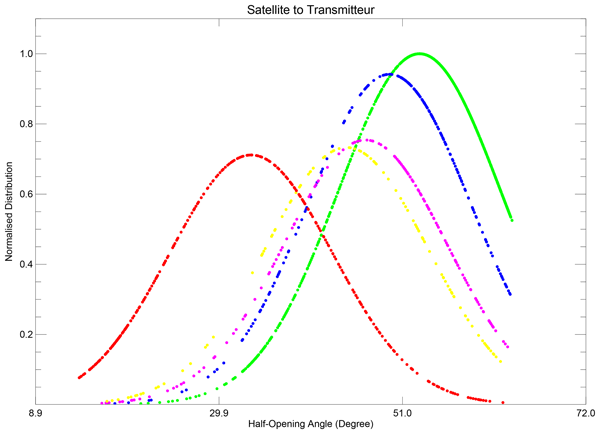
We investigate the variation of the electric power density linked to VLF signals emitted by NWC transmitter. The power density measurements were detected by the Electric Field Detector (EFD) instrument onboard CSES satellite above NWC station and its conjugate region (CR). The beam is subject to disturbances and modulations in CR. Above the NWC station, the beam can be considered as a hollow cone with inconsistency dependence of the half-opening angle on the electric power density.
Cited articles
Bailey, S. M., Barth, C. A., and Solomon, S. C.: A model of nitric oxide in the lower thermosphere, J. Geophys. Res.-Space, 107, 1205, https://doi.org/10.1029/2001JA000258, 2002. a, b, c, d
Barth, C. A.: Nitric oxide in the lower thermosphere, Planet. Space Sci., 40, 315–336, https://doi.org/10.1016/0032-0633(92)90067-X, 1992. a, b, c, d
Barth, C. A., Bailey, S. M., and Solomon, S. C.: Solar-terrestrial coupling: Solar soft X-rays and thermospheric nitric oxide, Geophys. Res. Lett., 26, 1251–1254, https://doi.org/10.1029/1999GL900237, 1999. a, b
Barth, C. A., Baker, D. N., and Bailey, S. M.: Seasonal variation of auroral electron precipitation, Geophys. Res. Lett., 31, L04809, https://doi.org/10.1029/2003GL018892, 2004. a, b
Bisi, M. M., Breen, A. R., Jackson, B. V., Fallows, R. A., Walsh, A. P., Mikić, Z., Riley, P., Owen, C. J., Gonzalez-Esparza, A., Aguilar-Rodriguez, E., Morgan, H., Jensen, E. A., Wood, A. G., Owens, M. J., Tokumaru, M., Manoharan, P. K., Chashei, I. V., Giunta, A. S., Linker, J. A., Shishov, V. I., Tyul'bashev, S. A., Agalya, G., Glubokova, S. K., Hamilton, M. S., Fujiki, K., Hick, P. P., Clover, J. M., and Pintér, B.: From the Sun to the Earth: The 13 May 2005 Coronal Mass Ejection, Sol. Phys., 265, 49–127, https://doi.org/10.1007/s11207-010-9602-8, 2010. a
Bisikalo, D., Shematovich, V., and Hubert, B.: The Kinetic Monte Carlo Model of the Auroral Electron Precipitation into N2-O2 Planetary Atmospheres, Universe, 8, 437, https://doi.org/10.3390/universe8080437, 2022. a, b
Bowman, B., Tobiska, W. K., Marcos, F., Huang, C., Lin, C., and Burke, W.: A New Empirical Thermospheric Density Model JB2008 Using New Solar and Geomagnetic Indices, AIAA 2008-6438, AIAA/AAS Astrodynamics Specialist Conference and Exhibit, https://doi.org/10.2514/6.2008-6438, 2008. a, b
Buzulukova, N. and Tsurutani, B.: Space Weather: From solar origins to risks and hazards evolving in time, Front. Astron. Space Sci., 9, 1017103, https://doi.org/10.3389/fspas.2022.1017103, 2022. a
Casali, S. and Barker, W.: Dynamic Calibration Atmosphere (DCA) for the High Accuracy Satellite Drag Model (HASDM), AIAA/AAS Astrodynamics Specialist Conference and Exhibit, 5–8 August 2002, Monterey, California, https://doi.org/10.2514/6.2002-4888, 2012. a
Chen, G.-m., Xu, J., Wang, W., and Burns, A. G.: A comparison of the effects of CIR- and CME-induced geomagnetic activity on thermospheric densities and spacecraft orbits: Statistical studies, J. Geophys. Res.-Space, 119, 7928–7939, https://doi.org/10.1002/2014JA019831, 2014. a
Cohen, S. D., Hindmarsh, A. C., and Dubois, P. F.: CVODE, A Stiff/Nonstiff ODE Solver in C, Comput. Phys., 10, 138–143, https://doi.org/10.1063/1.4822377, 1996. a
Cosby, P. C.: Electron-impact dissociation of nitrogen, J. Chem. Phys., 98, 9544–9553, https://doi.org/10.1063/1.464385, 1993. a
Dothe, H., Duff, J. W., Sharma, R. D., and Wheeler, N. B.: A model of odd nitrogen in the aurorally dosed nighttime terrestrial thermosphere, J. Geophys. Res.-Space, 107, 1071, https://doi.org/10.1029/2001JA000143, 2002. a
Emmert, J. T., Drob, D. P., Picone, J. M., Siskind, D. E., Jones Jr., M., Mlynczak, M. G., Bernath, P. F., Chu, X., Doornbos, E., Funke, B., Goncharenko, L. P., Hervig, M. E., Schwartz, M. J., Sheese, P. E., Vargas, F., Williams, B. P., and Yuan, T.: NRLMSIS 2.0: A Whole-Atmosphere Empirical Model of Temperature and Neutral Species Densities, Earth Space Sci., 8, e2020EA001321, https://doi.org/10.1029/2020EA001321, 2021. a
Emmert, J. T., Jones Jr, M., Siskind, D. E., Drob, D. P., Picone, J. M., Stevens, M. H., Bailey, S. M., Bender, S., Bernath, P. F., Funke, B., Hervig, M. E., and Pérot, K.: NRLMSIS 2.1: An Empirical Model of Nitric Oxide Incorporated Into MSIS, J. Geophys. Res.-Space, 127, e2022JA030896, https://doi.org/10.1029/2022JA030896, 2022. a
Gerard, J. C. and Barth, C. A.: High-latitude nitric oxide in the lower thermosphere, J. Geophys. Res., 82, 674, https://doi.org/10.1029/JA082i004p00674, 1977. a
Gérard, J. C., Shematovich, V. I., and Bisikalo, D. V.: Non thermal nitrogen atoms in the Earth's thermosphere 2, A source of nitric oxide, Geophys. Res. Lett., 18, 1695–1698, https://doi.org/10.1029/91GL01997, 1991. a, b
Gérard, J. C., Shematovich, V. I., and Bisikalo, D. V.: The role of fast N(4S) atoms and energetic photoelectrons on the distribution of NO in the Thermosphere, Geophys. Monogr. Ser., 87, 235–241, https://doi.org/10.1029/GM087p0235, 1995. a
Gérard, J. C., Bisikalo, D. V., Shematovich, V. I., and Duff, J. W.: An updated model of the hot nitrogen atom kinetics and thermospheric nitric oxide, J. Geophys. Res., 102, 285–294, https://doi.org/10.1029/96JA02868, 1997. a
Hardy, D. A., Gussenhoven, M. S., and Holeman, E.: A statistical model of auroral electron precipitation, J. Geophys. Res.-Space, 90, 4229–4248, https://doi.org/10.1029/JA090iA05p04229, 1985. a
Itikawa, Y.: Cross Sections for Electron Collisions with Nitrogen Molecules, J. Phys. Chem. Ref. Data, 35, 31–53, https://doi.org/10.1063/1.1937426, 2006. a
Jackman, C. H., Garvey, R. H., and Green, A. E. S.: Electron impact on atmospheric gases, I. Updated cross sections, J. Geophys. Res., 82, 5081, https://doi.org/10.1029/JA082i032p05081, 1977. a
Johnstone, C. P.: Hydrodynamic Escape of Water Vapor Atmospheres near Very Active Stars, Astrophys. J., 890, 79, https://doi.org/10.3847/1538-4357/ab6224, 2020. a
Johnstone, C. P., Khodachenko, M. L., Lüftinger, T., Kislyakova, K. G., Lammer, H., and Güdel, M.: Extreme hydrodynamic losses of Earth-like atmospheres in the habitable zones of very active stars, Astron. Astrophys., 624, L10, https://doi.org/10.1051/0004-6361/201935279, 2019. a
Johnstone, C. P., Lammer, H., Kislyakova, K. G., Scherf, M., and Güdel, M.: The young Sun's XUV-activity as a constraint for lower CO2-limits in the Earth's Archean atmosphere, Earth Planet. Sc. Lett., 576, 117197, https://doi.org/10.1016/j.epsl.2021.117197, 2021. a, b, c
Kislyakova, K. G., Johnstone, C. P., Scherf, M., Holmström, M., Alexeev, I. I., Lammer, H., Khodachenko, M. L., and Güdel, M.: Evolution of the Earth's Polar Outflow From Mid-Archean to Present, J. Geophys. Res.-Space, 125, e27837, https://doi.org/10.1029/2020JA027837, 2020. a
Kockarts, G.: Nitric oxide cooling in the terrestrial thermosphere, J. Geophys. Res., 7, 137–140, https://doi.org/10.1029/GL007i002p00137, 1980. a
Krauss, S., Fichtinger, B., Lammer, H., Hausleitner, W., Kulikov, Y. N., Ribas, I., Shematovich, V. I., Bisikalo, D., Lichtenegger, H. I. M., Zaqarashvili, T. V., Khodachenko, M. L., and Hanslmeier, A.: Solar flares as proxy for the young Sun: satellite observed thermosphere response to an X17.2 flare of Earth's upper atmosphere, Ann. Geophys., 30, 1129–1141, https://doi.org/10.5194/angeo-30-1129-2012, 2012. a
Krauss, S., Temmer, M., and Vennerstrom, S.: Multiple Satellite Analysis of the Earth's Thermosphere and Interplanetary Magnetic Field Variations Due to ICME/CIR Events During 2003–2015, J. Geophys. Res.-Space, 123, https://doi.org/10.1029/2018JA025778, 2018. a, b
Krauss, S., Behzadpour, S., Temmer, M., and Lhotka, C.: Exploring Thermospheric Variations Triggered by Severe Geomagnetic Storm on 26 August 2018 Using GRACE Follow-On Data, J. Geophys. Res.-Space, 125, e2019JA027731, https://doi.org/10.1029/2019JA027731, 2020. a
Krauss, S., Drescher, L., Temmer, M., Suesser-Rechberger, B., and Kroisz, S.: Database for ESA Service Satellite Orbit DecAy (SODA), TU GRAZ Repository Bibliothek und Archiv, https://doi.org/10.3217/c53m9-rk057, 2023. a
Krauss, S., Drescher, L., Temmer, M., Suesser-Rechberger, B., Strasser, A., and Kroisz, S.: SODA – A tool to predict storm-induced orbit decays for low Earth-orbiting satellites, J. Space Weather Space Clim., 14, 23, https://doi.org/10.1051/swsc/2024022, 2024. a, b
Kusnierkiewicz, D. Y.: An overview of the TIMED spacecraft, JHU/APL Technical Digest, 24, 150–155, 2003. a
Li, Z., Knipp, D., and Wang, W.: Understanding the Behaviors of Thermospheric Nitric Oxide Cooling During the 15 May 2005 Geomagnetic Storm, J. Geophys. Res.-Space, 124, 2113–2126, https://doi.org/10.1029/2018JA026247, 2019. a
Licata, R. J., Mehta, P. M., Tobiska, W. K., Bowman, B. R., and Pilinski, M. D.: Qualitative and Quantitative Assessment of the SET HASDM Database, Space Weather, 19, e2021SW002798, https://doi.org/10.1002/essoar.10506516.2, 2021. a
Liu, H., Gao, H., Li, Z., Xu, J., Bai, W., Sun, L., and Li, Z.: Response of NO 5.3 μm Emission to the Geomagnetic Storm on 24 April 2023, Remote Sens., 16, https://doi.org/10.3390/rs16193683, 2024. a
Matzka, J., Stolle, C., Yamazaki, Y., Bronkalla, O., and Morschhauser, A.: The Geomagnetic Kp Index and Derived Indices of Geomagnetic Activity, Space Weather, 19, e2020SW002641, https://doi.org/10.1029/2020SW002641, 2021. a
Mayer-Gürr, T., Behzadpour, S., Eicker, A., Ellmer, M., Koch, B., Krauss, S., Pock, C., Rieser, D., Strasser, S., Süsser-Rechberger, B., Zehentner, N., and Kvas, A.: GROOPS: A software toolkit for gravity field recovery and GNSS processing, Comput. Geosci., 155, 104864, https://doi.org/10.1016/j.cageo.2021.104864, 2021. a
Mlynczak, M., Martin-Torres, F. J., Russell, J., Beaumont, K., Jacobson, S., Kozyra, J., Lopez-Puertas, M., Funke, B., Mertens, C., Gordley, L., Picard, R., Winick, J., Wintersteiner, P., and Paxton, L.: The natural thermostat of nitric oxide emission at 5.3 µm in the thermosphere observed during the solar storms of April 2002, Geophys. Res. Lett., 30, https://doi.org/10.1029/2003GL017693, 2003. a, b, c, d
Mlynczak, M. G., Hunt, L. A., Thomas Marshall, B., Martin-Torres, F. J., Mertens, C. J., Russell, J. M., Remsberg, E. E., López-Puertas, M., Picard, R., Winick, J., Wintersteiner, P., Thompson, R. E., and Gordley, L. L.: Observations of infrared radiative cooling in the thermosphere on daily to multiyear timescales from the TIMED/SABER instrument, J. Geophys. Res.-Space, 115, A03309, https://doi.org/10.1029/2009JA014713, 2010. a
Mlynczak, M. G., Hunt, L. A., Marshall, T., Mertens, C. J., Russell, J. M., Mast, J. C., and Thompson, R. E.: Atomic Oxygen and Energy Balance in the Mesosphere and Lower Thermosphere, in: AGU Fall Meeting Abstracts, vol. 2012, pp. SA22B–08, 2012. a
Mlynczak, M. G., Hunt, L. A., Marshall, B. T., Russell, J. M., Mertens, C. J., Thompson, R. E., and Gordley, L. L.: A combined solar and geomagnetic index for thermospheric climate, Geophysical Research Letters, 42, 3677–3682, https://doi.org/10.1002/2015GL064038, 2015. a, b
Mlynczak, M. G., Knipp, D. J., Hunt, L. A., Gaebler, J., Matsuo, T., Kilcommons, L. M., and Young, C. L.: Space-Based Sentinels for Measurement of Infrared Cooling in the Thermosphere for Space Weather Nowcasting and Forecasting, Space Weather, 16, 363–375, https://doi.org/10.1002/2017SW001757, 2018. a, b
Oberheide, J., Mlynczak, M. G., Mosso, C. N., Schroeder, B. M., Funke, B., and Maute, A.: Impact of tropospheric tides on the nitric oxide 5.3 µm infrared cooling of the low-latitude thermosphere during solar minimum conditions, J. Geophys. Res.-Space, 118, 7283–7293, https://doi.org/10.1002/2013JA019278, 2013. a
Oliveira, D. M. and Zesta, E.: Satellite Orbital Drag During Magnetic Storms, Space Weather, 17, 1510–1533, https://doi.org/10.1029/2019SW002287, 2019. a, b
Oliveira, D. M., Zesta, E., Mehta, P. M., Licata, R. J., Pilinski, M. D., Tobiska, W. K., and Hayakawa, H.: The Current State and Future Directions of Modeling Thermosphere Density Enhancements During Extreme Magnetic Storms, Frontiers in Astronomy and Space Sciences, 8, 189, https://doi.org/10.3389/fspas.2021.764144, 2021. a
Picone, J. M., Hedin, A. E., Drob, D. P., and Aikin, A. C.: NRLMSISE-00 empirical model of the atmosphere: Statistical comparisons and scientific issues, J. Geophys. Res.-Space, 107, 1468, https://doi.org/10.1029/2002JA009430, 2002. a, b, c
Ranjan, A. K., Nailwal, D., Sunil Krishna, M. V., Kumar, A., and Sarkhel, S.: Evidence of Potential Thermospheric Overcooling During the May 2024 Geomagnetic Superstorm, J. Geophys. Res.-Space, 129, 2024JA033 148, https://doi.org/10.1029/2024JA033148, 2024. a
Redmon, R. J., Denig, W. F., Kilcommons, L. M., and Knipp, D. J.: New DMSP database of precipitating auroral electrons and ions, J. Geophys. Res.-Space, 122, 9056–9067, https://doi.org/10.1002/2016JA023339, 2017. a, b
Reigber, C., Lühr, H., and Schwintzer, P.: CHAMP mission status, Advances in Space Research, 30, 129–134, https://doi.org/10.1016/S0273-1177(02)00276-4, 2002. a
Richardson, I. G. and Cane, H. V.: Solar wind drivers of geomagnetic storms over more than four solar cycles, AIP Conference Proceedings, 1539, https://doi.org/10.1063/1.4811075, 2013. a, b
Russell, J. M. I., Mlynczak, M. G., Gordley, L. L., Tansock, J., and Esplin, R.: An Overview of the SABER Experiment and Preliminary Calibration Results, Space Dynamics Laboratory Publications, 114, https://doi.org/10.1117/12.366382, 1999. a
Sætre, C., Barth, C. A., Stadsnes, J., Østgaard, N., Bailey, S. M., Baker, D. N., Germany, G. A., and Gjerloev, J. W.: Thermospheric nitric oxide at higher latitudes: Model calculations with auroral energy input, J. Geophys. Res.-Space, 112, A08306, https://doi.org/10.1029/2006JA012203, 2007. a
Scherf, M., Lammer, H., and Spross, L.: Eta-Earth Revisited II: Deriving a Maximum Number of Earth-Like Habitats in the Galactic Disk, Astrobiology, 24, e916–e1061, https://doi.org/10.1089/ast.2023.0076, 2024. a, b, c
Scherf, M., Krauss, S., Tsurikov, G., Strasser, A., Shematovich, V., Bisikalo, D. et al.: Simulation data for Scherf et al., The impact of electron precipitation on Earth's thermospheric NO production and the drag of LEO satellites, Annales Geophysicae, figshare [data set], https://doi.org/10.6084/m9.figshare.31389760.v2, 2026. a
Shematovich, V., Bisikalo, D., and Tsurikov, G.: Non-Thermal Nitric Oxide Formation in the Earth's Polar Atmosphere, Atmosphere, 14, 1092, https://doi.org/10.3390/atmos14071092, 2023. a, b
Shematovich, V., Bisikalo, D., Tsurikov, G., and Zhilkin, A.: Non-Thermal Processes of Nitric Oxide Formation during Precipitation of Auroral Electrons into the Upper Atmospheres of Terrestrial Planets, Astronomy Reports, 68, 843–864, https://doi.org/10.1134/S1063772924700744, 2024. a, b, c, d, e, f, g, h, i
Shematovich, V. I., Bisikalo, D. V., and Gerard, J. C.: Non thermal nitrogen atoms in the Earth's thermosphere 1. Kinetics of hot N(4S), Geophysical Research Letters, 18, 1691–1694, https://doi.org/10.1029/91GL01566, 1991. a, b
Shematovich, V. I., Bisikalo, D. V., Krauss, S., Hausleitner, W., and Lammer, H.: Influence of the hot oxygen corona on the satellite drag in the Earth's upper atmosphere, Solar System Research, 45, 231–239, https://doi.org/10.1134/S003809461103004X, 2011. a, b
Siskind, D. E., Barth, C. A., Evans, D. S., and Roble, R. G.: The response of thermospheric nitric oxide to an auroral storm 2. Auroral latitudes, Journal of Geophysical Research, 94, 16 899–16 911, https://doi.org/10.1029/JA094iA12p16899, 1989a. a
Siskind, D. E., Barth, C. A., and Roble, R. G.: The response of thermospheric nitric oxide to an auroral storm 1. Low and middle latitudes, Journal of Geophysical Research, 94, 16 885–16 898, https://doi.org/10.1029/JA094iA12p16885, 1989b. a
Storz, M., Bowman, B., and Branson, J.: High Accuracy Satellite Drag Model (HASDM), https://doi.org/10.2514/6.2002-4886, 2002. a
Tabata, T., Shirai, T., Sataka, M., and Kubo, H.: Analytic cross sections for electron impact collisions with nitrogen molecules, Atomic Data and Nuclear Data Tables, 92, 375–406, https://doi.org/10.1016/j.adt.2006.02.002, 2006. a
Tapley, B. D., Bettadpur, S., Ries, J. C., Thompson, P. F., and Watkins, M. M.: GRACE Measurements of Mass Variability in the Earth System, Science, 305, 503–506, https://doi.org/10.1126/science.1099192, 2004. a
Tian, F., Kasting, J. F., Liu, H.-L., and Roble, R. G.: Hydrodynamic planetary thermosphere model: 1. Response of the Earth's thermosphere to extreme solar EUV conditions and the significance of adiabatic cooling, Journal of Geophysical Research (Planets), 113, E05008, https://doi.org/10.1029/2007JE002946, 2008a. a
Tian, F., Solomon, S. C., Qian, L., Lei, J., and Roble, R. G.: Hydrodynamic planetary thermosphere model: 2. Coupling of an electron transport/energy deposition model, Journal of Geophysical Research (Planets), 113, E07005, https://doi.org/10.1029/2007JE003043, 2008b. a
Tobiska, W. K., Bowman, B. R., Bouwer, S. D., Cruz, A., Wahl, K., Pilinski, M. D., Mehta, P. M., and Licata, R. J.: The SET HASDM Density Database, Space Weather, 19, e2020SW002682, https://doi.org/10.1029/2020SW002682, 2021. a
Trichtchenko, L., Zhukov, A., van der Linden, R., Stankov, S. M., Jakowski, N., Stanisławska, I., Juchnikowski, G., Wilkinson, P., Patterson, G., and Thomson, A. W. P.: November 2004 space weather events: Real-time observations and forecasts, Space Weather, 5, https://doi.org/10.1029/2006SW000281, 2007. a
Tsurikov, G., Bisikalo, D., Shematovich, V., and Zhilkin, A.: Searching for biomarkers with Spektr-UF observatory: nitric oxide molecule in atmospheres of exoplanets near the active host stars, Astron. Rep., 68, 1406–1422, https://doi.org/10.1134/S1063772925701355, 2024. a
Van Looveren, G., Güdel, M., Boro Saikia, S., and Kislyakova, K.: Airy worlds or barren rocks? On the survivability of secondary atmospheres around the TRAPPIST-1 planets, Astron. Astrophys., 683, A153, https://doi.org/10.1051/0004-6361/202348079, 2024. a, b
Van Looveren, G., Boro Saikia, S., Herbort, O., Schleich, S., Güdel, M., Johnstone, C., and Kislyakova, K.: Habitable Zone and Atmosphere Retention Distance (HaZARD): Stellar-evolution-dependent loss models of secondary atmospheres, Astron. Astrophys., 694, A310, https://doi.org/10.1051/0004-6361/202452998, 2025. a, b
Wang, X., Miao, J., Aa, E., Ren, T., Wang, Y., Liu, J., and Liu, S.: Statistical Analysis of Joule Heating and Thermosphere Response During Geomagnetic Storms of Different Magnitudes, J. Geophys. Res.-Space, 125, e2020JA027966, https://doi.org/10.1029/2020JA027966, 2020. a
Wilson, G. R., Weimer, D. R., Wise, J. O., and Marcos, F. A.: Response of the thermosphere to Joule heating and particle precipitation, J. Geophys. Res.-Space, 111, A10314, https://doi.org/10.1029/2005JA011274, 2006. a
Woods, T. N., Eparvier, F. G., Bailey, S. M., Chamberlin, P. C., Lean, J., Rottman, G. J., Solomon, S. C., Tobiska, W. K., and Woodraska, D. L.: Solar EUV Experiment (SEE): Mission overview and first results, J. Geophys. Res.-Space, 110, A01312, https://doi.org/10.1029/2004JA010765, 2005. a
Zesta, E. and Oliveira, D. M.: Thermospheric Heating and Cooling Times During Geomagnetic Storms, Including Extreme Events, J. Geophys. Res., 46, 12739–12746, https://doi.org/10.1029/2019GL085120, 2019. a, b
Zhang, B., Lotko, W., Brambles, O., Wiltberger, M., Wang, W., Schmitt, P., and Lyon, J.: Enhancement of thermospheric mass density by soft electron precipitation, J. Geophys. Res., 39, L20102, https://doi.org/10.1029/2012GL053519, 2012. a, b, c
Zhang, Y., Paxton, L. J., Lu, G., and Yee, S.: Impact of nitric oxide, solar EUV and particle precipitation on thermospheric density decrease, J. Atmos. Sol.-Terr. Phys., 182, 147–154, https://doi.org/10.1016/j.jastp.2018.11.016, 2019. a
Zhang, Y., Paxton, L. J., Schaefer, R., and Swartz, W. H.: Thermospheric Conditions Associated With the Loss of 40 Starlink Satellites, Space Weather, 20, e2022SW003168, https://doi.org/10.1029/2022SW003168, 2022. a, b
Short summary
We model the structure of the thermosphere for two space weather events that affected satellite orbits. Based on the Sun's irradiation, we simulate atmospheric density profiles and feed them into a model that calculates the influence of precipitating electrons on nitrogen oxide production in the atmosphere. Our results underscore the importance of considering both solar irradiance and particle precipitation to understand and predict space weather effects on the atmosphere and satellite orbits.
We model the structure of the thermosphere for two space weather events that affected satellite...


